‘Black families are hurting.’ NAACP asks FBI to look at police shooting in Moss Point
In the aftermath of George Floyd’s killing and nationwide protests against police brutality, the NAACP is renewing calls for a federal investigation into the death of Toussaint Diamon Sims, a Black man shot by a white Moss Point police officer in the summer of 2019.
A grand jury cleared the officer, but Jackson County NAACP President Curley Clark said many in the Black community feel there is never a thorough investigation when it comes to a Black person being killed by law enforcement.
He says more investigation is needed in the Sims case, especially as the nation is reexamining its history of racism and policing.
“Black families are hurting, and this is up and down the Coast,” Clark said. “I am being inundated with calls throughout the community wanting to know how they can get involved and how they can express themselves and get their voices heard.”
“They can see the connection to some of the incidents that have happened on the Coast, and they are tired,” Clark said. “It’s time for us to clean up our house — our house of law enforcement here on the Gulf Coast and here in the state of Mississippi.”
In the last 25 years, Sun Herald archives show South Mississippi officers have fatally shot and killed a suspect 24 times. Five others died by other means, such as a beating, an alleged self-inflicted gunshot wound, a seizure due to an alleged drug overdose and more. In two cases — one with video evidence — officers have faced criminal charges.
“I think the incident that happened with George Floyd is a reflection of incidents happening far too often here in Jackson County and on the entire Mississippi Gulf Coast.”
‘A bad shooting’
Clark points to the Aug. 8, 2019, shooting death of Sims, 27, as another example of what he calls “Mississippi justice” — a white officer not being held accountable for killing a Black man.
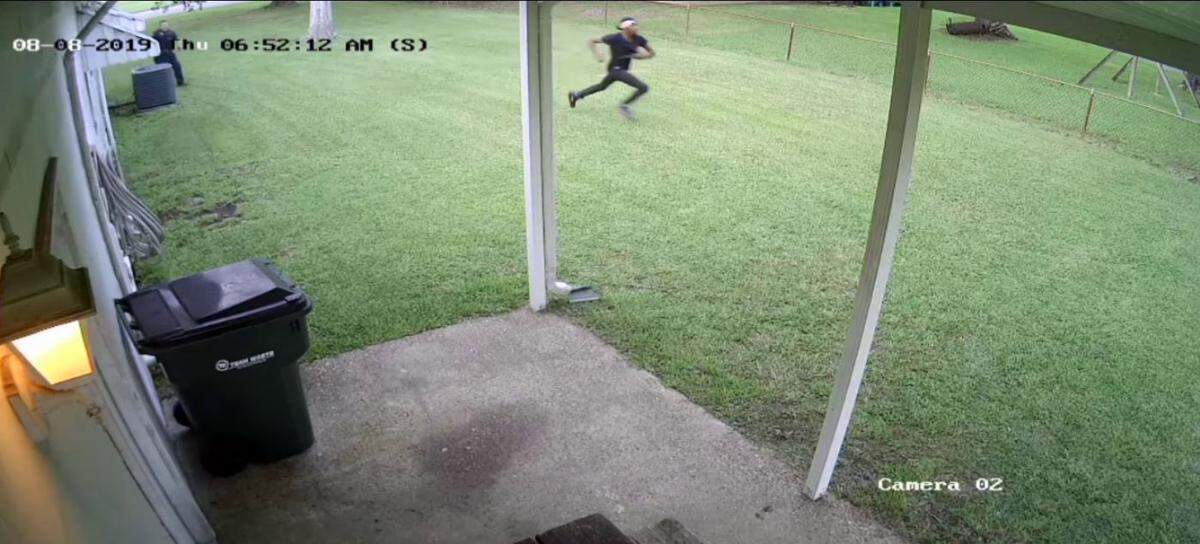
Moss Point Police Officer Lancen Shipman shot and killed Sims after he led police on a high-speed car chase and foot chase.
Sims, though armed with a loaded semi-automatic weapon, had his back to Shipman and was running away when the shots were fired.
Sims died of multiple gunshot wounds to the back and neck.
The NAACP, the Sims family, and their attorney, Brian Dunn of the Cochran Group in Los Angeles, believe there was no justification for the shooting because Sims was running away.
Moss Point police, however, considered Sims armed and dangerous because of his previous run-ins with law enforcement.
He was wanted on three felony and three misdemeanor charges — two counts of felony fleeing in other police chases, one count of aggravated assault, two counts of domestic violence by simple assault, and one count of assault by threat.
Gautier police also had issued warrants on a third charge of felony fleeing and a charge of felony child endangerment because he had a small child in the car during that pursuit.
A Jackson County grand jury ruled Sims’ death a justifiable homicide after hearing from 25 witnesses.
In each case of a police shooting, a grand jury meets with prosecutors, reviews the facts of the individual case and talks to the people involved. The grand jury then makes a recommendation about whether the officer should face criminal charges.
After the Sims ruling, the police department released Shipman’s body-camera footage.
Dunn maintains it was “a bad shooting” and wasn’t justified.
“I’m not exactly sure there is any other way to talk about it,” Dunn said.
But Shipman’s attorney, Calvin Taylor, pointed out Shipman and a second officer first pulled out their Tasers to avoid the use of deadly force. In addition, the Mississippi Bureau of Investigation was called in to independently investigate the shooting.
‘Enough is enough’
Dunn said officers justify using their firearm by saying they were in fear of losing their lives, and that justification is universally accepted.
“But there is an inherent bias in that justification,” Dunn said. “The officer wants to go home at night just like everybody else. If the officer truly believes that the person has a firearm and is willing to use it against him, that officer will never chase him like that.
“He will take a position of cover from a position of safety — usually behind a safe object — and issue demands and use a coordinated effort with other officers and bring the suspect down in the way that they are trained to bring them down.”
What happened instead was something else, Dunn believes.
“This officer didn’t even have his partner next to him,” Dunn said. “He (Shipman) ran after Sims by himself. There was no form of coordinated response.”
Clark is hoping federal investigators “aggressively” investigate what happened to Sims.
“Being shot in the back by a police officer shouldn’t be overlooked to determine if there was a misuse of excessive force by law enforcement in this case,” Clark said.
Both Dunn and Clark said shootings like the Sims case are affecting the public’s trust in law enforcement.
“The power dynamic for police is so obviously a skewed power,” he said. “What’s happening is police have been able to get away with so much .... because of this sacred trust they’ve had with the community that they are there to serve and protect. But that trust is starting to systematically erode.”
Clark said it’s time for a change.
“I can’t breathe, the NAACP can’t breathe,” he said, echoing some of Floyd’s last words before he fell silent and died while Minneapolis Officer Derek Chauvin had a knee planted in his neck. “We want a breath of justice. The NAACP wants a breath of justice.”
‘Go with the facts’
Moss Point Police Chief Brandon Ashley and Shipman’s attorney Calvin Taylor disagree with Dunn and Clark’s take on the killing.
And a federal investigation, Taylor said, isn’t needed because the case has been thoroughly investigated.
“I don’t know what else there is to look at in this particular case,” Taylor said. “Sometimes you have to go with the facts as they are, as MBI did — end of story.”
Taylor pointed out, as he has in the past, that Shipman and other police officers in Pascagoula and Moss Point first tried to take Sims into custody at a gas station, but Sims drove off.
Sims, he said, also put other people’s lives in danger when he led police on the high-speed pursuit, exceeding 100 mph through the city before Sims’ car went into a ditch. He jumped out and ran.
In addition, he said, three officers ultimately responded to the shooting scene and a second officer was at the scene when the fatal shots were fired.
“We have to deal with the facts,” Taylor said. “We had an independent investigation conducted by MBI, and we had a neutral grand jury, and they all found there was not enough evidence to indict Officer Shipman.”
Sims, Taylor said, turned the incident into a potentially fatal encounter when he pulled out a loaded assault weapon and appeared to turn in the officers’ direction as he tried to get away.
Shipman fired, he said, because he did not need to “wait until he is shot” to take action.
Ashley, who is white, called what happened to Sims a “tragic event” for both the Sims’ family and the police officers involved.
“No officer puts their uniform on and goes to work wanting to discharge a firearm,’ the police chief said.
An act of sympathy
Despite the calls to further investigate Sims’ death, Dunn said he still chooses to believe the majority of law enforcement officials have their hearts in the right place.
In fact, he said, Keena Sims will forever cherish a moment she had with a white female Moss Point police officer in the aftermath of her son’s death.
“This is what Keena Sims will never forget,” Dunn said. “There was an officer in uniform — a white officer in uniform — that gave her the biggest hug when she got there and said, ‘I’m so sorry.’”
“That is the way of the future, and that is why I choose — despite my profession (handling police brutality cases) — to hold officers in that vein,” he said. “That is who they can be because a good cop can do more good for more people than a priest if they have their hearts in the right place and what happened between that (female) officer and Ms. Sims is an example of that.”
The Sims’ family still plans to file a $10 million wrongful death suit against the city of Moss Point and the Moss Point Police Department.
This story was originally published June 26, 2020 at 5:50 AM.