Coast county’s subdivision rules feed ‘forever renters’ trend, builders say
AI-generated summary reviewed by our newsroom.
- Harrison County zoning favors large lots, which increases home prices.
- Developers urge zoning clarity and acceptance of smaller lots to boost homeownership.
- Residents defend large lots to protect rural farms and heritage properties.
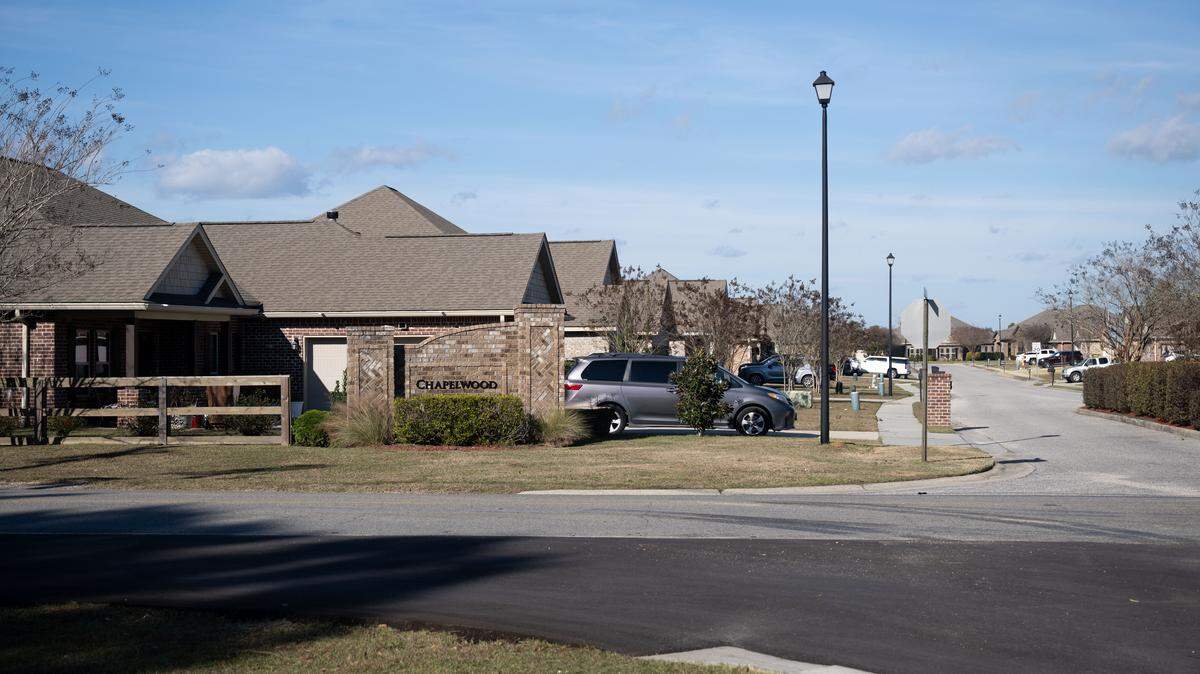
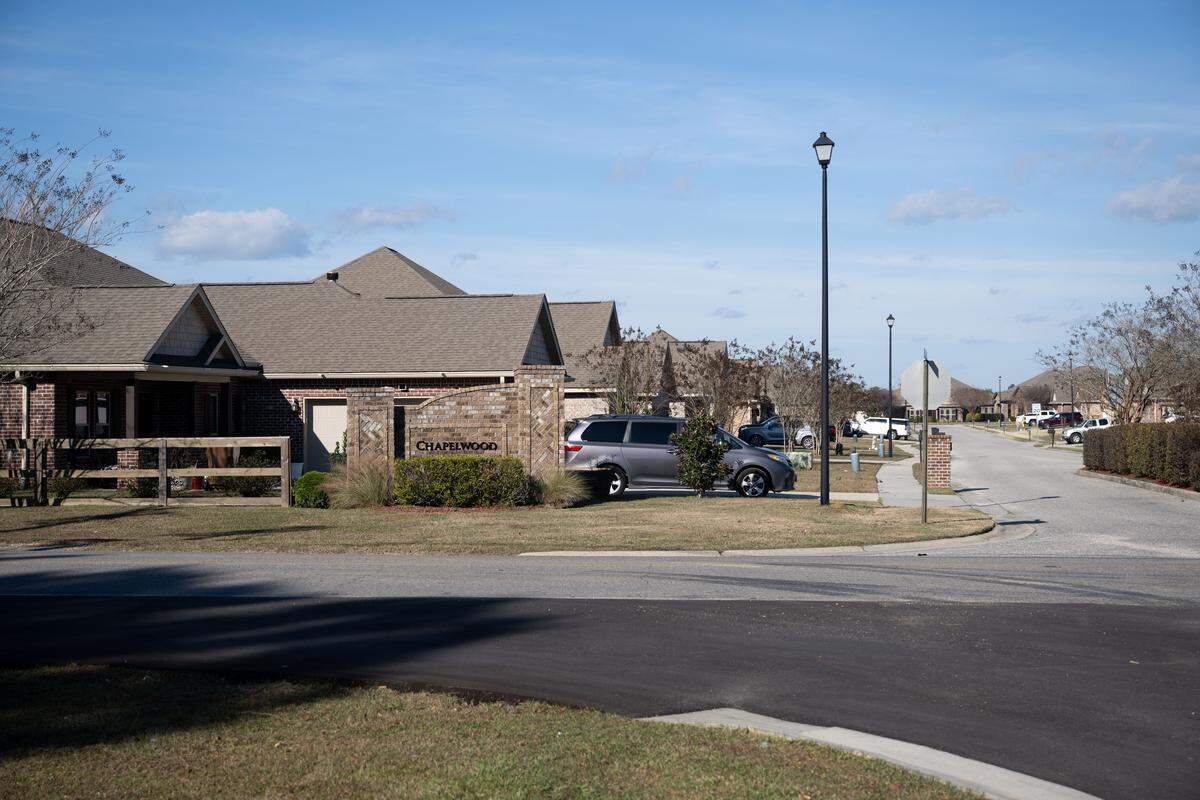
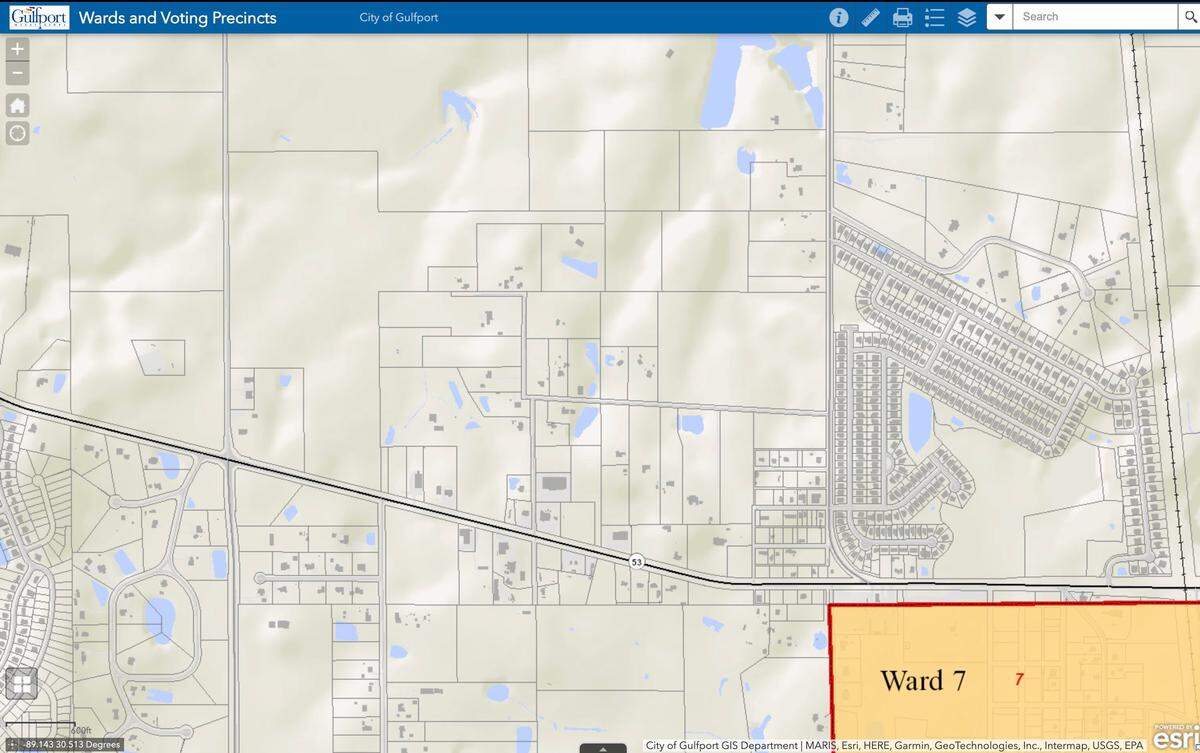
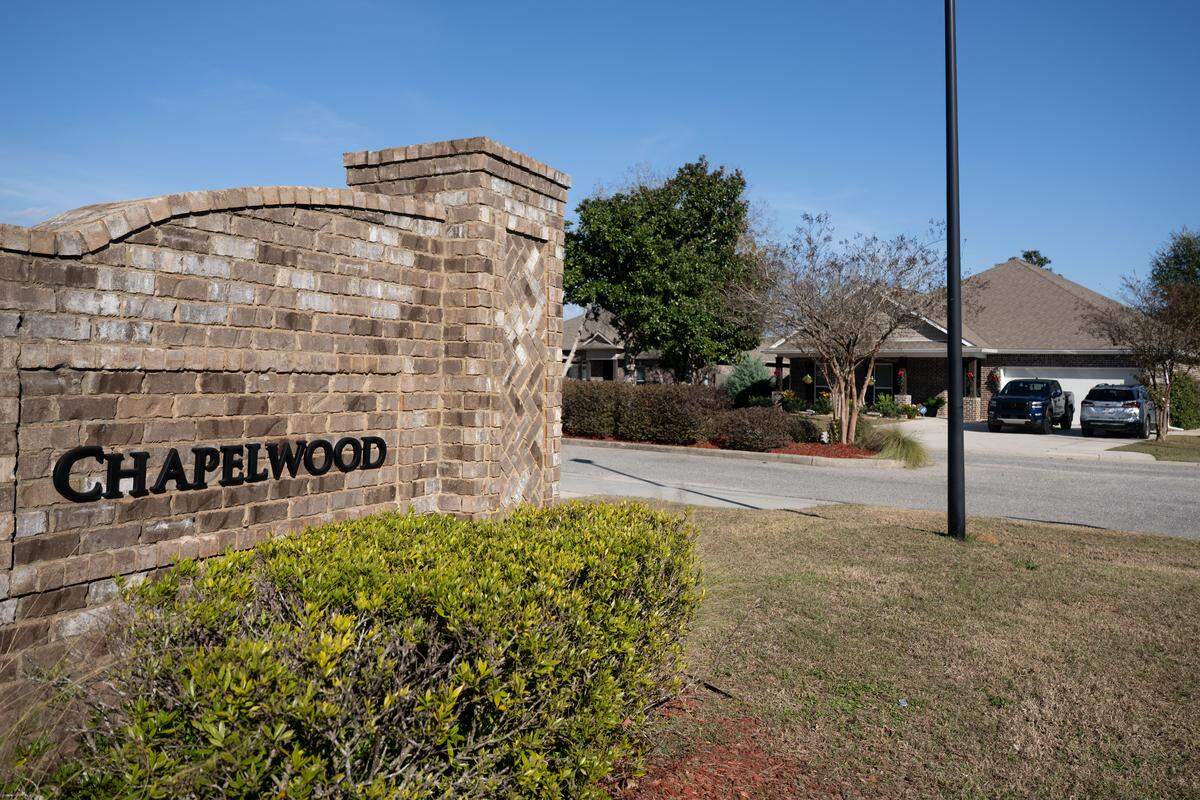
As subdivisions stack up north of Interstate 10 in unincorporated Harrison County, both rural residents and those who propose developments are unhappy with the county’s approach.
Angry residents pack the county boardroom to fight subdivisions next to their farms. And they’ve sometimes prevailed in keeping out those subdivisions where lots are less than 1.5 acres.
But developers, builders and real estate agents recently showed up in large numbers to tell the county Board of Supervisors that the county contributes to the problem of “forever renters” when they reject subdivisions with smaller lots.
The default lot size for housing in unincorporated areas is 3 acres or more and, in agricultural areas, at least 15 acres. Until the county designates land for smaller lot sizes, clashes over new subdivisions will continue, said developer Kenneth Jones, who organized the presentation to supervisors.
Pressure for housing in rural areas is increasing as public water and sewer systems expand into unincorporated areas. The county also offers more high and dry vacant land. Also, many prospective homebuyers are anxious to escape the skyrocketing property insurance rates that accompany homes south of Interstate 10 in the county’s cities.
From 2022 to date, county records show, 39 subdivisions with 1,430 lots have been added to the tax rolls in unincorporated Harrison County, most of them west of U.S. 49.
Both developers and rural residents want clearer rules that define where smaller lot subdivisions should be allowed. The Harrison County Board of Supervisors intends to update its comprehensive plan, adopted in 2008, to direct growth as it marches inexorably north.
“This is a serious issue and it’s finally getting the attention it deserves,” Realtor Summer Newman told the board at the recent meeting, where a contingent of developers, builders and business people spilled out the boardroom door into the lobby.
“I think we all agree that the zoning process in Harrison County is not working as intended,” she said. “ . . . What you’ll hear today is not just that the rezoning process is frustrating, it’s that it is actively hurting working Harrison County families. It is delaying or preventing homeownership, and it is turning many young people into forever renters.”
Harrison County residents want to protect rural life
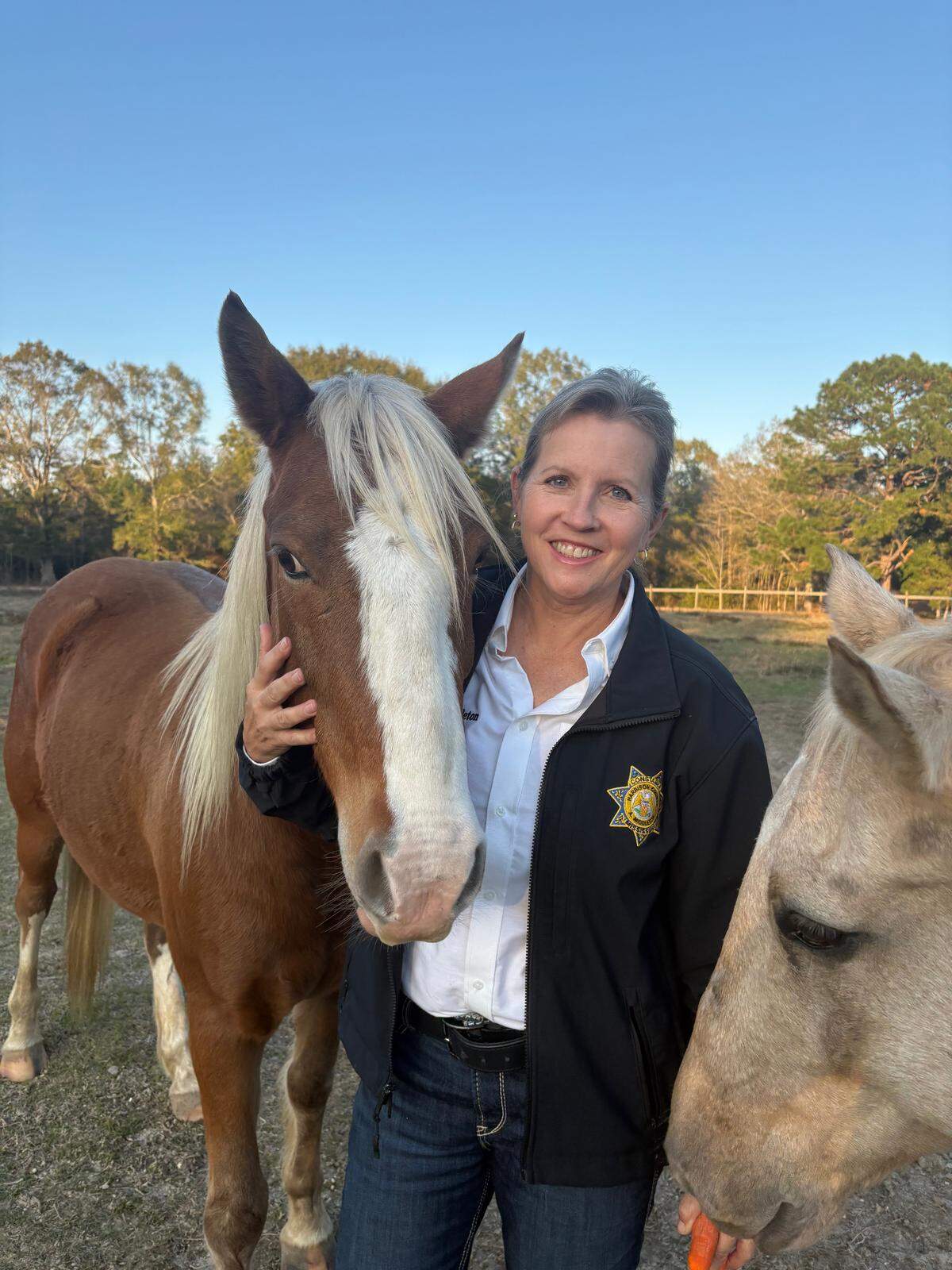
Angel Kibler-Middleton grew up on a 10-acre farm in northwestern Harrison County. Her parents still live on the property, and she has a nearby home with a pond on 2.5 acres. Her parents also own Hayfever Farm on 45 acres where they keep horses in the Saucier community.
Kibler-Middleton, a former Harrison County supervisor who now serves as an elected constable, is also somewhat of a modern day cowgirl, riding horse trails and accompanying her daughter to rodeo competitions.
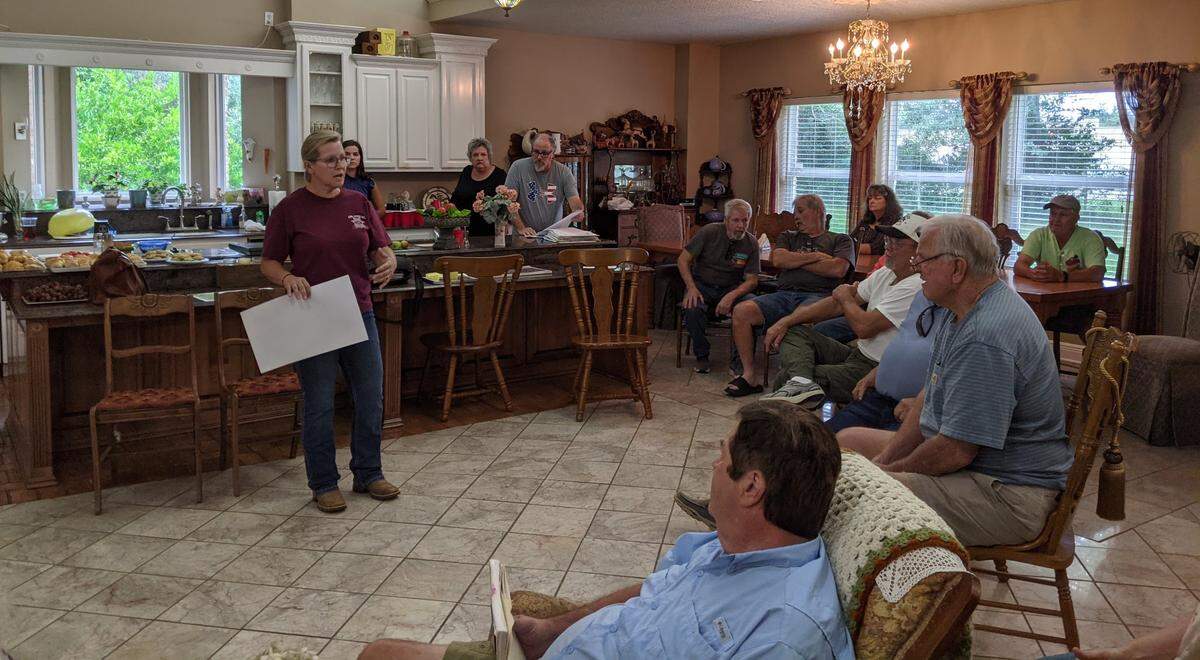
For the past few years, Middleton has spent a great deal of time — and money — fighting subdivision developments in and around Mississippi Highway 53. She rallies a group of 20 to 30 residents who call themselves Harrison County Strong.
They are not opposed to development, she said. They know it’s coming. But they are opposed to high-density subdivisions abutting rural property.
“It’s supposed to be urban, suburban, rural,” she said. “That’s the golden rule.”
The residents recently won a court battle on a technicality to keep out a subdivision with 235 lots on 100 acres off John Clark Road, which connects to Mississippi 53. The developer will have to start the process over and reapply for the subdivision, called Windridge.
Rural residents fight high-density subdivisions
“A lot of my neighbors that are fighting this have heritage property,” Middleton said. “It’s third generation and they’re trying to give it to the fourth generation.”
She said the county needs to follow the comprehensive growth plan in place. It identifies growth corridors and, based on public input, recommends residential development transition to larger lots near property zoned agricultural.
“It’s just not safe to put people next to livestock that don’t know livestock,” Middleton said. “They want to go put their hand through the fence. They want to go feed something. And then they lose a finger or two.”
Infrastructure has also failed to keep up with development. Residents travel narrow roads heavily congested during peak periods. County Farm Road, a main thoroughfare, backs up 1.3 miles, five days a week with school traffic, said Middleton, who picks up her daughter daily from West Harrison High on the road.
As a state aid road, she said, the road is a little wider than busy county roads such as Canal Road, a feeder thoroughfare for subdivisions that is narrow and has no shoulders in places.
Bigger lots mean higher home prices
The problem, developers, real estate agents and builders say, is that middle-class homebuyers have few places to turn. Most large tracts available for development are in the county, they say.
Availability of land is only one reason developers, builders and homebuyers are drawn to unincorporated Harrison County.
High property insurance costs south of Interstate 10 mean homebuyers can often pay less for a new home than they would for a fixer-upper south of the interstate, where the forces of wind and storm surge from hurricanes are highest.
Location and a home’s age are big drivers of insurance rates. Summer Newman, also president of the Gulf Coast Association of Realtors, said homebuyers often pay less for a new home north of Interstate 10 than they would for an older fixer-upper south of the interstate.
After expenses, she said, a family of three with an above-average income of $77,541 a year can barely afford a home that costs $195,000. She said the average home price in Harrison County is $278,000.
Large lots mean higher prices for developers and homebuyers.
To make a profit on homes on 1.5-acre lots, a developer would need to fetch $500,000, said Kenneth Jones, owner of Gulf Coast Development & Design.
Builder and Realtor David Saulters told supervisors: “As a developer myself, I can tell you the juice ain’t worth the squeeze if you can’t make a profit on a house.”
Builders want flexibility to offer a range of lot widths for a bigger buying pool, a healthy income mix in neighborhoods and to avoid the “cookie cutter” look people dislike, he said.
‘The reality is, Harrison County needs a range of lot sizes, not just those affordable to the top 5% of earners,” Saulters said.
Jones told the Sun Herald: “There are no properties in Harrison County where I could develop a subdivision of 15,000 (square) feet by right. That is simply a poor lack of proper planning. Developing 3-acre lots would make housing unaffordable to 98% of Harrison County families.”
Advocates of county development said they showed up to counter the crowds that turn out to oppose smaller-lot subdivisions.
County supervisors updating development plan
Supervisors had decided before the recent meeting to revisit the comprehensive plan.
But the development contingent at the meeting said nothing will improve if the county continues to couple residential zoning with the need for a conditional-use permits and fails to designate areas where lots can, by right, be under an acre. Any subdivision with more than five lots requires a conditional-use permit, county Zoning Administrator Eric Nolan said.
Other localities, including Jackson County, allow subdivisions if zoning is compatible and site plans meet safety and other regulations.
In Harrison County, the need for a conditional-use permit opens debate for restrictions such as lot size.
Board president Nathan Barrett said he would favor eliminating conditional use where other subdivisions have already located, changing the character of the neighborhood from rural to residential. Fighting to keep out subdivisions in those circumstances is a waste of money, he said.
Most fights over whether to allow subdivisions are in District 2, which Supervisor Rebecca Powers represents, and in District 3, where Marlin Ladner is supervisor.
Ladner likes to remind residents that most counties in Mississippi have no zoning laws and that Harrison County did not put zoning in place until 2000, the year he took office.
“That’s significant for Harrison County that we do have zoning to protect people’s properties,” he said.
Powers understands the need for development. But Angel Kibler-Middleton credits the supervisor with listening to residents who want to protect their rural properties. Powers said all sides need to be heard for a consensus to be reached.
“It’s the worst tightrope I’ve ever been on,” Powers said. “ . . . I’m trying to protect the future of Harrison County. When the trees are gone, they’re gone forever.”