
A development would bring 235 houses to rural Harrison County. Neighbors don’t want it.
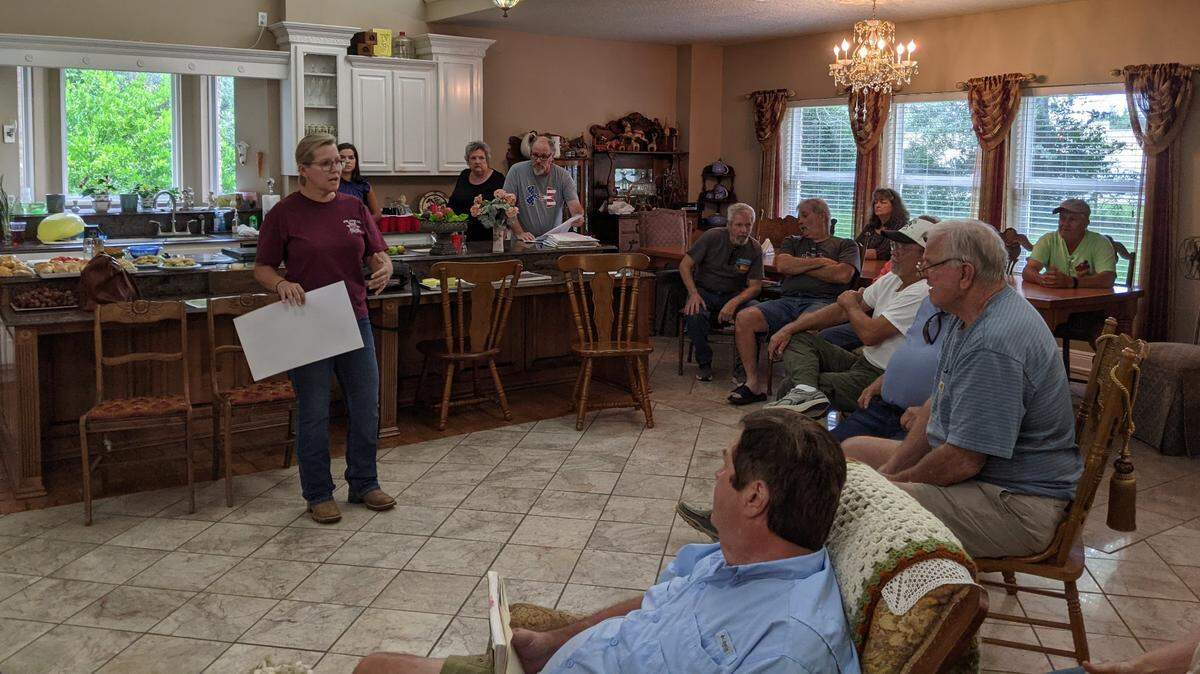
A county constable, a family of Egyptian farmers who own a Gulfport liquor store and dozens of other landowners with property near the Harrison County Fairgrounds have banded together to oppose a large residential subdivision development approved this week by Harrison County supervisors.
Supervisors last Monday approved 235-lot single-family residential subdivision on John Clark Road.
Harrison County Constable and former supervisor Angel Kibler-Middleton plans to appeal this decision in court, citing environmental and community objections to the project, as well as a litany of alleged procedural violations in the approval process.
Neighbors charge the proposed subdivision will blight their community. Adeeb Botros, whose family owns a small farm directly adjoining the development, told the Sun Herald the property will no longer afford him the peace of mind he cherishes with 235 houses right next door.
“As soon as they’re done building, this is no longer gonna be special. It’s just another neighborhood,” Botros said.
Addressing the supervisors at last week’s hearing, Pat Lowery, a retired public works official at Camp Shelby, said the assembled residents were “scared of flooding in their homes. They’re scared for their decreasing property values. They’re scared of making insurance claims, an increase in the rates. And they’re scared for floodplain maps being redrawn, causing more loss of property values and causing more rate increases on their homeowners’ insurance. But they trust you. They trust you to defend them, not to develop.”
A muddled process
The subdivision, known as Windridge, is designed by Gulfport firm Heinrich & Associates. A conditional use permit for the development was initially applied for and approved in 2017, but, because of issues with sewage infrastructure — which the developers say have since been resolved — the developers did not move forward on the project in the allotted time frame.
Earlier this year, the developers sought to restart the project following the completion of a force main sewer line in the area. After the the county planning commission greenlit their plans, Kibler-Middleton appealed this approval to the supervisors, which resulted in last week’s hearing.
The supervisors, though, appeared unclear on whether they were there to vote on extending the previously granted permit (as listed on the published agenda) or on granting a new one. They spent the first 30 minutes of the meeting debating among themselves, while the audience of several dozen opponents of the project waited for arguments to begin.
Two hours in, after having heard arguments for and against the project, at least one supervisor remained unclear on this point.
“What are we voting on?” demanded Marlin Ladner.
The question was bypassed when Beverly Martin made a motion “to deny the appeal currently before the board,” concurring with the planning commission’s decision without saying what it was and thereby allowing the development to move forward. The motion passed 4-1; the dissenting vote was cast by Rebecca Powers, whose district the development sits in.
The appeal was brought by a group of community members led by Kibler-Middleton. More than 80 residents submitted letters in support of the appeal.
Kibler-Middleton’s appeal, filed in May to zoning administrator Patrick Bonck, listed several environmental and community objections to the project, as well as a litany of alleged procedural violations.
The appeal says that the “high density development” is at odds with the Harrison County Comprehensive Plan’s recommendations for the area, for which Kibler-Middleton noted she was on the steering committee.
A development abutting agricultural land
Neighbors say the area is primarily rural and agricultural, with livestock on several nearby properties. Kibler-Middleton owns a property five lots down from the site on John Clark Road, where she raises horses.
Adeeb Botros and his father, Magdy Botros, raise livestock including chickens, pigs, goats and a donkey on their property directly adjacent to the proposed development site.
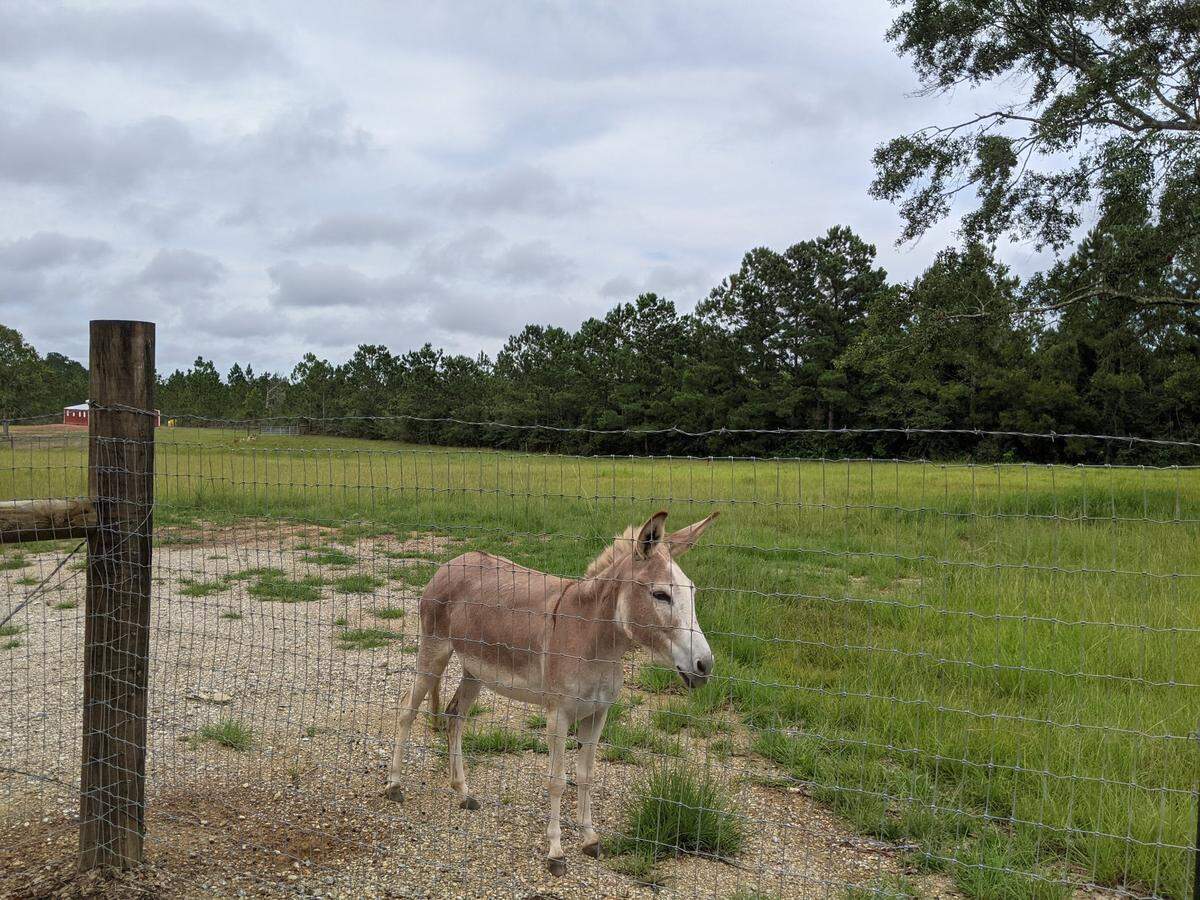
Botros did not attend the supervisors’ meeting because he had to work at the Gulfport liquor store he and his family own, Mr. Egypt Wine and Liquor. He told the Sun Herald his family bought the property some five years ago and invested hundreds of thousands of dollars into it in order to replicate the lifestyle he had known growing up on a farm in Egypt. The Botroses emigrated to Gulfport 20 years ago.
He described the purchase of the farm as his family’s effort to escape the city and “live the American Dream.”
Scott DeLano, a state senator and real estate agent, said there are other places where subdivisions are built near farms.
“I heard some of the objections that were up here that said that this subdivision was going to be built adjacent to farmland and there are going to be farm animals in people’s backyards,” DeLano said. “That’s bullcrap, that’s baloney.”
Malcolm Jones, the city attorney for Pass Christian who is separately representing the development, said he understood concerns from residents.
“Everybody is afraid of change,” Jones said. “I get that, I see that, I understand, I know that when you live a certain way, you want to keep it going that way because you like it. But you know, the county is just not what it was even 10 years ago. Certainly not what it was prior to Katrina.”
Jones said Harrison County is “probably more metropolitan, more urban in some ways than any other county in the state.”
Because the neighborhood the proposed subdivision sits in is “suburban, closer to the city limit lines,” Jones said, “what you would do in far western Harrison County is not the same thing you do in these areas where you have water and sewer that’s in place.”
Will development mean more flooding?
At the supervisors’ meeting, Lowery said the developers had not done their due diligence before presenting their plans.
Noting that the area is already prone to flooding, Lowery said the developers had not presented an estimate of how much stormwater runoff the project would cause in order to determine what mitigation was necessary.
“They’re asking you if they can do this project, but they’re not telling you how much water they’re going to introduce into an already stretched system,” Lowery told the supervisors.
But project designer Robert Heinrich countered that this step was not necessary at this stage of the process.
“We’ve gone through all the requirements that you’re supposed to do when you apply for a conditional use application. Engineering is not required at this time,” Heinrich said.
The supervisors asked Harrison County Chief Engineer Jaci Turner to explain the process that would unfold after they approved the development.
“The next step is for them to start developing their plans and specifications,” Turner said. “The full design, the water, the sewer, the road grading, topographic survey, all that stuff is the next phase.” She said the calculation of runoff that Lowery had discussed would take place during this stage, and that the county and the state would both have to vet the engineers’ plans for the project before construction began.
Supervisor Connie Rockco said, “I will say that in the past they have not been as strict, I don’t think, as we are now, and we’ve run into some issues, and we’ve resolved those issues because of Jaci,” Supervisor Connie Rockco said.