Who is Lee Bond? He’s led Coast casinos and hospitals through crisis, controversy and COVID
Lee Bond resigned from his position as CEO of Singing River Health Systems on Monday, saying he was taking time to pursue new career opportunities.
“There’s a right time for everything,” he told the Sun Herald, and said it is time to leave Singing River and explore several “different and exciting” options and job offers.
He declined to elaborate other than to say, “Stay tuned for something outside of the hospital world.”
Bond’s resignation was announced after a special-called meeting of the SRHS Board of Trustees.
He became chief financial officer of SRHS in 2013 and chief operations officer five years after that. He has seen the hospitals through financial crisis, cyber attacks, competition from other hospitals expanding into Jackson County and the opening of a third hospital when SRHS expanded into Gulfport.
Two years of the coronavirus brought nursing shortages, and he became one of the Coast’s most vocal supporters of nurses and front line workers.
“I believe in the mission,” he said in a press release announcing his resignation from SRHS, “and hope that in my time here I left it better than when I came.”
His options for his next job go beyond the medical field.
Those who know him as the CEO of the three hospitals under Singing River Health System may not know that he was a casino executive for years before that. He’s also a certified public account and had his own excavating and demolition company that removed slabs after Hurricane Katrina.
IP Casino leader after Hurricane Katrina
A native of Ocean Springs, Bond said he put himself through college working as a carpenter. He graduated summa cum laude with a BS degree in accounting from University of South Alabama.
Bond was chief financial officer at the Grand Casino in East Biloxi in 2005 when Hurricane Katrina hit. He was one of the first staff members able to get back to the casino after the storm subsided and said his office in the the executive suite was gone. “It was literally washed away,” he said.
Jon Lucas, the new general manager at IP Casino, previously worked with Bond at the Grand and convinced him to come to work at the IP.
“He shared my belief in service,” Bond said, and the team worked to restore the damage and remodel the IP one area at a time after it became the first casino in South Mississippi to reopen after Katrina.
The IP had been losing $15 million a year when he arrived, Bond said, but the successes built on each other and it moved from last in visitor numbers to first.
In 2006, IP began hosting the Coast’s first poker circuit tournament, with players vying for a seat in the World Poker Tour Championship in Las Vegas.
Bond, who was IP’s vice president of operations, helped bring the tournament to the Coast with his contacts from a previous casino where he worked.
“I called and asked what the possibility of getting a World Poker Tour event at Biloxi would be,” Bond said. “Two hours later, we had people at the World Poker Tour excited about coming to Biloxi.”
Singing River challenges, pension controversy
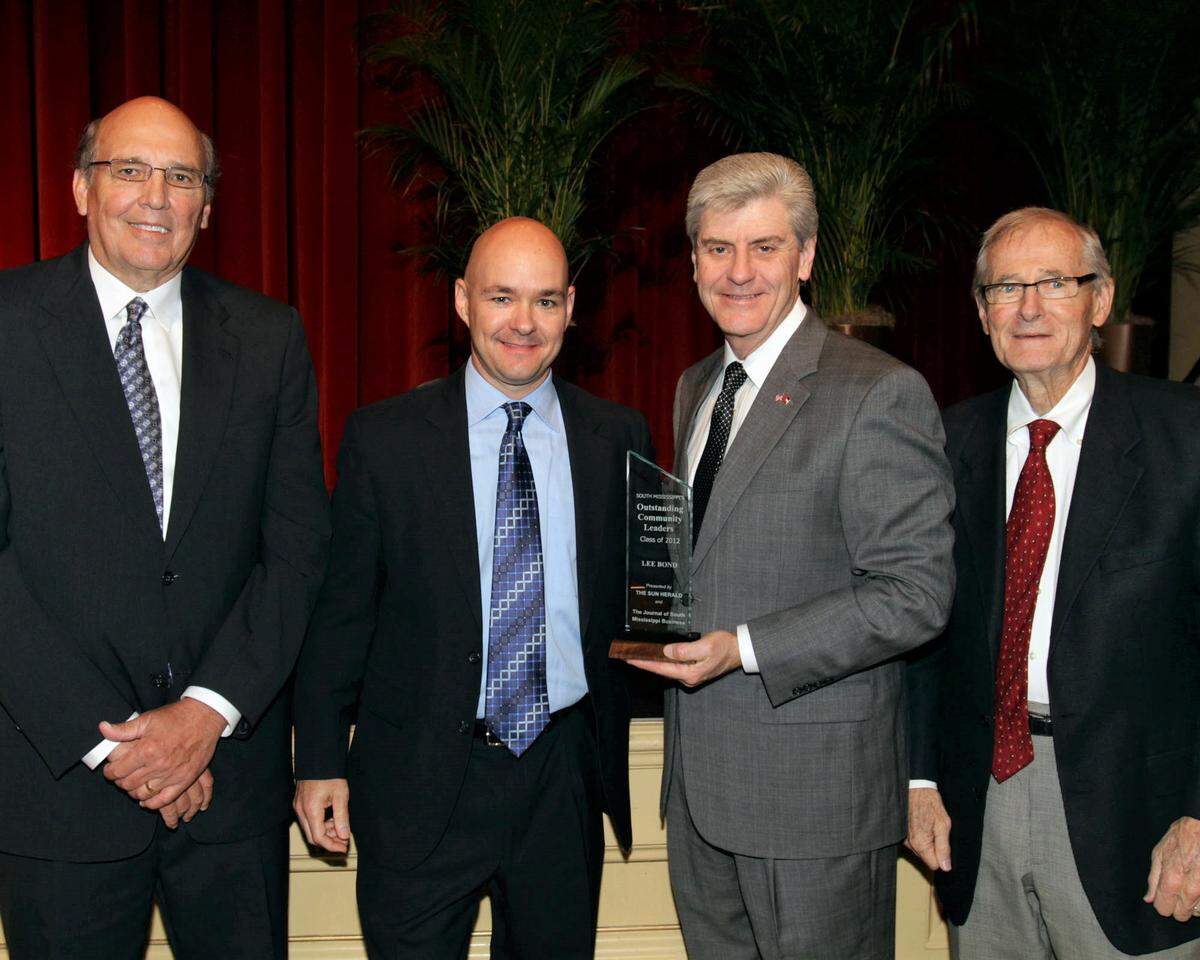
In 2013, Bond was named one of the Outstanding Community Leaders in South Mississippi and inducted into the Roland Weeks Leadership Hall of Fame.
The same year he switched careers. He was hired as chief financial officer at Singing River Health System, which needed his help to right its finances.
“I don’t have any magical superpowers,” he said. “I’m just a finance guy who believes in service.”
Morale was low, Bond said. A new audit firm turned up an $88 million shortfall from years of unpaid patient bills that couldn’t be collected. A restructuring brought a new CEO, CFO, COO and chief medical officer.
Bond said he was the one who brought to light the lack of funding that he said started five years before his arrival.
Hospital officials were accused of stopping to fund the employees’ pension plan without informing them and they were sued, along with the hospital. After years of court battles, the case was settled.
Bond said he also was the whistleblower on the pension lack of funding, and said he worked with opposing lawyers to salvage the plan.
The financial turnaround came pretty quickly and with painful decisions. A 2015 audit showed SRHS went from losses of more than $30 million a year to making a slight profit of $690,000 over two years.
The hospital system did it by laying off 124 people, reducing salaries and benefits by $30 million, closing clinics, cutting expenses and collecting unpaid bills.
Two years of COVID in MS
The turnaround wasn’t just financial, Bond said, but came about with changes to culture and service at SRHS.
He was known to send motivational emails to the entire staff even before March 2020, when the coronavirus changed the public’s perception of nurses and doctors as both healers and now heroes.
Despite long days and nights at the hospitals, Bond said he was able to stay healthy and not get COVID-19 thanks to vaccinations and “rigorous handwashing.”
But suffering was all around him. When Cheryl Smith-Longfellow, a registered nurse at Ocean Springs Hospital, died from the coronavirus, the hallways were lined with hospital staff keeping vigil as she passed.
“Cheryl was a beloved member of our Singing River Strong family,” Bond said at the time. “No words can describe the pain our family feels today.”
He fought for physical and financial help for his staff and all nurses in the state during the nursing shortage that became more acute with every spike in COVID-19 cases and deaths.
Keeping the faith
Bond said his faith has brought him through all the challenges he’s faced.
“God has really blessed me in my life,” he said.
He also took his motivation out into the community, serving on the board of directors for the Jackson County Chamber of Commerce, the Gulf Coast Business Council, the Bacot-McCarty Foundation, Pascagoula River Audubon Center and others.
“I enjoy motivating and leading teams to victory,” he said.
This story was originally published March 4, 2022 at 10:03 AM.