Hospitals beg MS for help during nursing crisis as omicron rages. Will lawmakers listen?
CORRECTION: Editor’s note: Singing River officials said the chief proposal to curb the statewide nursing shortage crisis is a $50 million allocation of American Rescue Plan funds. The original version of this story said the $50 million proposal was from CARES Act money. The story has been adjusted to reflect the change.
Though flushed with extra money, Mississippi elected officials have remained mum to the pleas of Gulf Coast health care leaders for funds to boost their systems that sit on the verge of collapse because of staffing shortages.
Singing River Health System’s officials said the last they’ve heard from state leaders is that the chief proposal to curb the statewide nursing shortage crisis is a $50 million allocation of the over $3 billion Mississippi received in federal pandemic relief cash to be dispersed to all front line health care workers.
This means that every nurse, EMT, nursing home staff member and respiratory therapist, among others, would receive just under $1,000 in American Rescue Plan money to stay at Mississippi hospitals.
The proposal wouldn’t target the shortage and would do very little to incentivize nurses– the bonus is a few hours pay at the increased rates hospitals are attempting to keep up with currently, a Singing River spokesperson said.
Singing River has hospitals in Gulfport, Ocean Springs and Pascagoula and other medical clinics and offices across the Coast.
While the pandemic ravaged South Mississippi and overwhelmed hospitals during COVID’s fourth wave this summer, Singing River CEO Lee Bond in August proposed a plan that would use a portion of any available federal COVID relief funds to retain front line health care workers across the state.
He said the reportedly leading proposal would offer a fraction of the funds and not provide what it would take to retain nurses in the state.
“We understand the Legislature is working on some options, and while we are unrelenting in our plea, we are cautiously optimistic that everyone will work together to allocate closer to 25% instead of only 3% of the 1.8 billion which was intended for and required to help save our lifesavers,” Bond said in a statement to The Sun Herald.
Singing River did get an allotment of the Coronavirus Aid, Relief, and Economic Security Act money, to convert some of their Jackson County hospital rooms to negative pressure rooms for COVID patients and some other projects.
“The bulk of federal funds received were simply “advance” payments for Medicare charges that are now being paid back to the government. Point blank: there is no hospital windfall from CARES Act Funds,” Singing River’s CARES Act ask says.
Where is the CARES money going?
Governor Tate Reeves during a Dec. 20 press conference said his allotment of the $1.25 billion Mississippi received in CARES Act money must be used by the end of 2021. The money needs to be used for pandemic relief or to aid essential workers, among other provisions.
About $5 million is left for use, Reeves said, which will be used mostly for a Christmas bonus or hazard pay for law enforcement officers working during the pandemic.
“The remaining discretionary monies at our disposal are just less than $5 million and including this they will be spent by the end of this calendar year, so before Dec. 31,” Reeves said. “And so this is one of three or four things that we’re spending these dollars on as we move toward the end of it.”
Each sworn law enforcement officer who actively served during the COVID-19 State of Emergency and who was employed by state agencies as of November 30, 2021 will receive $1,000 for putting their “own health on the line and risked increased exposure to COVID-19.”
Earlier this year, a Legislative subcommittee charged with providing input on how lawmakers should spend pandemic relief said they received nearly $7 billion in requests from local governments, state agencies, universities and nonprofits.
Reeves has remained quiet on whether CARES funds will be dispersed to hospitals to address the staffing crisis, however, despite pleas from health care systems for the money.
Legislature with an influx of cash makes decision
A lack of executive action on the nursing shortage means the Mississippi Legislature will have an outsized influence on the outcome of the crisis.
Ahead of the start of the 2022 legislative session on Jan. 4, Mississippi is sitting on an unprecedented $4.2 billion in unused funds.
Lt. Gov. Delbert Hosemann has said such a large amount of unallocated funds had “never been seen before in Mississippi, and I don’t think will be seen again.”
Mississippi House Speaker Phil Gunn said on an episode Super Talk Mississippi that he’s met with Bond and other hospital administrators on the Coast about nurse retention plans and is preparing to offer some of the federal relief money to mitigate the crisis.
“We have actually proposed and drafted a bill that will allow a portion of that $1.8 billion to be used going to the Department of Health, then disseminated to the hospitals and allow them to enter into contracts with health care workers,” Gunn said.
Omicron spread is bad for hospitals
Bond said that because Singing River and most other Mississippi hospitals are not-for-profit, they don’t have enough money to continue spending on nurse salaries in order to stay open.
“We’re in the least healthy state, in a state that’s not wealthy, and a state that has not expanded Medicaid. And because of all of those factors, we have less money coming in,” Lee Bond said.
His system cannot afford to compete with what lucrative travel companies are able to offer.
Jessica Lewis, Singing River’s executive director of human resources told the Sun Herald in November that to retain talent, the health care system has spent over $10 million out of pocket on incentives in the past six months.
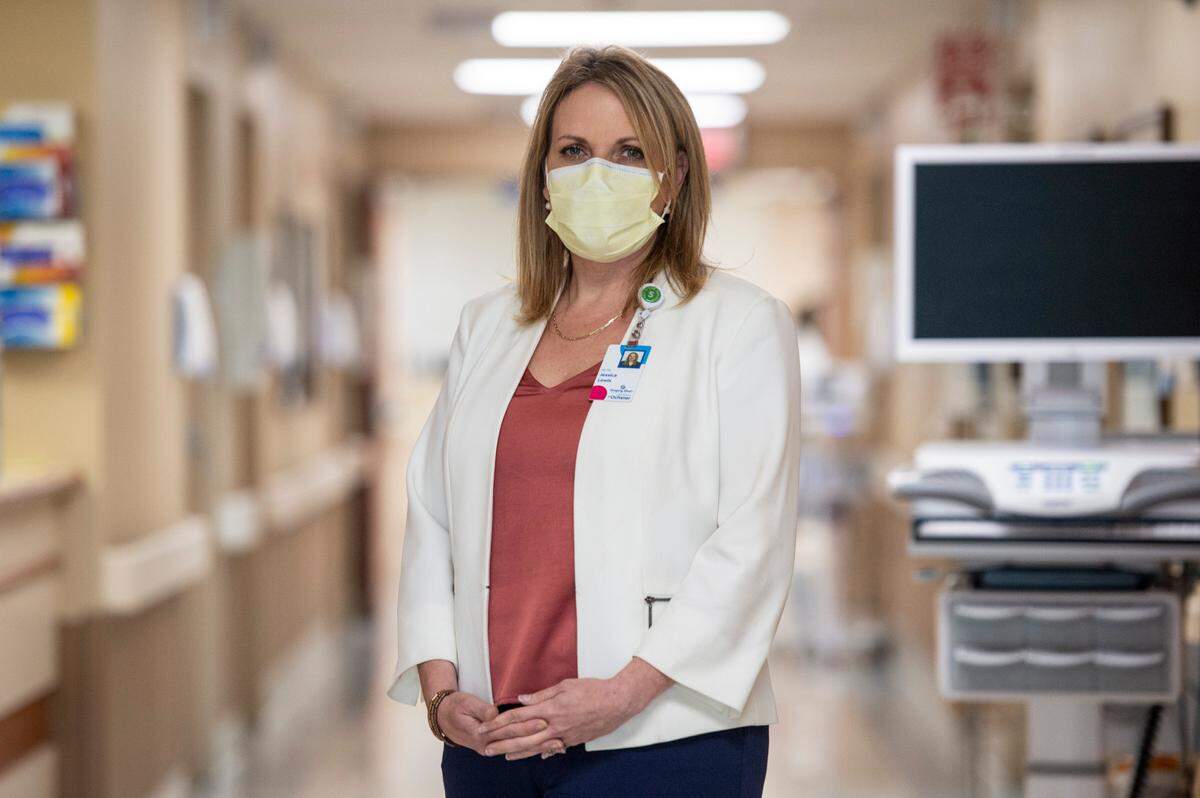
This money has been spent on overtime work rates, mostly. Lewis said a standard nurse works 36 hours a week but if they pull an extra day, Singing River pays nurses in critical areas like the med-surge, ER, ICU, respiratory and labor and delivery units an additional $400 per shift on top of any overtime work rates.
Singing River is also offering up to $15,000 sign-on bonuses, $2,000 travel incentives, flexible scheduling and other perks for new nurses.
“Right now, the incentive that we’re offering our employees for helping out and pulling the extra shifts and doing extra things is truly coming out of our bottom line as a nonprofit organization,” Lewis said.
Federal or state assistance is the only way they will remain operable, especially as the newly emerging omicron variant will increase hospitalizations in the health system crumbling in the aftermath of the delta variant.
“We’re really hoping if we can get this money, it’s going to allow us to offer those incentives to our existing employees,” Lewis said.
This article is supported by the Journalism and Public Information Fund, a fund of the Gulf Coast Community Foundation.
This story was originally published January 2, 2022 at 8:30 AM.