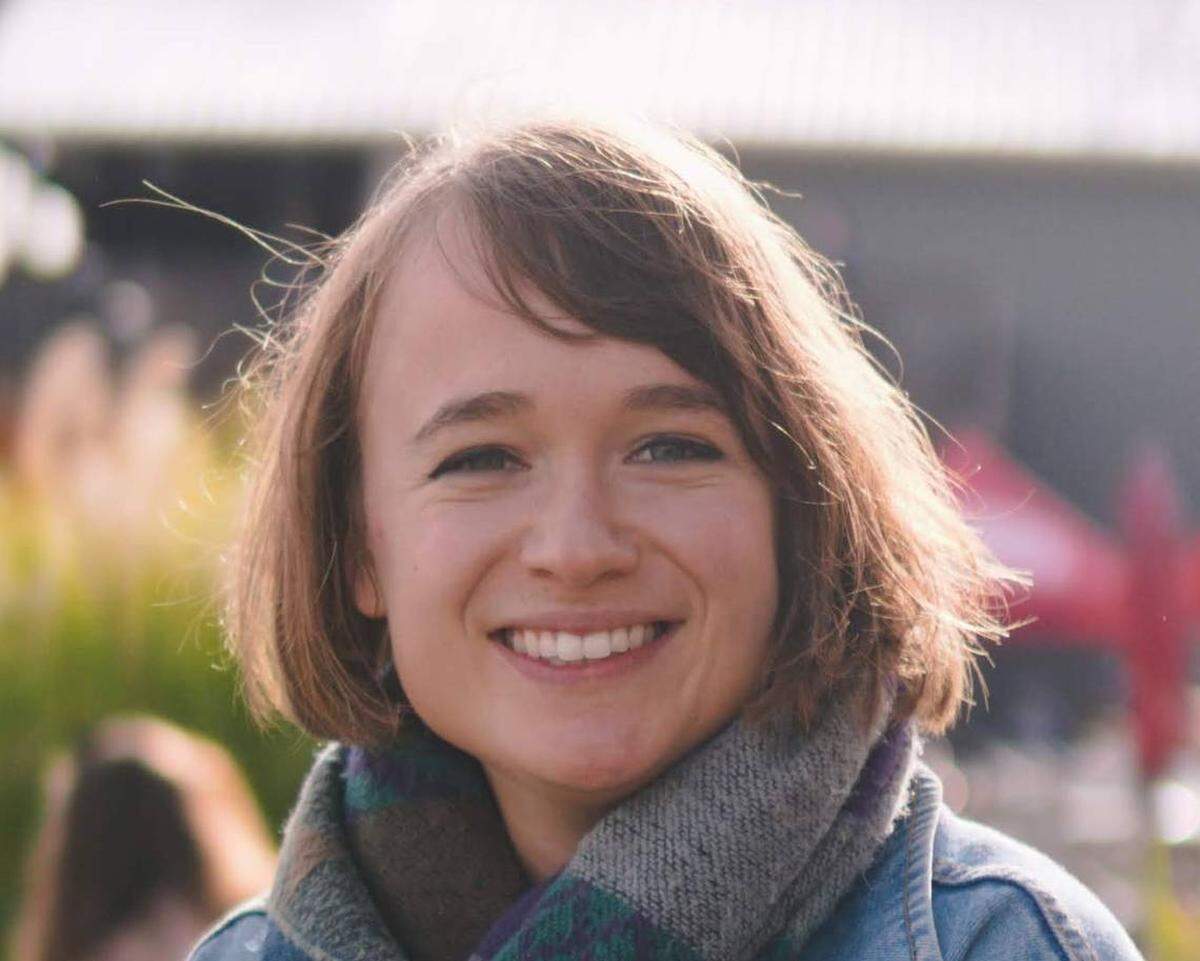
America’s political divide cuts through MS Coast Vietnamese families, young voters say
A few months ago, Skylar Nguyen attended a family gathering that almost came to blows over politics.
Three generations of the high school senior’s family had gathered at her grandmother’s dining room table in St. Martin to spend time with an uncle visiting from Las Vegas.
The conversation soon turned to politics, and the disagreements cut cleanly along generational lines.
Some of Nguyen’s cousins, all of whom are in college or have college degrees, said they thought the coronavirus pandemic demanded a national shutdown. The older family members, many of whom own small businesses, countered that they had already suffered during the shutdown in March and April.
The Black Lives Matter movement came up, too. The older family members said the protests that summer had been violent; their children countered that they were mostly peaceful.
Then it escalated: older relatives dismissed younger relatives’ views as lacking independent thought.
“It was, ‘You’re a Democrat!’” Nguyen said of the reaction some of her cousins got.
“Whenever it got to that point of almost being physical, at that point I was like, ‘We need to head home,’” Nguyen said.
The family gathering was over, but the bad feelings over the political disagreements remain. Nguyen said one of her cousins still hasn’t come back to family events.
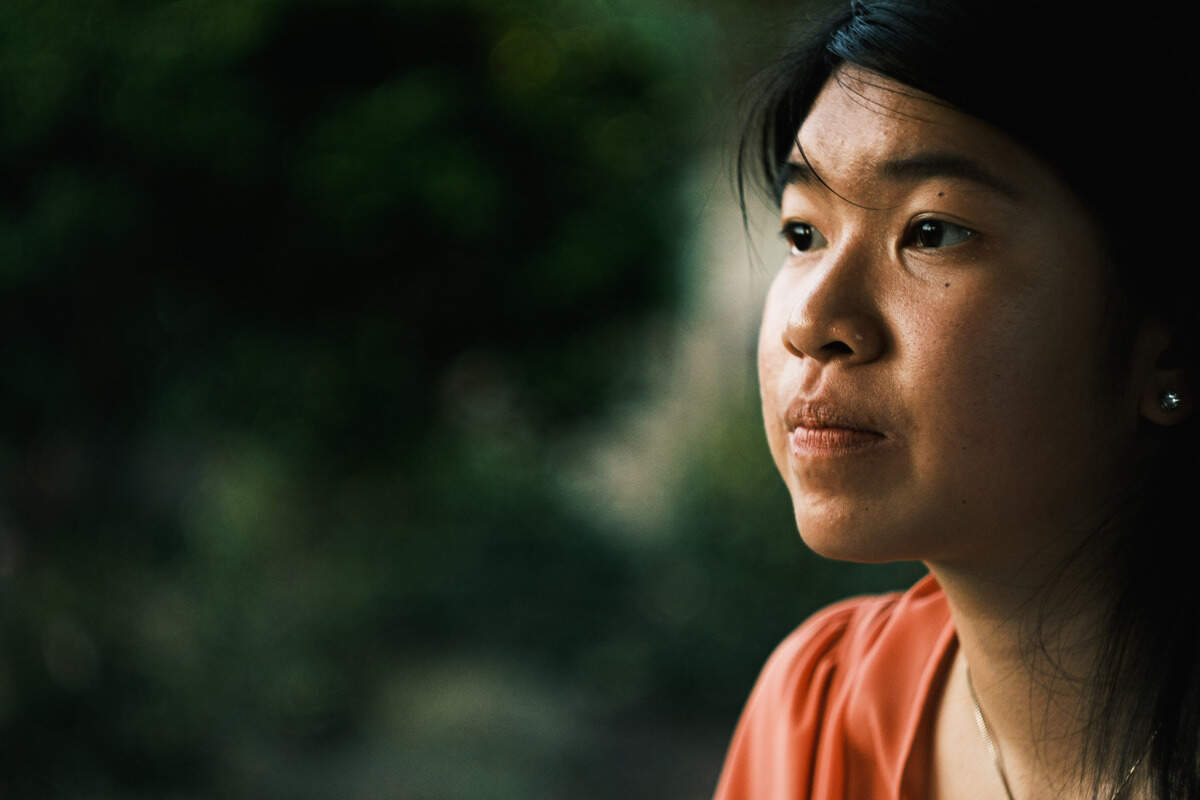
Across the Coast, young Vietnamese Americans like Nguyen, who will vote for the first time on Nov. 3, are seeing the country’s sharp political divide cut through their own families. The Sun Herald spoke with nine Gen-Z and millennial Vietnamese Americans who are supporting presidential candidate Joe Biden and the Democratic Party, while their parents and older relatives are eager to vote for President Donald Trump, a Republican.
For many of them, the 2020 election has cast into relief the cultural differences they have with their parents who immigrated to the United States after the Vietnam War. Discussions of politics sometimes take place across a language barrier. They reveal opinions rooted in divergent life experiences and informed by separate sources of news and analysis.
“It almost feels like a dead conversation,” said Nguyen, who plans to vote for Biden, while her father supports Trump.
Nationally, the Asian American Voter Survey shows that Vietnamese Americans are likelier than any other Asian national origin group to support Trump: 48% of respondents said they planned to vote for Trump, compared to 36% who said they would vote for Biden.
But that figure obscures a generation gap. Among Asian Americans ages 18-34, 60% plan to vote for Biden, compared to just 20% for Trump. (The generation gap exists in other groups, too: among all American voters under 30, 59% say they’ll vote for Biden and 29% for Trump.) Young, progressive Vietnamese Americans congregate in Facebook groups like “Asian Americans with Republican Parents Support Group” to share experiences discussing politics in their families, and even translation help for broaching topics in Vietnamese.
Observers like Baoky Vu, an Atlanta, Georgia, resident with decades of experience in Republican politics, say young voters’ support for Democrats shows an important shift under way in Vietnamese American political attitudes.
Vu’s career included outreach to Asian-American voters during the George W. Bush administration, and in 2016 he became a Republican elector for the state of Georgia. After Trump won the nomination, he resigned his position. This election cycle, he has joined other Bush 43 alumni to endorse Biden.
Vu, who spent time on the Coast helping with translation efforts to assist Vietnamese fishermen after the BP oil spill in 2010, sees in young voters the possibility of a more vocal constituency in Coast politics moving forward.
“I think the younger generation, they are now speaking up,” he said. “The younger generation is more progressive, and they’re going to vote.”
Fleeing communism for the Coast
Like most Vietnamese communities around the country, the Coast’s began to grow in the years after 1975, when Communist North Vietnam took control of Saigon and reunified the country. Hundreds of thousands of Vietnamese refugees began arriving in the United States. The journey from Vietnam often involved a dangerous trip by boat and a lengthy stay in a refugee camp in the Philippines or Indonesia.
Up to 200,000 people died at sea, including several of Skylar Nguyen’s aunts and uncles.
Some who arrived in the United States had been officials or soldiers in the Republic of Vietnam, and everyone had chosen to flee communism. The Republicans, especially under Reagan, were the party of anti-communism.
“Many of the South Vietnamese still blame the US and the Democrats for betraying them in the 1970s when they cut off aid,” Vu said. “Those are the many reasons that collectively have hardened the older generation’s stance against any Democrat.”
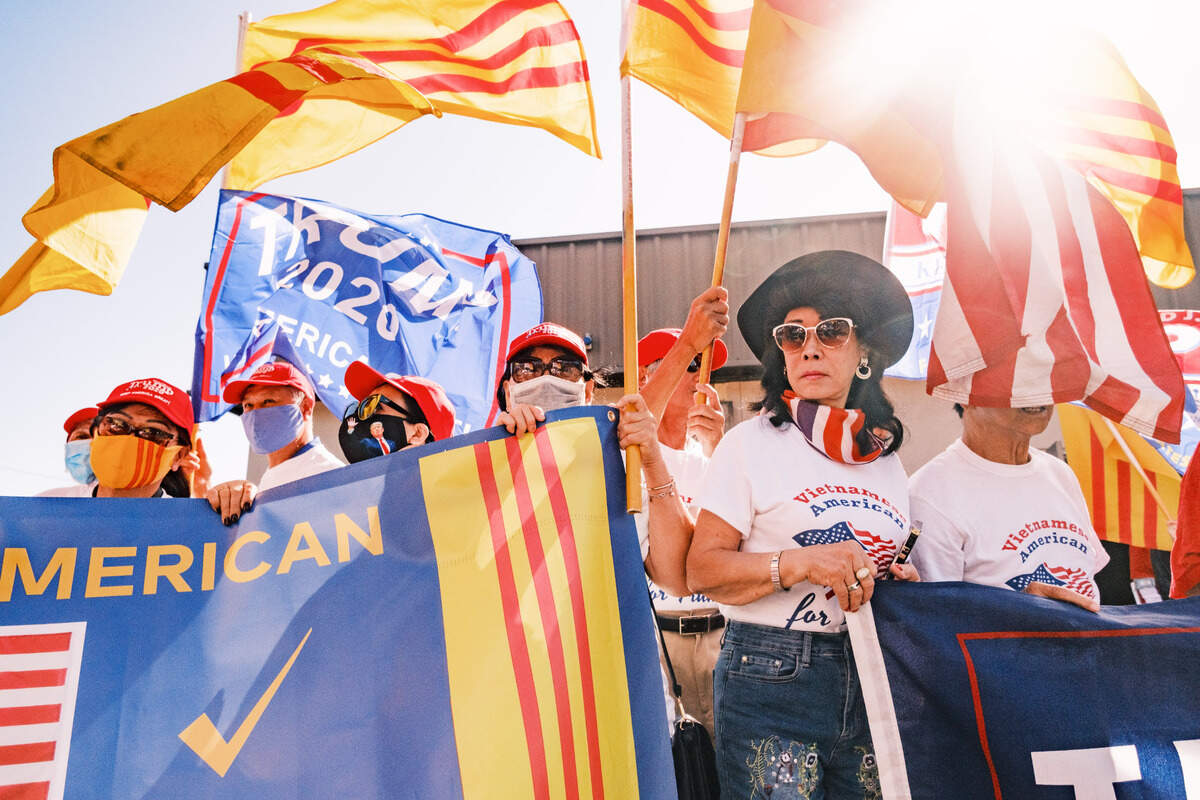
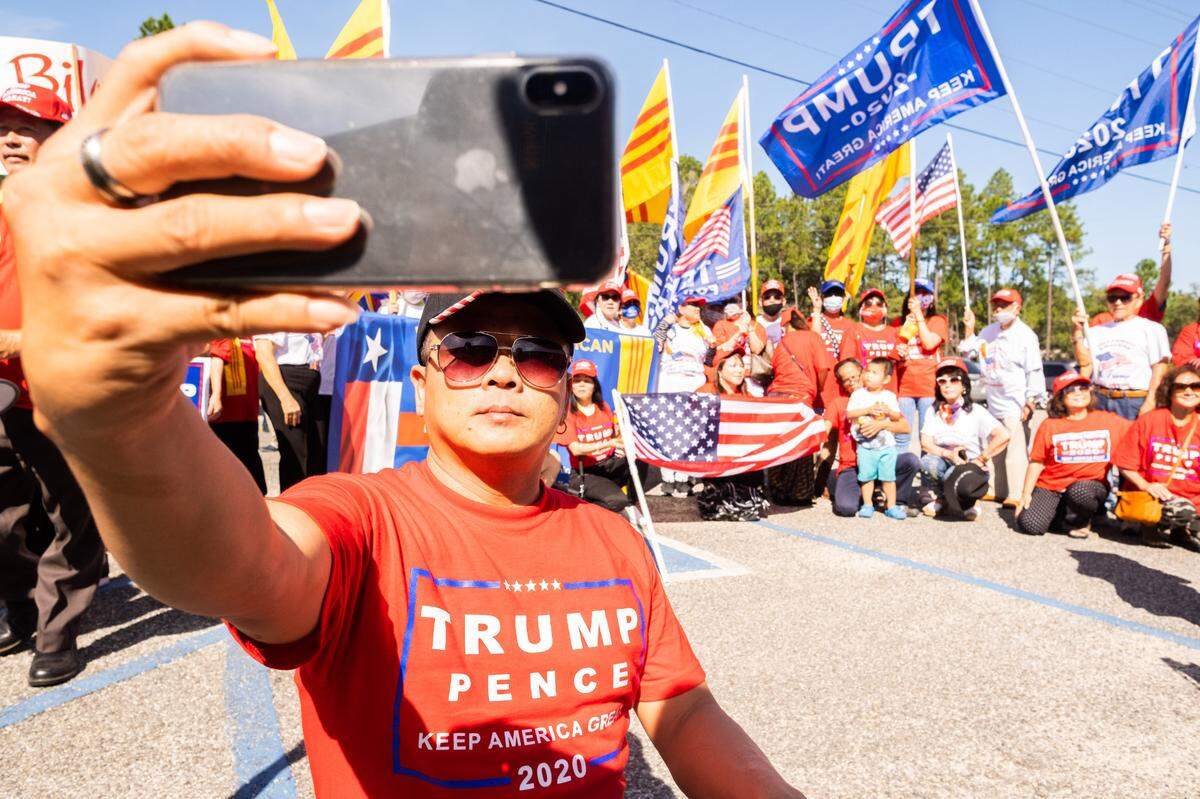
That history remains a powerful influence. At the Trump rally hosted by members of Biloxi’s Vietnamese American community earlier this month, attendees equated support for Trump with opposition to communism. They waved flags for the United States, South Vietnam, and Trump.
“We’re refugees,” said attendee Thomas Vu, who came to Biloxi from Vietnam decades ago. “We don’t like communism. That’s why we support President Trump.”
Attendees also said their experience with communism deepened their suspicion of China, historically a military rival and occupier of Vietnam, and they felt Trump was standing up to the country.
But Hanh Hua, who grew up in Mobile and now works there as a real estate agent and political organizer, sees her family’s experience as refugees and new Americans as another reason to support Democrats.
“All of these people, including myself, benefited from all these social programs that Democrats are champions of,” she said.
Educations in diversity
To Tomy Duong, a Biloxian who graduated from the University of Southern California and is now working remotely from home during the pandemic, communism seems a distant threat.
“We don’t really care as much about communism as our parents do, because our parents lived through the Vietnam War,” Duong said.
Instead, their views on politics were shaped by educational experiences at diverse high schools on the Coast, through extracurricular programs with students from around the country, and at universities with students from around the world.
Young people interviewed by the Sun Herald said that those life experiences contributed to their interest in racial injustice in the United States and support for the Black Lives Matter movement— an issue that has divided Vietnamese American communities across the U.S., including in Houston.
Skylar Nguyen said that most of her friends growing up were Black or white, because there weren’t many other Asian kids in her area. She attended Gautier High School, where a plurality of students are Black, before transferring to the Mississippi School of Math and Science. She was startled by how she heard some Asian students who attended other high schools describe Gautier.
“That’s a ghetto school,” she says she was told.
That experience served as her introduction to anti-Black racism. Over the past few years, she’s read about police killings of Black people and discussed experiences of racism with Black friends. She supports the Black Lives Matter movement, but her parents are more skeptical.
Nora Nguyen-Beique, 36, said she had tried explaining to her slightly-older brother-in-law, who’s generally apolitical but has expressed support for Trump, the concept of the “model minority” myth: that the success of Asian immigrants in the United States has been used to advance the argument that all people of color, especially Black Americans, have an equal chance to succeed.
“He doesn’t think that’s real,” Nguyen-Beique said.
(Another wrinkle in the “model minority” claim that Asian success proves the fairness of American systems: aggregate data hides serious discrepancies between national origin groups. Southeast Asians in particular tend to experience poverty at high rates.)
Duong said he talks to his mom about the injustices Black Americans have experienced for centuries, from slavery to disenfranchisement to racist housing policies.
“My mom doesn’t see that, because she says, ‘I came here from dirt poor Vietnam, made a living for myself, here I am thriving— how come they can’t do it?’” he said.
A language barrier at home and in the news
Many young voters interviewed by the Sun Herald were forced home from school by the pandemic. That gave them plenty of time to talk politics with their parents, but few opportunities for real persuasion on either side.
Jenny Nguyen, who finished her spring semester at the University of Pennsylvania at her family’s house in Biloxi, developed a strategy for broaching political topics when she disagreed with her parents.
“To make sure that I was emphasizing I wasn’t coming from a place of disrespect, I would say exactly that, but in Vietnamese,” she said. “I would try to keep my voice as low as possible, because I know that even if I’m not yelling, any increase in my voice volume indicates, this is opposition.”
She said that the dramatic increase in hate crimes against Asian people in the United States as coronavirus spread around the country also helped her mom understand discrimination against Black Americans when Black Lives Matter demonstrations erupted a few months later.
“She felt as though, Ok, I can put myself in their shoes,” Jenny Nguyen said.
But that was the only time their discourse changed anyone’s mind.
Peter Nguyen, a student at the University of Mississippi who is living with his dad on the Coast for a year, avoids politics altogether. His dad often watches conservative Vietnamese pundits on Facebook live. Peter goes to his room and puts on headphones to listen to progressive commentators on Twitch.
Recently, his voter registration card arrived in the mail. As his dad handed it to him, he steeled himself for what he knew was coming.
“He said that I should vote for Trump and not vote for Democrats,” Nguyen said. “I was like, yeah, yeah, yeah, mindlessly saying yes to kind of finish the conversation.”
Conversations about politics are complicated by the language barrier. Duong can’t always get his point across to his mom when he’s speaking Vietnamese.
“If I can’t explain all that I want to explain and help her get to the middle of it, I get really frustrated,” he said. “Sometimes we just call it quits there. We just agree to disagree.”
Fighting fake news
That language barrier also means that parents and children are often consuming completely different news sources. Mainstream news sites like the AP, CNN and the Washington Post aren’t typically translated into Vietnamese. Vietnamese-language newspapers, television and radio stations, and increasingly Facebook pages and YouTube influencers fill the void. Like older Vietnamese Americans in general, many of the voices lean right.
Viral misinformation circulates in Vietnamese, too, from QAnon to claims about Trump and Biden. One popular narrative is that Joe Biden opposed welcoming southeast Asian refugees to the United States after the Vietnam War.
Jesse Tran, a high school senior in Biloxi, said that point is his dad’s number-one voting issue. Tran is still making up his mind on politics, he said, but he leans left. His father’s views are clear: he attended the rally in Biloxi, waving American and Trump flags from his truck, to show support for the president.
“‘We don’t want him, we want someone who will let our people in to escape communism,’” Tran said of his dad’s thinking on Biden.
According to a Vietnamese-language fact-checking site set up by progressive young Vietnamese Americans, the claim is false. VietFactCheck says that back in 1975, then-Sen. Biden wanted more information about how the money to resettle refugees would be spent, and he opposed further aid for the government of South Vietnam. But he voted in favor of the bill that brought the first 130,000 refugees from South Vietnam to the United States in committee. The website presents this article and all of its others in both English and Vietnamese.
VietFactCheck was set up by PIVOT (The Progressive Vietnamese American Organization), a nonprofit that has been working to increase Vietnamese American political participation since 2017. It’s not the only translation project aiming to increase access to mainstream political news for Vietnamese speakers: A recent graduate of the University of Southern California launched a website, “The Interpreter” (Người Thông Dịch), to create and aggregate Vietnamese translations of journalism published in English.
PIVOT also publishes a bilingual voter guide, Get Out the Vote videos featuring well-known Vietnamese Americans, and VietAmVote, to provide information on registering and voting in both English and Vietnamese.
Hanh Hua of Mobile is a candidate support co-chair for the organization.
“What we’re trying to do is empower people, fighting misinformation,” she said.
Separate trips to the polls
Sitting on her back porch in a Gautier subdivision earlier this month, Skylar Nguyen reflected on what her parents had accomplished. They had rebuilt their lives after Hurricane Katrina, helped her two younger sisters through a serious medical issue, and always made a point of taking their kids on weekend outings to the park or to the zoo in New Orleans, even as they spent long hours at the nail salon they own.
They provided for their family a life very different from the one they had fled — and a life that gave their daughter a very different perspective on the world.
Skylar turned 18 on Oct. 20, just in time for the election. When she told her father she planned to vote for Biden, he exclaimed, “That’s despicable!”
Still, they’ll be living in the same house on Election Day, and voting at the same precinct. Was there any chance they’d carpool to the polls?
“Absolutely not,” she said.
This story was originally published November 1, 2020 at 7:03 AM.