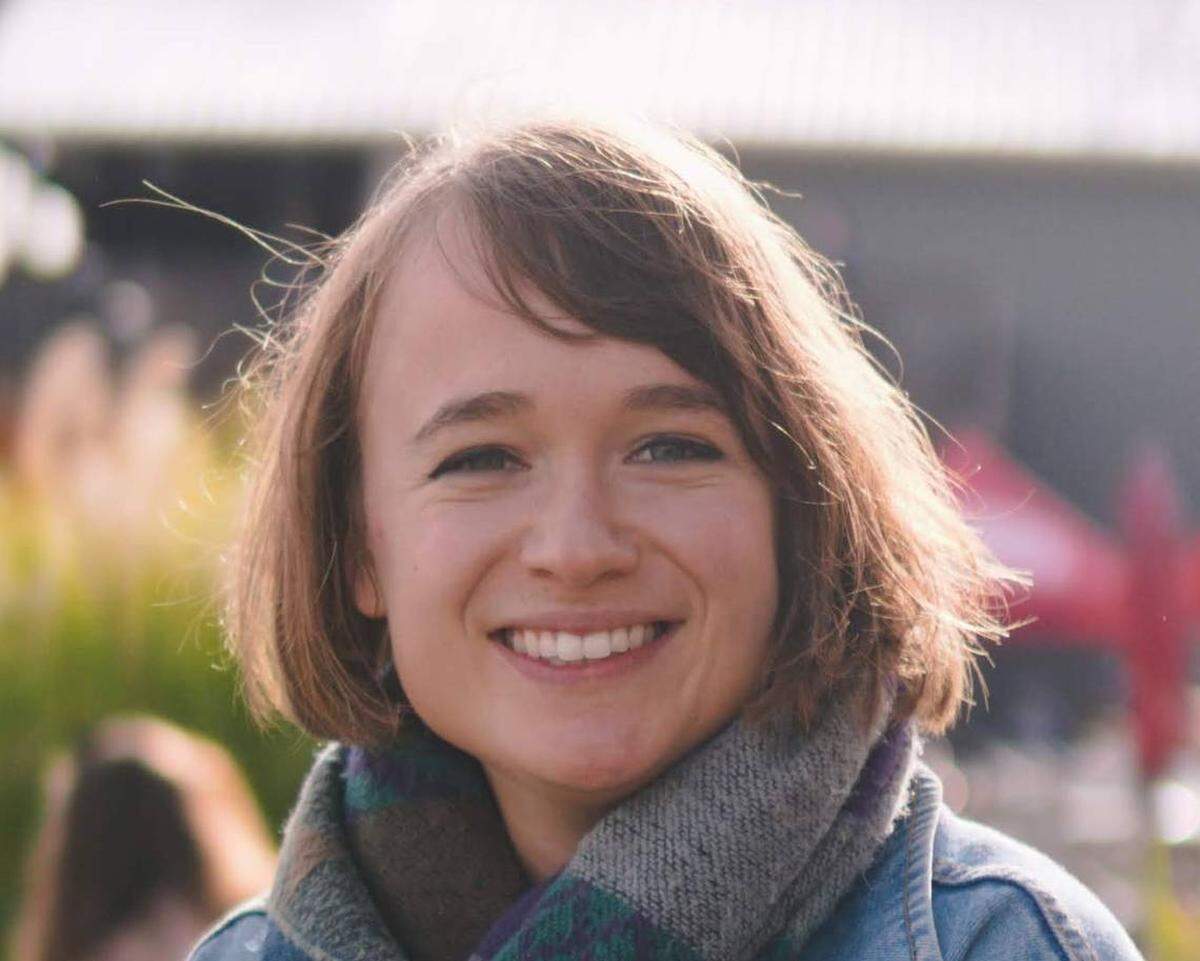
Thanks to a Coast engineer, MS hurricane guide is in Vietnamese for the first time ever
During hurricane season, coastal Mississippians rely on the most accurate, timely information about weather forecasts, storm surge predictions and evacuation orders.
Lives are on the line.
But what happens when all of that information is in a language you can’t understand?
For Mississippians who don’t speak English — on the Coast, most people in that group speak Spanish or Vietnamese — the answer has long been: Rely on each other. Official sources, from the state down to the local level, rarely provide translations of disaster information, much less of real-time updates when a hurricane is approaching.
This hurricane season, however, Ingalls Shipbuilding employee Huy Nguyen helped the Mississippi Emergency Management Agency take a small step forward, by translating MEMA’s hurricane guide into Vietnamese for the first time. The guide contains information about key emergency supplies, hotlines for for traffic and weather updates, and considerations for people with disabilities.
Nguyen got a shout-out, though not by name, during a press conference Gov. Tate Reeves held with Greg Michel, MEMA’s executive director, just after Tropical Storm Cristobal hit the state in early June.
“I just want to thank Ingalls Shipbuilding for assisting us with our hurricane preparedness guide, translating it into Vietnamese,” Michel said. “We’ll be pushing it out very soon, to our population there primarily on the lower three counties of coastal Mississippi.”
Nguyen, a marine engineer, has long filled an extra role at the company’s human resources department, serving as an interpreter and guide for Vietnamese employees who prefer to review documents in their first language. About five years ago, the company asked him to take a look at a contract that had been translated into Vietnamese using an automated program.
“When I reviewed it, I realized one thing: Google only translates word to word, it doesn’t translate the meaning,” he said. “And the position of each word... is incorrect when you translate it into Vietnamese. So I have to reword it to make sure all the Vietnamese people, when they read it, they know exactly what the document means.”
That was the beginning of his translation career. At the start of hurricane season, Ingall’s asked MEMA if they would like Nguyen to prepare a Vietnamese translation of the guide. MEMA said yes, and Nguyen got to work.
Malary White, director of external affairs at MEMA, said the agency had sent boxes of the pamphlets down to the emergency management directors in the Harrison, Jackson and Hancock counties. As Sally approached, MEMA also tweeted out a link to the Vietnamese and Spanish guides.
Amber Hall, MEMA disability integration advisor, said this was also the first year the agency released a Spanish translation on its website, though it had been available by request in the past. The agency also publishes braille and large-print versions of the guide.
“Because everyone needs it and deserves it,” she said.
‘Anything that can help Vietnamese people’
Translating the guide wasn’t difficult, Nguyen said, just a little time-consuming. And he was glad to do it.
“Anything that can help Vietnamese people, that’s what I enjoy to do,” he said.
Nguyen was born in central Vietnam and grew up in Saigon. He first came to the United States as a political refugee in 1992, after spending several months in a refugee camp in the Philippines. His family settled in Mobile, where he still lives today.
Nguyen graduated from college, but many of his fellow refugees didn’t have that opportunity because they had to get to work, he said. And older relatives who joined families in the United States sometimes struggle to learn English.
“Of course I know, you live in the U.S., you have to learn English, but a lot of older people, or the ones who just come over, they still have the language barrier,” he said. “It takes time for them to learn.”
A sign of progress, the guide is also a reminder of how far Mississippi would have to go to provide equal access to information for people who don’t speak English. It appears to be the only information in Vietnamese on MEMA’s website. And Vietnamese and Spanish are essentially nonexistent on the websites of cities and counties that distribute hurricane information.
Too expensive to translate?
According to the Department of Justice, Mississippi has one of the country’s lowest percentages of people with limited English proficiency, at just 1.57%. (Only Montana, West Virginia, North Dakota and Vermont are lower.) In Harrison and Jackson counties, the proportion is slightly higher, at 2.94% and 2.49%.
Vincent Creel, public affairs manager for the City of Biloxi, said that translating information hasn’t been a priority because of the area’s relatively small number of people who don’t speak English and because getting accurate translations can be expensive. The city uses free Google software to translate its web pages into many different languages, but those automated translations can vary wildly in quality. The citywide hurricane preparedness newsletter also has included Vietnamese and Spanish translations of some sections.
“On communicating with Spanish and Vietnamese speakers, could we be better?” Creel said. “A lot better. But do we have the money to do it? No.”
According to Harrison County Emergency Management Director Rupert Lacy, the devastation of Hurricane Katrina showed the importance of providing information in multiple languages. When people with limited English or who were hearing-impaired were living in shelters for months, they sometimes communicated with volunteers and officials by drawing on white boards.
That spurred the creation of “translation boards” that contain common phrases in English, Spanish and Vietnamese, with illustrations as well. The boards are included in the county’s shelter kits.
In the months after Katrina, Biloxi distributed Vietnamese translations of two city-wide special newsletters. That was possible because of a volunteer from California who did the work for free, Creel said.
A ‘self-sufficient’ community
With little in the way of official information in Vietnamese, members of the Coast’s Vietnamese community exchange updates and check in on people with limited English as a storm heads toward Mississippi. It’s been that way for more than 40 years now.
This past weekend, Daniel Le, branch manager for the Biloxi office of Boat People SOS, was working the phones. He called clients who are older or have medical conditions, making sure they had a plan to evacuate if necessary. And he asked them to check in with their friends, ensuring a flow of information he compared to a game of tag.
“Our community has built a network of support,” Le said. “If one person knows something, they let other people know.”
At the Vietnamese Martyr’s Church in East Biloxi, Father John Thang Pham made an announcement at Sunday services, urging everyone to prepare three days’ worth of food and water.
The community’s success in preparing for storms on its own is probably one reason why state and local governments haven’t rushed to invest in translations, Le said.
“This community has been self sufficient,” Le said. “They’re able to thrive and respond to disaster without assistance from the state.”
Sally shifted east, largely sparing Mississippi. But Vietnamese Americans in Bayou La Batre and Baldwin County, Alabama, were hit hard, and by Friday, Le was working to help them connect with resources to get back into their homes.
Nguyen’s home in Mobile wasn’t damaged, but the wind kept him up all night and blew trees around his yard. His wife’s sister and parents had lost power, so they were all staying at Nguyen’s house in the days after the storm. He hadn’t seen any hurricane resources in Vietnamese from Alabama’s government, which made him “a little bit sad,” he said.
“Regardless of what your background is, you all pay tax to the government,” he said. “And when you pay tax to the government, you should have equal treatment.”
This story was originally published September 21, 2020 at 5:50 AM.