
Practicing locks. Planning barricades. South MS teachers adapting to school shooting fears
Caroline Bartlett was scanning the crowd at Long Beach High School’s homecoming dance last month when she heard a loud, sudden pop.
People jumped. But it wasn’t gunfire.
A teenager had stomped on a beach ball.
“We’re just not going to do that,” Bartlett recalled telling the student. “It’s supposed to be a night of fun.”
The noise may not have bothered her a decade ago. But now, horrified by school shootings and exhausted from recent hoax threats, Bartlett and teachers in schools on the Mississippi Coast say even unusual sounds make them tense.
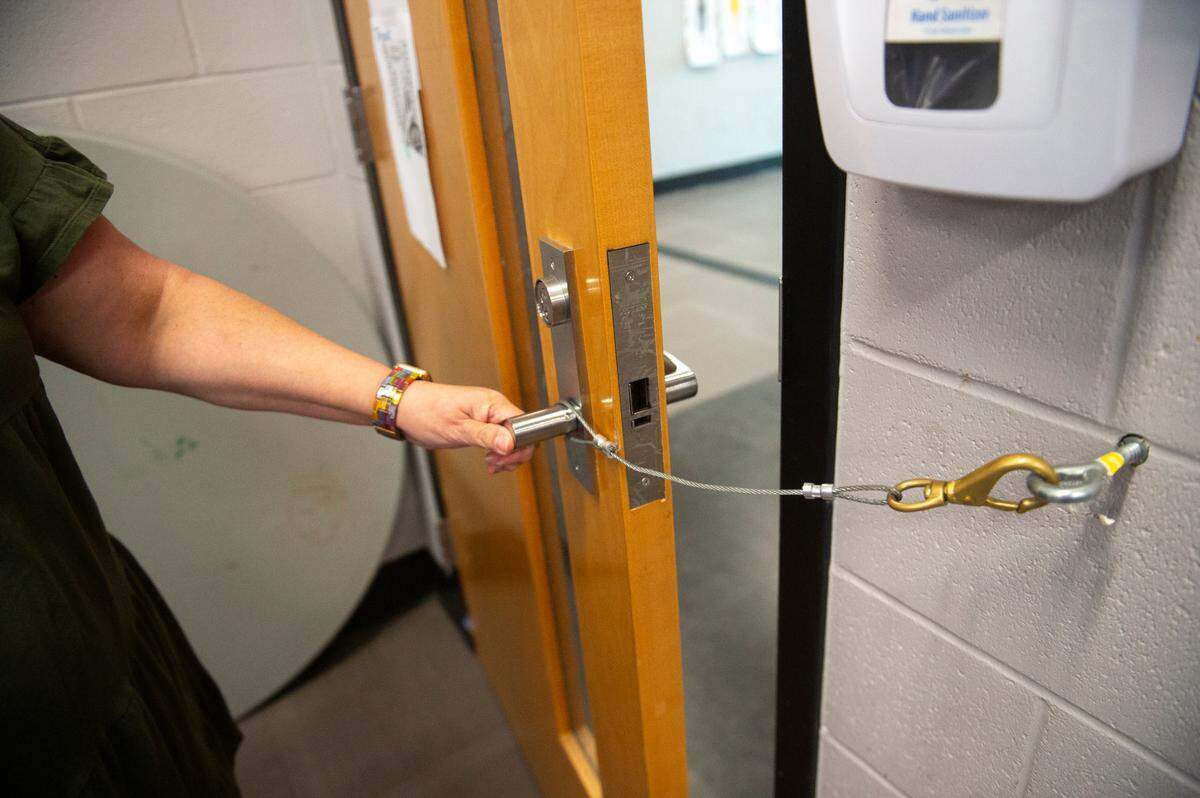
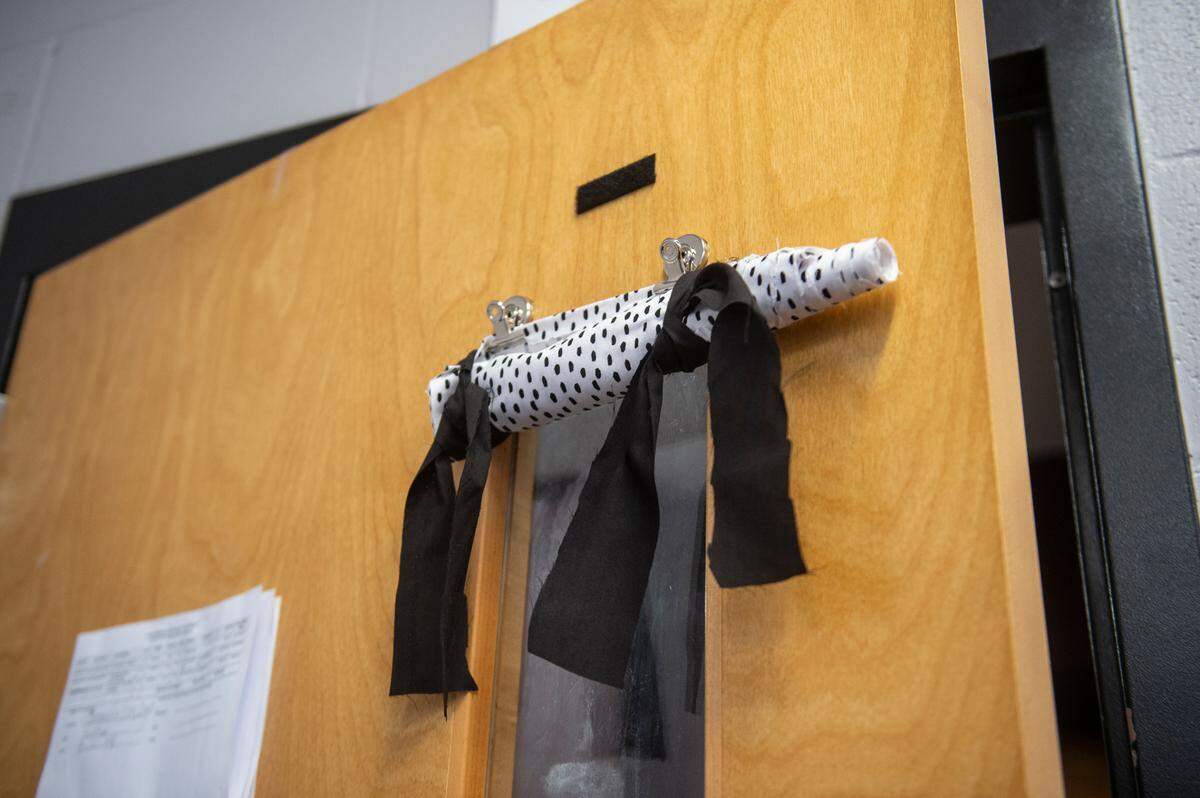
Bartlett practices using the fail-safe lock on her classroom door. Some Mississippi teachers are buying door stop wedges in case they need to fortify barricaded classrooms. Others have learned how to hit an intruder and how to hook a chair behind a door handle. A few are forming support groups.
“Am I more on edge? Yes. Are the kids more on edge? Yes,” said Gabrielle Flowers, a science teacher at Long Beach Middle School. “I think that’s only going to get worse.”
Threats surged on the Mississippi Coast and across the nation last month after police arrested a 14 year old accused of killing four people with a semiautomatic rifle at his Georgia high school. Twenty-one juveniles accused of over 60 school threats were also arrested in South Carolina. Nine students were recently charged for violent threats in the same Florida county where a shooter once killed 17 people at Parkland’s Marjory Stoneman Douglas High School.
South Mississippi authorities arrested a 16-year-old in September who is accused of calling Harrison Central High School twice with threats to “shoot up” the campus. D’Iberville Middle School recently canceled a dance after an untraceable shooting threat. Local districts and police departments have repeatedly sought to reassure nervous families that a national hoax threat spreading on social media was not a credible danger to any Mississippi Coast schools.
School shootings are rare. But the threats are still making Bartlett’s United States History and Government students nervous – and curious. They want to know: What would you do if an intruder got in? Would you grab a weapon? Would we turn our desks over? What do I do if I’m in the bathroom?
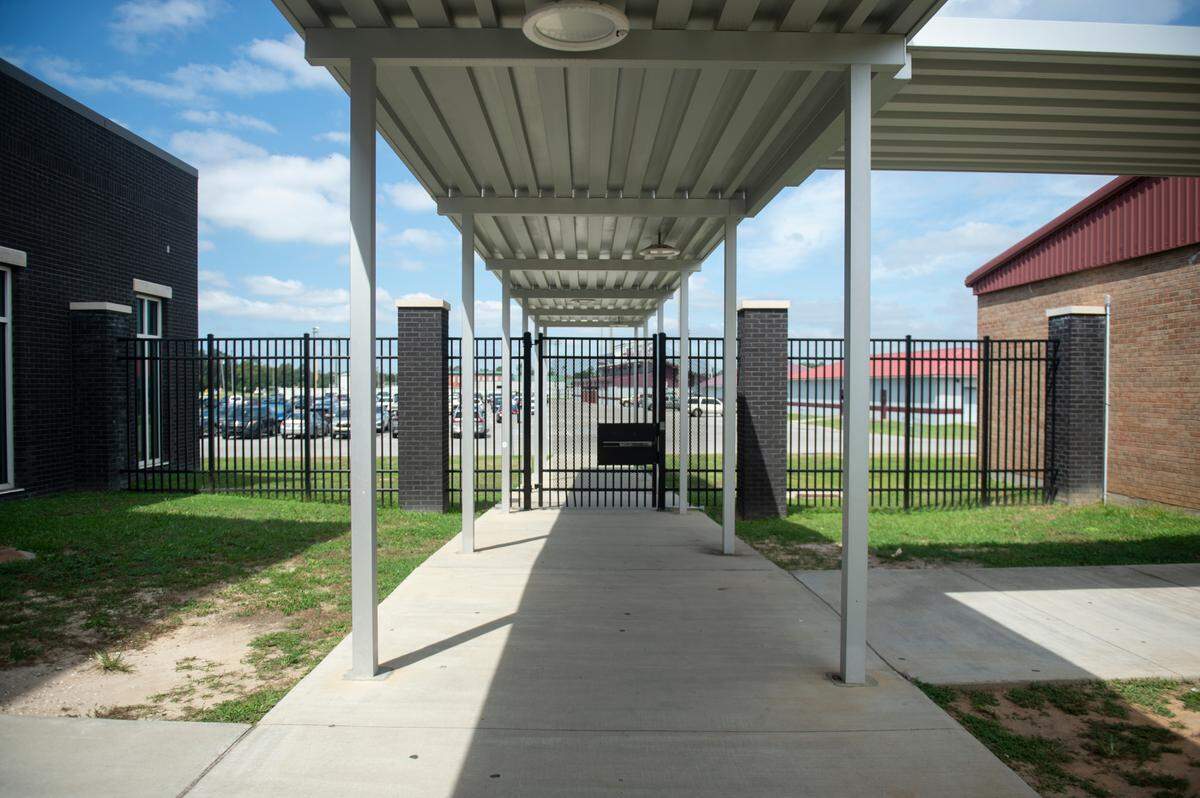
“Teachers will protect you,” Bartlett said recently from her classroom. But that new responsibility has transformed the job she started 21 years ago. After the Parkland massacre, she realized the world expected her to stand in the line of fire, if it ever came. School fences rose up. Doors began locking automatically. A decade ago, some unruly students giggled during lockdown drills. Now, Bartlett huddles with her class in the darkness as police officers walk the halls and shake the handles on classroom doors.
Students usually never know a drill is coming. But this fall, Bartlett clued them in. If they do not know, she said, “they want to call their mom.”
Worry over school shootings is “at the top of a lot of teachers’ minds,” said Erica Jones, president of the Mississippi Association of Educators. Some teachers have told her they start each day by noting their building’s nearest exit, she said.
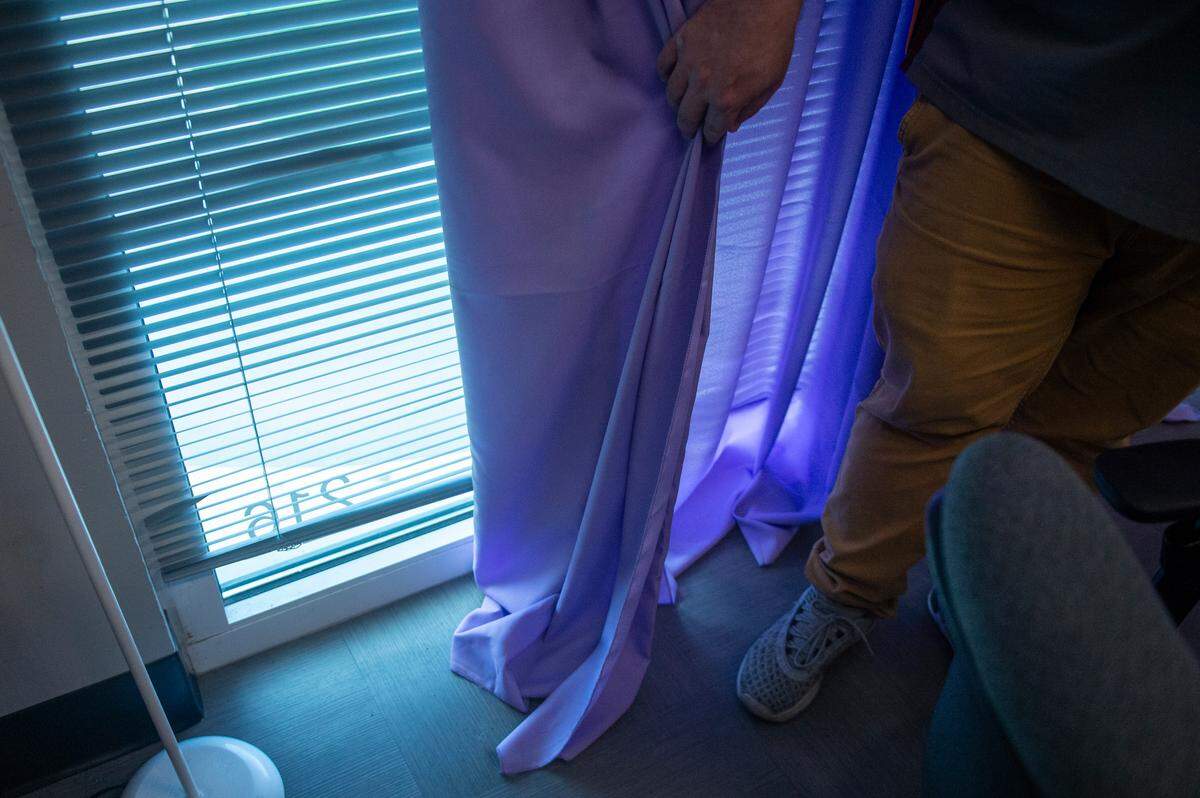
“You start looking at your classrooms in very different ways,” said Louise Smith, the band director at Gautier Middle School. She said teachers returning this summer to decorate their rooms were also thinking about how to stack desks against their door, how to stay away from windows and how they might hide students behind furniture or even inside cabinets if their school came under real threat.
Teachers, Smith said, “dream of changing students’ lives.”
“The fact that our own lives can be in danger is not something that we sign up for.”
Classroom anxiety
Flowers said her students also seem anxious. Some are withdrawn. Others scan the room, tapping their fingers or feet.
Flowers sometimes clicks “not interested” when posts that depict violence in schools appear on her social media. But calming students’ worry is tough when parents help spread posts about unfounded threats online, she said. Some worried parents also do not trust teachers to protect their children.
If a real threat ever came, “I’m going to try to save everyone I can,” Flowers said. “I care about their well-being. I can’t believe people would think that we don’t.”
The worry can disrupt class. Schools often schedule lockdown drills at the end of a period because afterwards, Bartlett said, “everyone is either shell-shocked or not very focused on this World War II lecture.” Some of her students skipped school last month after a hoax threat. “You don’t have to go to the pep rally,” she recently told another student, who was nervous of crowds.
Few would have feared the festivities two decades ago. In 2000, when Jones started teaching in Jackson, she remembers no active-shooter drills.
But one day after school this fall, Jones asked her daughter: “What did you all cover today?”
“We practiced a new intruder drill,” her fourth grader replied.
“It really kind of shook me,” Jones said. “I was expecting her to say ‘I have a vocabulary test coming up’ or ‘we’re working on multiplication.’”
New responsibility
Fear over school shootings has become so ingrained in modern life that past tragedies are now on Bartlett’s U.S. History syllabus. Her government classes often discuss the issue’s political questions. She tries to remind students of the steps Long Beach is taking to keep them safe. But “I don’t think there’s any way to make them lose anxiety,” she said.
Sometimes, overwhelmed by the news after recent shooting tragedies, Bartlett turns off the radio on her way to work.
But the problem returns in her classroom.
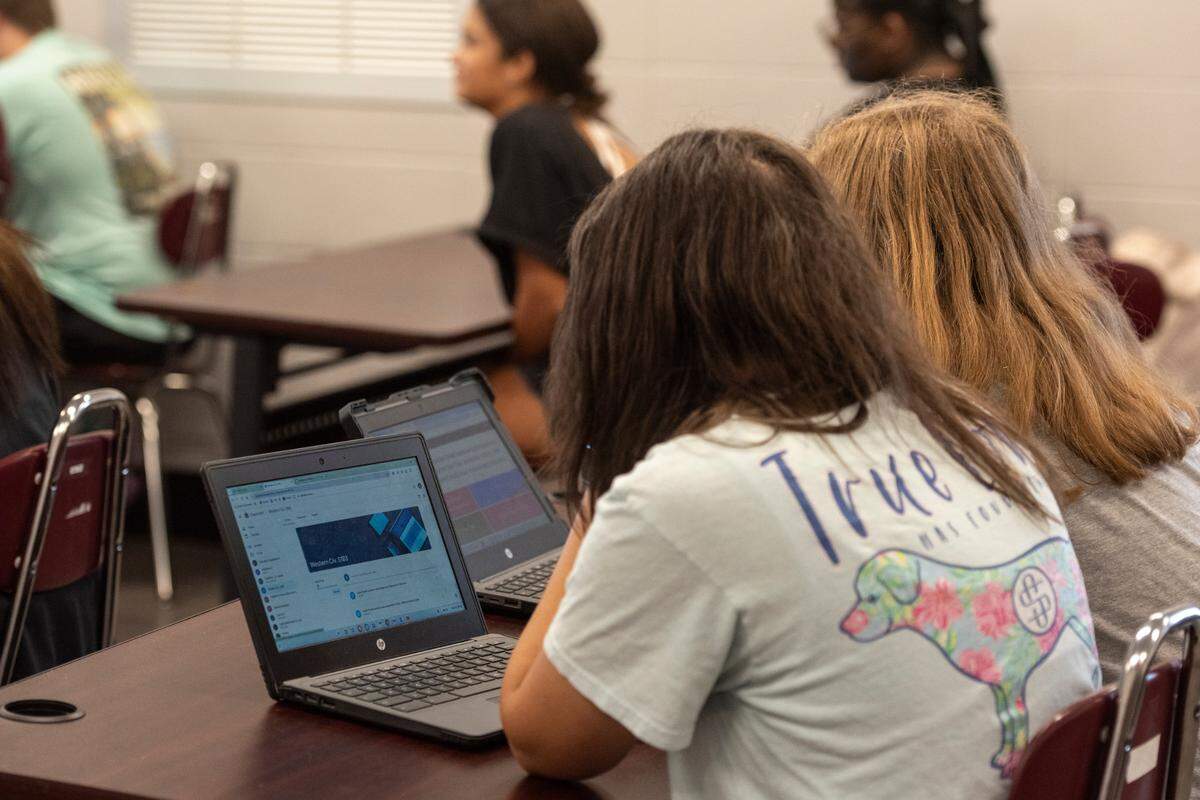
Recently, her class convened a mock Congress. One student wrote a bill calling for more school resource officers in Mississippi.
“I want them to be present in every middle school and high school,” the student wrote.
The bill passed.
“They thought it was important to spend that money,” Bartlett said. A projector shined the assignment, called “protecting the future,” on the wall behind her.
This story was originally published October 1, 2024 at 5:00 AM.