New podcast uncovers flaws in Billey Joe Johnson death investigation
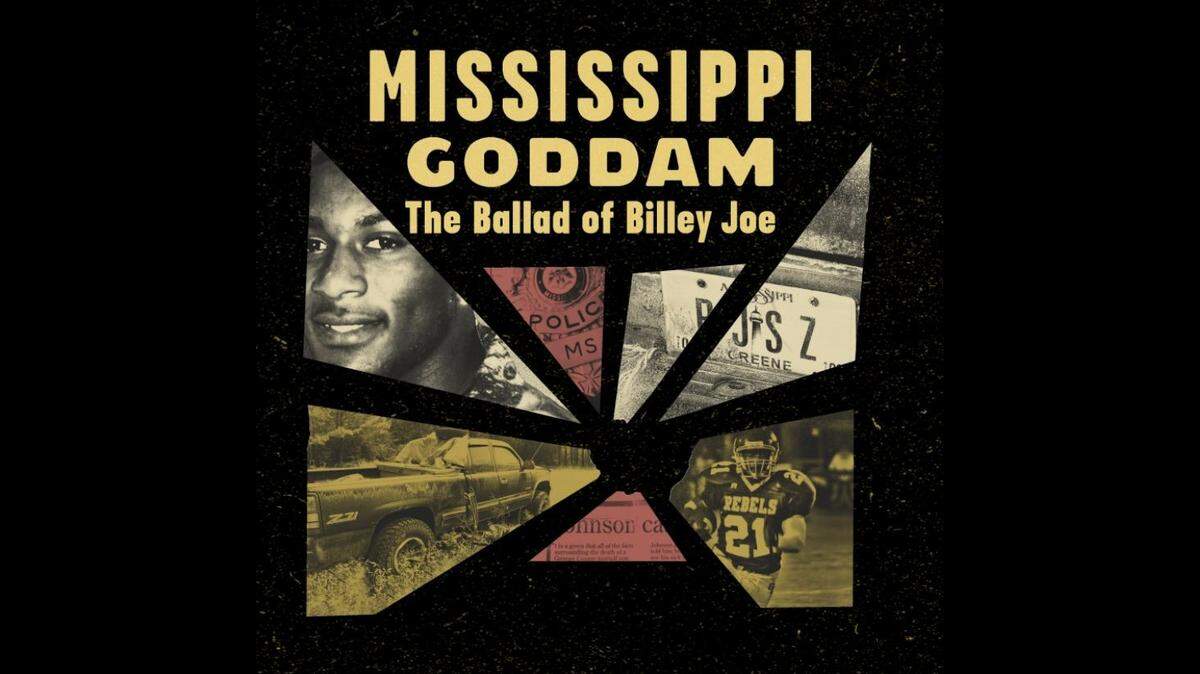
In the first three episodes of the serial podcast: “Mississippi Goddamn: The ballad of Billey Joe Johnson,” host and journalist Al Letson and colleague Jonathan Jones dig deep to uncover troubling findings in the investigation into the shooting death of the Black star athlete from George County.
Letson first heard about the Dec. 8, 2008, shooting death of Billey Joe Johnson Jr. when he went to Lucedale 10 years ago to write about the BP oil spill.
Though years had passed since Johnson’s death, Letson said he knew he had to get involved because he was so moved by the people still questioning the outcome of the investigation in an area in the Deep South long marred by racial injustice.
Letson and Jones would spend three years delving through never-before-seen case files that included 911 calls, audio recordings from witnesses and more.
The series has included interviews with those involved in the investigation, the Johnson family and medical experts called on to do an independent review of the autopsy findings.
Based on what has been found so far, Letson said, “I believe the case needs to be reopened.”
The shooting of Billey Joe Johnson
The Sun Herald first reported on how the running back died of a gunshot wound to the head in the moments after a white George County deputy stopped him for allegedly running a stop sign and traffic light near Mississippi 26.
Authorities initially ruled his death a suicide, but a grand jury later determined the only plausible explanation for his death was that it was an accidental shooting.
Johnson died shortly after Deputy Joe Sullivan stopped him in a business parking lot near the highway.
At the time of his death, Johnson was in an on-again, off-again relationship with a white classmate, Hannah Hollinghead, then 17. She still lives in George County but uses her married name, Hannah Calloway.
The Sun Herald attempted to reach out to her for comment but did not hear back.
In the hours leading up to his death, Johnson stopped by his girlfriend’s father’s house and knocked on the door.
The girl called her mother, telling her someone was banging on the door and trying to break in, but it turned out to be Johnson who ran to his truck when he heard sirens in the area.
The girl’s mother called to report the alleged burglary.
The grand jury ruled that Johnson was not trying to break into the home, but was simply stopping by as he’d done many times before after the girl’s father left for work.
Conflicting autopsy findings
So far, the podcast has uncovered troubling questions about how the investigation was handled and how the results of an autopsy on Johnson differed between the official one conducted by the Tennessee medical examiner, Dr. Adele Lewis, and another conducted by the Division of Pathology within the Department of Justice.
Lewis determined Johnson died of a shotgun wound to the head that came from a glancing blow from the shotgun blast that hit his head near an ear, but listed the manner of death as undetermined.
The DOJ’s full report determined the the shotgun was in his mouth when it went off, either through self-inflicted wound or as a result of someone putting the gun in his mouth and firing.
According to the records, authorities tried to do a forensic test on Billey Joe’s shotgun, but the gun fell apart during the testing so it couldn’t be completed.
“The fact that the medical examiner and the Department of Justice, when they reviewed the case, came up with two different findings, I think, is reason enough for me to believe the case needs to be reopened to find out what happened,” Letson said.
Other inconsistencies, he said, have to do with the timeline of events as outlined in the case files.
An area marred by racism?
“If you thought about the official timeline (in this case), there are just things that don’t make sense,” Letson said. “In a case like this, I think you have to cast the net wider in a lot of ways.”
Why?
Because, Letson said, the history of racism and lynchings in Mississippi as a whole has an impact on investigations such as these, especially for Black families like the Johnsons who feel like authorities never showed them any compassion.
“The authorities never wrestled with the weight of history,” Letson said. “You can’t go to a Black family and say we handled this when they are thinking about what has happened in the history of Mississippi.”
Podcast details: guests, episodes, more
“Mississippi Goddamn: The ballad of Billey Joe” is a serial podcast that delves deep into the issue of race and interracial relationships in South Mississippi and provides expert input on how death investigations in Mississippi were built on a system defined by the tenants of racism.
In the podcast, listeners hear from the medical examiner who performed the autopsy on Johnson, other independent experts who performed their own evaluations based on the autopsy material, and from friends of Johnson who still question the official version of events.
The podcast has brought to light what appears to be flaws in the investigation when law enforcement officials failed to follow various leads, corroborate witness accounts or complete forensic tests in the case.
The series has a new episode weekly, with the fourth installment dropping Saturday.
Among those who are going to be featured in the next episode is retired Mississippi Bureau of Investigation Investigator Joel Wallace, a Black officer who headed up the investigation into Johnson’s death and others.
This story was originally published November 4, 2021 at 5:50 AM.