
Two MS Coast beaches get all-clear, 6 remain affected by high bacteria readings
AI-generated summary reviewed by our newsroom.
- Mississippi Department of Environmental Quality found high Enterococcus levels
- Advisories expanded eastward to include Biloxi beaches, 8 in total across Coast
- DEQ tests advisory beaches daily until Enterococcus levels return to normal.
The Mississippi Department of Environmental Quality has lifted the beach water contact advisories for two of the eight Coast beaches affected by high bacteria readings.
Water samples at the Bay St. Louis and Gulfport Central beaches show the areas have reached acceptable levels. There are still six beach water contact advisories in effect for the Mississippi Gulf Coast currently.
The bacteria are common across the Mississippi Coast, and beaches in Gulfport and westward have been under advisories for much of 2026. The advisories have now spread east, to Biloxi West Central Beach and Biloxi East Central Beach.
The beaches currently under an advisory are:
- Biloxi East Central Beach, from St. Peter Sreet. to Dukate Street
- Biloxi West Central Beach, from approximately Travia Street to Iberville Drive
- Gulfport West Beach, from Marie Avenue to approximately Camp Avenue
- Long Beach Beach, from Oak Gardens Avenue to Girard Avenue
- Pass Christian East Beach, from Espy Avenue to Hayden Avenue
- Pass Christian West Beach, from approximately Fort Henry Avenue to Elliot Street
The beaches are still open. But the Department of Environmental Quality issues advisories as a precaution to warn beachgoers that swimming could increase the risk of illness. The advisories are often triggered by faulty septic tanks or sewers that leak through the stormwater system and into the Mississippi Sound.
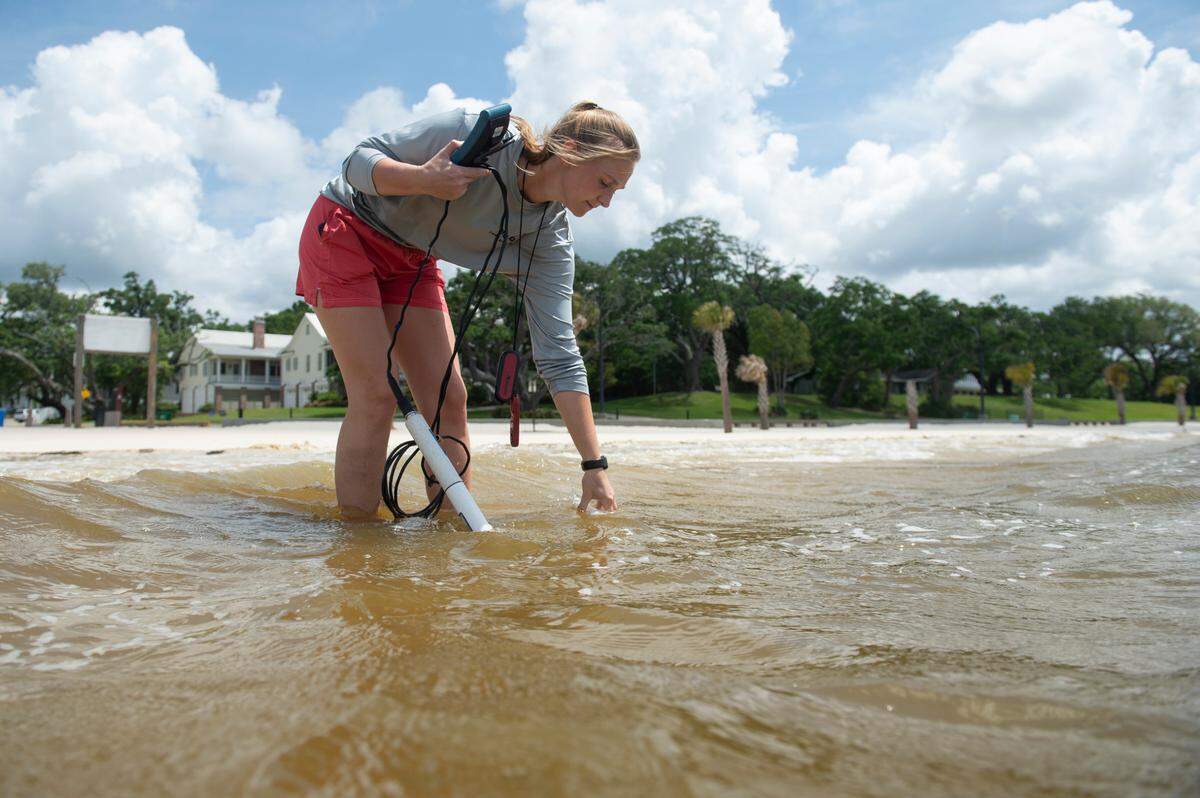
The Department of Environmental Quality tests every beach weekly for the bacteria, which are called Enterococcus and can indicate the possibility that sewage is contaminating the water. Scientists briefly stopped testing beaches after the discovery of mold last month at the Bolton Building, where the program’s laboratory is based, forced employees to find temporary offices. But the program started testing beaches again earlier this month.
The agency’s tests do not track a separate and rare bacterium called Vibrio, which has spiked this year across the region. Vibrio naturally lives in coastal waters and can cause serious infections. Enterococcus is not usually harmful to humans, but scientists use it to indicate possible pollution.
Scientists at the Department of Environmental Quality test beaches under advisory every day until Enterococcus bacteria levels return to normal. The agency also has a standing advisory against swimming after heavy rain because runoff from drains south of the railroad tracks inevitably washes pollutants into the waves.
Tests this week showed bacteria levels are normal at all other beaches across the Mississippi Coast.
This story was originally published April 13, 2026 at 2:30 PM.