
This Coast team tests for the trouble that keeps turning up on our beaches
The truck pulled off the coastal highway and Jennifer Ahlbrand jumped out, bound for the beach on an urgent mission.
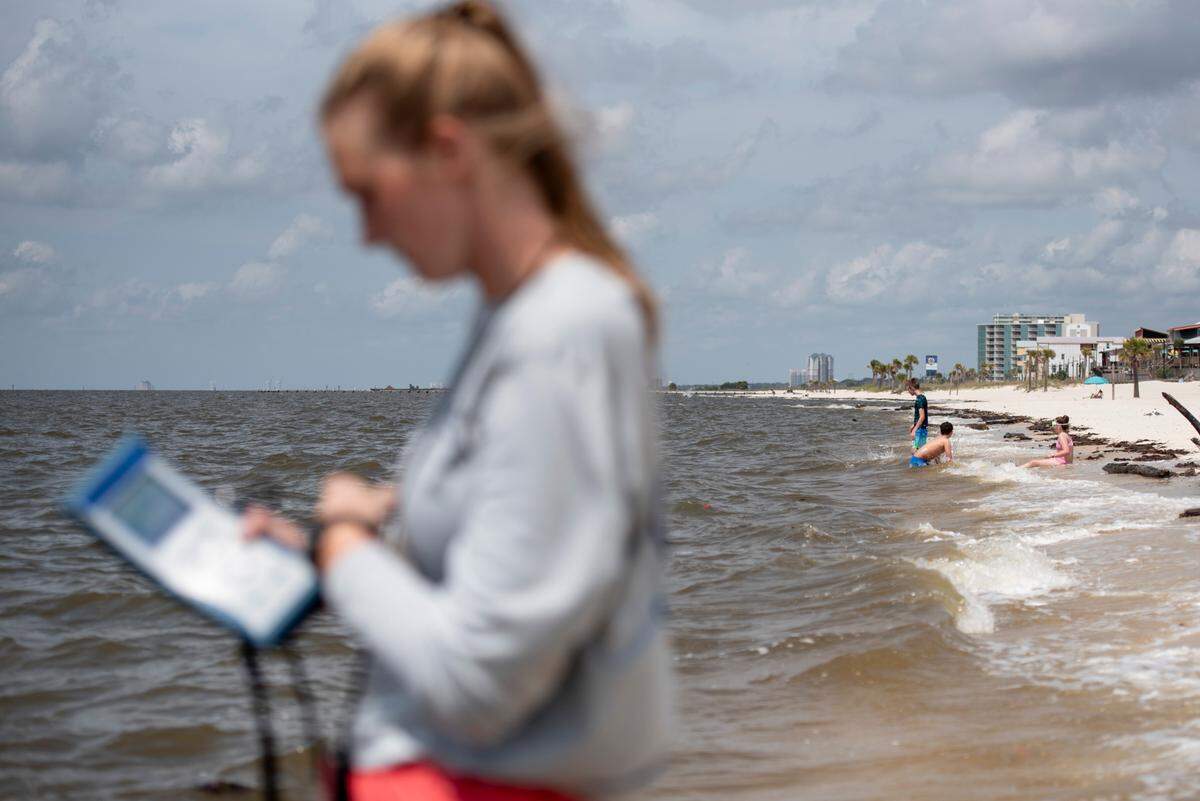
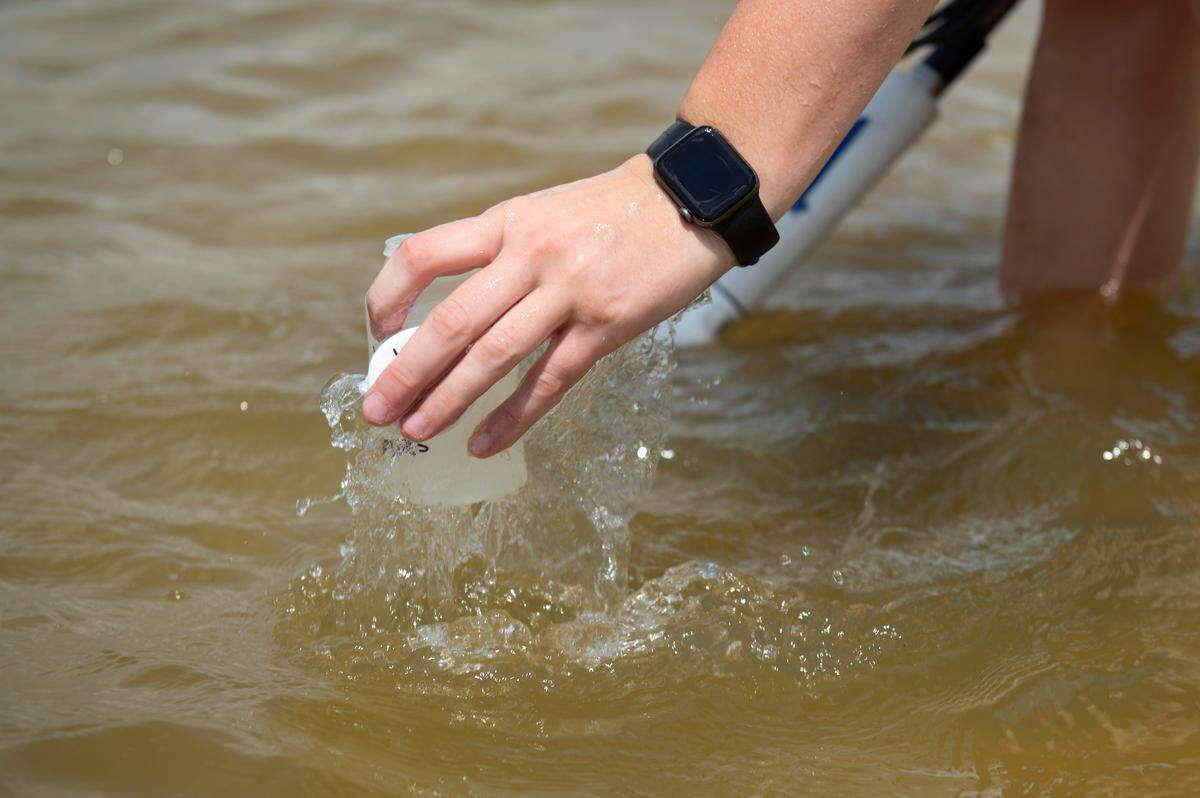
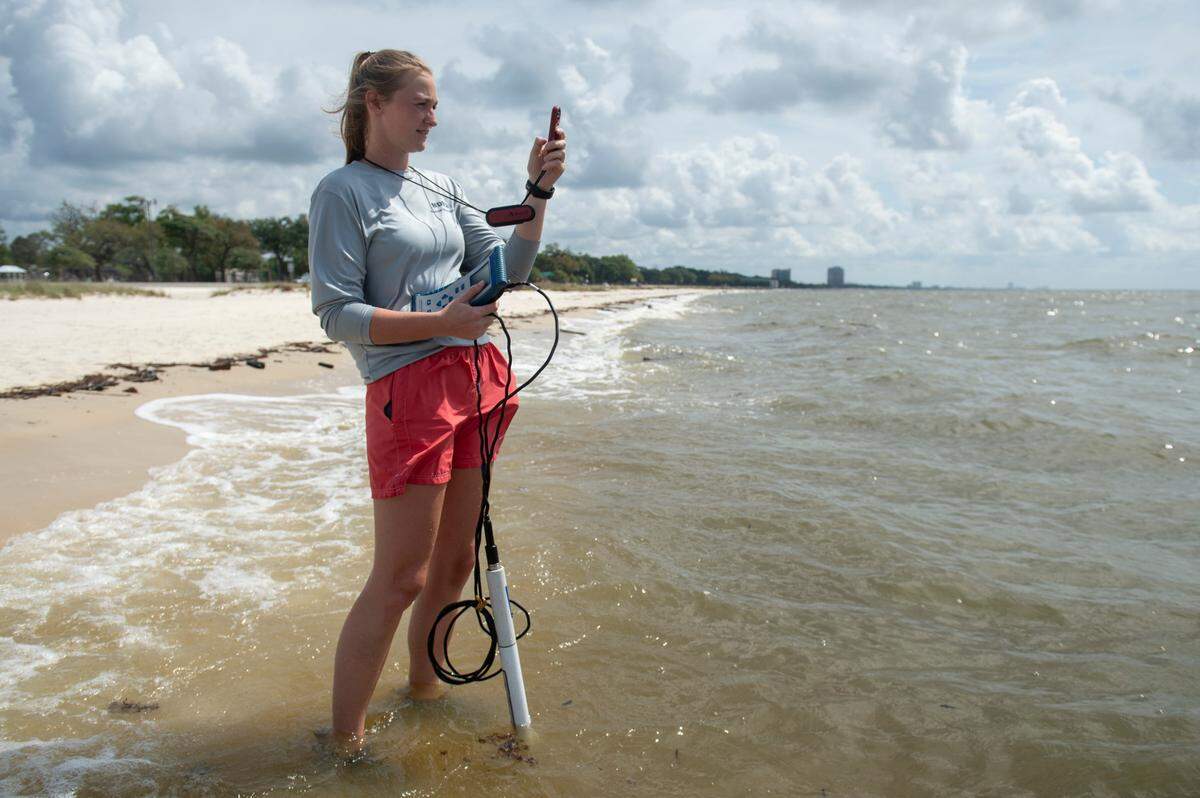
She headed for the shoreline to fill a clear bottle and stick a measuring device in the choppy brown waves. Then she drove off to the next of 21 beaches the Mississippi Department of Environmental Quality tests every week for pollution.
“A lot of people don’t realize there’s always bacteria in the ocean,” Ahlbrand said. “So when they see us testing, they kind of freak out.” But the bacteria turning up in her samples has also appeared this year in Texas, Hawaii and Florida.
It is a common finding and not worrisome enough to close beaches. Still, each time it shows up, scientists warn swimmers there could be stormwater runoff in the waves that might give them digestive troubles or infections. States track the bacteria relentlessly. And Ahlbrand is one link in an army of monitors empowered by federal law in a vast effort to probe for water quality issues at more than 3,000 beaches across the country.
Day after day, this is her role: Roam the Mississippi Coast from Waveland to Pascagoula to help people understand what they are swimming in. The busiest season is just beginning. Thousands of tourists come each summer, when water contact advisories naturally tend to increase. Already, tests on four Mississippi Coast shorelines were finding enough bacteria to warrant signs that read “ADVISORY — swimming in this area is not recommended.”
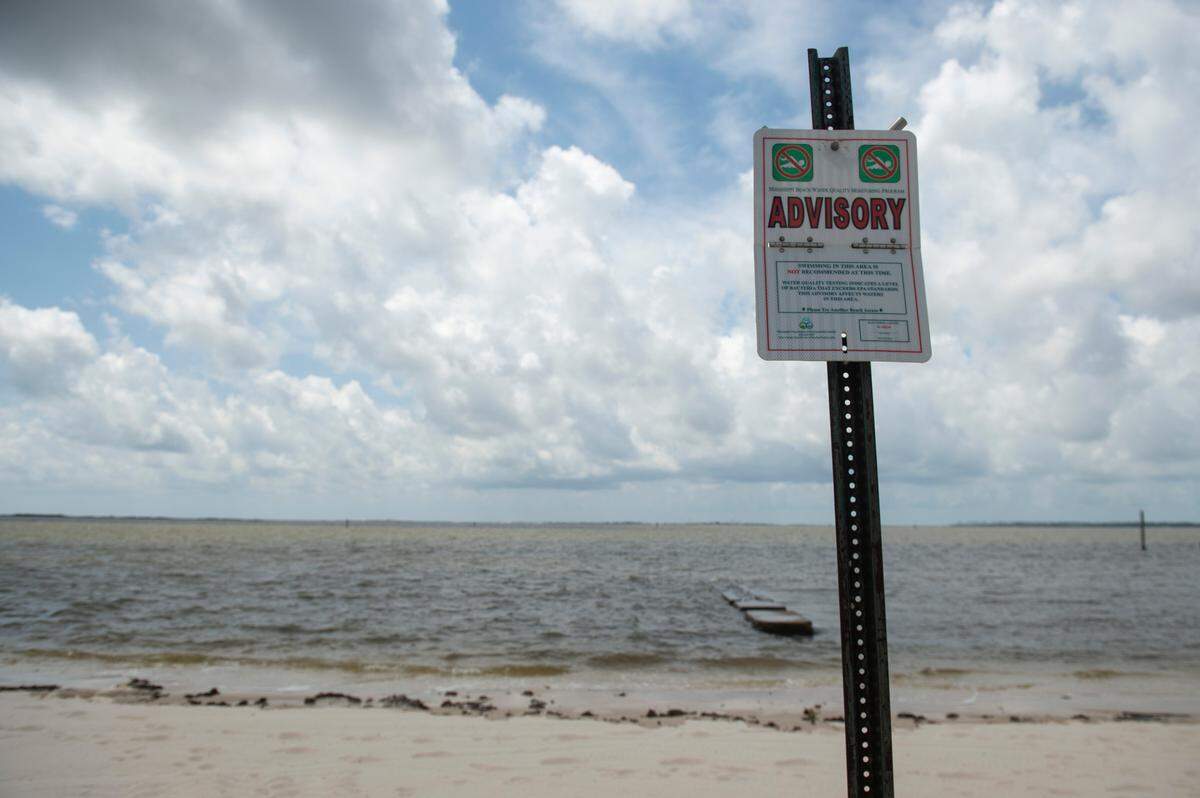
“A lot of people think Mississippi water is gross,” Ahlbrand said. But “Florida has the same program that we do, their water is just clearer.”
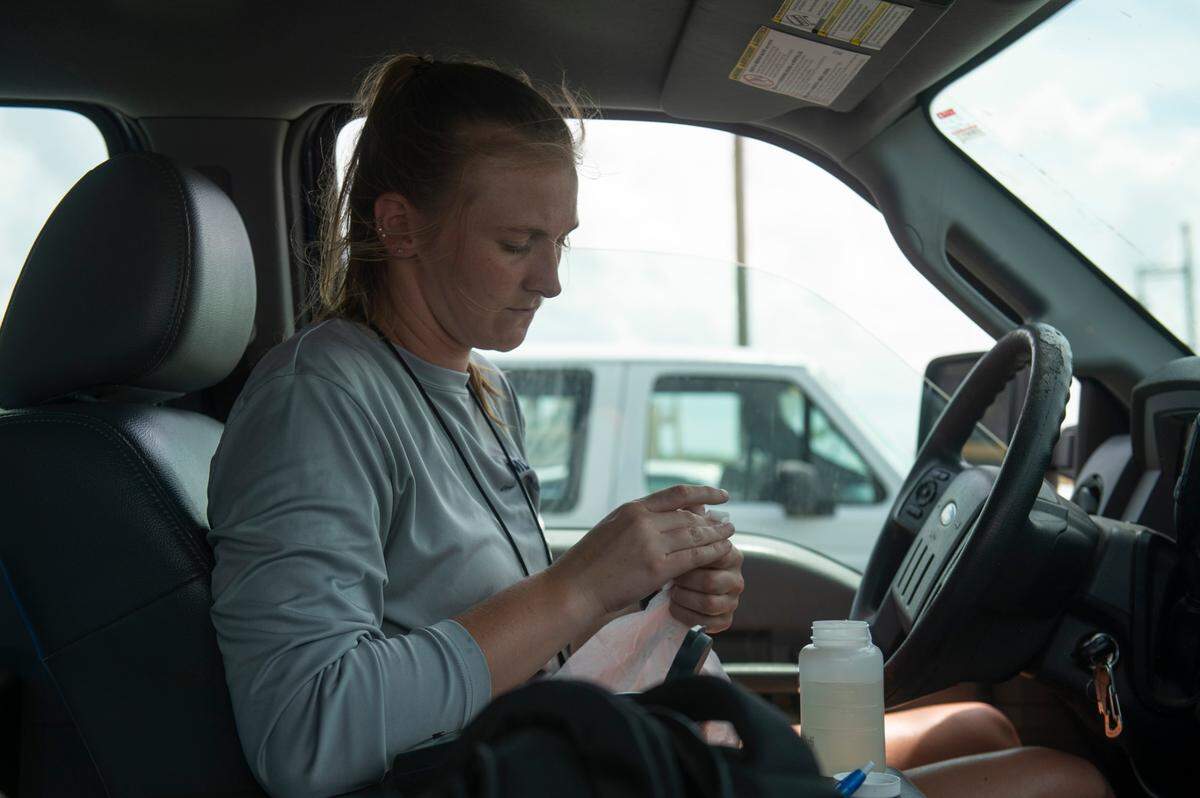
The 27-year-old trudged across the sand to the dark blue truck emblazoned with “Dept. of Environmental Quality” on the bumper. She wrote temperature and salinity recordings on a spreadsheet. She stuck her latest water sample on ice in a backseat cooler.
A man wandered over to ask what she was doing.
“I’m the water-tester person,” she said.
“Oh,” he said. “How’s the water?”
“It’s a little high right now,” Ahlbrand said, referring to the bacteria. “But we’ll test it every day until it comes off advisory. Usually the heat helps a little bit. Have a good day!”
What bacteria means
The Department of Environmental Quality team in Biloxi has tested beaches under federal standards for more than two decades. The program is funded through Congress and runs year-round, which sometimes means employees work weekends and are in the lab over busy beach holidays like the Fourth of July. They must bring water to the lab within six hours of their sample. And they issue an advisory only if two tests in a row show higher-than-normal levels of bacteria.
The results hold clues about science and health. The state has a standing advisory against swimming after heavy rain because runoff from drains south of the railroad tracks inevitably washes pollutants into the water. The bacteria’s source is not always clear, but researchers say faulty septic tanks and sewers can leak through the stormwater system. Data from years of testing shows advisories have ebbed and flowed but endured steadily over the last decade.
“It means we’re not treating our stormwater well enough,” said Anna Linhoss, an Auburn University professor who studies water quality in Alabama and Mississippi. “The monitoring is so important. If we can’t solve the problem through infrastructure, we need to at least know the problem is there.”
The bacteria is stubborn. Wind often stirs up waves and unearths it from sediment underwater. Barrier islands stop waves and currents from washing pollution into the ocean.
“You don’t have that flushing action,” said Emily Cotton, a biology supervisor at the Mississippi Department of Environmental Quality and former beach monitoring coordinator. “It tends to stay in the Sound.”
Murky river systems also drain to this part of the Gulf Coast, mixing brown freshwater with clear salty waves. That makes the Mississippi Sound an estuary home to oysters, shrimp and fish. Scientists say the color is natural and has little to do with safety.
The beach tests are also fueling research. Holley Muraco, a Mississippi State University professor, tracks the advisories to understand where bacteria most often appears. She will use that information as a guide for more testing and hopes it will answer questions about how far the bacteria reaches from the shoreline and how it might impact dolphins and other creatures.
Mississippi’s manmade beaches were once marsh that absorbed runoff. “What we have done is created an incredibly artificial scenario for nature to deal with by our infrastructure, our outfall pipes and our beaches themselves,” Muraco said. “We need to understand what it is that we’re putting out there. Is nature able to take care of it? Or is nature overwhelmed?”
Testing Mississippi beaches
On her route this week, Ahlbrand rode past golf carts and fishermen through Waveland, Bay St. Louis, Pass Christian and Long Beach. At each spot, she did the same thing: Wade into the water. Fill the clear container. Take readings and measurements from a high-tech probe. Record the numbers. Fill the cooler with samples, which Cotton said each cost up to $60. Drive to the next beach, and repeat over and over.
“It’s important to monitor it,” Ahlbrand said as she pocketed another full bottle. “If you don’t have a baseline, you don’t know what’s normal. And we do see patterns, like when it starts to warm up. That’s important too.”
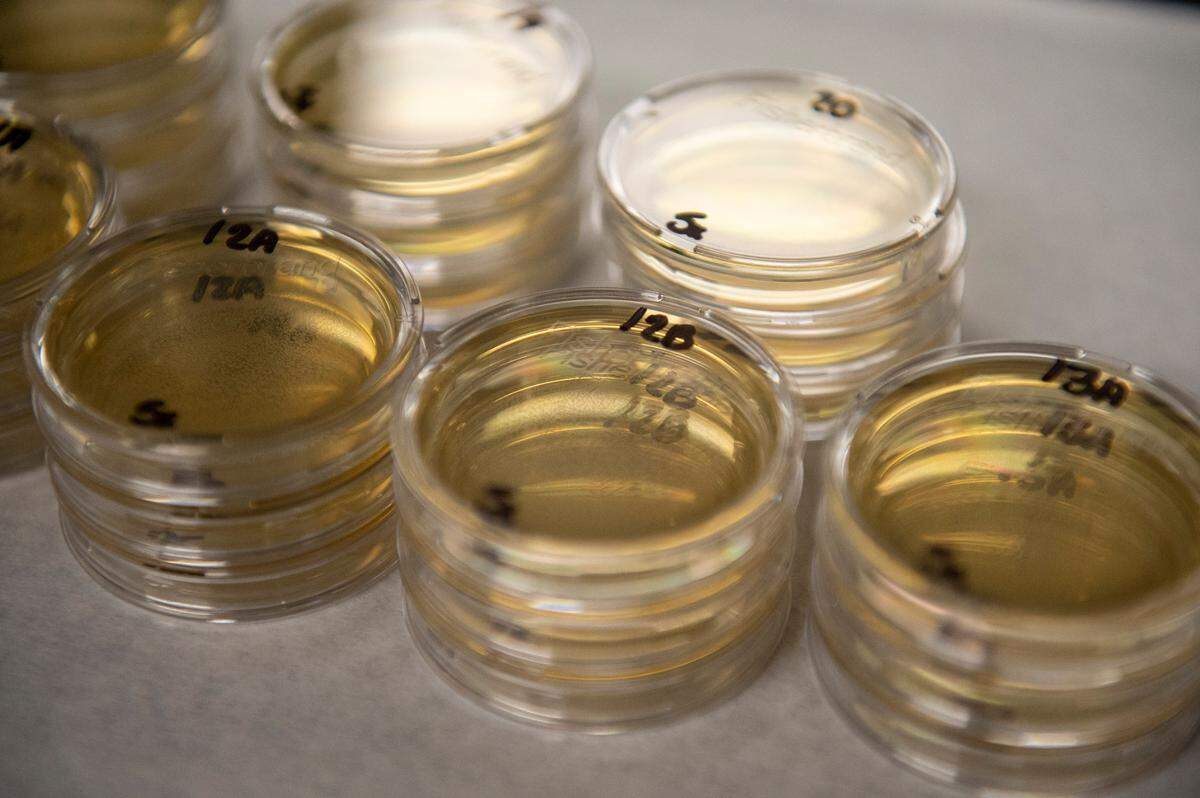
She rode back to Biloxi, kicked the sand off her shoes and pulled the cooler through the halls of the state office. She wiped off the bottles, cleaned a metal cart and rolled it into the laboratory. The samples went in the fridge for a few minutes, until a scientist in blue gloves and a lab coat began to sterilize tools and send the water through a filter that captures bacteria. The filter went into petri dishes, and the petri dishes went into an incubator.
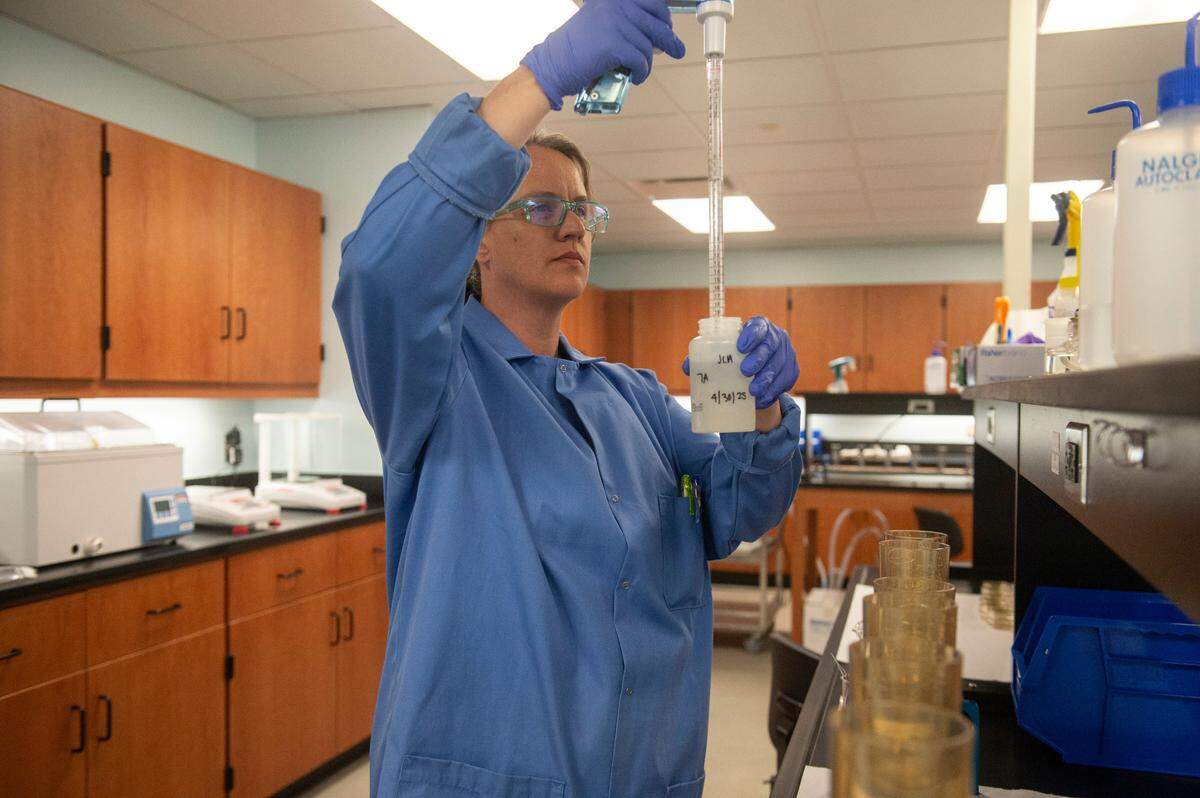
“We won’t see these results until tomorrow,” Ahlbrand said, when the team would count the little blue dots of bacteria and upload the results to their website.
Twenty-four hours later, there were no new advisories. But the same four beaches were still measuring pollution.
So Ahlbrand got back in the truck, cruising the coastline, hoping again for clean water.
This story was originally published May 2, 2025 at 5:00 AM.