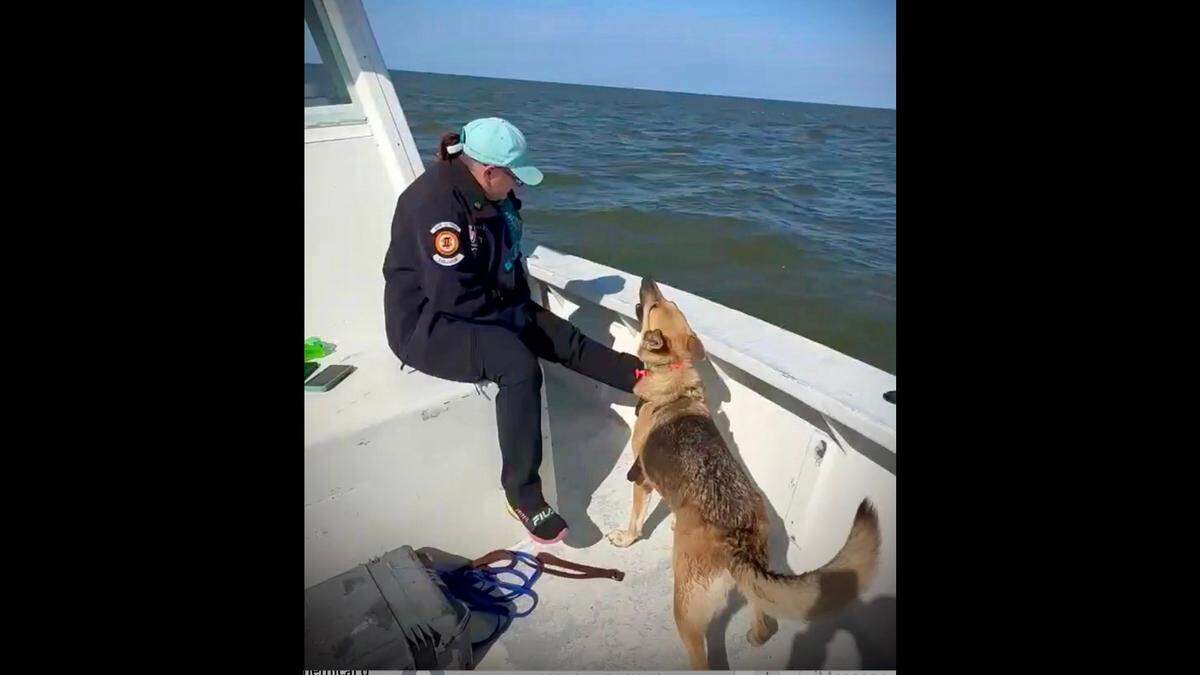
First report released on Gulfport Cessna’s fatal crash on Lake Pontchartrain
AI-generated summary reviewed by our newsroom.
- NTSB released preliminary report on Nov. 24 Cessna crash; final report could take a year.
- Two pilots, both 30; instructor and instrument trainee; bodies not recovered.
- Flight data show descent, left turn; speed loss suggests stall.
Most of a Cessna 172 single-engine airplane was recovered from Lake Pontchartrain when it plunged into the water, broke apart on impact and killed the two pilots aboard, a preliminary report from the National Transportation Safety Board says.
The report does not speculate on the cause of the Nov. 24 crash after dark on the flight from Gulfport-Biloxi International Airport to the Lakefront Airport in New Orleans. A final report could take a year or more to complete.
Flight instructor Taylor Dickey and private pilot Michael Jahn, both 30 and South Mississippi residents, were on a training flight aboard the Apollo Flight Training and Aircraft Management plane based at the Million Air terminal at the Gulfport airport. Jahn, a Navy officer, was training on flight instruments. While memorial services have been held for Dickey and Jahn, their bodies have not been recovered.
The report notes several key points about the flight’s final minutes:
- The pilots were in communication with the New Orleans Lakefront Airport and the plane had been cleared for landing.
- The plane began making its descent when 6 nautical miles from the airport in the dark with intermittent cloud cover at 800 feet.
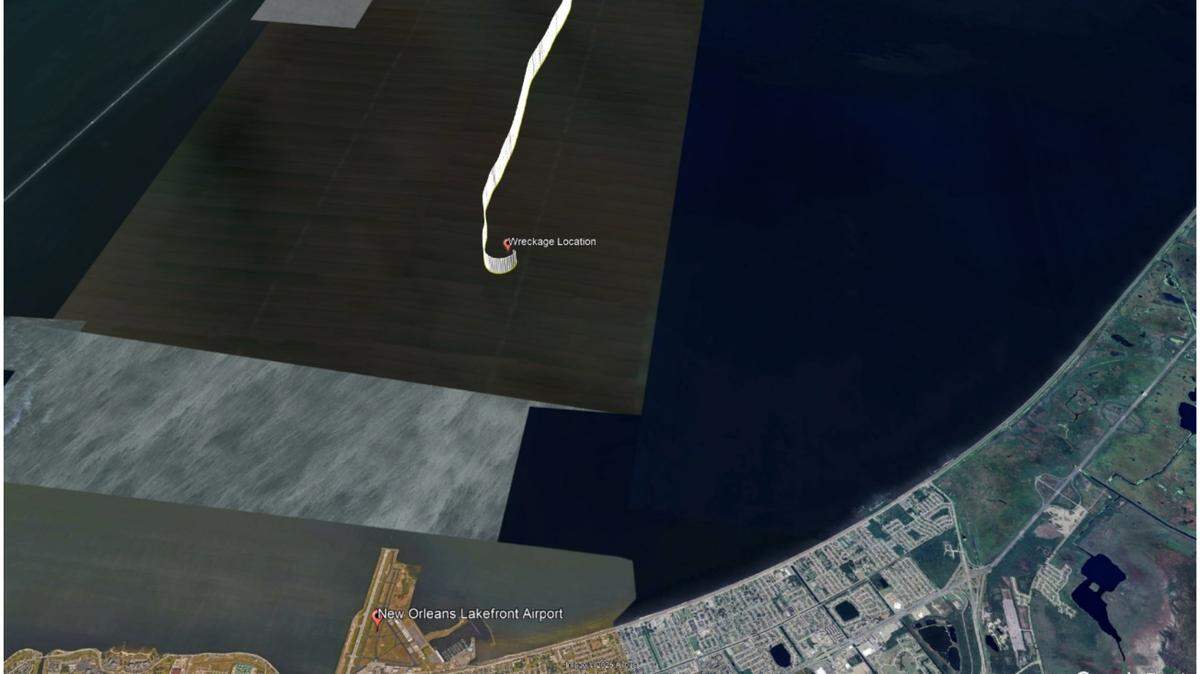
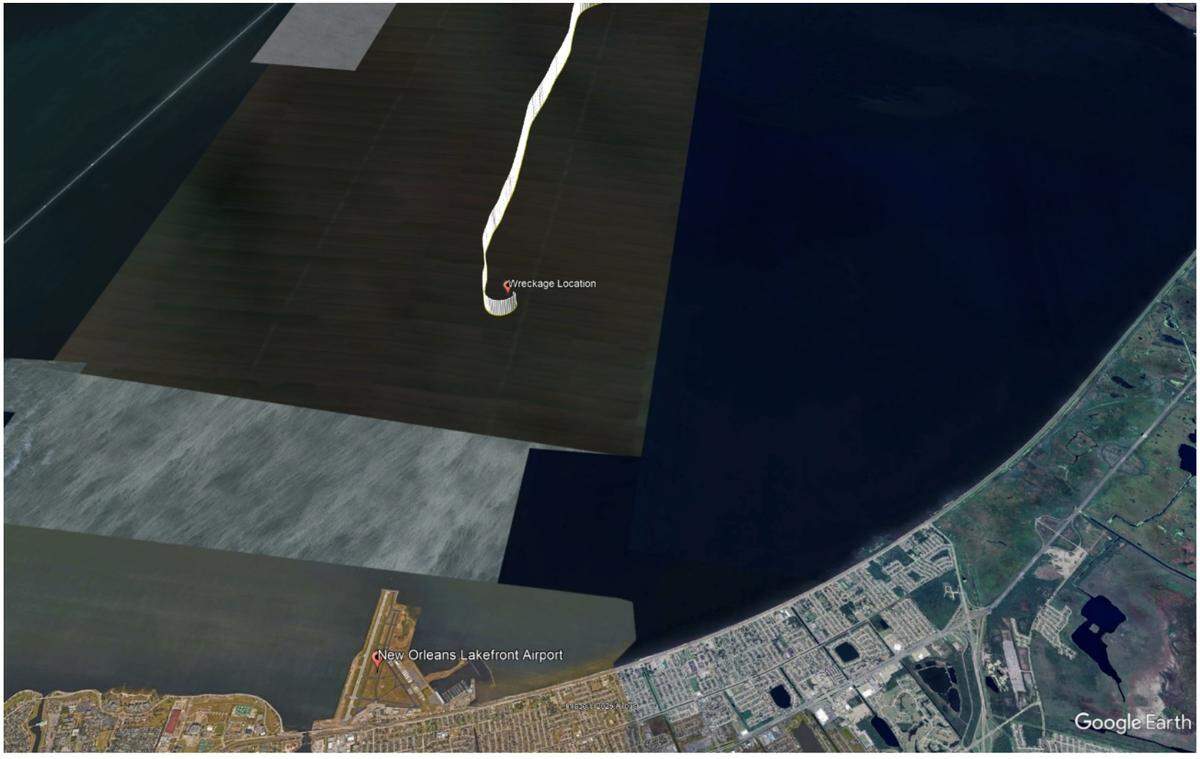
- About three minutes later, the plane “began a tight descending left turn that lasted about 27 seconds until the last recorded position . . .”
- The plane’s last recorded position was 3.7 nautical miles from the approach end of runway.
Gulfport resident Joe Pevey, a private pilot and retired sheriff’s captain, has flown the same course.
“They couldn’t have picked a better day or night for an instrument training flight,” he said. “I think what got them was being on Lake Pontchartrain.”
Pevey added, “That is one of the scariest landings you can make, coming over that lake at night, because you don’t have a horizon.”
Plane lost air speed ‘quickly’
The report did not indicate a mechanical problem with the airplane before the crash and there was no distress call.
“It was a solid airplane,” said Bethany Fayard of Biloxi, who had rented the Cessna and flown it for 20 or more hours. She most recently flew the plane on a day trip in June to the New Orleans Lakefront Airport and said that Apollo did a good job of maintaining the plane. Dickey, who lived in Biloxi, had been a contract flight instructor with the company since June 2024.
South Mississippi pilots are all too familiar with the night approach to the Lakefront Airport. On a clear night, the runway lights are visible for miles, but there was some cloud cover at 800 feet, as the NTSB report indicated.
Flight data from the plane shows the last recorded altitude at 1,100 feet, so the plane was still in the clouds. The wreckage was located about 500 feet from its final recorded position, the report says.
“It appears that they were flying a stable approach across Lake Pontchratrain,” Pevey said. “For some unknown reason, they lost air speed quickly. That probably put the airplane into a stall, and they just didn’t have enough altitude to recover.”
“ . . . By the time they broke out of the clouds,” he said, “they were looking at the lake. They were looking at darkness.”