This MS community survived slavery, segregation. Now, they fight to save ‘God’s country.’
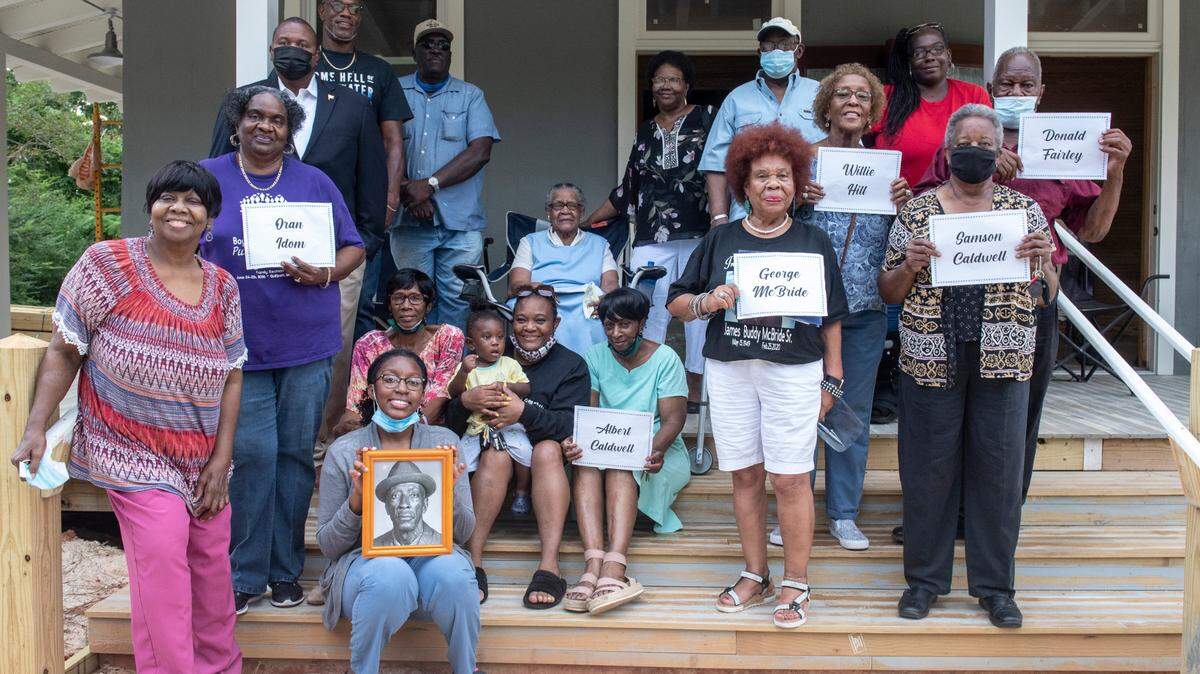
Derrick Evans pieced together the history of the dilapidated house he bought bit by bit, person to person, the way knowledge is handed down in Turkey Creek.
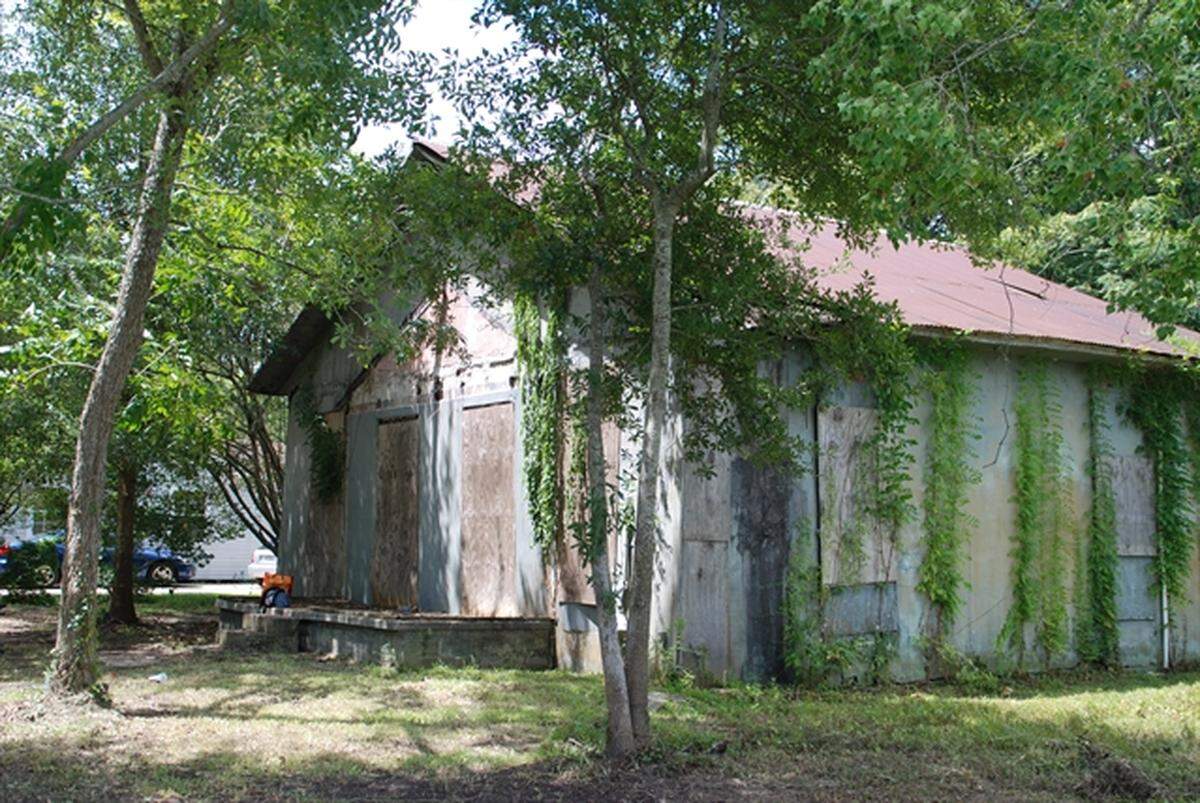
It turns out he hadn’t bought a house at all. He was the owner of the former paymaster’s office for what his elders had described since he was a child as “the knot plant” or “the Yaryan.”
The building had been moved a few hundred yards down Creosote Road and turned into a rental house.
By the time Evans bought it in 2004, the house was abandoned, termite-infested and sunk into the ground by the weight of time.
He paid the $10,000 asking price without realizing his great-grandfather had moved the heavy concrete building, a feat in itself, to the small parcel he then owned.
“Most people would have torn it down,” said Evans, who taught history at Boston College and in Massachusetts public schools while maintaining his roots as a sixth-generation member of the Turkey Creek community. “I didn’t. I knew it had to be historic.”
“ . . . It was almost predestined that what has happened would happen,” he said. “God’s hand was in it.”
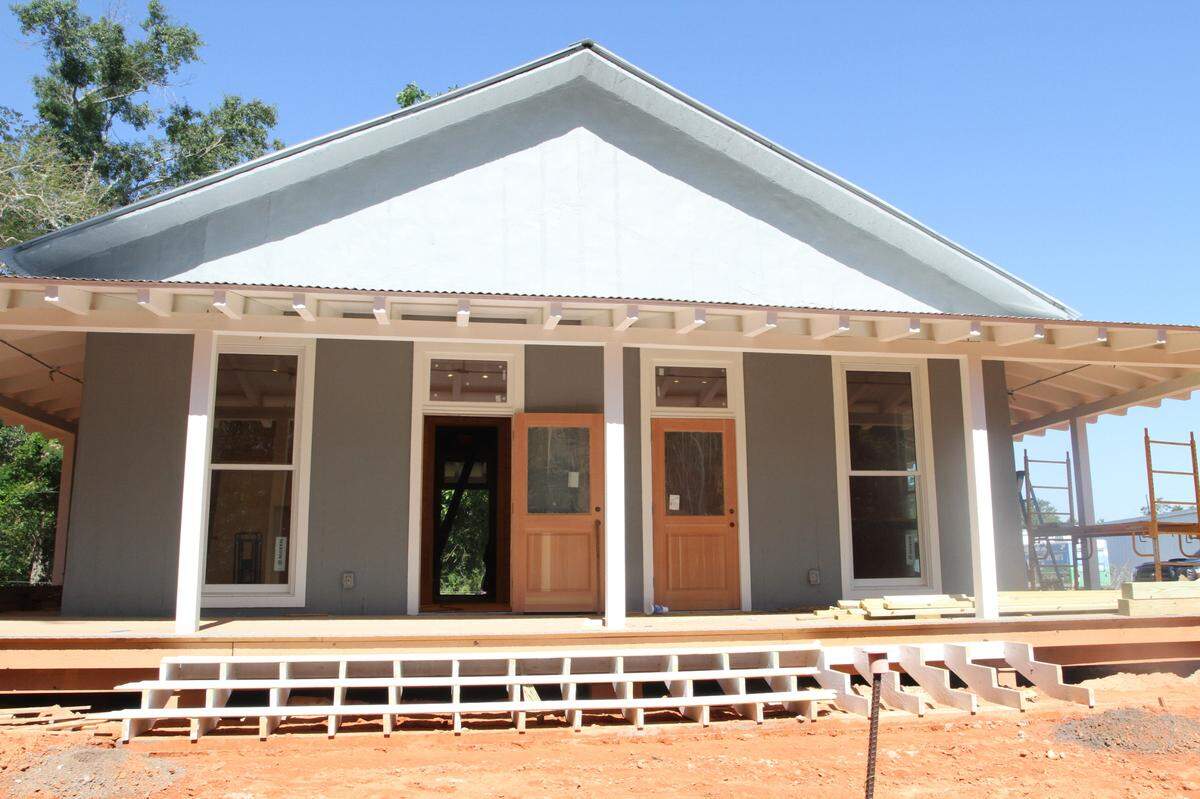
Today, the old paymaster’s office is almost restored. The lone surviving structure in a 1943 plant explosion that killed 11 men, including 8 African-Americans, will serve as a memorial to those who died and a community center for the nonprofit Turkey Creek Community Initiatives.
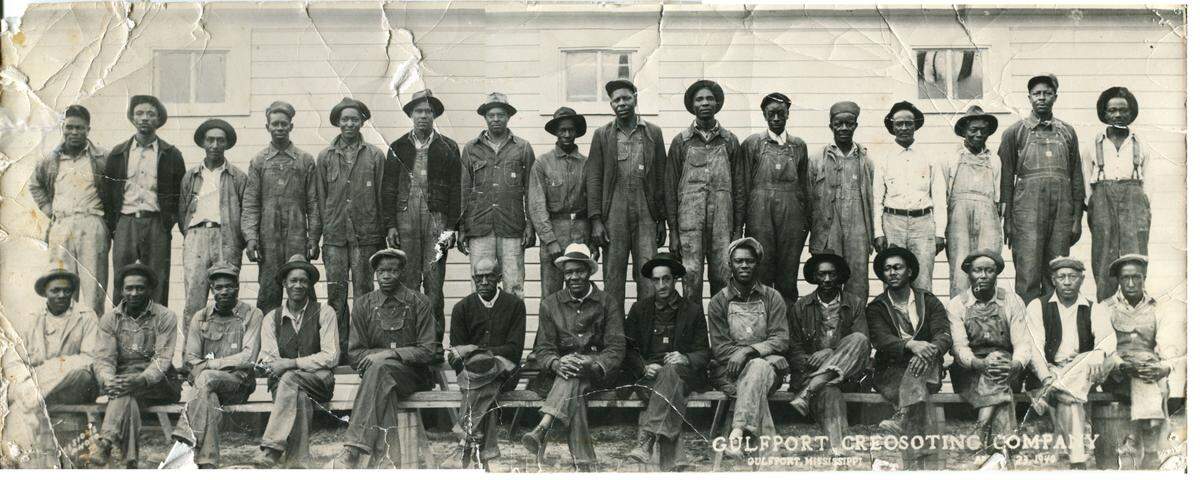
The center will also be a repository for the history of the Black men who toiled in South Mississippi’s timber industry, at low pay and great risk to their physical safety, while many of their wives cleaned the homes and laundered the clothes of white families on the beach.
In a broader sense, the paymaster’s office will anchor a community with a rich history that dates to slavery, a history that has bound together residents for generations.
Turkey Creek, tucked away beside Gulfport’s busiest commercial corridor, is a place apart and a testament to the perseverance of Black Americans. The shared history of its residents, and the kinship that sprung from its founding families, created unique community ties that have survived for generations.
In Turkey Creek, residents have always shared the bounties of their gardens, watched over one another’s children, and worshiped at the same community church
Since the community’s founding in 1866, oral history has been a strong tradition. The old paymaster’s office will tie together stories of a community that withstood Jim Crow laws and segregation to preserve its identify as the city of Gulfport continues developing the commercial and industrial corridors that threaten to swallow it.
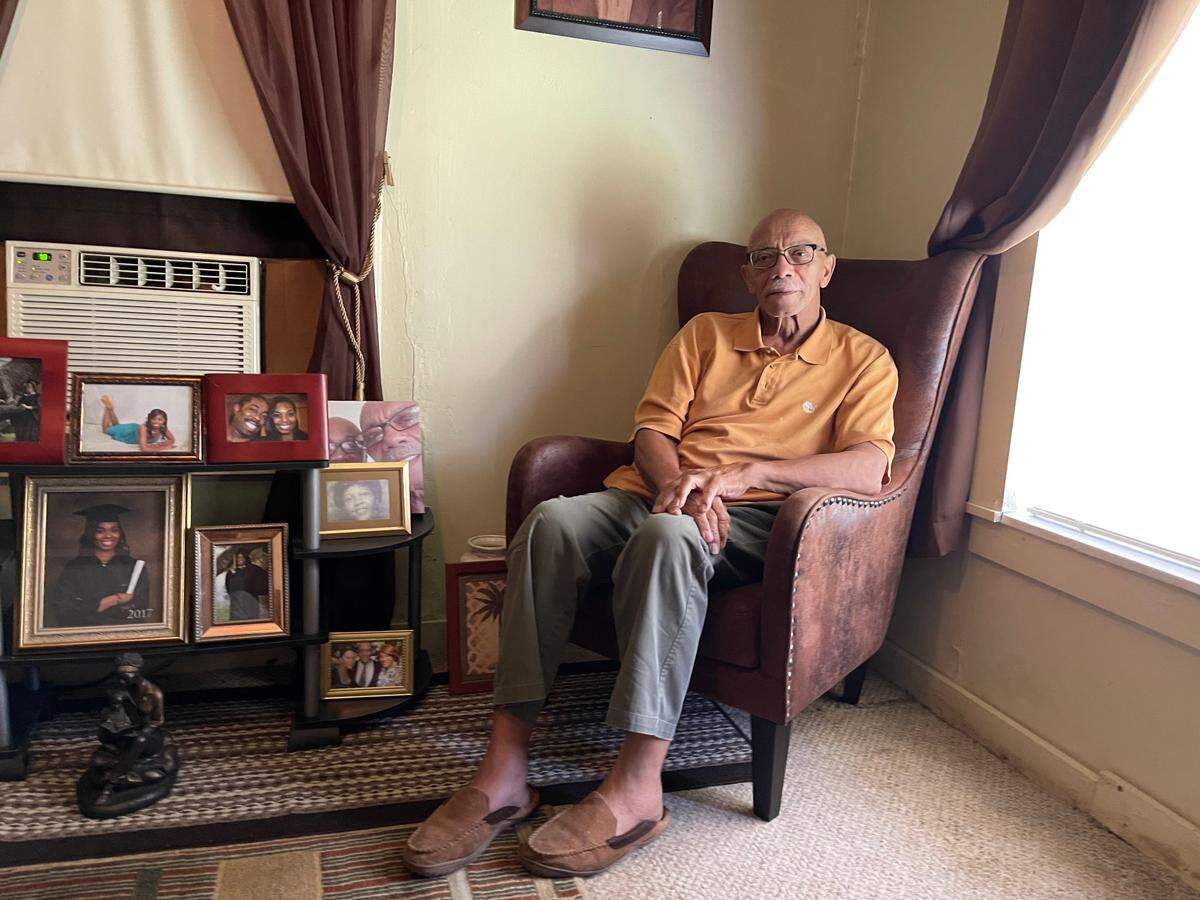
“Turkey Creek is God’s country,” said Raymond White Sr., an 87-year-old descendant of one of the founding families. “I think He smiled when He laid out that land there in Turkey Creek.”
‘Swampland’ sold to former slaves
Turkey Creek is older than the city of Gulfport.
When Turkey Creek was settled after the Civil War, it was like an island in what was described as “uninhabitable swampland,” removed from white settlements to the south.
“This is Mississippi,” said David Holt, an associate professor of geography at the University of Southern Mississippi’s Long Beach campus. “They were dragging their feet on Black people owning anything, so when land opened up, which was basically timberland, they were given the mouth of the creek and the wetlands.”
Seven families bought and settled 320 acres that have been passed down through generations. Descendants who still live in the community can trace their lineage to one of five family surnames: Evans, White, Simms, Myers or Benton.
Melinda and Thomas Benton, a former “inside slave,” settled on 80 acres, the last of the five families to arrive. They had seven daughters who married and received property from Melinda Benton, whose husband died young.
Melinda Benton donated land for a church and school. She also sold 12 acres for a creosote plant where residents could work for 25-45 cents a week, David Holt’s research showed.
The creosote plant, opened in 1906, treated timber for railroad ties and telephone poles. The community also had a sawmill, the Yaryan knot plant, a post office, a grocery store, a boarding house for forest industry workers and the first school for African-Americans in Harrison County.
The timber-related businesses worked in concert, attracting Black Mississippians whose employment opportunities at the turn of the century were limited.
The old paymaster’s office at the Yaryan is the last relic of that once-booming timber industry.
The original building with four rooms has heart pine floors and beadboard walls that create a soft, warm glow and speak of its age.
Phoenix Naval Stores plant explosion kills 11
The paymaster’s office survived the 1943 explosion because its outer walls and roof are built of concrete for fire protection. The knot plant was a dangerous place to work.
The plant opened around 1909, when Homer Yaryan of Ohio invented a process to turn pine stumps and knots to gold by extracting turpentine and rosin, called naval stores because the products were used on ships. The extraction process was highly volatile, involving superheated steam, gasoline and other chemicals.
A number of fires and explosions were documented at the plant, which nonetheless provided steady employment for Black laborers. White employees at the plant generally worked in managerial positions.
Yaryan chose Gulfport because of its access to rail and port, and a bountiful supply of pine. Acres of pine stumps, the vestiges of trees cleared for lumber, could be harvested and processed at the plant, originally called Yaryan Naval Stores Co.
Sullivan White, an 80-year-old resident of Turkey Creek who has lived all his life on Rippy Road, remembers the plant well. As a boy, he toted lunches to the workers for 15-cent tips. The plant maintained separate break areas and bathrooms for Black and white employees.
White also remembers the explosion, when he was much younger. At that time, the plant had changed hands and was called Phoenix Naval Stores Inc.
“When that thing blew up,” he said, “We thought the world was going to end. It shook us out of the bed and the sky lit up forever, seemed like.”
Raymond White, 87, remembers it, too. His mother instructed him to shield himself behind one of his grandmother’s pecan trees. His family also thought the world had come to an end.
“It scared the life out of me,” he said. “I thought that was the end. Those were some awful explosions.”
The plant closed after the explosion but eventually opened under new ownership. In 1958, having run out of pine stumps, plant operations moved to Florida, with some Turkey Creek workers relocating to keep their jobs.
Segregation avoided in Turkey Creek’s boundaries
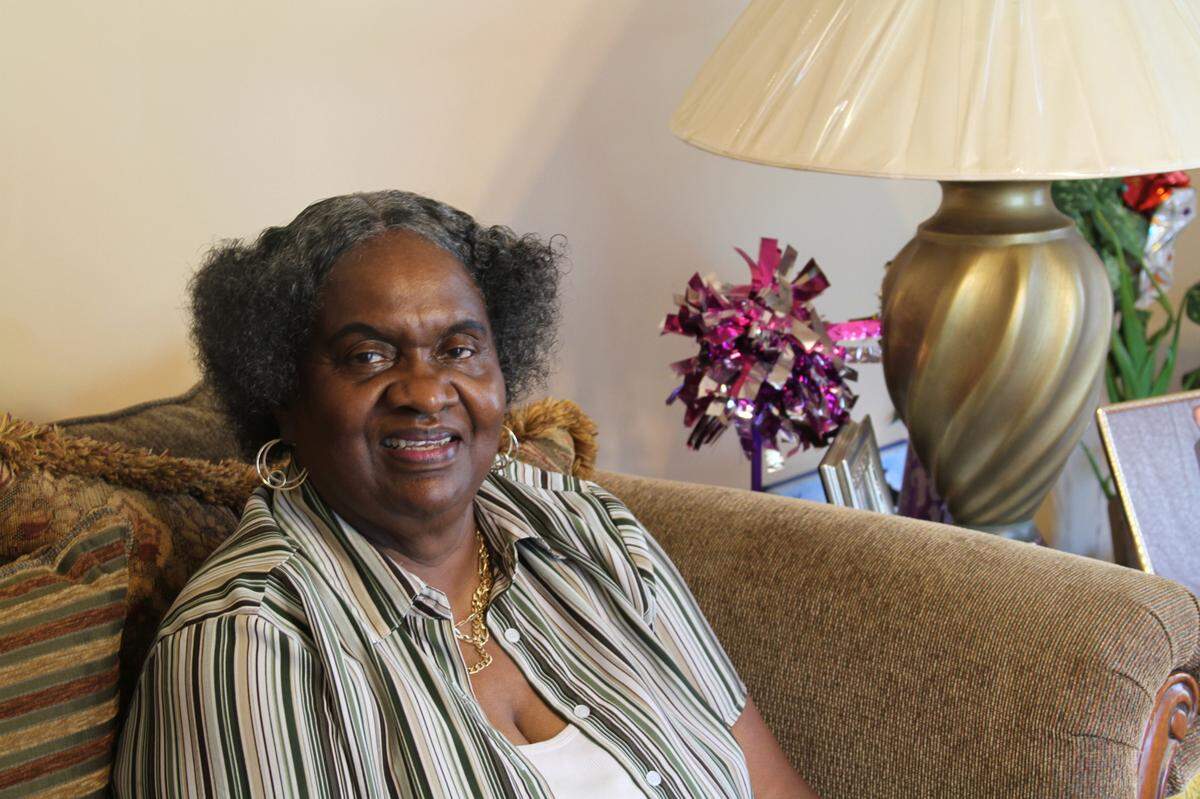
Georgia May Idom’s parents were picking cotton on a farm near Forest, Mississippi, before her father moved the family to Turkey Creek in the early 1950s so he could work at the Phoenix plant.
They lived in one of the company houses, a dozen or more modest wooden cabins with outhouses.
“Back then, you were blessed to have a house like that,” Idom said, “even though you didn’t have an inside bathroom.”
Her father also earned more money, she said. On the farm, a big part of the pay consisted of vegetables from the garden and remnants of slaughtered livestock.
Faith, family, education and discipline were all part of life in Turkey Creek, where residents often joined the military so that they could pay for college degrees, Holt said.
“The people on Turkey Creek looked out for each other,” Idom said. “It was just like one big family community.”
Segregation was a fact of life avoided within the confines of Turkey Creek, where residents had their own swimming pool, Black sports teams competed because they could not play with white teams, residents swam and fished in the creek and cars lined both sides of Rippy Road on weekends at popular nightclubs.
When they ventured to Gulfport, Turkey Creek residents encountered separate drinking fountains for Blacks and whites, were turned down for service at some businesses and were not allowed on the beach.
Idom said she never drank from the segregated water fountains at the dime store, instead waiting until she returned home to get a drink.
She was part of the third integrated class that graduated in 1970 from Harrison Central High School. Idom then graduated from Alcorn State University and spent 35 years teaching in Florida, where she raised two sons.
In retirement, Turkey Creek called to her. She lives next door to her deceased brother’s family on Idom Street, named for her family because so many members settled there.
“I just loved Turkey Creek,” Idom said. “I had enough of the city. And I always did want to come back home. Most of my classmates and old friends, we all moved away to different cities and when we retired, we came home. We still get together as classmates.”
Historians take interest after Hurricane Katrina
The community’s unique characteristics seemed to be lost on the city of Gulfport, which wanted to annex around it to capture the more lucrative commercial area to the north of Interstate 10 in Orange Grove. But to take in Orange Grove, Gulfport was also forced to accept Turkey Creek in the 1994 annexation, Holt said.
The city considered Turkey Creek a “tax sink,” he said.
“They were just trying to get everybody out of there,” he said. “The community fought back because the city was characteristically unaware of how old the community was.
“Lifelong residents of Gulfport aren’t even aware Turkey Creek is there, the creek or the community. Everything’s just kind of grown up around them. They’re trying to hold that sense of community.”
Derrick Evans has been a tireless advocate for Turkey Creek.
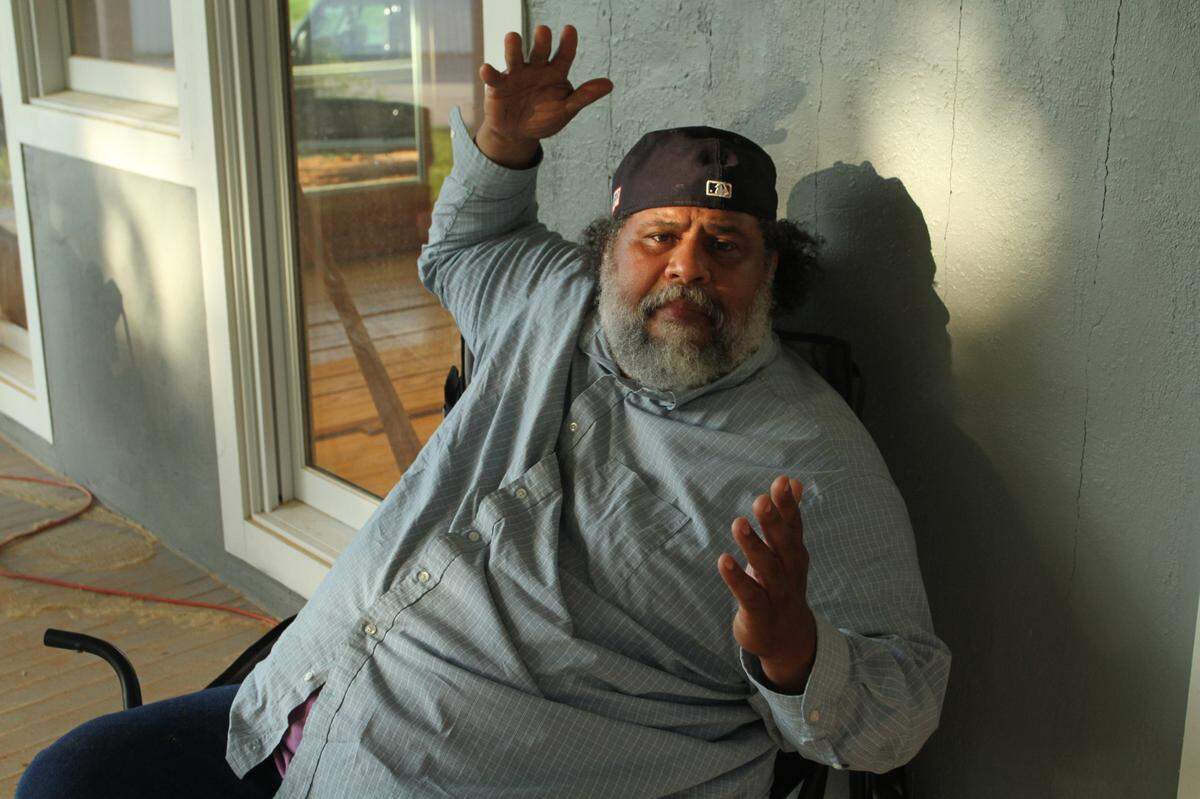
He moved from Massachuetts back to Turkey Creek in 2003 to help his elderly mother and fight for a community diminished by coastal sprawl.
When Hurricane Katrina hit in 2005, an amazing thing happened, he said.
Architectural historians, structural engineers, federal agency representatives and other specialists poured into the Mississippi Coast for hurricane recovery and discovered Turkey Creek’s rich history endangered by development and neglect.
Preservation plans gained momentum. In 2007, Turkey Creek was added to the National Register of Historic Places. The nomination letter from a state historic preservation officer documented 73 structures in the community, most of them homes.
In 2015, the Phoenix Naval Stores paymaster’s office made the Mississippi Heritage Trust list of the state’s 10 Most Endangered Places.
The National Park Service in 2018 awarded a $500,000 grant to restore the old paymaster’s office to the nonprofit Land Trust for the Mississippi Coastal Plain, which oversaw the project. Sen. Thad Cochran, now deceased, encouraged the application and was instrumental in securing the funds.
Evans sees the building as visual gateway to the community.
The paymaster’s office sits near the south end of Creosote Road, where industries and businesses give way to residential Turkey Creek. In many ways, the community is showing its age.
The community is a contrast of tidy wooden cabins and brick homes marred by properties that appear abandoned, with roofs caving in, lots overgrown and windows boarded up.
‘This is Gulfport history’
Evans takes all this in and, in his mind, maps out future restoration. His life’s work has been teaching and researching civil rights history. Turkey Creek is a living laboratory, one he hopes the broader community of Gulfport will come to value.
At 54, he’s finishing up business in the Boston area and heading home for good.
He has his eyes on the prize.
“Turkey Creek is not a ditch,” he said, “but a centrally located ecological and recreational asset.”
He is ever mindful of the families that settled on the creek and the struggles they endured.
Men like Lee Skinner, who left a wife and seven children behind when he died in the 1943 knot plant explosion. Evans never knew Skinner, but he did know his widow, Eva Skinner, who opens a documentary about Turkey Creek filmed by Leah Mahan, a friend of Evans.
“Come Hell or High Water: The Battle for Turkey Creek,” which premiered in 2013, has introduced the community to a global audience.
Evans has listened since childhood to the stories of community elders.
“I didn’t care about nursery rhymes and comic books and fairy tales,” he said. “I cared about what they cared about, which were Bible stories, family stories.”
“ . . . I also felt like they were sharing it with me because it would be my turn one day to pay attention, to share the story.”
The city twice condemned the old paymaster’s office after Evans bought it. The second time demolition was threatened, he finally knew the building’s history, having pulled together threads from several different conversations with his elders.
“I was going to tear it down and send it to the landfill,” Evans said, “but I started thinking about Mrs. Eva Skinner, who lost her husband and had all those children.”
“It just pained me that, if this building goes, I’ll never have a reason, an impetus or reminder to tell the story that Mrs. Eva Skinner and others who were involved in that plant and that explosion told me.”
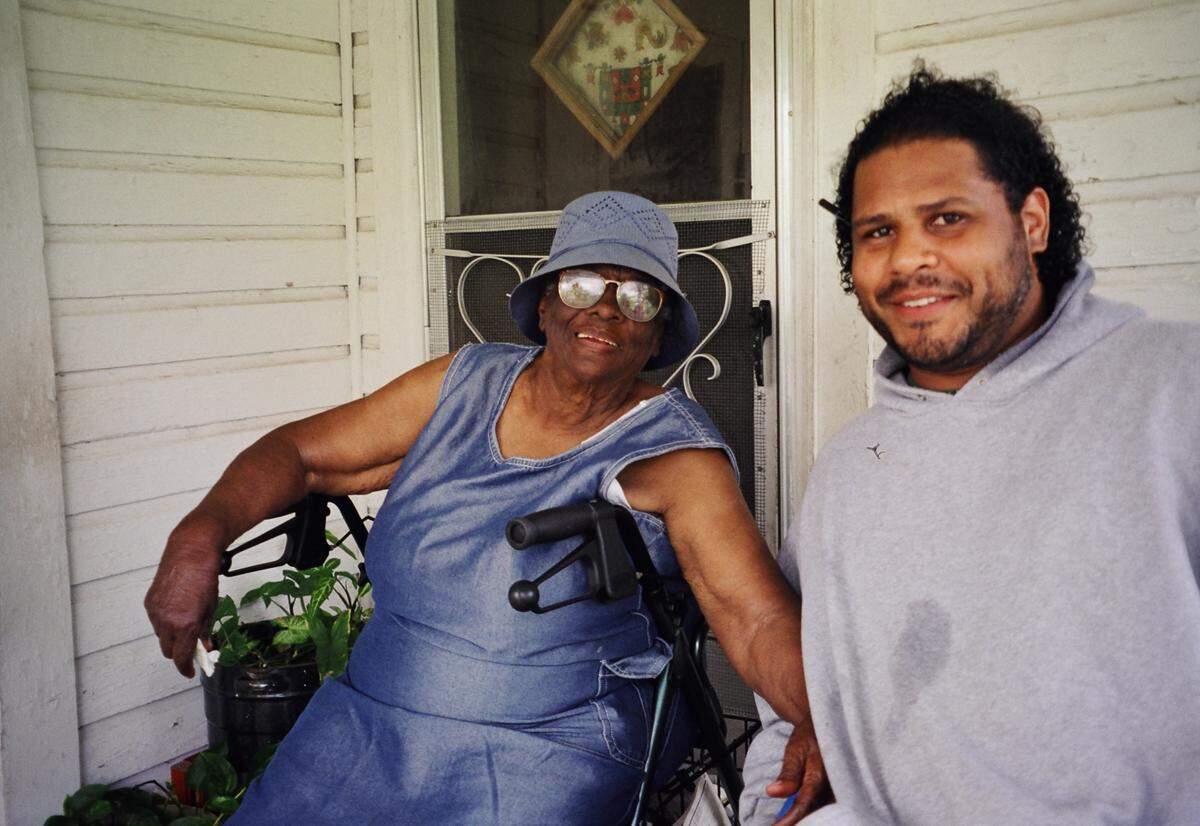
One of the elders with whom Evans spoke was Oliver White. White was off work the day of the explosion because he had traded shifts with Lee Skinner. White moved away after the explosion, joining the military and then working as a barber in Washington before returning to Turkey Creek.
“He said, “Derrick, to this day, I always ask God why did he spare me and take this young man who had all these children to feed,” Evans said, recalling a conservation with White after his return.
When she heard about his distress, Eva Skinner insisted on talking to White. Evans remembers that Skinner and White were wearing their church clothes when they got together and were both past their 90s by that time. Skinner told White that what happened in the explosion was “God’s will” and that he should not feel guilty.
White and Eva Skinner are gone now, too, but their memories will live in the restored paymaster’s office, where workers collected their pay in scrip that could be spent in company stores or was worth 80 cents on the dollar in Gulfport.
Evans recently offered a tour of the old building.
“It speaks years and years of injustice and faith and deliverance,’ he said. “This is American history. This is Gulfport history.”
This story was originally published September 28, 2021 at 5:50 AM.