
Coast’s famous Brown Condor broke through ‘color line,’ led air force to fight fascists
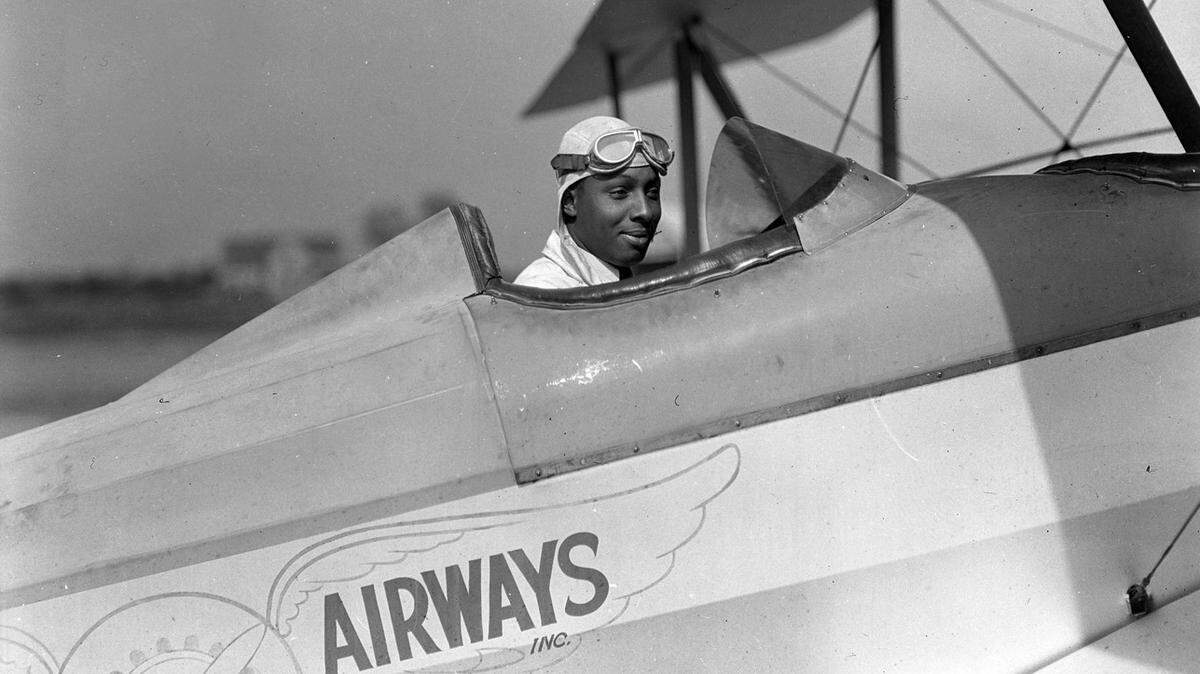
Johnnie Robinson watched amazed as “America’s greatest man-bird” flew overhead, landing his Curtis Pusher bi-plane, complete with wooden floats, on the Mississippi Sound just off Gulfport’s East Beach.
The 7-year-old Johnnie, like most living on the Mississippi Coast in 1910, had not seen an airplane. Only seven years had passed since the famous Wright brothers’ Kitty Hawk flight, and those who took to the air in questionable mechanical flying birds were daredevils.
The pilot was John B. Moisant, the famous Chicago aviator who first flew passengers from Paris to London and who had claimed awards and public attention for his flying prowess. Moisant is thought to have flown to the Coast in December 1910 when he organized an international flying competition in New Orleans billed as “the greatest outdoor event ever held in America.”
Young Johnnie caught the fly bug that day and never let it be swat down by racial prejudice. He wanted to soar like a condor, and that he eventually accomplished in both name and deed. John C. Robinson would one day become the famous Brown Condor of the sky and help plant the seed for the famed Black Tuskegee Airmen.
But early attempts to fly in an airplane or attend flight school to get a pilot’s license were denied simply because he was Black. His high intellect and innate understanding of flight science was ignored.
Undaunted, Robinson found ways to break the U.S. Jim Crow color barriers and to carve an international name as the daring American pilot who helped Ethiopia fight invading fascists and Italian dictator Benito Mussolini.
His longtime friend Katie Booth would recount, “When he was a kid he stood on the beach and watched the first ‘aeroplane’ land in Gulfport. Right then he was thrilled with the idea of flying.”
Robinson’s dream remained unaltered when Moisant died after being catapulted by wind from an airplane during that 1910 outdoor show. New Orleans honored his memory by naming, after him, the new airfield on the agricultural land where his plane crashed. Pilot deaths were common in the early days of aviation, when plane structure, avionics and weather science were in infancy.
If his parents attempted to deter his flying ambitions, it’s unknown in history retellings. In fact, Robinson’s mom and stepfather instilled a work ethic and personal strength that bode well for dream-pursuing.
‘Definite boundaries’
Born in Florida in 1903, baby Johnnie moved to Gulfport after his father died in an accident and his mother, Celeste, determined Gulfport offered more opportunity for widowed Black people. She remarried to Charles Cobb, who advanced in a job on the G&SI Railroad.
The port and rails offered good work opportunities for Black people, and the neighborhood St. Paul AME Church filled the spiritual needs of the Robinson-Cobb family and so many others.
As a teenager, it was obvious Johnnie was smart, a quick thinker, a hard worker, gutsy and handsome.
At age 15, he graduated from segregated Thirty-Third Avenue High School, which only offered classes through 10th grade because of Jim Crow strictures based on the misbelief Black people could not understand complex and technical things.
The next education level was to attend a Black higher education school. For Robinson that was Tuskegee Institute in Alabama, where he excelled in engines and mechanics.
Back in Gulfport, with a college degree and a natural ability at figuring out anything mechanical, Robinson still couldn’t land a good job at Coast automotive shops.
Katie Booth, who grew up in the same Gulfport Black neighborhood called The Quarters, would recall:
“There were definite boundaries, but education was the main thing. That’s why many of us left. We had writers and musicians here, but they were locked behind the color line. He wanted to do more than work at the docks or railroad. He had his dreams.”
Heading to the North
The month Moisant visited Gulfport, this newspaper published an article about what is now known as the Great Migration, when Southern Black people moved North for better opportunities.
Robinson himself became Illinois-bound, first to Detroit because of the automotive jobs, then to Chicago where aviation possibilities abounded. His ability to figure out how to repair an airplane engine finally won his first ride in the sky but only whet his appetite.
Next in Chicago he and like-minded friend, Cornelius R. Coffee, were denied flight school because of skin color.
Still determined, Robinson kept his day mechanics jobs and at night took on janitorial work at the top-notch Curtis-Wright School of Aviation. He studied blackboards and eavesdropped on night classes, finally convincing an instructor to set up night classes just for he and Coffee.
After acing the pilot’s license tests in 1931, the two opened the first U.S. Black-owned airport in Robbins, Ill., a business denied them in Chicago. Their aviation school’s first class included two women, breaking yet another equality barrier.
Bad weather destroyed their airport in three years, and both moved on.
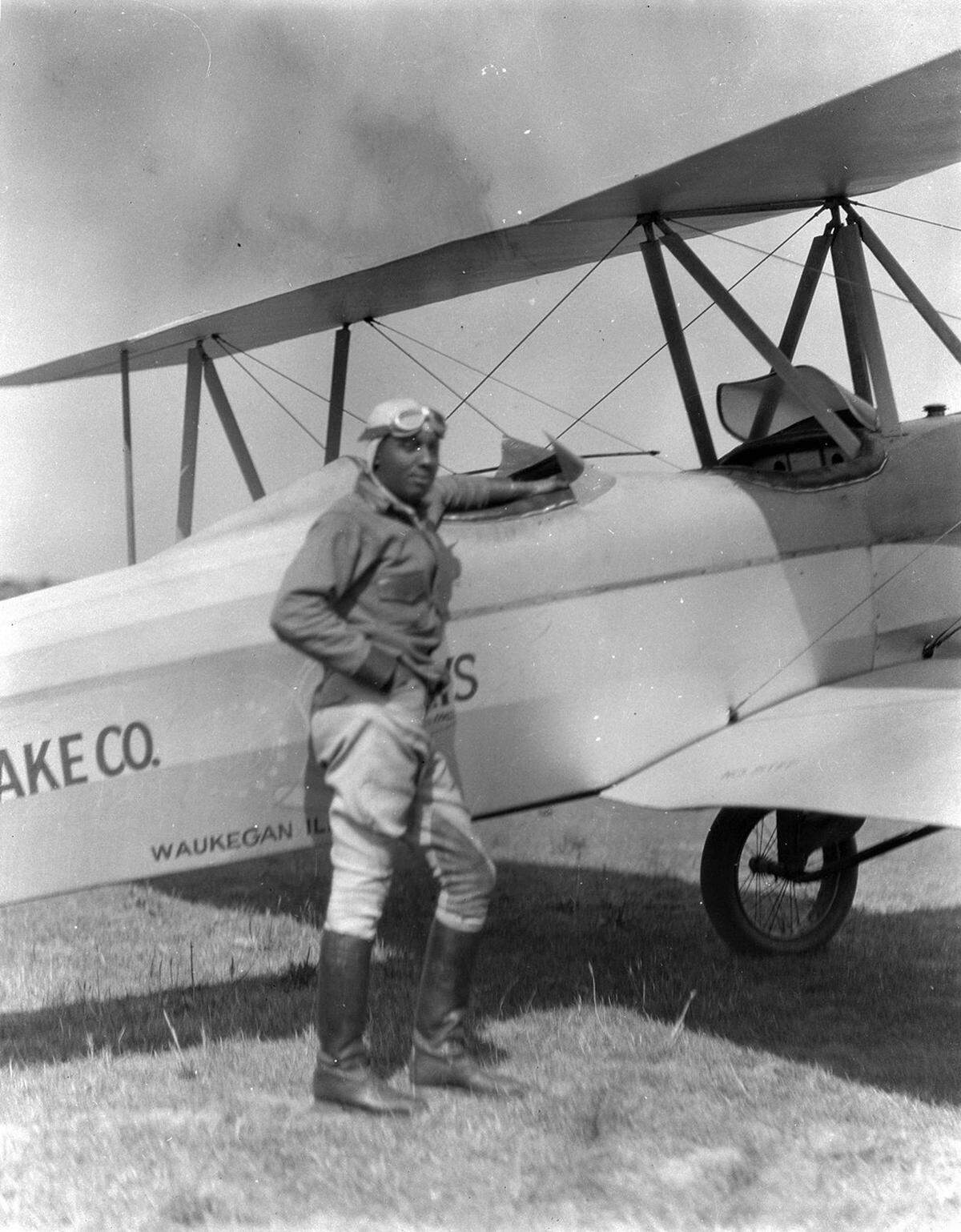
For Robinson, that meant to Ethiopia, a war-torn independent African country rarely mentioned in today’s textbooks. That’s where he earned the Brown Condor (sometimes Black Condor) nickname.
In 1935, Robinson whipped together a rag-tag Ethiopian Imperial Air Force for Haile Selassie and trained pilots to fight off Italian fascists attempting to colonize the majority-Christian country. Eventually the fascists overran Ethiopia and the Brown Condor temporarily headed home, where his wartime heroics in the sky made news in both Black and white newspapers.
His exploits and words also planted the seed at his alma mater and in the Army Air Corps for the famed Black Tuskegee Airmen of World War II.
When Allies liberated Ethiopia, the Brown Condor returned and launched Ethiopian Airlines. He died in a 1954 plane accident and was buried there — but none today know the grave location as records and memories were lost in war-torn Ethiopia.
The Herald was among newspapers reporting his tragic death and connection to Gulfport with a front-pager headlined: “World Famous Negro Flyer Native of Mississippi Killed in Crash.” Robinson was 50 and from that point onward, he became a non-entity in most American history books and memories.
A Robinson legacy revival
Fast-forward to 1973 and meet Thomas E. Simmons, a Gulfport native, businessman and now author who earned his pilot license at age 16. Simmons remembers reading a special Herald edition for Gulfport’s 75th anniversary jubilee in which one short paragraph piqued his interest.
The article titled “Blacks An Integral Part of Gulfport’s Rich Heritage” briefly mentions the “Black” Condor and the Italian-Ethiopian War. Simmons suspected John Robinson must be a pilot. The Herald article led him to a 1939 book from the Depression-era Works Progress Administration guide series.
The “Mississippi Gulf Coast” guide book suggests a walking tour of Gulfport and includes this bit:
“’Big Quarters’ is the principal Negro section of Gulfport, a section of one-story frame houses and business buildings. Compared with the State as a whole, an unusually large number of Gulfport Negroes own their own homes. The majority are longshoremen and receive union wages.”
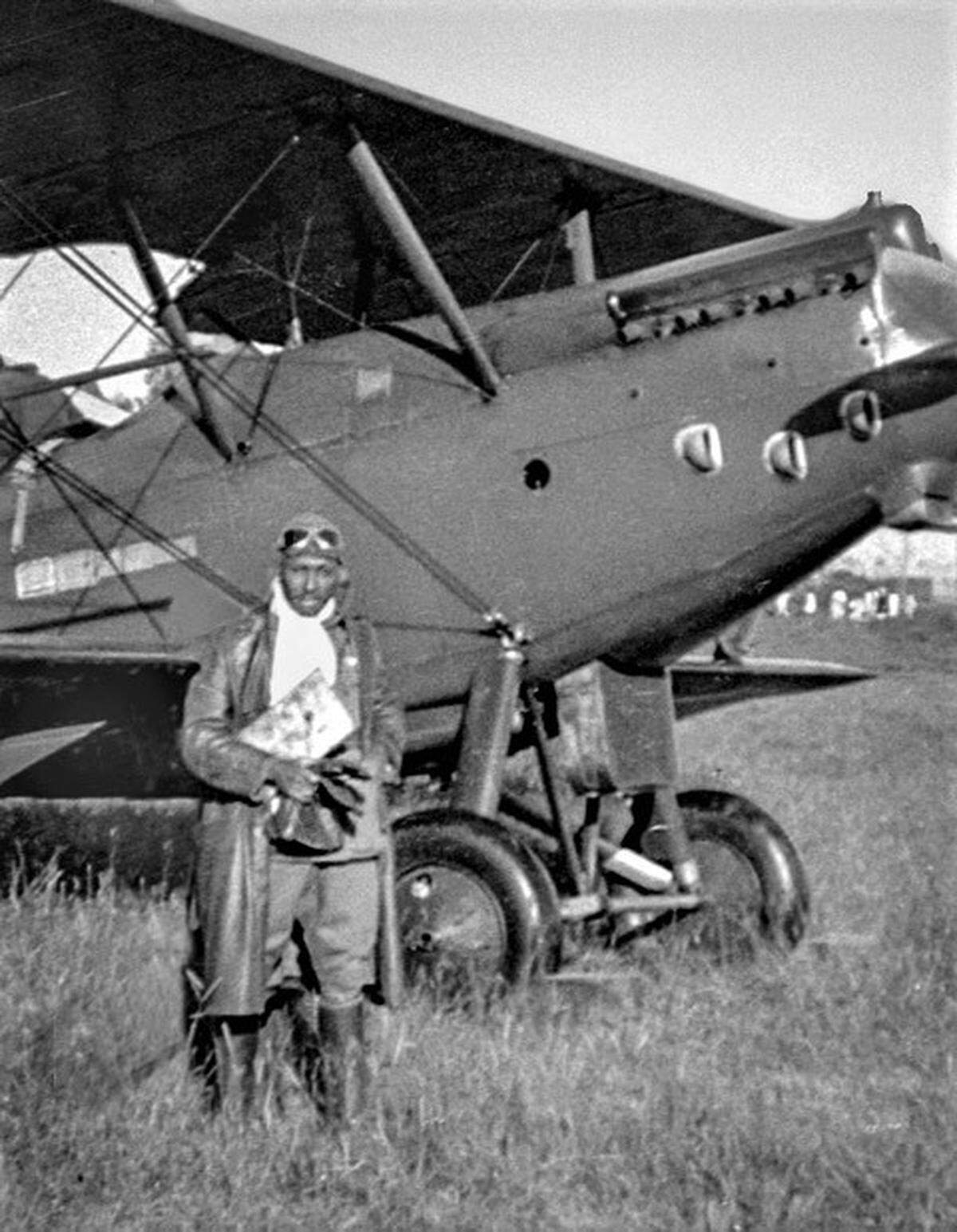
But this is the part that grabbed Simmons’s attention and spurred him into three decades of tedious but rewarding research:
“Big Quarters was the birthplace of J.C. ‘Johnnie’ Robinson, who won fame as the ‘Black Condor’ while commanding the Imperial Flying Corps of Haile Selassie, Emperor of Ethiopia, during the Italo-Ethiopian conflict.”
Fifteen years later, bleary-eyed from reading years worth of newspaper microfilm and hunting down Robinson’s family, friends and colleagues, Simmons published “The Brown Condor: The True Adventures of John C. Robinson.”
“I wasn’t pleased with it,” Simmons admits today, “and the Brown Condor was on my mind a lot. He wouldn’t leave me alone. The research wasn’t over. Photographs and more stories kept coming my way.”
Several years ago, he published an updated version, richer in detail and photographs and titled “The Man Called Brown Condor.” He thinks Robinson likes this one “because he’s leaving me alone now.”
Simmons’s revelations eventually lead to creation of a Brown Condor historical society, for which many of an age to remember Robinson documented their memories for the society as well as for a University of Southern Mississippi oral history project. The late Katie Booth was among them.
An aviation museum is born
Talk of a Brown Condor museum naturally surfaced, and today the Mississippi Aviation Heritage Museum attests to the prowess of Robinson and other Mississippi flyers in air and space.
Funding any new museum is difficult, and this one has faced the Great Recession and now the COVID-19 pandemic. As it expands and develops — including a planned flight deck — the museum doors are open several days a week on Pass Road in a building adjacent to a runway for the Gulfport-Biloxi International Airport.
With Simmons’s updated book, numerous media articles and a 2012 Phillip Tucker book, “Father of the Tuskegee Airmen: John C. Robinson,” the Brown Condor legacy grows with national attention.
“He was such a wonderful character who accomplished the impossible dream,” Simmons says. “This book should be in every school library to inspire people not to give up, to follow their dreams.”
When a bronze bust of the Black aviator was originally unveiled in Gulfport in 2010, the Smithsonian Air & Space Museum’s aeronautics division director attended. Robert van der Linden explained at the time:
“Aviation was a symbol of progress, a symbol of hope, especially when the economy got bad. It was a symbol of equality because an airplane doesn’t know and doesn’t care who is flying it: man, woman, Black or white.”
Kat Bergeron, a veteran feature writer specializing in Gulf Coast history and sense of place, is retired from the Sun Herald. She writes the Mississippi Coast Chronicles column as a freelance correspondent. Reach her at BergeronKat@gmail.com or at Southern Possum Tales, P.O. Box 33, Barboursville, VA 22923.
This story was originally published February 21, 2021 at 8:00 AM.