
Why Point Cadet in East Biloxi is the Mississippi Coast’s ‘cultural kaleidoscope’
A community name can reveal much. Point Cadet in Biloxi is a prime example.
The southeast tip of the Biloxi peninsula looks like a point on a map. The “Cadet” part of the name isn’t so obvious, but those who know the colonial history of this region might detect it as French.
“Cadet” means “junior” or “youngest.” Historians tell us that back in the early 1700s — when the French held sway in Biloxi — the word was used like “Jr.” today, to denote a son of the same name.
In this particular case, Point Cadet gets a bit muddled because the name is linked to a Spanish land grant. That’s easily explained: When Spain briefly held sway in this region, the French language and culture were so entrenched that there was no replacing them. The Mississippi Gulf Coast to this day remains awash with French place names, family names, traditions and foods.
That early history is stirred into a 21st Century cultural Coast gumbo flavored with other ethnicities and nationalities — Slavs, African-American, Polish, Irish, Italian, Vietnamese and Hispanics, among others. That early French influence was made stronger in the early 20th Century when French Cajuns from neighboring Louisiana came here to work in the burgeoning seafood industry.
This few miles of land with gorgeous water views and a colorful people remains out-sized for its influence, causing this newspaper to muse in 1888: “Apropos of a recent political meeting, is Point Cadet trying to run Biloxi or Biloxi trying to run Point Cadet?”
The name remains all these years later, but the land itself has undergone a transformation caused by both progress and destruction.
The progress might be defined as carving out a pristine coastal woodland once favored for hunting by Native Americans to make way for seafood factories and a working-class neighborhood of cottages. That evolved three decades ago to include waterfront casinos.
The destruction reference, however, is simply one word: Hurricane. In modern memory that would include the 1947, 1969 and 2005 storms that reshaped Point Cadet, indeed much of the entire Mississippi coastline that joins Mobile to New Orleans.
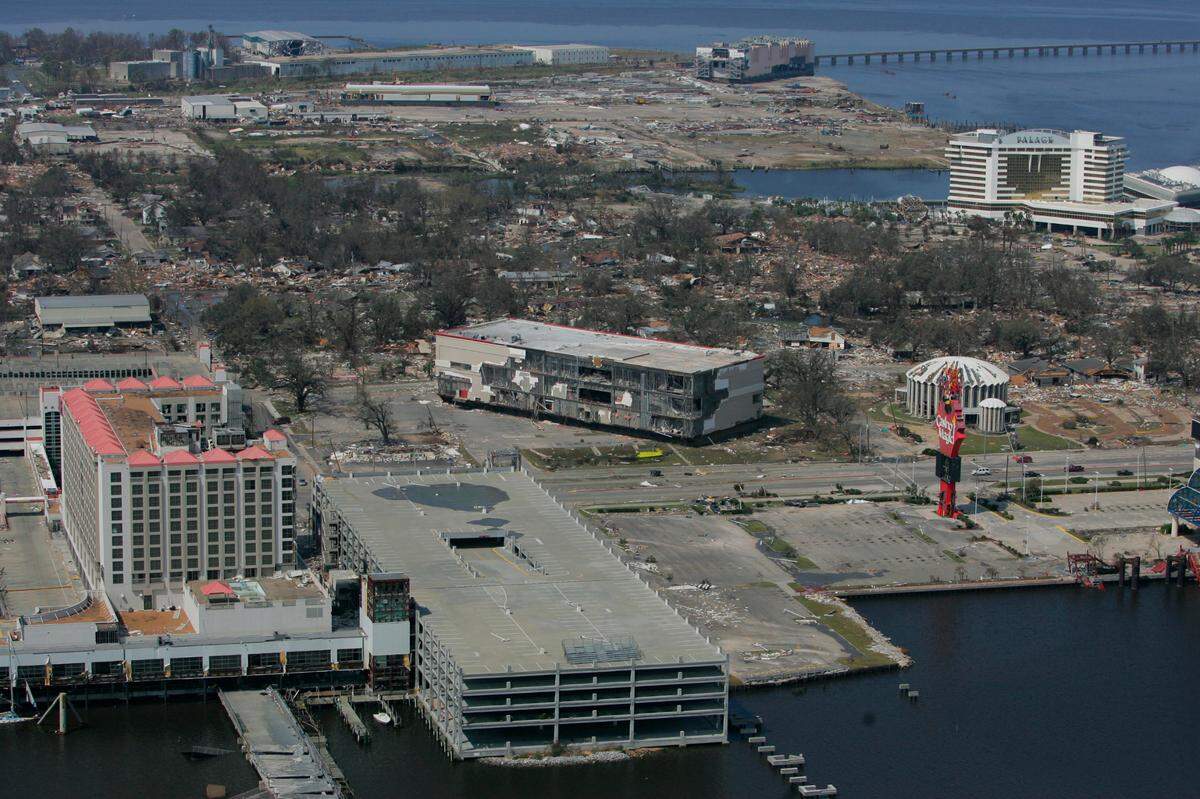
Point Cadet’s future is debated, but the diminished seafood production that once gave Biloxians a good life isn’t the only reason. In 2005, Hurricane Katrina destroyed or badly damaged 90% of its structures, stripping away familiar architecture and lifestyles. Changing times also play a role.
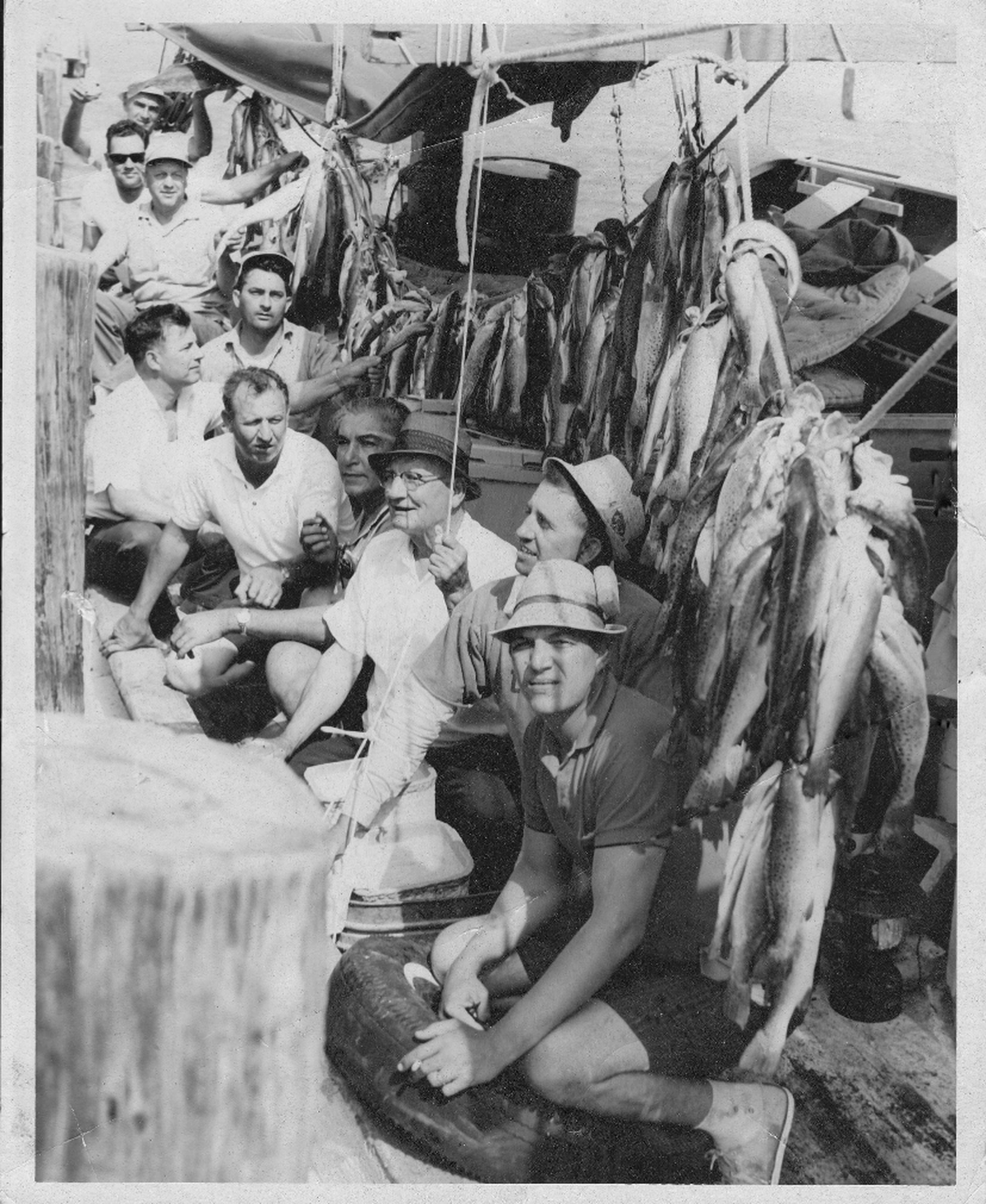
Old-timers no longer meet the charter fishing boats with their fiddles and accordions to entertain visitors and locals alike with their music. The “mullet brigades” now rarely entertain by cleaning and cooking their catches for all to see. Rows of the day’s catch aren’t displayed for all to ogle over.
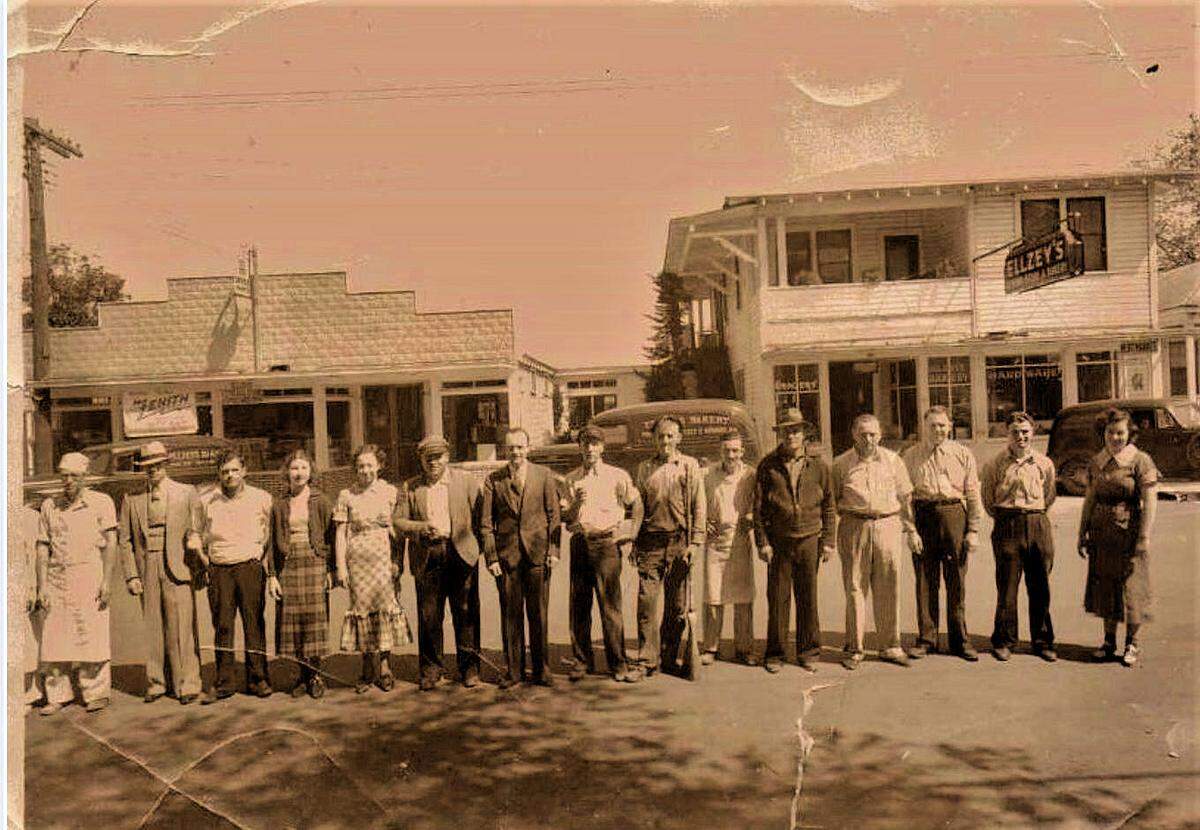
Most of the quaint fishermen cottages are gone. The bakeries famous for their daily French bread are gone, all but one that continues a booming crusty baguette business. Vietnamese restaurants, started by immigrants who helped save a Coast seafood industry in need of more workers, are now more prominent than po-boy shops.
As casinos bustle, many gamblers don’t realize there was wink-and-nod gambling prominent there long before casinos became legal. A fascinating Maritime & Seafood Industry Museum lures the curious, and there’s a Point Cadet Plaza, complete with pavilion for entertainers and splash pad for kids. Fishing piers, a marina, boat launches and beach walks beckon.
Point Cadet, often just shortened to The Point, is a changed and changing place.
The name, historians now believe, is linked to Jacques Mathurin Ladner II, who received a Spanish land grant there in 1784. He was a cadet, or junior, and that designation for a point of land is reflected in early court records. In French it would be ka-day, but most today use the Americanized pronunciation of cadet, or even the nickname caddy.
But this is not the Coast’s only cadet. Hancock County claims one, Bayou Caddy near Lakeshore. It, too, was originally Cadet and the product of yet another Spanish land grant to another junior son named Jean LaFontaine.
Interestingly, the boundaries for Biloxi’s cadet is still debated and is rarely delineated in maps. Kuhn Street is likely the western boundary, and if so that encompasses the Ohr O’Keefe Museum of Art dedicated to the famous potter George E. Ohr. However, some might argue that nearby Crawford or Oak streets are the western boundary.
The other directions aren’t in dispute because of water, the Bay of Biloxi and the part of the Mississippi Sound that encompasses Deer Island. For sure, no Point Cadeter will claim Back Bay on the northern boundary because that is a distinct historical neighborhood of its own.
For nearly 200 years after the landing of the French claimers, The Point stayed its pristine self. That began changing in mid-1880s with the coming of canneries. By 1908, a newspaper letter from “a resident of the East End, commonly called Point Cadet,” pointed out that it was no longer inhabited “by a few of the old-time people with a house here and there among the trees and high woods all around.”
The letter observed rapid change with wide streets paved with oyster shells, the “finest” branch of Biloxi public schools, a charity hospital, a fire station, a dozen grocery stores, meat markets and fruit stands, a bakery, a baseball park, two barbers, a broom factory, blacksmith, four churches, electricity, water and a street car line. Most importantly, shrill factory whistles awakened The Point.
The first immigrants to transform Point Cadet were the ethnic Slavs, who built the first Slavonian Lodge in late 1930s to look after their own. Replaced after Katrina, that lodge today carries the “Croatian-American” title, a reflection of war and changing countries in that part of the world.
These Slavic immigrants and their descendants have variously been called Austrians, Yugoslavs, Slavonians and Jugoslavs.
Their first indication of trouble came in World War I, as explained in this 1917 Daily Herald:
“In the event that war is declared on Austria and other allies of Germany, Biloxi will occupy a peculiar position. The seafood industry employs hundreds of Austrians, and it is feared that a large percentage may be forced to give up their work on schooners and on the waterfronts.... Probably the safest plan for the Austrians who are in sympathy with this government would be to secure their naturalization papers at once.”
Whatever called, this first group of seafood immigrants were hard-living, hard-working, family-oriented and strong-willed, as often reflected in the earliest news articles about them getting into fights with each other and having feuds brought as baggage from the Old Country.
The earliest extant news reports are often police and court reports about their fighting, drinking, crashing the parties of rival families and gambling.
Ironically, the Coast’s first legal gambling was a riverboat that docked at a former factory site 139 years after the first Point factory opened. During Prohibition, the Coast Guard also opened a seaplane base at Point Cadet to catch local rum-runners.
By then, The Point was not just stomping grounds for Slavic immigrants. Early on, it became obvious there weren’t enough of them. Soon seasonal Polish immigrants from Baltimore, called Bohemians, joined them to turn Biloxi into the self-described Seafood Capital of the World.
An interesting mix of Americans and new immigrants have kept Coast seafood alive. African Americans owned trawlers, but the majority were run by whites of European descent. That picture changed in the mid-1970s, when war-fleeing Vietnamese immigrants were lured here by familiar coastal weather and seafood jobs. Many stayed.
Point Cadet today is a mix of rebuilt people pleasers, like the open-air pavilion, and houses rebuilt by those who didn’t leave their beloved neighborhood. Those are contrasted by vacant sandy lots. Yet other Katrina-ed lots have sold for good prices to the gambling and resort industries that see an even bigger future on The Point. Public and private master plans also are studied.
So what is in the future? The answer, I believe, lies in a symbolic but true story.
Several weeks after Katrina, enough debris was cleared away for me to explore so I drove by my favorite Point eatery on Oak Street to see if anything remained. Le Bakery had just renovated and all that work was gone in the 22-plus-foot surge. But the building, a former seafood market, stood.
The shop’s customers and proprietors have always represented the Coast’s cultural kaleidoscope, beginning with Slavic descendants to today’s millennial foodies who seek out Le Bakery’s French bread, pastries and Vietnamese-style po-boys,
When I studied the battered building I realized I was correct that the hard-work ethic of the owner, Sue Nguyen-Torjusen, was fueled by a sense of humor.
A hand-painted sign hung on the building, declaring “Bread will rise again. It kneads time.”
Kat Bergeron, a veteran feature writer specializing in Gulf Coast history and sense of place, is retired from the Sun Herald. She writes the Mississippi Coast Chronicles column as a freelance correspondent. Reach her at BergeronKat@gmail.com or at Southern Possum Tales, P.O. Box 33, Barboursville, VA 22923