
East Biloxi has new roads. After 7 years of frustration, residents still pay a steep price.
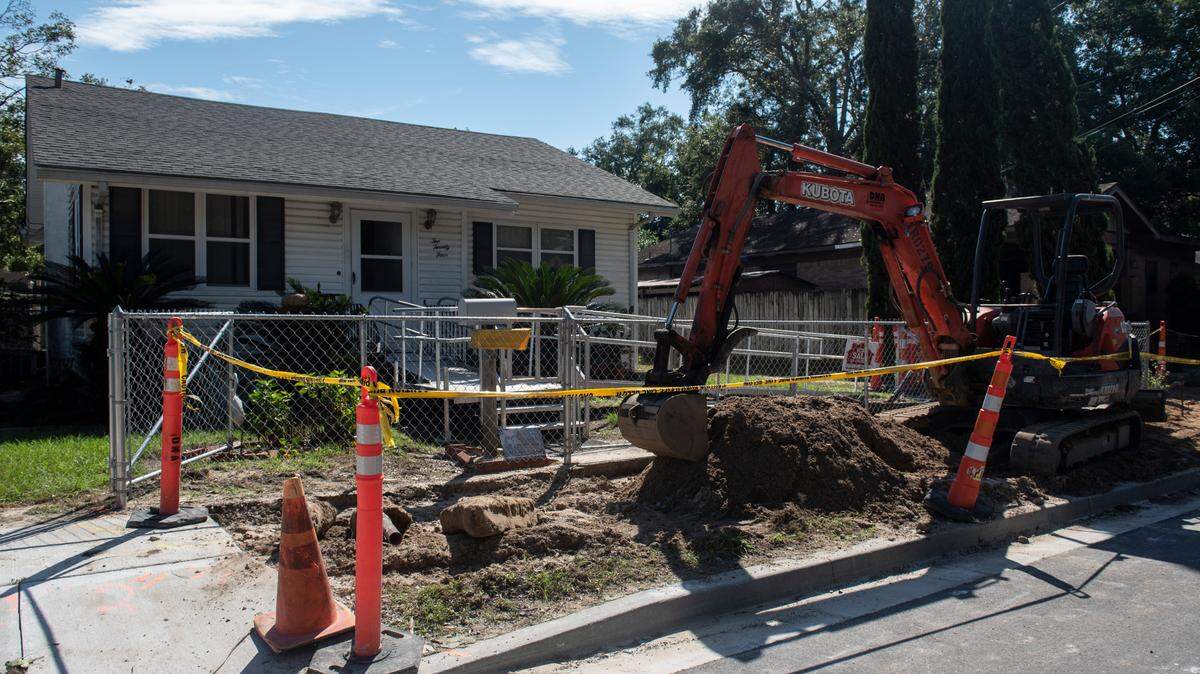
While contractor Oscar Renda and the city of Biloxi are fighting in court over tens of millions of dollars, some East Biloxians are still reeling from the damage a years-long infrastructure project did to their cars, homes and health. Many of them have never seen a dime in compensation.
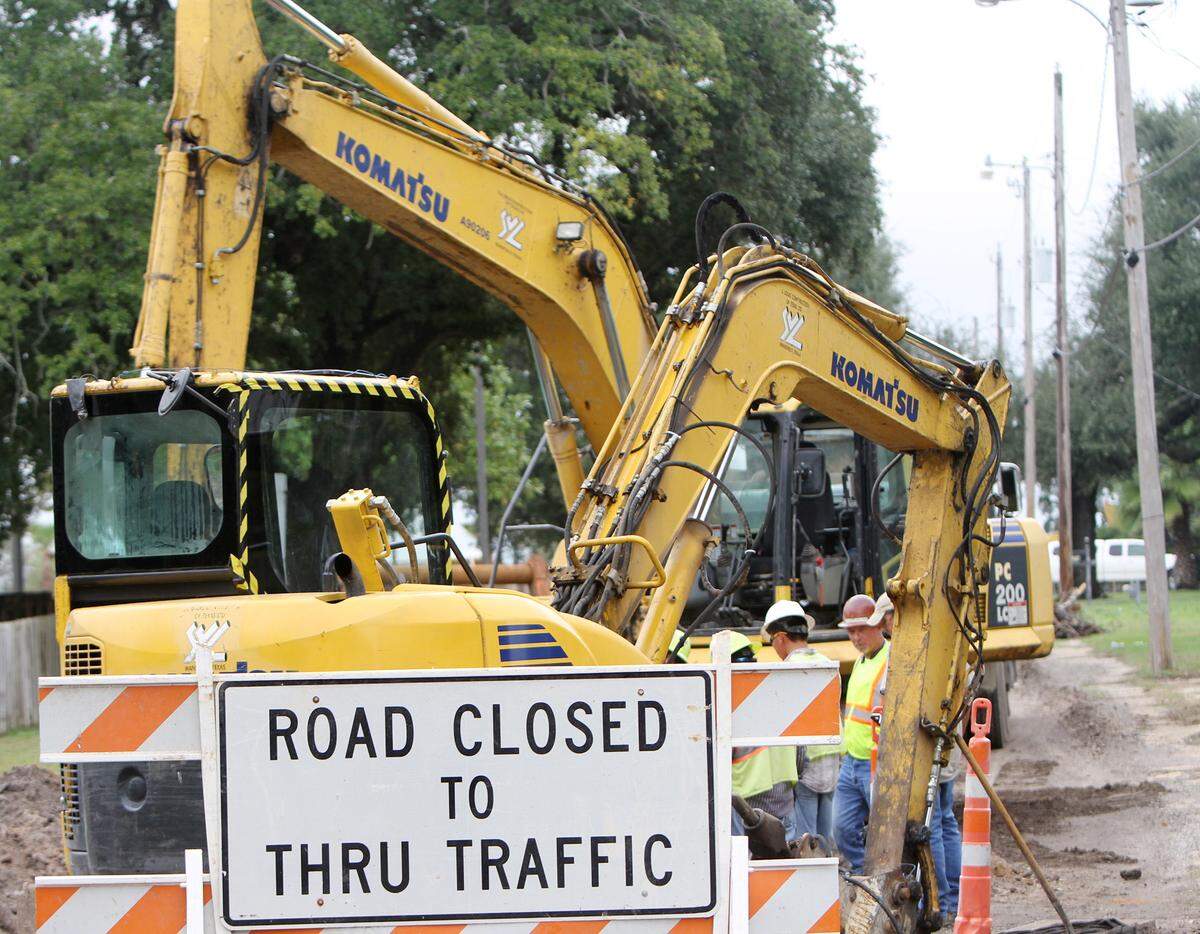
From 2014 to 2021, the Texas-based company worked in East Biloxi on a FEMA-funded project to repair water, sewer and road infrastructure — the largest public works project in city history.
During the project, East Biloxians packed into city council meetings to share their frustrations: Roads, unpaved for years, became obstacle courses. Dust collected in their homes and hampered their breathing. And some claimed the deep excavations and constant vibration of heavy machinery caused foundations and walls to crack.
But never before has the full scope of suffering in East Biloxi been publicly quantified.
According to documents obtained through a public records request, residents filed 756 damage claims against Oscar Renda with the city of Biloxi from 2014 to 2021. About 560 of these claims involved vehicle damage. Sixty-four reported damage to structures like homes and businesses, and some residents say they’re still trying to figure out how they will ever be able to afford costly repairs.
Experts in construction claims and litigation interviewed by the Sun Herald said that number of claims is high, for a project of any size.
“Wow,” said one Mississippi construction attorney who spoke on the condition of anonymity because he has colleagues and friends involved in the sprawling litigation around the project. “That’s a lot of people.”
The documents do not say whether the claimant received compensation, only whether their claim is still open.
In August, Oscar Renda sued the city for $79 million, alleging that flawed plans and poor project management caused the project to drag on for more than four years past its original completion date. The city has rejected that argument and says the problems were caused in part by Oscar Renda’s failure to staff the project adequately.
It’s unclear how many Biloxi residents were compensated for their claims because key figures refused to answer questions, including:
Oscar Renda
The city of Biloxi
Liberty Mutual, Oscar Renda’s insurance company
Some people who spoke with the Sun Herald say Oscar Renda never responded to their claims at all. As of July 2021, the documents showed 132 claims were still open and an additional 13 had been re-opened. Most of the open claims were originally filed in 2017 and 2018.
The Sun Herald spent more than six months reporting this story and spoke with dozens of East Biloxi residents and community leaders. Only three people said they got compensation without filing a lawsuit against Oscar Renda, and one of those people got a check only after the Sun Herald asked the company about her claim.
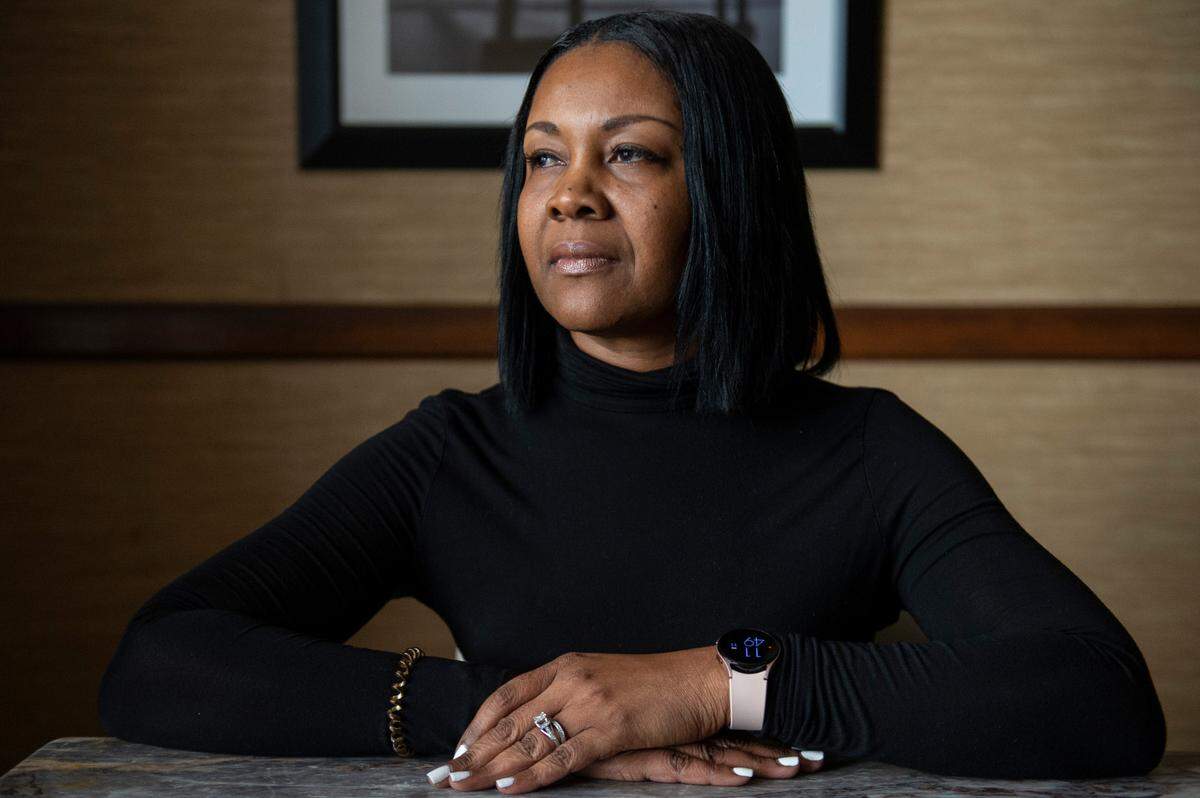
Tammy Carney, a paralegal who lives on Esters Boulevard, is still in disbelief at just how bad it was during the years of the road work.
“You couldn’t even have visitors,” Carney said. “You couldn’t have family day that you used to have on Sunday. Where they gonna park? They don’t want to step in mud. They don’t want to inhale dust and dirt. You don’t see your family unless you go see them. I’m talking, this was going on for years.”
In 2016, after the company had rejected her claims for damage to her Mercedes-Benz, Carney sued and won a nearly $3,600 settlement in a default judgment because Oscar Renda didn’t show up to court.
But Carney said most of her friends and neighbors didn’t know that was an option, or they couldn’t afford to pay the court fees.
One in three East Biloxi residents are impoverished, well above the city average, and the area is home to Biloxi’s historic Black community as well as many of the city’s Vietnamese and Latino residents.
Carney believes Oscar Renda recognized they were working in a poor community. She thinks they calculated they could simply ignore damage claims.
“They felt like and knew that we weren’t gonna do anything about it,” Carney said.
Challenges from the start
After Hurricane Katrina, FEMA awarded Biloxi $376 million in funding to repair its infrastructure.
The North Contract, covering water, sewer and road work north of the railroad tracks and east of Interstate 110, was the biggest single project and the largest public works project in city history.
The city received three bids for the project. Yates-Hemphill bid just shy of $154 million, while Eutaw Construction bid about $147 million. Oscar Renda’s bid came in by far the lowest, at $116.5 million.
The low-bidder was founded by a football coach and U.S. history teacher named Oscar Renda in 1974. He and his brother, Rudolph, had immigrated to the United States as young boys about 20 years earlier. According to the company website, Oscar got a teacher’s credit union loan for $13,000 and started building up his construction company, specializing in pipeline installation.
Today, it’s one of six companies under the umbrella of Southland Holdings, based in Grapevine, Texas, northwest of Dallas.
After winning the contract in May 2014, Oscar Renda broke ground later that year. Not long after, the claims started coming in.
The first was filed in November 2014: “Rocks thrown from dump truck in front of claimant’s vehicle.”
Vehicle claims like that one would continue for years as the roads remained unpaved long after the contract’s original completion date of August 2017.
Dozens of residents interviewed by the Sun Herald said they had assumed that the work would proceed in pieces, leaving most of the neighborhood roads paved at any given time. The company says that was its goal, too.
Instead, about 50 miles of roads were torn up at nearly the same time, and many remained that way for years.
Oscar Renda says the plans they were given were missing details. While waiting for answers to move forward, the company’s workers had to move on to another area of the project to keep work going.
That meant tearing up more asphalt — the simplest part of the job in each section.
Damage claims roll in
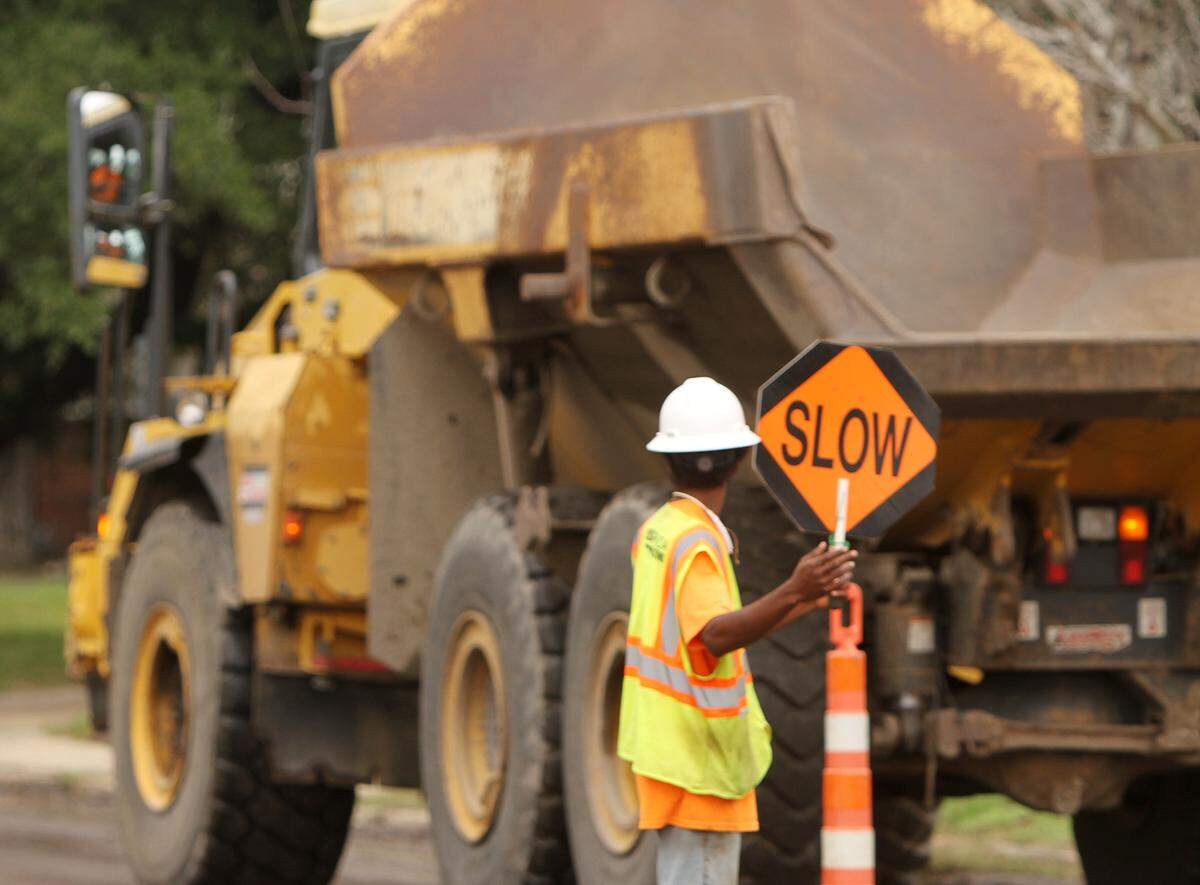
The unpaved roads made East Biloxi a nightmare to drive through for years. And life indoors was disrupted, too, by dust that came in with the breeze, unpredictable work schedules, and occasional blockades of people’s driveways and cars.
“Sometimes they would let us know if they were gonna be working,” but sometimes they wouldn’t, said Leaseare Hughes, who lives in the Main Street home her family has owned for decades.
The claim summaries provide snapshots of life in the neighborhood while the infrastructure work was underway.
“Fell in a hole near residence, had to be physically pulled out of the hole,” Bowen Street, July 2016.
“Has had 2 flat tires in three weeks from driving on the roads under repair,” Holley Street, November 2015.
“Damages to mother’s house due to construction in area; foundation shifted and water has ran under home for past several years,” Graham Avenue, December 2018.
“Alleges son has breathing issues and allergies from construction dust,” Haise and Benachi, October 2017.
Other claims illustrate subtler disruptions. Claimants mourned the loss of oleander trees, and the replacement of St. Augustine grass with bermuda and winter grass.
Some claims hint at resignation creeping in as residents repeatedly saw their property treated as expendable. In March 2018, a resident on Fayard Street filed a claim after contractors took her fence down, asking if they’d put it back up or give her a new one.
By July 2021, Oscar Renda had left town. But another spreadsheet compiled by the city, called the “Fence List,” showed dozens of Biloxians were still waiting on their fences to be returned.
“It’s been five years,” said Forrest Rucker, who lives on Croesus Street, while visiting on a friend’s porch in January 2022. “Six months ago, they just brought the fence back. They ain’t brought the gates back yet. I’m tired of going up there.”
The fence list recorded about 350 households that had already gotten their fences replaced, though it did not say when.
The largest numbers of damage claims were reported in 2016, 2017 and 2018, but continued to come in through 2021.
In November 2020, the city documented four claims involving vehicle damage from driving on Forrest Avenue. Claimants reported a torn exhaust pipe and bumper, a cracked A-frame and damage to their car’s front end — all apparently caused by the same elevated and unmarked manhole cover.
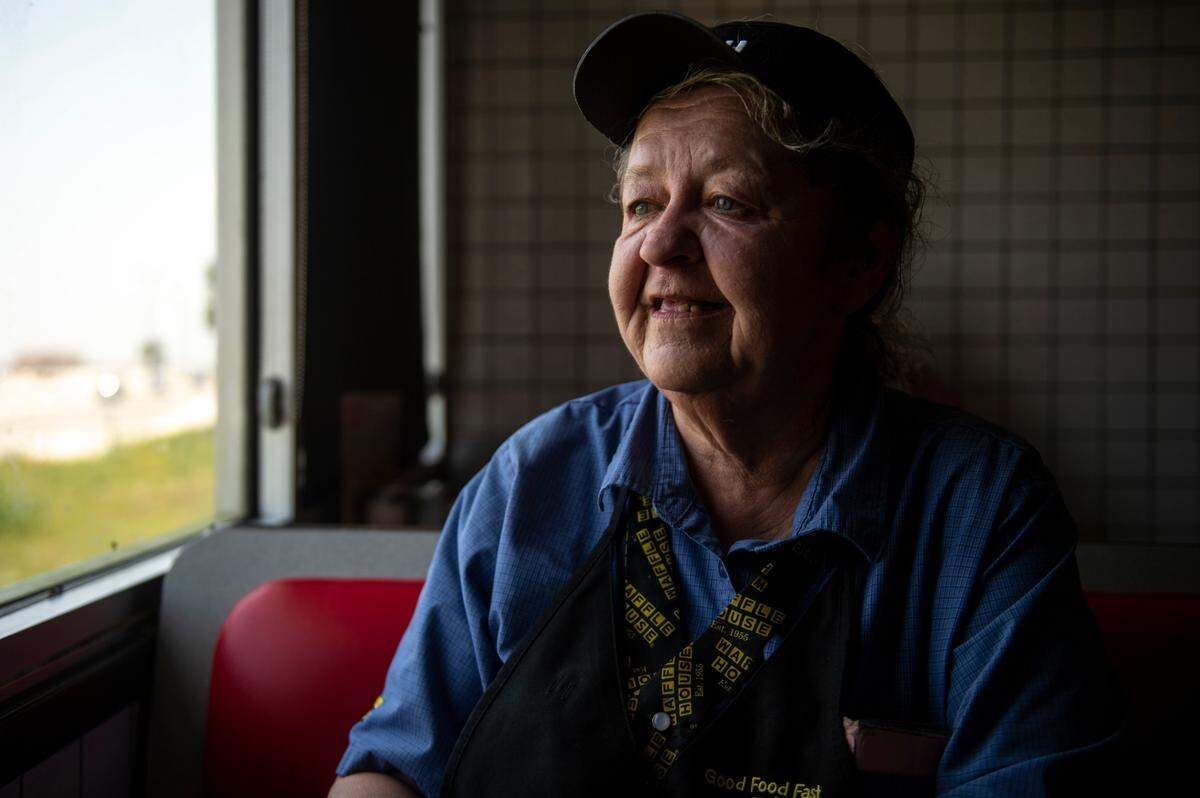
Oscar Renda told one of the claimants, Vicki Dean, to send her claim documentation to the home of an Oscar Renda office employee. Oscar Renda then ignored Dean’s messages for months. After the Sun Herald started asking the company about Dean’s claim, she got a check for nearly $5,000 to buy a new car — nearly a year after she filed a claim.
It is unclear what happened to the other three claimants: the documents the Sun Herald reviewed indicate only that all of them have been “closed.”
In an email, project manager Jennifer Matranga echoed the points Oscar Renda has made in court.
“You asked about the number of claims,” she wrote. “This was a large project. Also, because of problems with the design the City provided to Oscar Renda, Oscar Renda was not able to complete its work in an area before it moved to work in the next area, like Oscar Renda planned to do.”
City’s process documents claims
Ward 2 Councilman Felix Gines was often the first person who got a call when a constituent’s property was damaged during construction. In his experience, when people tried to file claims with the company, they were frequently ignored. At first, the city had no visibility into the extent of the claims or how they were being handled.
He quickly came to distrust Oscar Renda. That was part of the reason why the city eventually set up its own process with its third-party administrator, Associated Adjusters, Gines said.
“We wanted to make sure things went smoothly,” he said. “We wanted to make sure that people were heard.”
When a resident called the city to report a claim, they would pass the information to Associated Adjusters. Often, Associated Adjusters would visit the claimant’s house, document their damage, and send a letter with the information to Oscar Renda’s project manager, Jennifer Matranga.
The Sun Herald reviewed letters Associated Adjusters sent to Oscar Renda. Walt Rode, the infrastructure program manager for the city, was copied. Mayor Andrew “FoFo” Gilich and city attorney Peter Abide were BCC’ed.
Involving city officials ensured that the claims became public record. But for some Biloxians, following the city’s process felt like a bait and switch, because it usually seemed to result in the same outcome: being ignored by Oscar Renda.
Fed up with the ‘lists to nowhere’
Lela Jordan, a native Biloxian who moved home in early 2021, was shocked to find out how many friends and neighbors had suffered damage to their homes during the infrastructure project. She started trying to help them get compensation, but eventually concluded that the city’s process simply put people on “the lists to nowhere.”
Associated Adjusters and the city of Biloxi could make sure Oscar Renda received the claims, but they had no power to compel them to respond.
John Higgins, a nearly lifelong resident of Querens Avenue, contacted the city to report damage to his home: Settling and sinking ever since the excavation in front of his home, cracked tiles in the bathroom and shingles falling off the roof of the house where he had been raised.
After he contacted Biloxi, an Associated Adjusters employee arrived at his home to document and photograph the damage. In April 2021, the company sent the claim to Matranga.
Higgins said no one from Oscar Renda ever contacted him.
And when he later asked Associated Adjusters for an update, he claims he was told “there is no follow-up, no timelines, no deadlines, no status report to the homeowner, that Oscar Renda decides what to do with the claim.”
Role of insurance company unclear
Oscar Renda’s insurance company is Liberty Mutual. In a statement, senior public relations consultant Richard Angevine said the company does not publicly discuss claims.
Under the terms of the North Contract, Oscar Renda was required to have general liability insurance, which should have covered third-party damage claims.
Jim Zack, a Colorado-based expert in construction litigation and disputes and the owner of James Zack consulting, said that ordinarily, a contractor who gets a damage claim would simply hand it off to their insurance company for evaluation. If it’s determined that the contractor is responsible, the insurance company will make a payment.
But it’s not clear how often Oscar Renda sent claims to Liberty Mutual. Liberty Mutual employees were not copied on the letters Associated Adjusters sent to Oscar Renda.
According to Bay St. Louis-based construction attorney and former state legislator David Baria, a contractor may want to avoid letting damage claims reach their insurance company at all. A large number of claims could cause an insurance company to hike premiums or even drop coverage.
Many of the claims in East Biloxi were for likely relatively small dollar amounts, particularly in the case of vehicle damage.
“They may feel like, either there’s no basis to these claims, or they’re so small that people aren’t likely to get a lawyer and file suit over it, so maybe they’ll just go away if I ignore them, so that won’t affect my premium,” he said. “I’m not saying any of that is right. But those are possible explanations.”
Matranga said Oscar Renda did not interfere with Liberty Mutual’s handling of claims and would not say how many claims were sent to the insurance company.
Some Biloxians did get paid
Some Biloxians did receive compensation for their claims.
Khadiya Smith, who lives on Nichols Drive, was one of at least 25 Biloxians who reported problems with their sewer system that they attributed to Oscar Renda’s work. She eventually got a check for about $700, from Oscar Renda.
Another East Biloxian, who asked not to be named because she doesn’t want to attract attention, lives just north of the railroad tracks in a home she had inherited from her parents. Because of the digging and vibration on two sides of her home, which sits on a corner, her house settled and she dealt with busted pipes and broken pilings. Oscar Renda offered her $3,000. She took it, even though she estimates it would cost $40,000 or more to fix all of the issues in her home.
“I begged and pleaded with these people for about a year trying to get ‘em to do the right thing, fix the house,” she said. “I told them I didn’t want any money, I just want the house fixed. They didn’t work that way, operate that way, of course. So finally I settled with them.”
Other Biloxians, like Tammy Carney, got compensation after filing lawsuits against the company.
Oscar Renda has sometimes incurred the ire of local judges by failing to meet filing deadlines and even to show up to court.
When Carney sued Oscar Renda in Justice Court, Oscar Renda never answered her complaint and then didn’t appear at their court date. Carney won a default judgment. But when she tried to collect it, the company asked the court to set aside the default judgment — the first time it acknowledged Carney’s lawsuit.
“Oscar Renda’s response to this lawsuit is much like a child’s response when having to face consequences for misbehavior,” Carney’s attorney, Jason Ruiz, wrote. “Oscar Renda seeks a free pass to ignore the rules with impunity.”
The default judgment stood.
Claimants often successful in court
A Sun Herald review of court records found that Oscar Renda has been sued at least 17 times over its work in Biloxi, including Carney’s case.
In four of those cases, liability has not yet been determined. In an additional four, Oscar Renda defeated the claim.
In another five, Oscar Renda settled with the plaintiff.
Represented by attorneys Christopher Van Cleave and Robert Wiygul, their suit alleged Oscar Renda’s work caused structural damage to their building, including foundation separation and cracked drywall, and lost income, among other problems. Wiygul said his clients were pleased with the size of their settlement.
“But I’m sorry there were people who unlike the Burtons, Oscar Renda just declined to pay and who weren’t able to take them to court,” said Wiygul, who has represented several other East Biloxians suing the contractor.
Another lawsuit by the Gulf Restoration Network alleged Oscar Renda was polluting Biloxi waterways in violation of the Clean Water Act; the group won a settlement in which the company paid attorneys’ fees and $300,000 for a habitat restoration project.
In two cases, the judge awarded a default judgment to the claimants after becoming exasperated by Oscar Renda’s conduct.
The review of lawsuits shows that Biloxians who sued Oscar Renda got compensation more often than not, by winning their case or by negotiating a settlement.
But many people in East Biloxi didn’t consider that as an option.
And in a community where some neighbors can trace their roots back generations, memories of the city’s corruption, violence and vice in the 20th century loom large. Some people interviewed for this story didn’t want their names to be published because they fear reprisal, even violence, for speaking out about the infrastructure project overseen by the city of Biloxi. They invoked the Dixie Mafia.
Others pointed to East Biloxi’s working-class culture and a deeply ingrained stoicism — a preference for not making a fuss.
One Reynoir Street resident called the city at 8:30 a.m. every day, starting around 2018 or 2019, until a crew came in early 2020 to install a retaining wall. Without the wall, her yard was eroding because the infrastructure work had dropped the elevation of the road. (The city and Oscar Renda agree that problems involving the elevation of the road and sidewalks, some of which Biloxi has been paying to fix, were not caused by Oscar Renda’s work but by design issues.) The city closed her claim in May 2021.
When her new wall went up, she almost felt embarrassed. Neighbors had the same problem but weren’t getting any help.
“This is the poor area of the city,” she said. “It’s hardworking, just-trying-to-live people… Nobody paid attention.”
This story was originally published March 30, 2022 at 10:00 AM.