She moved home to Biloxi after decades away. And city officials are paying attention
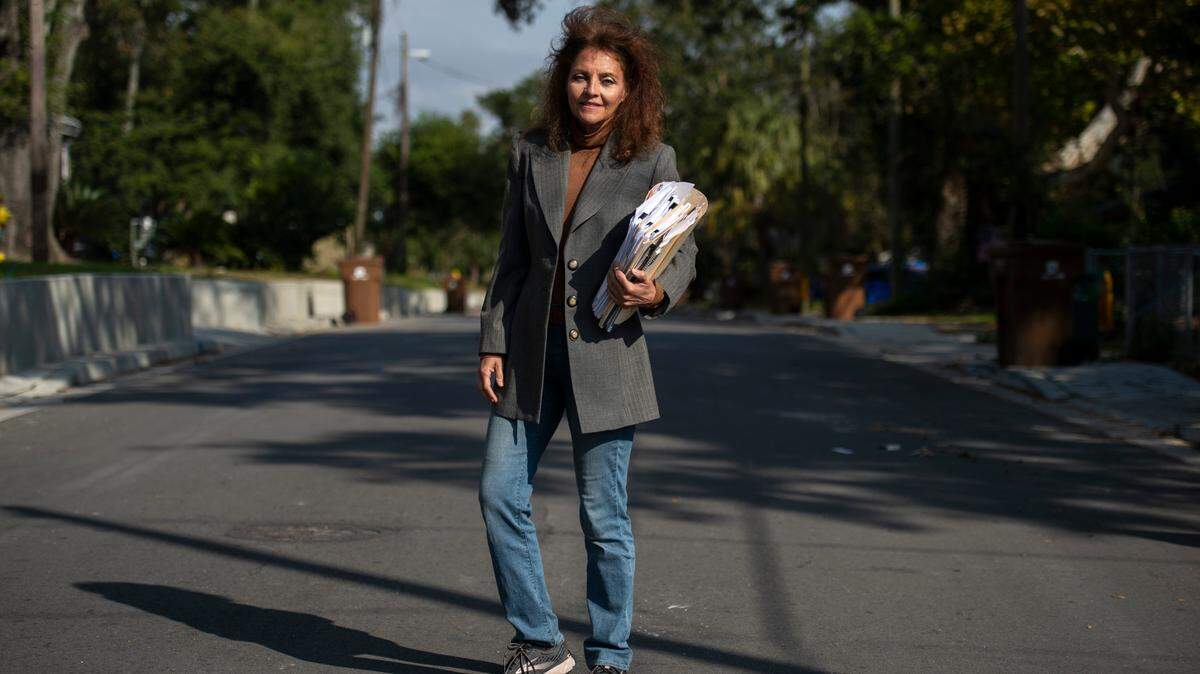
In February, Lela Jordan moved home to Biloxi.
She had grown up in East Biloxi, but spent the last 45 years working around the Southeast. Her career had involved helping vulnerable people: the poor, the young, the elderly, the homeless.
And as the director of the Youth, Family and Community Resources Division of West Palm Beach, Florida, she had learned what cities can do for those people— if they choose.
Jordan, who held the position under four different mayors, spent a lot of time telling city officials they couldn’t treat poor people like an inconvenience.
“I was kind of the devil from within, because I was always causing a headache, cause I’d say, ‘Well you can’t do that to the homeless,” she said.
When she came home, Biloxi had just declared an end to its biggest-ever public works project: The $130 million post-Katrina infrastructure repairs that ripped up miles of East Biloxi roads and turned the city’s historic heart into a landscape of mud and dust for years.
Though the project was completed, Jordan saw how it had damaged her old friends’ and neighbors’ property, and that no one outside seemed to care about what people had suffered in the city’s poorest neighborhood.
Jordan became determined to do something about it, though she held no formal position or job here that made it her responsibility.
And her advocacy appears to be part of why the city recently began repairing some of the driveways and sidewalks that were installed so steeply that residents fell down them or damaged their cars — years after Biloxians first began to ask for help.
“If I see something, I need to try and fix it,” she said. “It’s like a curse.”
A force to reckon with in West Palm
Alan Levine met Jordan in the 1990s, shortly after he moved to West Palm. Jordan had recently been hired by the city and given a simple mandate: Do what you need to do to help people who need help.
Over the years, Levine — who had helped raise money for AIDS-related causes in New York before moving to Florida — contributed to Jordan’s projects and advocacy efforts.
While other government officials waited for people to come to them and ask for help, Jordan met people where they were. She frequented homeless camps and knocked on doors in poor neighborhoods to ask people what they needed.
At the time, many of the city’s homeless residents were Vietnam veterans who didn’t trust the government and didn’t want anyone’s help.
“But they began to trust Lela because she would be out there where no one else went, in the woods, behind buildings and parks and hidden away,” Levine said, a volunteer and advocate for the poor.
Through conversations with veterans experiencing homelessness, she learned that some of them avoided seeking medical care at the local VA hospital, even though they were entitled to it, because they could get sent up to a higher floor, where it would be harder to make a quick exit. That made them afraid they would be committed and held against their will.
Jordan and Levine advocated for federal funding to set up a one-story trailer outside the hospital, where homeless veterans would feel more comfortable seeking medical care and resources.
How did Jordan explain why she was called to help vulnerable people?
“Very simply,” Levine recalled. “By growing up in Biloxi at that time, there was poverty, and there were haves and have nots.”
Two weeks after Katrina, in 2005, Jordan arrived in Point Cadet with the donations she had collected in south Florida, enough to fill an 18-wheeler.
‘A man-made disaster’
By early 2021, Jordan was ready for a change. In Florida, high-rise condominiums lined nearly every beach. Back home on the Mississippi Gulf Coast, you could still see the water.
Not long after returning to Biloxi, she went to visit her old friend John Higgins at his house on Querens Avenue. They had grown up together. His 18th birthday party had been a surprise, held at her house a block away on Benachi.
He remembered how as a girl she had walked around the neighborhood with cats trailing after her, or pushing a cat in a baby buggy. At one point, she recalls, she was taking care of 21 cats at her family’s home.
Higgins told Jordan about his three strokes that had left him walking with a cane, and how he kept falling down the new driveway that Texas-based contractor Oscar Renda had installed when they finally replaced the road they had torn up.
Jordan was shocked at how steep the driveway was, and even more shocked that no one from the city seemed to be doing anything about it.
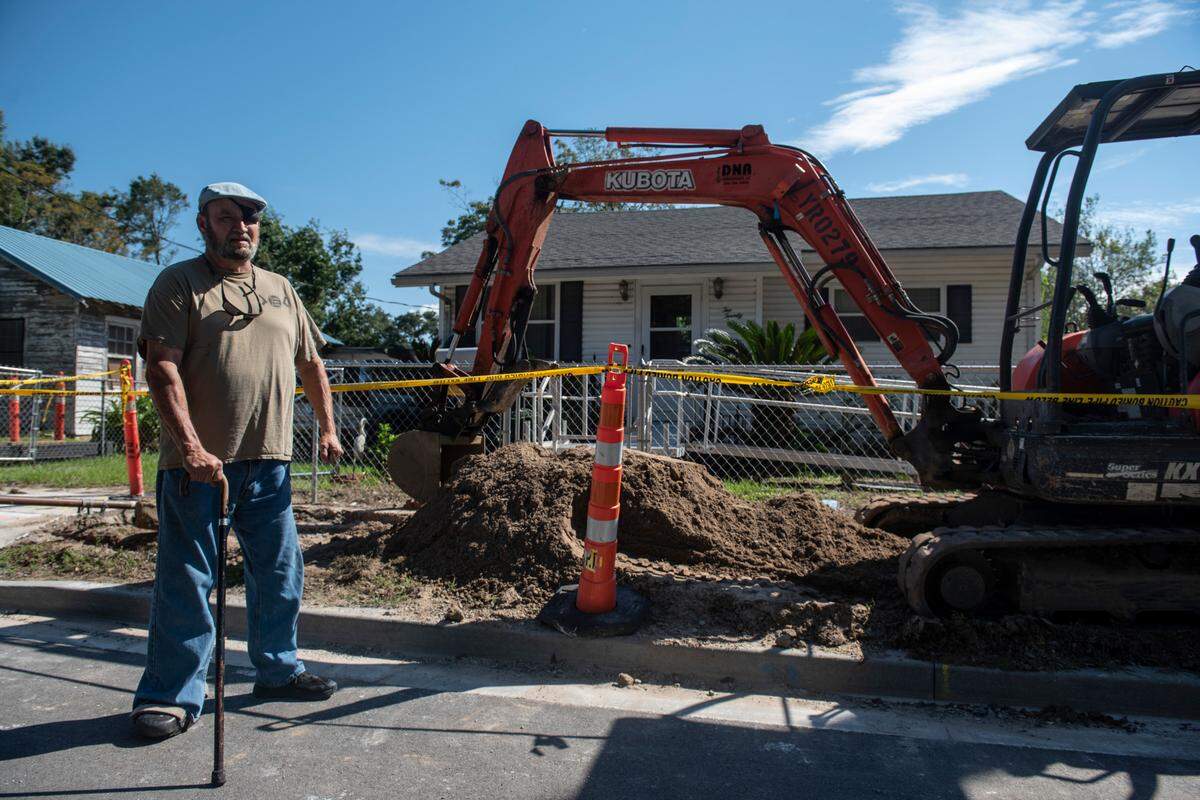
From Higgins and other friends and neighbors, she learned that the project intended to fix infrastructure damaged by Hurricane Katrina had disrupted people’s lives, damaged their cars, and even shaken the foundations of their homes.
“To me, this was like a man-made disaster,” she said.
Jordan says she isn’t “some kind of ADA (Americans with Disabilities Act) expert,” but she did work on ADA issues in West Palm and ensured the non-profit she ran in Mobile, Alabama, was accessible. She could tell just from looking at Higgins’ driveway that it was too steep.
Calling on the city of Biloxi
She called the city. In March, project manager Walt Rode came to Higgins’ house with Kevin Mullen from Brown, Mitchell, and Alexander, the Gulfport engineering company that designed the section of the North Contract that included Querens.
“I showed them that the sidewalk and the road, the pitch, it was not ADA compliant,” she said. “And at first they said, ‘Oh yeah it is.’ Then they got the level out and said, ‘You’re right, it’s not.’... They said they were gonna look at what to do and try to come up with a resolution. So then nothing happened.”
Rode declined to answer a detailed series of questions from the Sun Herald. Instead, public affairs manager Vincent Creel sent a general statement explaining that “the size and scope of the project made it difficult to manage.”
Contractor Oscar Renda told the Sun Herald it followed the plans it was given for sidewalks and driveways, and that city inspectors approved the work. It has sued the city for about $80 million, alleging it was given flawed engineering documents.
The city in turn has filed a third-party complaint against the seven engineering companies that designed the project.
Brown, Mitchell and Alexander declined to comment for this story, citing the litigation.
Speaking before the council
Jordan and Higgins waited for months. Other East Biloxi residents, like Karen Fleeton of Main Street, had first started raising concerns about the sidewalks and driveways as early as 2018. At least for Fleeton, nothing had been done.
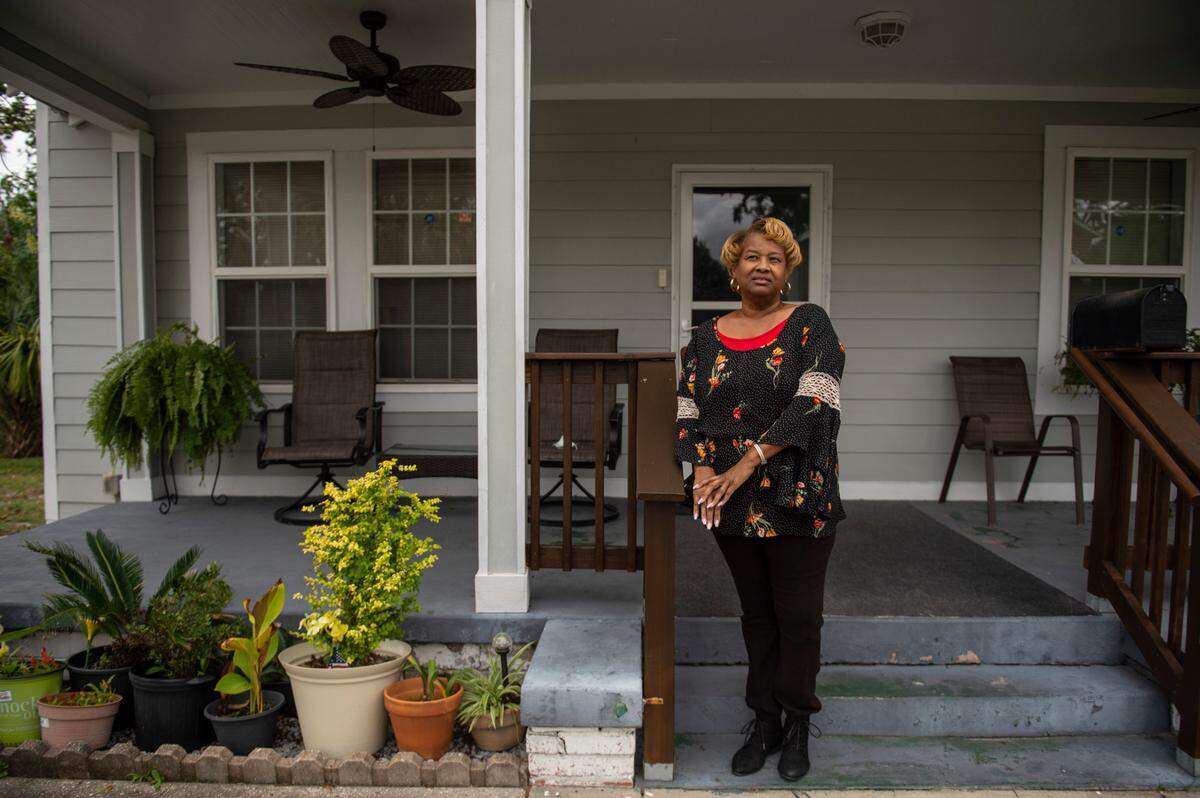
Meanwhile, Jordan collected documents and news articles. She filed records requests and talked to people, learning how many of them had been ignored . She kept everything in a thick folder, and wrote notes and questions on many documents.
On July 6, Jordan and Higgins went to a City Council meeting.
Jordan, wearing a slate grey skirt suit and heels, took a seat and pulled the microphone toward herself. She explained how city officials had acknowledged the problems at Higgins’ property, but nothing had changed.
“I must remind the council that in January 2002, there was a settlement case, Department of Justice vs the City of Biloxi, where the settlement demanded that the City of Biloxi ensure that current structures as well as future projects meet ADA guidelines,” she said. “It appears this directive is not being met.”
Jordan was referring to a case in which the federal government investigated the city’s compliance with the ADA and found a litany of violations at public facilities like polling places, libraries and City Hall.
The Department of Justice had agreed not to sue as long as Biloxi made the necessary fixes. But, as Jordan noted, the agreement also said the department could review compliance “at any time” and could sue if the city didn’t resolve the problems.
The city takes action
The next day, she got a call from Rode. Once again, they met at Higgins’ house, and he showed her plans for a new sidewalk and driveway.
On July 8, Rode also sent a certified letter to Higgins, copying Mayor FoFo Gilich and CAO Mike Leonard.
“I was at Tuesday’s Council meeting and heard your comments regarding your sidewalk and driveway,” the letter began.
Rode explained that the city had asked Mullen to work on “an alternate design” for the driveway, and that the plans would be finalized in a few days.
It’s not entirely clear what influence Jordan’s advocacy had on the city. A log of pay orders obtained by the Sun Herald through a public records request indicates DNA Underground sent its first invoice for North Contract-related work on June 1, 2021. But of the 37 invoices on the log, only four were dated before Jordan’s speech before the council.
But Councilman Paul Tisdale said that the repeated speeches before the council about Higgins’ property had caught his attention. He said he had followed up with other city officials and asked: “What’s being done to correct the situation?”
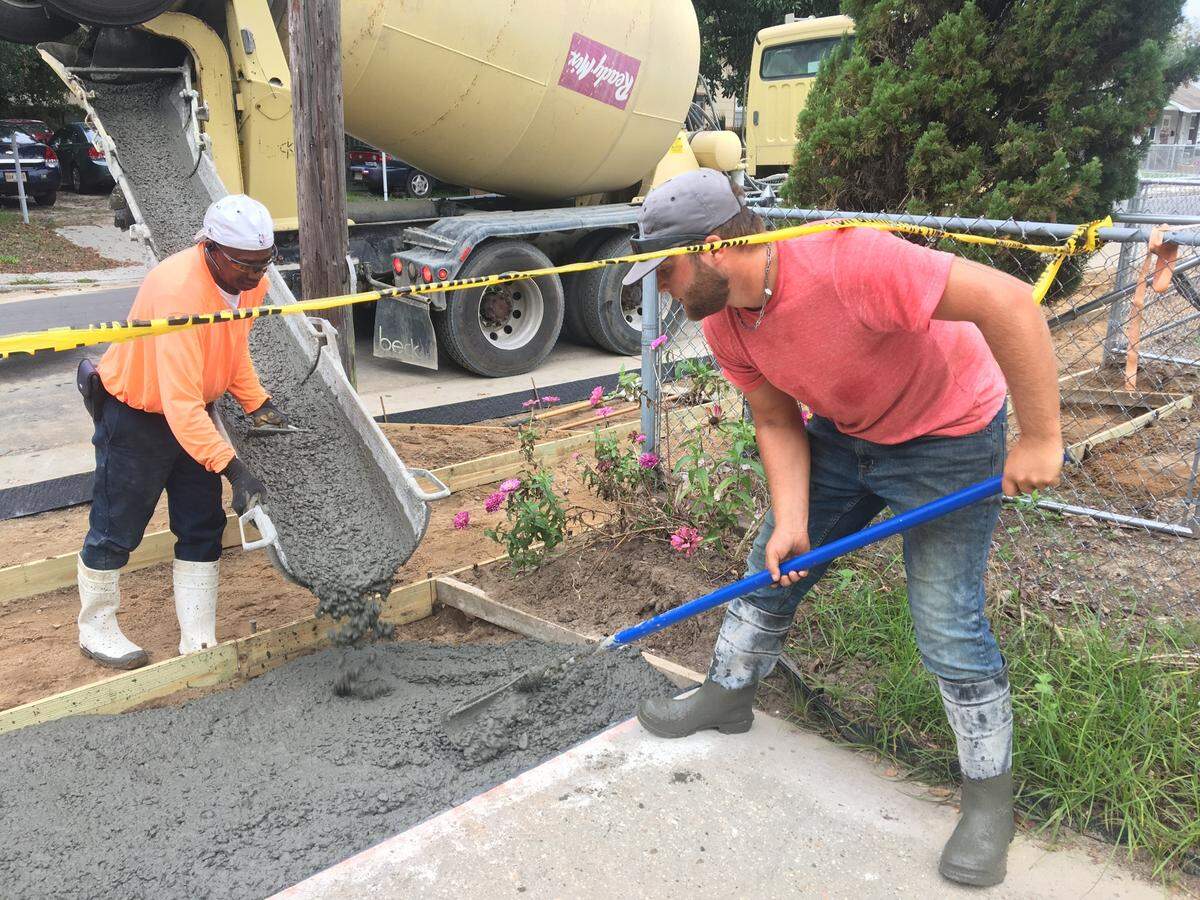
In September, DNA Underground started work at Higgins’ house.
For Jordan, it was a familiar story: Those in power tend to ignore people without power, until someone forces them to pay attention.
“You bring light to something, that changes a lot,” she said. “You expose it: A lot of times things will change.”
This story was originally published November 25, 2021 at 5:00 AM.