MS Coast hospitals are losing nurses in a ‘dire’ situation. It’s about to get even worse.
Hospitals in South Mississippi and throughout the state say they will have to close floors and reduce available patient beds if they don’t find a way to combat a nursing shortage that’s about to get worse.
The state, acting through the Mississippi Emergency Management Agency, had found money to hire 900 nurses statewide during the latest COVID-19 wave. But that funding is about to end, creating big problems for health care providers.
At Singing River Health System, these events translate into the loss of about 70 nurses and the closure of 100 hospital beds. Since the start of the pandemic last year, Singing River says it is down a whopping 240 nurses.
What’s going on? Hospitals say traveling nurse companies are poaching many of their nurses, and that some nurses have left on their own because of the ongoing stress of the pandemic. Replacements aren’t coming in quick enough.
The travel nursing companies are offering pay three to five times the rates that the mostly non-profit hospitals across Mississippi can offer. Recruiting for these companies have gotten aggressive as COVID hot spots shift often throughout the country.
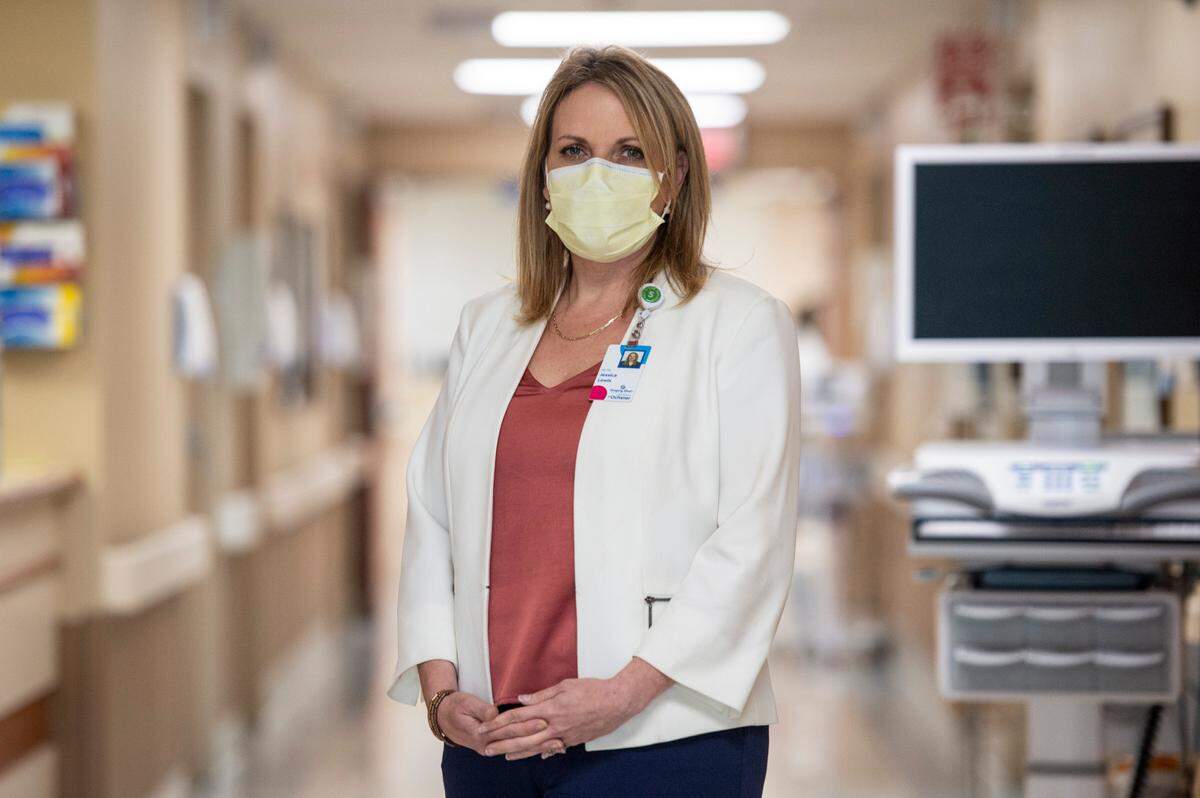
“Just today, I had 10 resignations of nurses ... in the last hour 10 nurses that have decided to go travel,” said Jessica Lewis, Singing River’s executive director of human resources, during an interview on Wednesday.
“You think that’s just one health system, right? Multiply that all across the state of Mississippi and all health care. It’s just a big taffy pull ... everyone is scurrying out there trying to get the talent and keep their doors open.”
Mississippi health systems are attempting with Herculean efforts to retain their nursing staff and swiftly train new employees, but are pleading with state leadership for more immediate help.
Though COVID numbers are now less of an issue than in recent months, the impact of a labor shortage caused by the pandemic still rages. An extension of MEMA nurses’ contracts is a necessary band-aid.
“It’s a dire situation and we’re needing assistance ... Governor Reeves, we need you to help extend these MEMA nurses,” said Lewis.
In a letter addressed to the governor, Lt. Gov. Delbert Hosemann and Mississippi House Speaker Philip Gunn, Singing River joined 36 other major health systems across the state on Nov. 5 in asking for further assistance using some of the $2 billion in CARES act and American Rescue Plan money the state has received for pandemic and economic relief.
“We are asking that you set aside a portion of those funds to quickly establish a program to incent health care workers, particularly nurses, to remain in and return to their hospitals,” the letter states.
Chief nursing officers across the state are predicting that staff shortages will result in closing over 500 acute care hospital beds over the upcoming months, according to a letter. In the first seven months of 2021, Mississippi lost approximately 2,000 actively licensed registered nurses.
‘We have no other choice but to close floors’
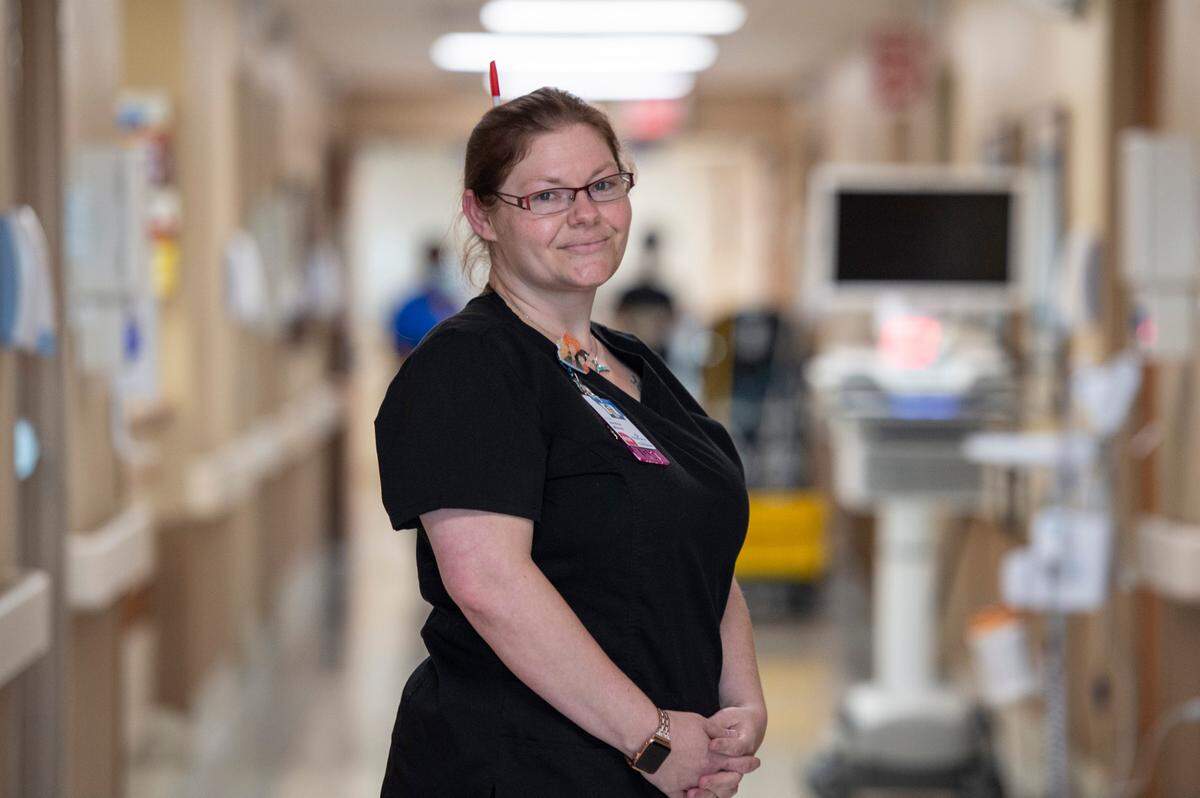
The MEMA nurses provided welcome relief to Singing River during critical staffing shortages amid COVID, said nurse and manager Jessica Moore, who coordinates staff and care at the health system’s Gulfport location.
Before the pandemic, patient ratios were five patients to one nurse, she said. During COVID, ratios surged to seven or eight to one.
“I was in full-time staffing, working six and seven days a week, 16-hour days so that my nurses didn’t have to do six and seven, 16- hour days,” Moore said.
With the MEMA help, the hospitals were able to return to pre-COVID levels of four and five patients per nurse. When they leave, it will be back to six and seven patients per nurse. Typically, Moore’s hospital plan calls for a total of 20 nurses to staff seven days a week. She’ll have only eight after Oct. 31, and will lose around 30 beds.
“I have enough staff to open up one, full 14-bed unit. Right now, I’m running at a 48-bed capacity with MEMA nurses. I have to shut that down to a 28-bed unit. And that’s with me going into staffing, my patient care coordinators going into staffing,” she said. “I have to find somewhere to put 30 patients after the 31st.”
While COVID patients have subsided in the hospitals, a backlog of sick patients who by choice or because of state emergency restrictions stayed away from care during the delta surge are now coming into MS Coast health systems in droves. Hospital volume has not decreased because COVID has disappeared.
“When we had these COVID surges, people couldn’t get into the hospital. So you have your people with chronic conditions ... waiting at home and getting sicker,” Moore said.
“Now when you’re coming in, you’ve waited that extra month, it’s going to take us six and seven days to get you back to baseline. So they’re coming in sicker, they’re staying longer, our bed turnover isn’t happening like it typically should.”
A war on talent
Singing River attempted to keep some of the MEMA nurses, but ultimately cannot compete with the contract rates they’re receiving. The MEMA nurses are getting paid critical rates, Lewis said, which are higher than even travel nursing rates, which can get up to $130 to $200 per hour. An average nurse about a year ago made $30 an hour, according to Lewis.
Travel nursing companies are able to be successful in states like Mississippi, where the majority of hospitals are not-for-profit or community business models with small profit margins. Cash flow to support large-scale nurse raises, bonuses or incentives isn’t available, according to Lewis.
“It’s kind of hard to compete with the traveling companies. If you tell me that I only have to work three days a week, I’m going to make three times when I’m working here. And I don’t have to deal with the politics, the regulations, the rules, I just got to go do my job and go home. It’s going to be hard to say no,” said Moore.
According to the U.S. Bureau of Labor and statistics, compiled by nurses.org, Mississippi pays an average nursing salary of $59,750 and ranks last in the nation.
“We’re in the least healthy state, in a state that’s not wealthy, and a state that has not expanded Medicaid. And because of all of those factors, we have less money coming in,” said Singing River CEO Lee Bond.
Hospitals are also competing against each other, which raises industry-wide rates. Lewis said that health systems are in sort of an “arms race” in their efforts to competitively adjust nursing salaries.
“We dropped our rates a few weeks ago because it felt like they were coming down. We were like, OK, this is working as long as other health systems start dropping their rates,” Lewis said. “But the moment a couple of them go up ... Alabama all the way goes up or Louisiana goes up, they start hitting higher demands.”
And health systems are not only having to pay travel agencies or attract talent, but retain their own workforce. They’ve done this partly through incentives. A standard nurse works 36 hours a week, Lewis said, but if they pull an extra day, Singing River pays them an additional $400 a shift on top of any overtime work rates.
“You’re looking at over $10 million that’s already been spent in incentives and retention,” she said.
Nurses struggle with the decision to travel
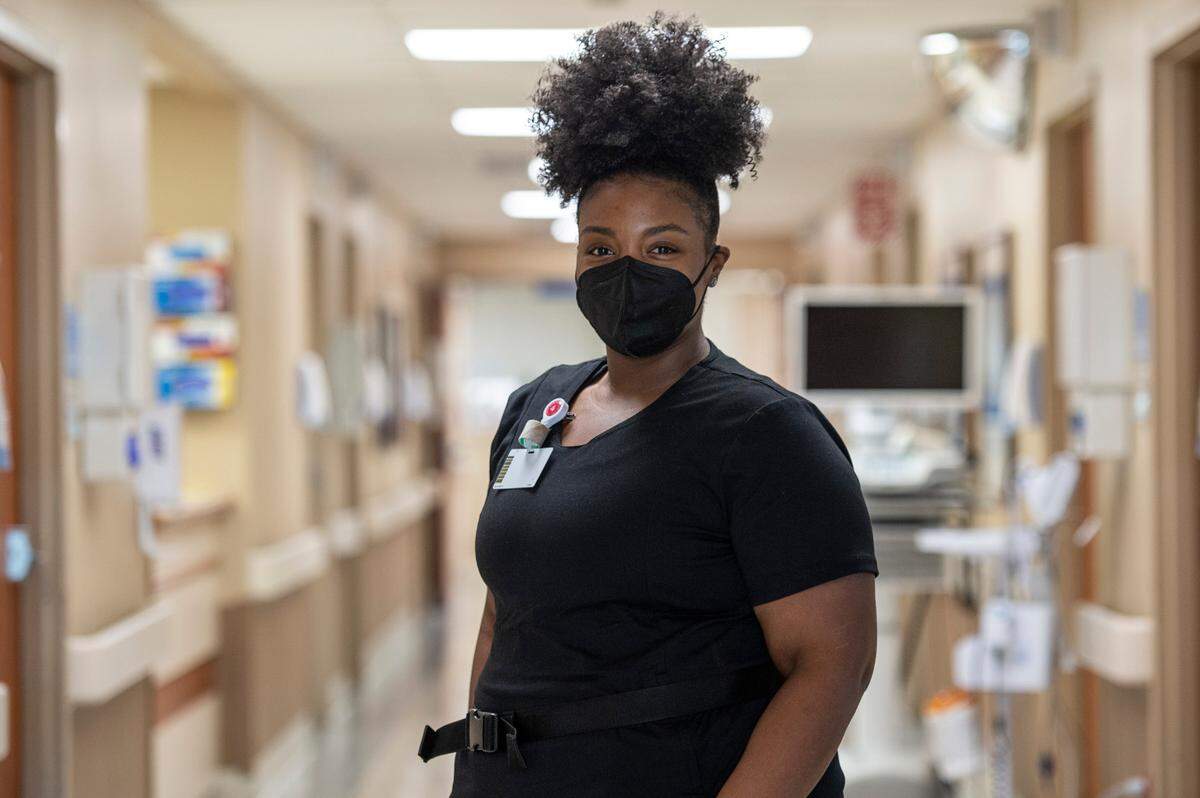
On Wednesday, MEMA nurse Maya Travis worked one of her final shifts in Singing River’s Gulfport hospital location since starting on Oct. 17. She found out a week ago that her contract was expiring. She doesn’t know where she’ll go next, but expects to choose from a list of new COVID hot spots soon.
Travis, who has been a nurse for two and a half years and a travel nurse for a year and a half, has worked in New Orleans and Pensacola and completed work during COVID’s second wave in El Paso, Texas on a five-month contract. She wants to do travel nursing for about a year more, and might settle somewhere after.
Unlike most of her MEMA colleagues, Travis is from D’Iberville and has been able to stay with her family throughout her contract. Others hail from Texas, California, Trinidad, the Bahamas, Arizona, among others, and have stayed in hotels across the Coast.
There has been interest from her Singing River colleagues about Travis’ experience with travel nursing, she said, not that they’d need her assisting the services. There are “recruiters at every turn,” according to Jennifer Dumal, senior vice president of patient care services at Memorial Health.
Travis said she has noticed that the attitudes of some of the nurses around her are sour because they realize how much more she’s making doing the same job.
“I know it sucks because you know, everybody wants to make money. But I try to make it where it’s like, ’yeah, that’s true, but I’m here to help you as well.’ So what do you need me to do? Let’s do it,” she said.
Moore said she hears from her permanent staff some complaints about the fairness of the contract nursing situation as well, especially because some of the short-term nurses come to the hospital with significantly less experience.
“There is resentment among, not necessarily toward, that contract nurse. But the fact that we can’t offer what the contracts can, you know, I’ve been doing this for 15 years, and I’m having to train somebody and, you know, typically do their job and they’re making such and such more,” said Moore.
Moore said she herself gets flooded with offers from travel nursing companies. The pay is enticing, she said, but Singing River and the Mississippi Gulf Coast is home.
“I get offers every day, I think I stay because I want to serve the community. That’s what I went into nursing for, it’s not typically about the money,” she said.
“I’m in a position where this is enough. And I can maintain. So I’m blessed that way. But you know, if my family got in a bind, I couldn’t say that I wouldn’t seriously consider it.”
Nurses said the decision to leave their communities, especially during COVID, is one of the hardest parts about taking travel nursing contracts.
Kara MacDonald is a registered nurse in Memorial’s ICU who left in the beginning of the pandemic to work a travel contract at Ochsner LSU Health Shreveport. She worked six months, “saved some money” and returned home to the Coast.
“I’m a homebody, I was ready to come home, my family’s here. It was a lot of travel back and forth. And I was still committed to Memorial ... that that was so my home and I never intended to stay away long term,” she said.
“I was ready to come back and get settled.”
State assistance is needed to ease the crisis
An executive order from Gov. Tate Reeves dispersed 920 MEMA nurses across 61 state hospitals in September. While Gov. Reeves extended Mississippi’s state of emergency in early October, the short-term nurse contract extensions were not included.
Singing River said they were hoping the governor would also extend the nurses, because the reimbursement process for the state to get these contracts funded by FEMA is relatively straightforward. But Lewis said she understands the way the state wants to curb cash flow right now, while the COVID crisis looks controlled as numbers dwindle. But that’s not looking at the full picture.
“You can’t just look at what the COVID numbers are. This is where we’re really, really needing help from the state because unfortunately, we have no other choice but to close floors,” said Lewis.
Beyond the extension of MEMA nurse contracts, Singing River and other hospitals in the state are requesting money for long-term asks. Bond, the Singing River CEO, has proposed a plan called Save the Lifesavers, which pushes for the state to use 25% of its American Rescue Plan funds to pay for health care workers incentives.
The plan proposes a $20,000 retention bonus for nurses who sign a contract agreeing to stay at a Mississippi hospital for at least two years.
Singing River is also requesting from federal, state and local elected officials some regulation of nursing rates. Lewis said the health system has received some verbal support but has seen no crafted legislation.
“We’re out there, talking to the county every day and talking to our board of supervisors, talking to the states, talking through our legislators,” said Lewis. “How can we do some regulation, so it doesn’t also bankrupt your hospital systems or put them in a situation where they may have to close their doors?”
This article and live event is supported by the Journalism and Public Information Fund, a fund of the Gulf Coast Community Foundation.
This story was originally published October 31, 2021 at 8:00 AM.
CORRECTION: Thirty-six Mississippi health systems sent a letter to Governor Tate Reeves, Lt. Gov. Delbert Hosemann and Mississippi House Speaker Philip Gunn on Nov. 5 asking for help around nursing shortages using some of the $2 billion in CARES act and American Rescue Plan money the state has received for pandemic and economic relief An earlier version of this story stated that 17 of the state’s health systems sent the letter on Oct. 21. The story has been updated to reflect these changes.