
Tim Lockley: Issues with chimney swifts? Kick them out before eggs in nest
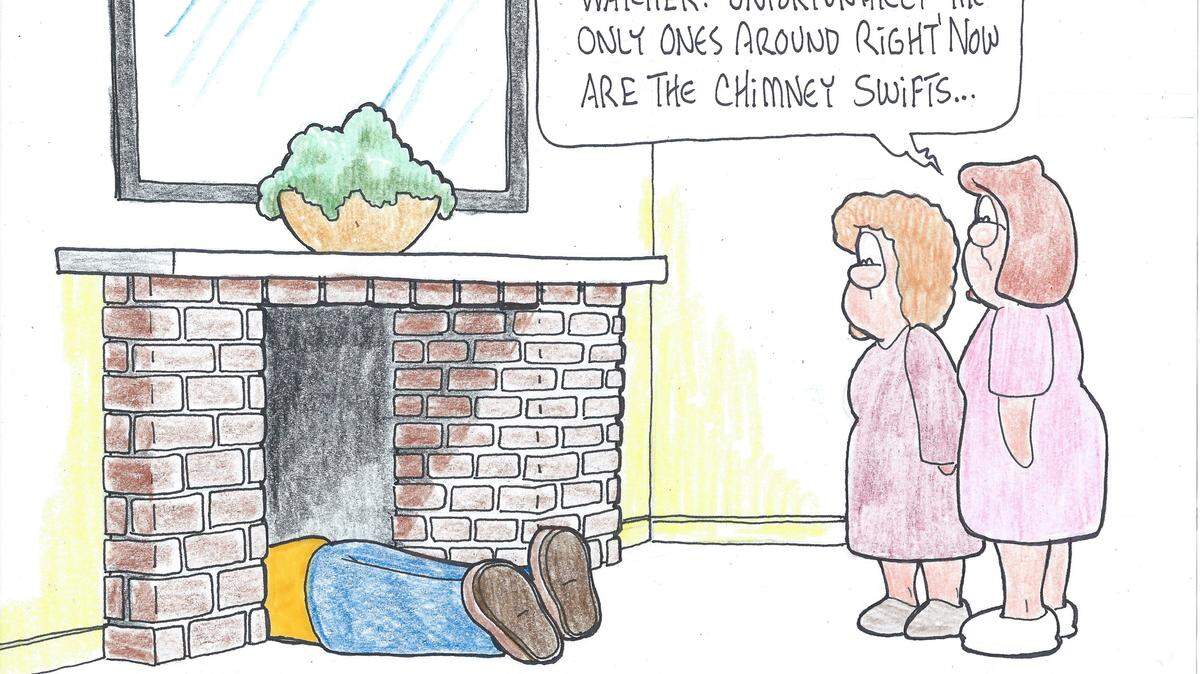
Chimney swifts are small, bluish-black birds with silver-gray throats who manage to eat up to 2,000 insects a day. Quite a feat, since that's around one-third of their body weight. When they fly, they alternate from flickering, stiff movements to long, graceful sweeping motions and are active from dawn to dusk, scouring the sky of flying insects.
These birds, distant cousins of hummingbirds, are unique in that they can't perch, stand upright or walk on the ground. They roost by clinging to vertical surfaces (like the inside of your chimney). Their small feet have four sharp claws that act as grappling hooks. Their tail also provides additional support.
Chimney swifts like enclosed areas to build their nests and raise their young. Under natural conditions, they'd be nesting under overhanging cliffs, in hollow trees or small caves. But we've managed to introduce artificial habitats that are perfect for chimney swifts.
The birds usually start showing up in March. Both sexes help in nest building. They will hover in a tree and snap off small twigs. They fasten these twigs together with spit and mud, forming a semicircular cup-sized basket attached to the inside of the chimney. Once the nests are made, they begin laying eggs, usually in early to mid-June. Incubation takes a little over two weeks, and the babies stay in the nest for up to 24 days (making quite a din when their parents show up with food). In late July, the kids are ready to leave the nest. By late October, the birds have migrated south.
Chimney swift nests are not likely to cause a fire in your chimney, but if the numbers of birds nesting in your chimney increase enough, they may reduce the drafting efficiency of the flue. This could lead to an accumulation of carbon monoxide or other byproducts of combustion.
If the idea of a noisy nest of birds living in your chimney doesn't appeal to you, now is the time to do something about it. Chimney swifts are federally protected under the Migratory Bird Treaty Act and, while the nests contain eggs or young, they cannot be removed or even disturbed. After the birds have left, you can have your chimney cleaned. Once that has been done, you need to screen the top of your chimney to prevent re-entry.
But, with the average colony of chimney swifts eating over 360,000 insects per season, many of you, I'm certain, should be more than willing to tolerate these little birds living with you.
Tim Lockley, a specialist in entomology, is retired from a 30-year career as a research scientist for the U.S. Department of Agriculture. For answers to individual questions, please send a stamped, self-addressed envelope to Tim Lockley, c/o Sun Herald, P.O. Box 4567, Biloxi MS 39535.
This story was originally published February 18, 2016 at 5:36 PM with the headline "Tim Lockley: Issues with chimney swifts? Kick them out before eggs in nest ."