Hurricane Ida made two landfalls in Louisiana. Why was it a Cat 4 for hours after?
Hurricane Ida made landfall in two coastal Louisiana cities on Sunday, and while the wind speeds have weakened some, it was still a powerful Category 4 storm hours later.
Tropical weather draws much of its power from the ocean. Normally, when hurricanes reach land, they begin to lose power.
“This storm has been absolutely scary,” National Weather Service meteorologist Kevin Gilmore said in 4 p.m. Facebook Live update on the storm.
“And honestly, it really hasn’t changed much (since landfall). We’re starting to see the eye kind of shift a little bit from some of the land interactions, but the storm is still going. This is what major hurricanes do. It takes a lot longer for major hurricanes to weaken when they come up the land.”
The storm made landfall in Port Fourchon at 11:55 a.m. and in Galliano at 2 p.m. Ida has stayed strong, NWS New Orleans experts say, because there isn’t a lot of land to sap power from the storm.
”It’s primarily marsh,” Gilmore said. “So, it’s not really feeling as much of a frictional impact yet, enough for it to diminish. It’s just going to keep going north. All these impacts are going to keep going on. This is an extreme situation for the area.”
Ida weakened to a Category 3 hurricane with winds of 120 mph in the National Hurricane Center’s 7 p.m. update Sunday.
A scientist for the National Oceanic and Atmospheric Administration said on Twitter that he had never seen a hurricane eye as powerful over land.
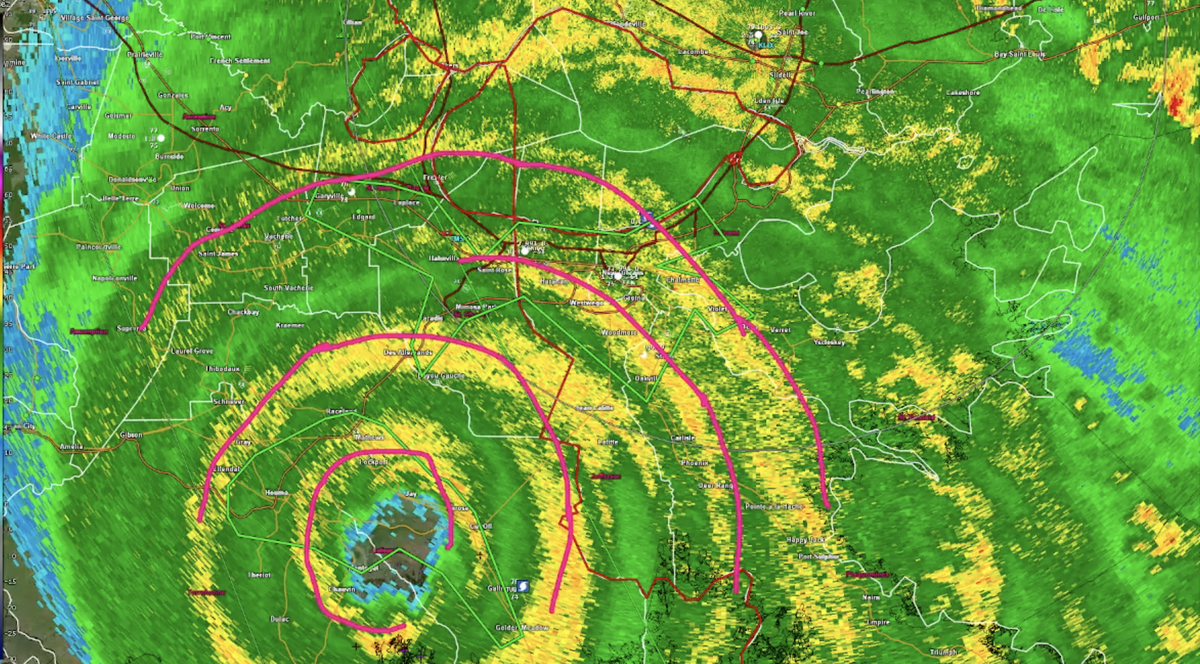
The storm is also developing multiple eye walls, which Gilmore said could produce winds of 70 to 80 miles per hour. Within the eye of the storm, there could be winds that exceed 120 mph.
“That is a serious eye wall here,” Gilmore said.
Gilmore said in the 4 p.m. update that Baton Rouge is “the next in line here to see a direct impact from this eyewall” and New Orleans is “getting dangerously close to this second eye wall that’s forming.”
“It is just beginning and will only get worse through the rest of the evening and possibly into the overnight hours,” the NWS said in a comment on Facebook Live.
The NWS said conditions will begin to deteriorate early Sunday evening, starting with tropical-storm force winds that could gust up to 90 mph.
“Very heavy rain is a major concern as well all night long,” the weather service said in a Facebook comment.
The Mississippi Coast expects to see “life-threatening” storm surge overnight, particularly in Hancock County.
This story was originally published August 29, 2021 at 5:42 PM.