Judge issues new ruling in Bay St. Louis after-prom mass shooting case
AI-generated summary reviewed by our newsroom.
- Judge grants change of venue for trial of Cameron Brand; new site not set.
- Defense cites pretrial publicity and Castle Doctrine self‑defense claim for Brand.
- Brand faces life term on two murder and four aggravated assault counts from 2023.
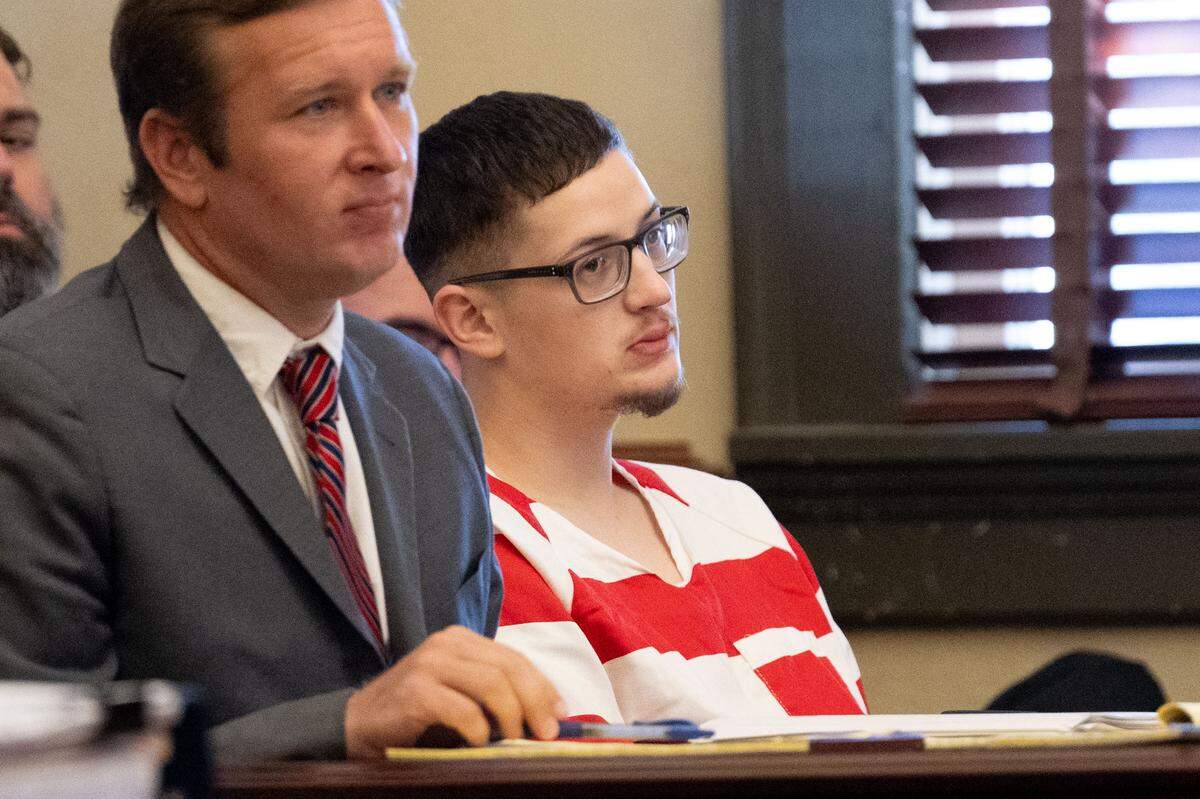
A Circuit Court judge has granted a request for a change of venue in the murder and assault case against a Pass Christian man accused in a deadly mass shooting at an after-prom party in Bay St. Louis.
Judge Christopher Schmidt issued the ruling Friday for the trial of Cameron Brand, 20, of Pass Christian, but did not include a new location for the trial. The trial had been tentatively set for February, but the trial has been continued. A new trial date has not yet been set.
Brand’s attorney, Lee Russell, successfully argued for the change of venue, citing pre-trial publicity that he said would make it impossible to find an impartial jury in Hancock County.

Brand is facing a potential life sentence if convicted of two counts of first-degree murder and four counts of aggravated assault.
He is accused in the April 30, 2023, mass shooting that killed two students and injured four others, all then between the ages of 15 and 18.
De’Arreis “DD” Smith, 18, of Pearlington; and Haeleigh Stamper, a 16-year-old Diamondhead resident and native of Lexington, Kentucky, died in the shooting.
In the aftermath of the shooting, Russell argues that investigators excluded key factors in the case at the time the crime occurred, namely that one of the two students killed had been armed with a semi-automatic shotgun at the time of the shooting and had previously threatened to harm Brand.
District Attorney Crosby Parker and Assistant District Attorney Jeremy Necaise argued that an impartial jury could be picked from the over 37,000 registered voters in Hancock County.
In other pending pre-trial motions, Brand’s attorney is asking a judge to allow him to use as a defense the legal principle, known as the Castle Doctrine.
The legal principle allows a person to use reasonable force — including deadly force — to protect themselves against an intruder in their home or, in some jurisdictions, in their vehicle or workplace, without a duty to retreat if they fear imminent harm.

Russell argues that Brand acted in self-defense, claiming he was being attacked by the young man he shot and killed during the mass shooting.
Law enforcement officials have not indicated that any of the victims were attacking Brand at the time of the shooting.
In other filings, the defense is asking the judge to bar prosecutors from introducing evidence at trial of Brand’s prior criminal convictions or messages he sent referencing other potential crimes he did not commit.
Before the mass shooting, Brand had prior convictions for misdemeanor domestic violence by simple assault in Waveland.
Brand’s attorney also wants permission to introduce toxicology and blood test results to argue that one of the deceased victims’ state of mind contributed to Brand’s fear for his life at the time of the shooting.
Before the mass shooting, Brand already had a history of run-ins with law enforcement related to guns, drugs and domestic violence.
He had been in and out of jail since May 2022, when Waveland police arrested him on the first of two misdemeanor charges of domestic violence by simple assault.