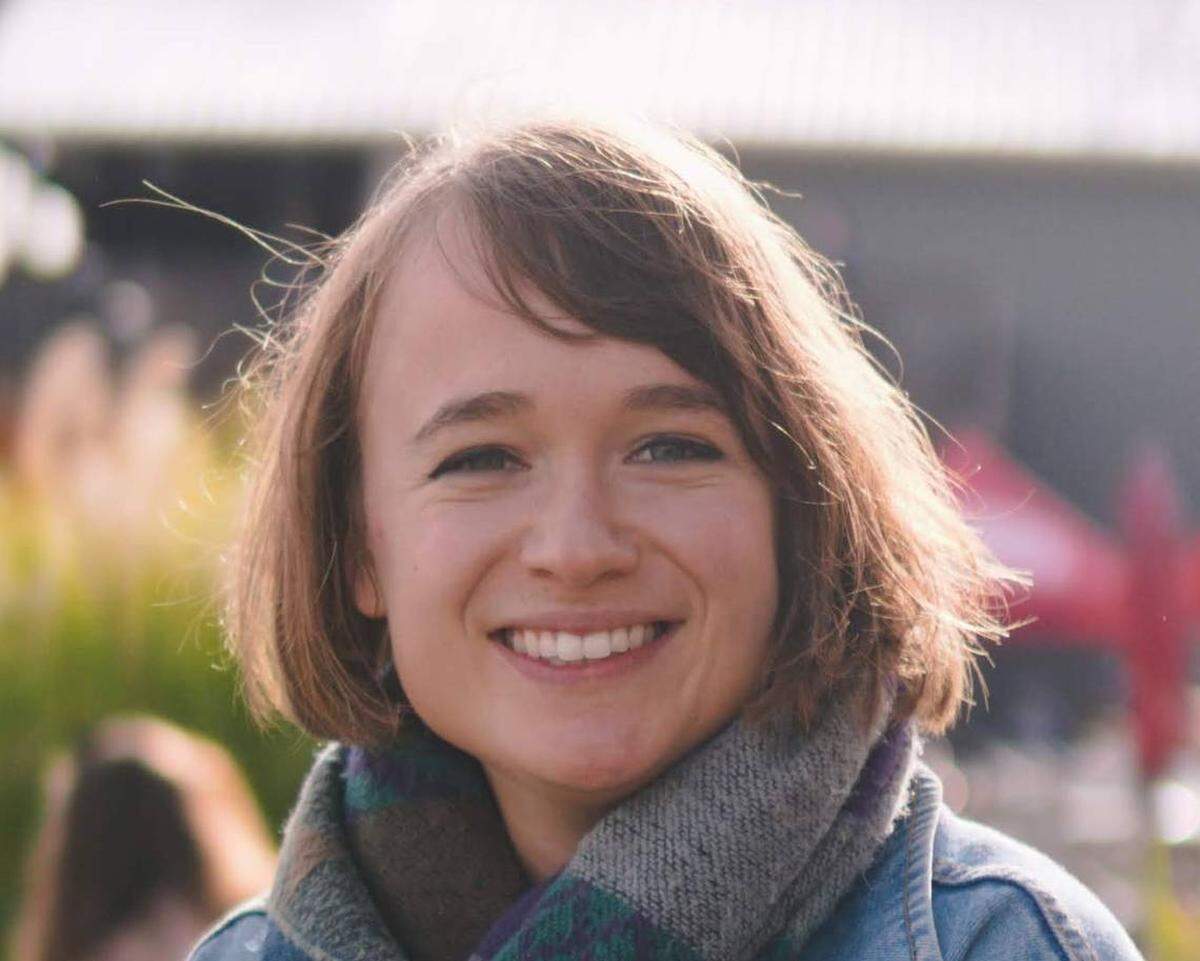
Her son died in 2006. After George Floyd’s death, Coast mom protests for the 1st time.
When Lashun Smith attended her first Black Lives Matter protest last year, she was thinking about George Floyd and Breonna Taylor, but mostly about her son Lee.
Lee Demond Smith died in police custody while an inmate at the Harrison County Adult Detention Center in December 2006.
There were no protests and no social media hashtags. There was only Lashun’s private grief, and her conviction that her son’s life was taken from him.
For almost 15 years, she mourned, and nothing lessened the pain.
Then, on Facebook, she saw the information about the protest at Jones Park on June 6, 2020, organized in response to Floyd’s death.
She was excited to go, but not sure what to expect. She wrote “Justice For Us” in green marker on a piece of poster board and collected a blanket made after Lee’s funeral and emblazoned with a picture of his face.
When she got to Jones Park that evening, she was stunned by what she saw: hundreds of people chanting the names of Black men and women recently killed by police.
It made her think that if Lee had died in 2020, the reaction from law enforcement and the public might have been different.
And it made her feel better.
“It made me feel like I was doing something,” she said. “Fighting.”
A beloved son dies in jail
George Floyd’s death one year ago changed many American views on police brutality and race.
An AP poll found that in June 2020, after Floyd’s death, 39% of white respondents agreed “police violence against the public” was an “extremely or very serious” problem, up from 26% in September 2019. Among Black respondents, 83% agreed with that statement in June 2020, up from 72%. By this month, the percentages had declined somewhat, but were still higher than before Floyd’s death.
For people like Lashun, Floyd’s death was confirmation of what she already believed about policing. It was a public reminder of a personal grief. And the protests it stirred were bittersweet. She was so glad to be part of them. She wished they had come earlier.
Lee was born and raised in Biloxi. He went to Biloxi High School and worked two jobs, at a Wendy’s in Gulfport and at the IP Casino. He liked to rap. He often dropped by his mom’s house to ask if she needed anything or wanted to go anywhere.
He was 21 years old on December 6, 2006, when he was arrested for shooting a man in the leg and charged with aggravated assault. He said he was innocent. He was taken to the Harrison County Adult Detention Center, and his bond was set at $100,000.
His family decided to wait for his court date. It wouldn’t take long, they thought.
At the time, the jail had its share of issues. Just 10 months earlier, jailers had beaten and tortured a 40-year-old Black man named Jessie Lee Williams, Jr., who was restrained, until he slipped into a coma and died. The subsequent investigation and trial turned up testimony about a “culture of abuse” at the jail, where officers traded tips on where to assault inmates to evade surveillance cameras.
By December 17, 2006, six jailers had entered a plea agreement and four others were awaiting criminal trial; one, Ryan Teel, would be sentenced to life in prison for Williams’ murder.
That morning, Lashun Smith awoke to a phone call from an inmate. He told her something was very wrong with Lee.
Lashun rushed to the jail. Officials there told her everything was fine, she said.
“They said there’s nothing wrong with Lee, he just got done eating breakfast,” she said. “I say, ‘Well, can you go down there and get him?”
An hour later, she said, the story was different: Lee had been rushed to the hospital, jailers told her.
His death was recorded at Garden Park hospital shortly after 2 p.m.
“I was just at a loss,” Lashun said.
Conflicting autopsies
An autopsy two days later found that Lee had died of a pulmonary embolism, in which a blood clot had moved into his lungs and blocked the flow of air.
That made no sense to Lashun. Her son had always been in good health, except for his eyesight, for which he wore glasses.
The family paid for a second autopsy, conducted by Dr. Matthias Okoye from Nebraska. He came to a different conclusion: that Lee had died of “asphyxia due to neck compression and physical restraint.”
It was not the first time another professional took issue with the conclusions of Dr. Paul McGarry, the forensic pathologist who at the time conducted most autopsies on the Coast. In 2011, ProPublica, Frontline and NPR released a lengthy investigation of America’s system of coroners and medical examiners.
They found three cases, including Lee Demond Smith, where McGarry issued a finding on a death in police custody that cleared officers of wrongdoing and where second opinions were later sought. In all three cases, the second expert concluded the death had been a homicide.
McGarry died in 2015. He did not comment for the 2011 story. But in 2006, Harrison County Coroner Gary Hargrove told the Sun Herald he stood by McGarry’s work. Hargrove passed away in January 2020.
The conflicting autopsies spurred CNN’s Anderson Cooper 360 to air an investigation about the conditions at the jail and the family’s questions about Lee’s death in July 2007.
“He was strangled and he was restrained while being strangled,” Okoye told CNN.
A third medical examiner interviewed by CNN agreed with Okoye’s findings.
Hargrove told CNN, too, that McGarry’s finding was sound.
“I have not ever covered up a death and will not do it today or any other time,” he said. “Because when it comes to that, it’s time to get out of the business.”
A federal investigation?
CNN’s reporting prompted then-Harrison County District Attorney Cono Caranna to ask the Department of Justice to conduct an investigation into Lee’s death.
“In light of recent events resulting in the arrest of several Harrison County jailers on the charges of violating inmates’ civil rights,” Caranna wrote in a letter to then-U.S. Attorney Dunn Lampton. “I can appreciate the family’s concern and join their request for a thorough federal investigation and review to be conducted.”
At the time, Hargrove told the Sun Herald he had turned over all of his paperwork and autopsy photographs to the Justice Department.
CNN also reported the feds were investigating.
But there’s no record of the Justice Department publicly acknowledging the investigation or issuing any finding. It’s not clear what the reported investigation actually entailed.
The Sun Herald requested records from the U.S. Attorney’s Office relating to Lee Demond Smith’s death, but the office had no responsive records. The department typically will not confirm or deny the existence of an investigation unless and until charges are filed. No criminal charges were filed in Lee’s death.
Caranna died in 2020 and Lampton in 2011.
Protesting ‘like a job’
Lashun Smith describes the years after Lee’s death this way: “You just sit up everyday, thinking about your kid and thinking about what happened to him and how it happened, and just be floating away and don’t want to do anything.”
When the CNN segment aired and afterwards, she says, she wasn’t able to advocate for her son, because the grief was too raw.
In 2010, a judge dismissed her lawsuit against jail employees for Lee’s death because they were never served with a copy of her complaint.
Now, she wonders if things might have gone differently if she had been in a different state of mind.
She doesn’t remember the moment she learned of Floyd’s death. But she does remember the protests: that day in Jones Park, and many days after. She went up to a march in Hattiesburg, too. She met other women whose sons had died in police custody.
And she spent many days sitting at Jones Park with a sign: “650 pics, no arrests,” referring to the photographs taken during her son’s second autopsy.
Strangers brought her food and water. Some days her grandchildren sat with her. People stopped to talk about Lee.
It felt important to be out there every day, “like a job,” even if there was no one else protesting.
“I’m doing it by myself because I wasn’t able to do it then,” she said.
When she got a call in January that Reginald Johnson had been killed by a Harrison County sheriff’s deputy, she rushed to the Biloxi courthouse where he was shot. Her brother and Johnson have been friends for decades; Lee knew him, too, she said. She stayed at the scene for hours.
“It did something to me, as if I was looking at my son,” she said. “I didn’t want to move ‘til he had some kind of respect.”
Later, she attended a protest to demand authorities release body camera footage of Johnson’s shooting.
Last summer, Lee’s name came up even at protests Smith didn’t attend. At a march in North Gulfport, a co-organizer who was in kindergarten when Lee died told his story to the gathered crowd.
That was what she had been hoping for when she attended her first protest a year ago.
“I was trying to keep his name alive, keep his face out there,” she said. “I don’t want nobody to forget about Lee, because I haven’t forgot.”
This story was originally published May 26, 2021 at 11:40 AM.