A Coast city has the biggest Latino population in MS. The community is shaping its future.
When Laura and Harmodio Santamaria opened their Pascagoula grocery store in 2006, it wasn’t easy to get all the products they needed to live up to their name, Las Americas.
Companies were already delivering Mexican items to Mississippi. But Puerto Rican customers wanted Kikuet brand frozen empanadillas. Dominicans wanted tubers like yuca and yautia blanca. Once or twice a month, Harmodio would drive his Chevrolet Silverado, then a U-Haul, to Miami or Atlanta to pick up items people had requested.
These days, the couple pays for someone else to carry items to their store on Chicot Street. But the mission is the same.
“The products that all of the Latino community needs, we bring them here,” Laura said. “So they feel at home, or that they have something they’re missing from their homeland.”
The store’s slogan, printed in white on the backs of employees’ bright blue shirts, is “El puente de la familia hispana,” or “The Hispanic family’s bridge.”
In Pascagoula, that family is growing.
The latest census results confirmed what Latino residents interviewed said was already obvious from the Spanish they hear spoken in Walmart and the Mexican and Puerto Rican restaurants clustered around Chicot Street and Old Mobile Avenue: Among Mississippi’s 20 biggest cities, Pascagoula has the highest share of Latino residents by a significant margin.
As of the 2020 census, 15% of Pascagoula’s 22,000 residents identify as Hispanic or Latino, up from 11% in 2010. Biloxi has the second-highest population by share at about 9%. By contrast, only about 2% of Jackson’s 150,000 residents are Latino.
Residents have come to the industrial city for jobs at companies like Ingalls Shipbuilding; many of them are Puerto Rican U.S. citizens. They have launched dozens of businesses, from restaurants and tiendas to tax services and auto shops.
In the Pascagoula-Gautier School District, about a fifth of students are Latino, and the district became the first in the state to offer a Seal of Biliteracy to students who are proficient in English and another language.
Lazaro Rovira, who was born and raised in Miami, lived in Jackson County after Hurricane Katrina, working for a mortgage company. In 2014, with a baby on the way, he and his wife decided to bet their life savings on Pascagoula.
They cashed out their retirement accounts and bought the building on Chicot Street that would become the first Rovira Team Realty office. Rovira had to sell his Jeep to finish the renovation.
Today, after years of working 16-hour days, Rovira’s company operates about 70 rental units and sells 20 homes a month. About 40% of his clients are Latino, he estimates.
“We bet on Pascagoula because of the large Hispanic population,” he said. “I knew that if I worked hard, and I did good by them, that we would be successful.”
From Latin America to Mississippi
A little more than 21 years ago, a teenager named Allan Cisneros left his home in Leon, Nicaragua, and got on a plane to Miami to meet the father he barely knew. After a few months, things weren’t working out with his dad. But Cisneros thought about the kind of life he wanted for himself, and decided to stay in the United States.
His dad’s boss at the time asked if he’d be willing to move to Mississippi for a job. Cisneros said yes, and ended up in Moss Point.
“When I came here, it reminded me of back home, with the woods,” he said. “When I came to Miami, I felt like a lost pet.”
As he learned English and moved up the ranks in his job at CVS, it was very rare for him to encounter another Latino person. Cisneros says hurricanes changed that.
Latino immigration to the American South and to Mississippi began much earlier than journalistic accounts of the region’s changing demographics typically acknowledge, historian Julie Weise has written. From the 1910s to the 1930s, tens of thousands of Mexicans and Mexican Americans traveled from Texas to the Mississippi Delta, mostly as seasonal laborers.
Some of their descendants have remained in the Delta for generations. In south central Mississippi in the early 20th century, the lumber industry also recruited Mexican workers.
When mostly African American poultry workers started a unionization push in the early 1990s, Mississippi’s poultry industry began recruiting Latin American immigrants for the often dangerous, low-paying jobs in central Mississippi, according to anthropologist Angela Stuesse.
In some rural Mississippi poultry towns, as much as a quarter of the population is Latino. In 2019, ICE targeted central Mississippi poultry workers in the largest single-site workplace raid in U.S. history, arresting nearly 700 employees.
But for the Mississippi Gulf Coast, Hurricane Katrina was a 21st century turning point. South Mississippi’s Latino population doubled to about 60,000 as people arrived for construction work rebuilding the devastated Coast.
Some workers, many of whom were single men or living away from their families, left for jobs elsewhere. Others put down roots.
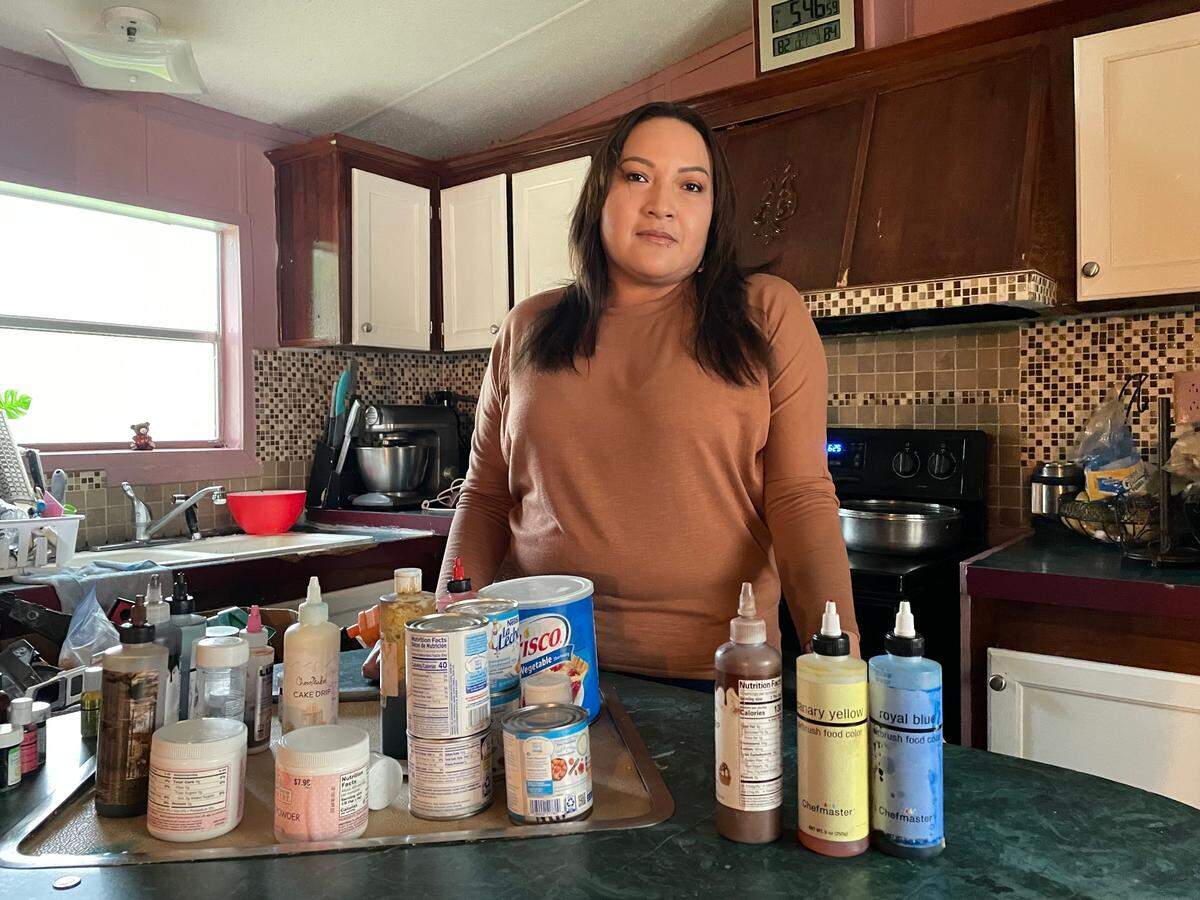
Miriam Santes arrived 14 years ago from Mexico to marry a man who had found construction work in Pascagoula. Now, she has two sons, ages 5 and 10, and a small business making custom cakes. She taught herself to decorate by watching YouTube videos.
She works out of her home in Gautier, making 10 or 11 cakes each week, but she dreams of opening a storefront. She knows where it would do well.
“Pascagoula, because there are more Hispanics there,” she said.
In the years after Katrina, jobs at Ingalls and Chevron have been the major draw for newcomers to Pascagoula.Ingalls has recruited new employees in Puerto Rico, where residents are U.S. citizens.
National origin data from the 2020 census is not yet available, but the 2019 American Community Survey estimated that about a third of the community was Mexican, followed closely by Puerto Ricans. Hundreds of residents are from the Dominican Republic or Central America.
Cisneros, now 41, sees the community’s growth at his church, Sacred Heart. As the eucharist minister, he helps Father Lalo Mora give communion during the Spanish-language mass every Saturday. After a recent mass, he stood outside talking with fellow parishioners on a rainy early fall night.
“It’s tough to leave your place where you were born,” he said. “But at least I’m not lonely — I’m not the only one.”
‘We’ll never vote for a Mexican’
Hoping to make a difference for his new hometown, Rovira ran for mayor of Pascagoula in 2017.
When he knocked on doors with his wife and daughter, he got frequent reminders of why South Mississippi had not yet elected a Latino official.
“‘Get off my property, we’ll never vote for a Mexican,’” he recalled hearing.
Rovira’s family is Cuban.
“Some people are that bad,” he said. “But it has gotten better. It definitely has gotten better. Or maybe I don’t pay attention to it that much.”
After the election, Rovira moved to Moss Point, but remains involved in both communities through his business, volunteer work and donations.
A few years ago, he said, Latino business owners in Pascagoula sometimes felt they were being picked on by the city through inconsistent code enforcement. A Latino entrepreneur would buy a building and be told they had to install green space instead of a parking lot. Rovira thinks that has changed.
“They just let them run their business, do their thing,” he said.
Pascagoula City Manager Michael Silverman said the city values Hispanic residents’ contributions to cultural diversity and the local economy.
This year, the city brought back the Festival Hispano for Hispanic Heritage Month after a hiatus of several years.
“Diversity is an integral part of the community and the success of the community,” he said. “I think it’s important that we recognize and appreciate the cultural contributions that a significant portion of our population brings to Pascagoula.”
The rhetoric stands out in a state where leaders more often bring up immigrants to cast them as a threat, as Gov. Tate Reeves did in a recent appearance on Newsmax.
The growth of the Latino community has helped Pascagoula stave off more significant population loss. From 2000 to 2010, the city’s population fell from about 26,000 to 22,000. Over the same period, the number of Latino residents rose from about 1,000 to about 2,500. In the last 10 years, the city’s population stayed about the same, while the number of Latinos rose to over 3,200.
Silverman said the city aims to ensure its workforce reflects the community. Currently, he said, four city employees are fluent in Spanish, three of whom are police officers.
“Generally, if somebody is unable to speak English and they only speak Spanish, most of the time they have a child or younger person that speaks English,” Silverman said.
If someone needs an interpreter for business with the city, he said, one of the bilingual police officers may be asked to help.
New businesses & institutions
From the spot at Point Park where Daniel Gonzalez and Carmen Perez set up their food truck, Chimi El Torito, Gonzalez can look across the Pascagoula River to see the spiky masts of a ship under construction at Ingalls, where he used to work as a pipefitter. Eight of the 18 people on his team were Latino.
Since retiring, he works at the food truck with Perez, who has 25 years of restaurant experience. They specialize in the Dominican chimi, similar to a burger, and Cuban sandwiches.
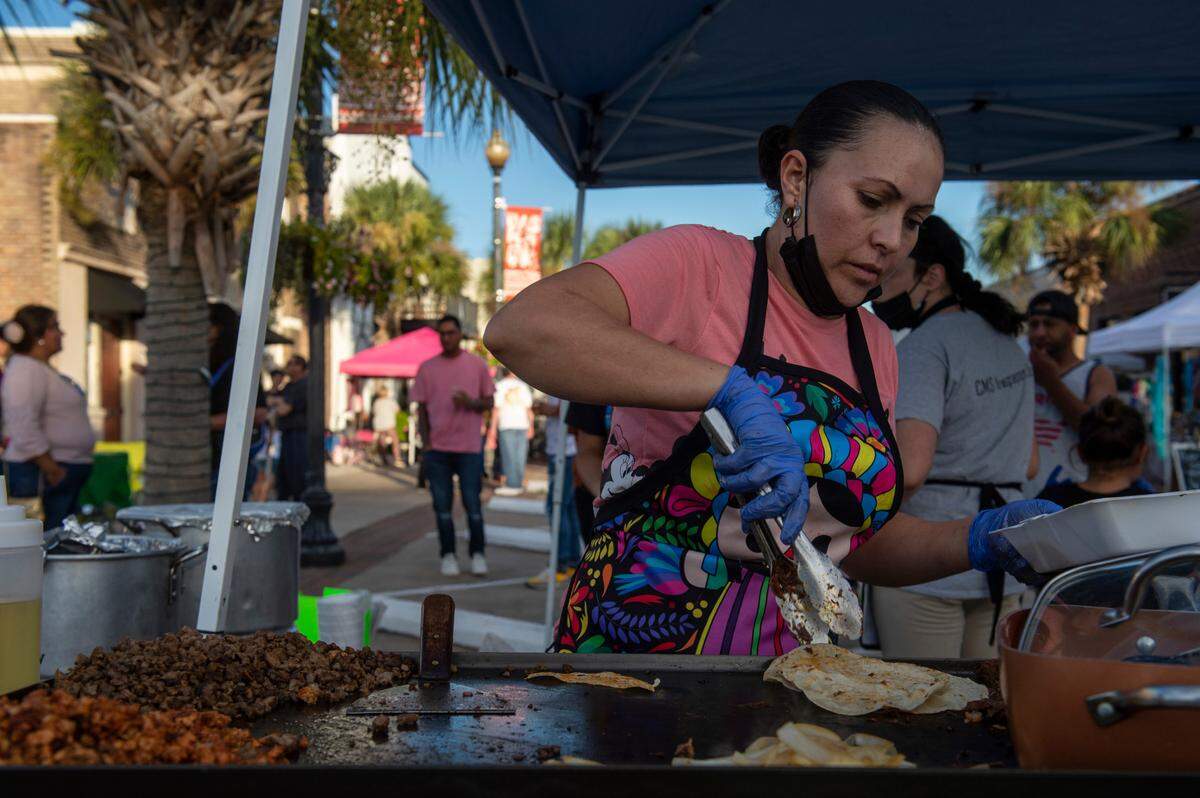
They serve at events like Festival Hispano, and every Sunday at Point Park, because they saw how many local restaurants close on Sundays.
But a recent afternoon had been so slow that the couple was playing dominoes at a plastic table next to their truck. Perez always wins.
After Festival Hispano, the city posted a list on its Facebook page of businesses to support.
Other Latino-owned businesses in Pascagoula include Latino Tax Services, Tres Hermanos tire shop and home businesses like Lupita’s Beauty Salon. Lupita Gutierrez’s family jokes that just about everyone in Pascagoula’s Latino community comes to her garage studio for haircuts.
At Las Americas, Laura Santamaria is proud to support Latino-owned businesses from across the Coast. They buy tres leches cake and chocoflan from Bakery Latino in Gulfport and products from La Corozaleña bakery in Mobile.
The Santamarias have fallen in love with Pascagoula. They like the calm pace of life and the feeling of safety in a small, close-knit town. They attend Sacred Heart Catholic Church and their two sons, 5 and 7, go to Catholic school.
“I always tell them, they have Mexican and Panamanian blood, but they are American, because they were born here,” Laura Santamaria said. “But we must not forget our roots.”
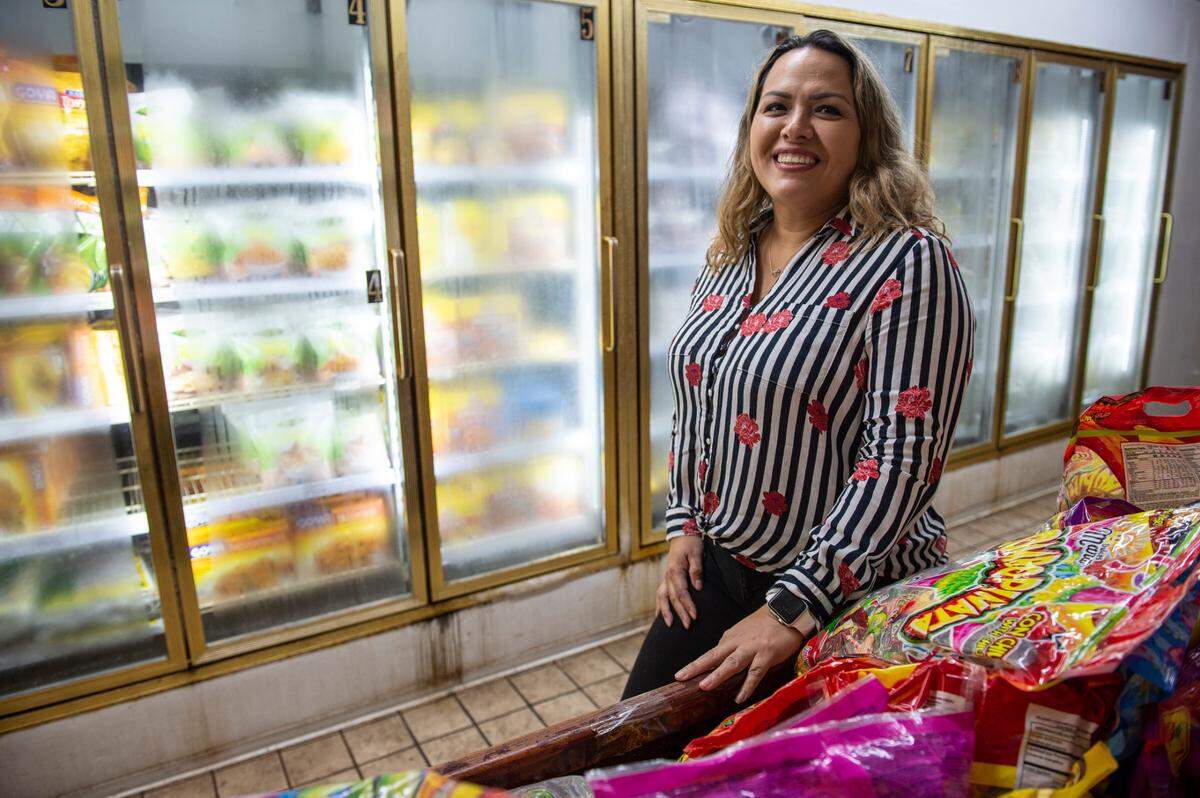
She’s proud that her sons speak both English and Spanish very well.
On a recent Thursday afternoon, Jose Carballo was enjoying a beer and watching the traffic on Chicot Street from the patio of the restaurant Los Monchies Locos. He leaned against a wall decorated with the flags of the United States, Venezuela and Carballo’s home, Puerto Rico.
He had come to Pascagoula five years ago for a job as a joiner at Ingalls, but in a few days he would open a new restaurant just across the street, serving sandwiches, beans and rice, and more.
The city’s Latino community could be transient, he said, but he expects it will continue to grow.
“Ten go, and then 15 come,” he said.
Learning English in Pascagoula
A little after 5 p.m. on a Tuesday evening, Oscar Javier Lacayo Argeña walked into the Pascagoula Adult Learning Center for the first time.
He saw a squat building sitting on a small patch of grass near the Jackson County jail and the county maintenance department. The windows are narrow and set up high, so from the outside the brick building looked a bit like a bunker.
About a month earlier, he and his partner Paola had arrived from Nicaragua to join his brother Carlos, who works at Ingalls.
Inside, the trio saw desks in a U shape around a smartboard and a projector. The walls were decorated with posters. One said, “What a Successful Professional Looks Like.” “Cómo se ve un profesional exitoso.”
Glynda Smith, who retired from the Pascagoula-Gautier School District as a teacher of English as a second language (ESL) and has taught the class for the last several years, greeted them.
“My name is Ms. Glynda,” she said. “I am the teacher. La maestra.”
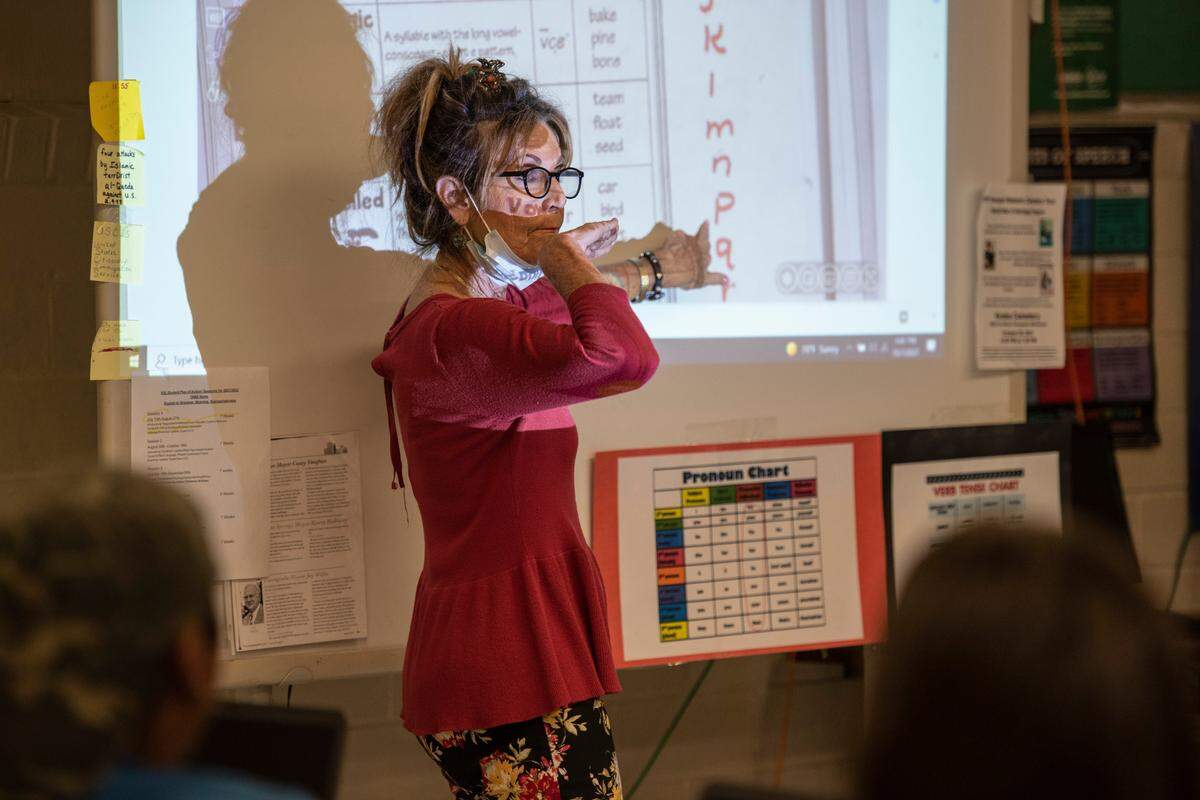
Outside of the class, Lacayo Argeña was spending most of his time studying English at home on a computer. It was hard, but he was determined.
“It’s the language of the country,” he said in Spanish.
By 6:30 p.m., a dozen students were watching Smith as she darted from the smartboard to the projector. She had the energy of a Broadway actress, keeping up a near-constant monologue in English with occasional words and phrases in Spanish.
Smith spent the summer of 2000 studying Spanish in Costa Rica. For the first two weeks, she cried every day, missing her husband and a new grandson. By the end of the summer, she was able to give a speech in front of her class.
“I get emotional when I talk about it,” she said. “Because I remember just how hard it was, to do that… I always start my classes with telling them: ‘I’ve been where you are.’”
Smith asked everyone to introduce themselves to the new students. There was Sayra from Honduras, Jessica from El Salvador, Sergio from Mexico, Monica and Michelle from Colombia.
Soon it was Oscar’s turn to speak in class for the first time.
“My name is Oscar,” he said. “I’m from Nicaragua.”
Smith gave him a high five.
When they arrived, Smith had helped him fill out introductory paperwork, including his home address. She told him to write, “City: Pascagoula. State: Mississippi.”
This story was originally published October 13, 2021 at 5:50 AM.