
Harrison County supervisors vote to keep Nativity scene at courthouse
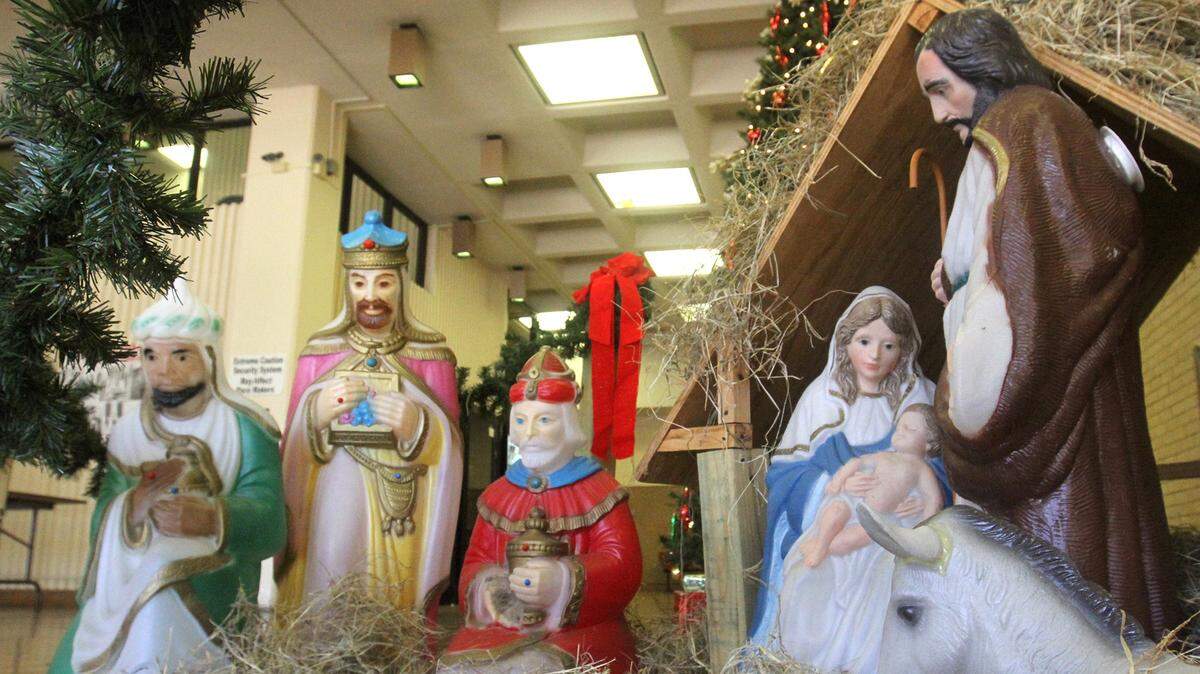
HARRISON COUNTY -- The Harrison County Board of Supervisors voted unanimously Monday to keep a Nativity scene inside a county courthouse after the American Humanist Association asked the display be taken down.
The Board also voted to have board attorney Tim Holleman represent the county in any potential legal claims related to the Nativity scene.
The Washington D.C.-based American Humanist Association sent a letter to the county last week alleging the display is unconstitutional because, though the county does not pay for the display, it is on county property and dominated by Christian elements.
"The County will not interfere with the County employees' expression of their religious faith or with any other faith or non-faith employees who desire to celebrate their holiday in a manner that does not interfere with County business," Holleman said in a letter to the American Humanist Association after the vote. "I believe the County has complied with the law including the Eighth Amendment to the U.S. Constitution."
On Monday, David Niose, legal director of the Appignani Humanist Legal Center, said the group was still determining how to respond.
"Nativity scenes in courthouses, like any blatantly religious display on public property, show government favoritism toward religion and toward Christian
ity in particular," Monica Miller, the senior counsel at the center, said last week. "Numerous courts, including the Supreme Court, have found these Christian displays in violation of the Establishment Clause of the First Amendment."
But many of those in attendance at Monday morning's meeting seemed untroubled by the idea of favoring Christianity.
The meeting was full of county residents. Six, including an incoming board member and the outgoing clerk of courts, spoke in favor of keeping the display. No one spoke against.
Some brought up a slippery-slope argument -- in light of what they called the consequences of taking prayer out of schools. They didn't want to see the consequences of removing Christianity from yet another venue.
Several simply said they were there to stand up for their beliefs.
Argile Smith, pastor of Parkway Baptist Church in Biloxi, said he had his own spiritual reasons for advocating for the display. But he also pointed to the cultural significance of the Nativity scene.
"It is a symbol of a cultural event that has shaped the culture of the world for 2,000 years," he said. "Taking away a Nativity scene from a courthouse would be like taking away books from a library."
Sugar Stallings, a Coast attorney, said although she comes from a Jewish and Islamic background, she has no problem with the display.
"One reason we came here is for religious freedom," she said. "I think it's a beautiful thing. It taught me about Christianity and the spirit of Christmas."
The controversy is not unique to Harrison County.
In what has become its own Christmas tradition, each year sees at least a few public entities threatened with legal action over Christmas displays on government property.
A December 2014 Pew Research poll found that the majority of U.S. respondents favored allowing religious displays like Nativity scenes.
In the survey, 44 percent said Christian symbols should be allowed even if they are not accompanied by those of other faiths and 28 percent said they should be allowed as long as symbols from other religions also appear.
Only 20 percent said the displays should never be allowed.
The Supreme Court has come to a similar middle ground.
In 1984, it ruled in Lynch v. Donnelly that a Nativity scene in a shopping district in Rhode Island did not violate the Establishment Clause because it also contained secular symbols of Christmas, like Santa Claus and reindeer. This ruling became known as the "reindeer rule."
In 1989, the high court ruled in County of Allegheny v. ACLU that a Nativity scene in a Pittsburgh courthouse was unconstitutional because it was not accompanied by any secular symbols or those from other religions.
This story was originally published December 14, 2015 at 10:17 AM.