Live oaks axed in two Coast cities before judges could hear appeals to save them
AI-generated summary reviewed by our newsroom.
- Biloxi, Long Beach boards voted to permit removing protected live oaks for development.
- Developers cut down the Gruich oak the day after the council's decision before appeals.
- State law gives residents 10 days to appeal decisions of city, county boards.
Tree ordinances failed residents of Long Beach and Biloxi who tried to save live oaks chopped down for development.
In both cities, government boards agreed, despite vocal opposition, that developers could axe live oaks protected by city ordinance, including the prominent Gruich oak on Pass Road in Biloxi. Residents of each city appealed those decisions to Circuit Court. In both cases, developers cut down the trees before judges could review the cases, even though state law provides a 10-day appeal period for such local government decisions.
In the case of the Gruich oak, Circuit Court Judge Larry Bourgeois later ruled that resident Carroll J. Campbell had no standing to appeal the City Council’s decision because she did not own the tree, according to Campbell’s attorney, Michael Fondren of Pascagoula. No written opinion had been filed in the case by Thursday morning.
“I don’t think the tree ordinance has any teeth whatsoever without any appellate review,” Fondren said.
Campbell filed her lawsuit in 2025. The Long Beach case is more recent. Three residents on April 30 appealed the Long Beach Board of Aldermen’s decision allowing the removal of three live oaks from waterfront property on U.S. 90 at Shelter Rock Drive.
Those trees came down May 4, residents said, the same day property owner Edward Guillie was served with the lawsuit.
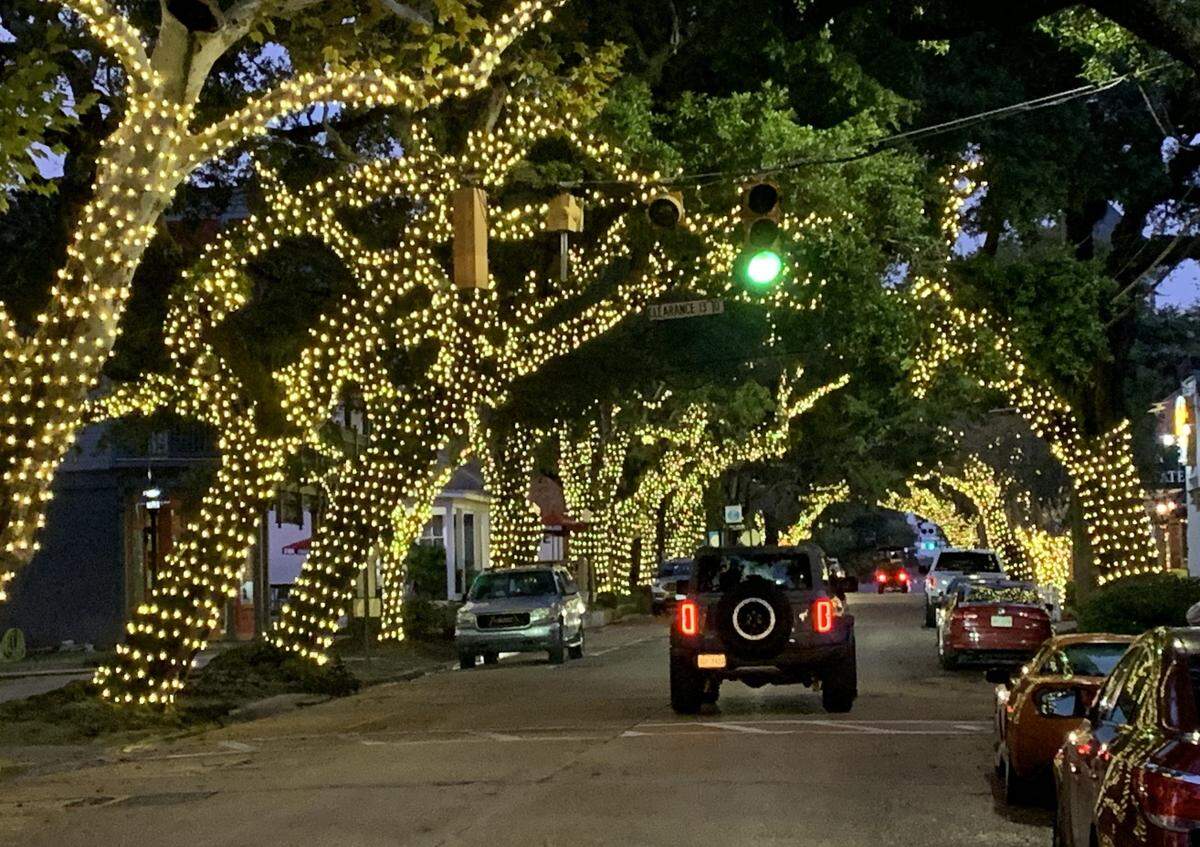
Live oaks are an indelible anchor in South Mississippi’s landscape. They thrive in the southeastern United States. Generations have picnicked in their shade, admired their strength in the face of violent hurricanes and celebrated their beauty. The trees provide habitat for plants and animals.
“You can not uncut a tree,” said Ashley Hardin, who appealed the Long Beach decision along with her husband and a neighbor on Shelter Rock.
“We understand growth,” said her husband Daniel Hardin. “Growth is not the issue. It’s proper growth.”
Biloxi loses Gruich oak
The Gruich oak grew to almost 58 inches in diameter at the corner of Pass and Nelson roads. The oak got its name from Dr. Charles Gruich, who was an owner of the property and whose brother had a pediatric practice in a building shaded by the oak’s canopy.
The Biloxi Development Group bought the Gruich property in September 2024, the month before Rouse’s Market opened in the shopping center behind it.
On January 28, 2025, the Biloxi Council considered the development group’s request to cut down eight protected trees, including the Gruich oak.
Residents lined up to speak. They wanted the council to spare the Gruich oak.
“I love Chick-fil-A, but hey, they’ve got enough money to figure this out,” said resident Ginger Collins, whose roots in Biloxi reach back generations. “... We have an opportunity to save what makes the fabric of Biloxi.”
Joey Spear of the Biloxi Development Group defended the project. “This is my town, too,” he said. “We made multiple attempts in how we designed and laid out this project.” He said the oak’s root system would have prevented installation of all needed utilities. And he mentioned the developers could have left the tree, only to have its root system destroyed by construction.
The Biloxi council voted to issue a tree permit for removal of the eight protected trees, including the Gruich oak. The next day, Biloxi Development Group leased the property to Chick-fil-A, Harrison County land records show. State law allows 10 days to appeal a city or county governing board’s decision to Circuit Court.
But, in addition to entering a lease, the Biloxi Development Group cut down the Gruich oak the day after the council’s decision. Developers also planted eight live oaks along the northern property boundary.
State law allowing appeal failed residents, attorney Fondren argued in Circuit Court. The law needs to say a city or county decision goes into effect only after the 10-day appeal period expires, he said. His arguments were moot once Judge Bourgeois ruled that Carroll Campbell had no standing to file her lawsuit.
The city, Fondren concluded, “can do whatever they want to and nobody in the city, unless you’re the owner of the tree, has standing to appeal.”
Decision floors Long Beach residents
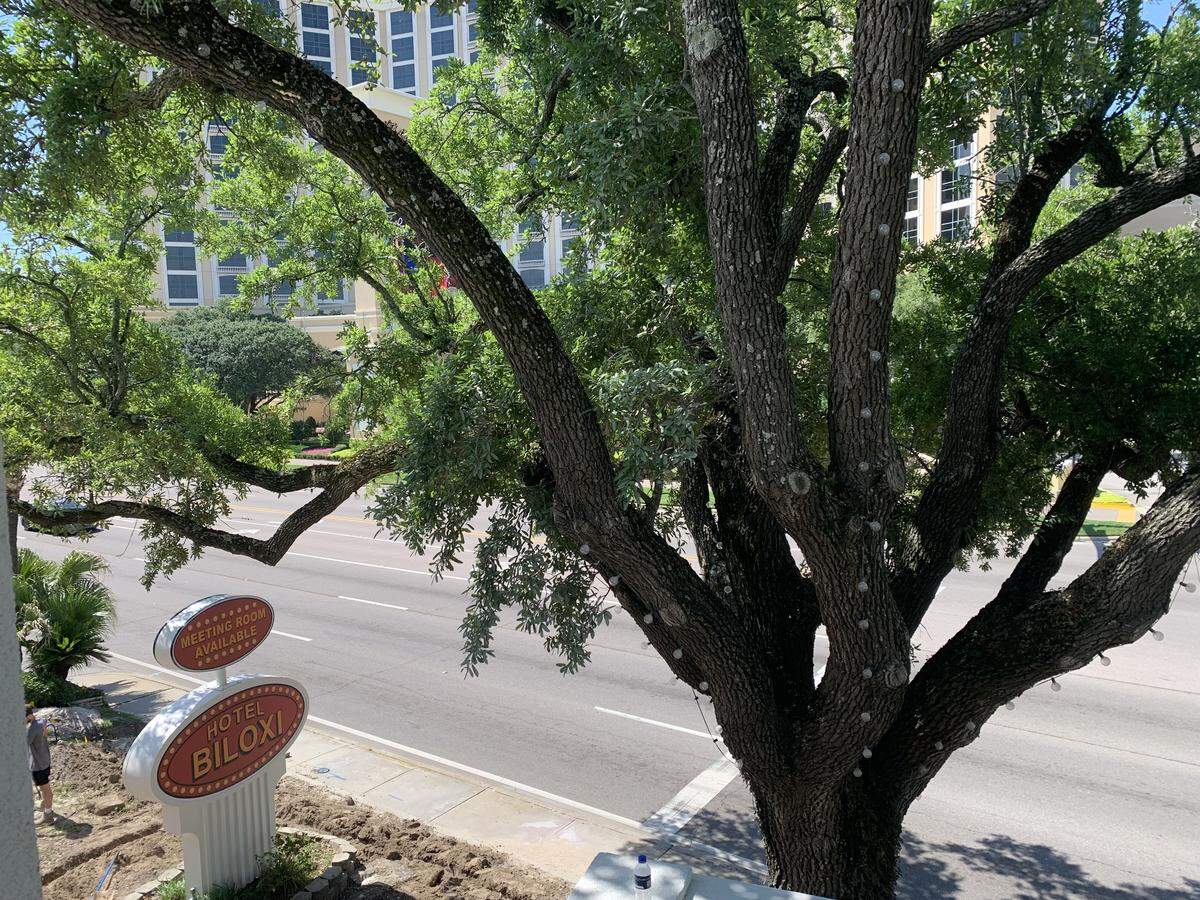
Long Beach residents are still stinging over the loss of a centuries-old oak on Arbor Day 2023 for the Hotel Whiskey on Jeff Davis Avenue. They fought for months to save it. Attorney Michael Prestia, hired late in the process by tree advocates, brought in an architect who said the building could be designed around the tree.
But the Board of Aldermen agreed the oak could be cut down.
“There was no reason to remove the tree,” Prestia said.
Residents also rallied to save oaks on the Shelter Rock Drive property that Guillie owns.
The case of the Long Beach oak was filed recently and is still to be decided. Residents turned out for a planning commission meeting in March about tree removal, but the issue was tabled. The commission is an advisory body that is supposed to pass its recommendation to the Board of Aldermen for a final decision.
Instead, several aldermen met with Guillie ahead of their regular meeting on April 7 and decided he could cut down three live oaks and spare one. Guillie agreed to save the largest tree, said Alderman at-large Donald Frazer, who was at the meeting. The group was able to meet in private because only three of seven board members attended — not enough for a quorum.
Guillie’s tree permit was not on the board’s agenda for the meeting that evening, so residents did not turn out to protest, said Debora Songy, the third Shelter Rock Road resident who signed on to appeal the city’s decision.
Because the permit was not on the agenda, she said, nobody got a chance to speak.
“My head spins around when I go to these meetings,” Songy said. “It’s just unbelievable how this happens. ... It just had the appearance of being so orchestrated.”
Nonetheless, the board approved the removal of the three live oaks. The attorney for the Shelter Rock residents, Greg Beard, says in the appeal that the Board of Aldermen violated its own ordinance by voting without a planning commission recommendation, a contention the city disputes.
The appeal also says Guillie cut down four live oaks instead of three, but Frazer insists one of the trees was a water oak that the tree ordinance does not protect. Guillie hung up on a reporter who called to ask him about the trees, but in court records he has denied any wrongdoing.
Circuit Judge Christopher Schmidt is presiding over the case. The Shelter Rock Road residents are asking that the judge refuse to dismiss the case, as Guillie has requested, and forbid the developer from cutting down any other live oaks without a permit and before an appeal period has expired.
“Cutting down those trees is a big deal for anybody who has been on the Coast,” said attorney Beard, who is from Booneville. “That is one of the things you notice about the Coast is those live oak trees. And they don’t just spring up overnight.”
Push to save live oaks
While cities make mistakes when deciding the fate of live oaks, Larry Tucei of Gulfport, who has been measuring and cataloguing the South’s live oaks for 20 years, believes they are for the most part trying to preserve this valuable resource. He said Long Beach, Biloxi and Ocean Springs are all planting oaks.
He doesn’t agree with what happened to the Gruich oak because of its age and size.
He said that cities go around their ordinances sometimes, “but most of them try to do a good job.”
The Coast counties, he said, are another story.
“The counties are destroying the trees and doing whatever they want,” he said, “because there’s no county tree ordinance.”