South MS, off-road communities rally around 5-year-old with grave diagnosis
AI-generated summary reviewed by our newsroom.
- Community organizes fundraisers and parade float to support Rhett’s family.
- Doctors used radiation and steroids; next MRI will determine trial eligibility.
- DIPG strikes mainly ages 5–7; survival under two years remains below 10%.
Another South Mississippi child has been diagnosed with DIPG, an aggressive brain tumor.
The family of 5-year-old Rhett Eubanks of Saucier has hope that he can recover. His parents have been researching clinical trials to decide which will be best for Rhett once they are able to find out if he qualifies.
Diffuse Intrinsic Pontine Glioma is a brain tumor that almost exclusively strikes children and is usually diagnosed between the ages of 5 and 7, according to DIPG.org. The tumor starts in the pons area of the brain stem and spreads like sand.
DIPG.org says 150 to 300 cases are diagnosed each year, with fewer than 10% of children surviving two years. Standard treatment has long been radiation to slow progression.
Since 2010, at least five South Mississippi children have died from DIPG. The Sun Herald extensively covered the story of Sophia Ann Myers, who lost her life to DIPG at age 7. Sophia’s mother, District Attorney Angel Myers McIlrath of Ocean Springs, was one of the first people to reach out to the Eubankses, offering assistance through the SoSo Strong Foundation that she founded after her daughter’s death.
“I feel like it’s almost some kind of sick, twisted dream that you’re living in,” said Rhett’s father, Joe Eubanks.
Family set for Long Beach Mardi Gras parade
After Rhett’s father and mother Kristal Eubanks shared his diagnosis on Facebook, the community rallied, including folks in the off-road world who live here and elsewhere.
A Gofundme account has been established, and numerous fundraisers have been held to help Rhett’s family with the extraordinary expenses they face, even with health insurance.
On Saturday, the family will have their own float in the Long Beach Carnival Association Mardi Gras parade, courtesy of the Krewe of Insanity. The parade rolls at 6 p.m. Kristal Eubanks said 16 family members will ride on the float and have picked out their throws, also courtesy of the Krewe of Insanity.
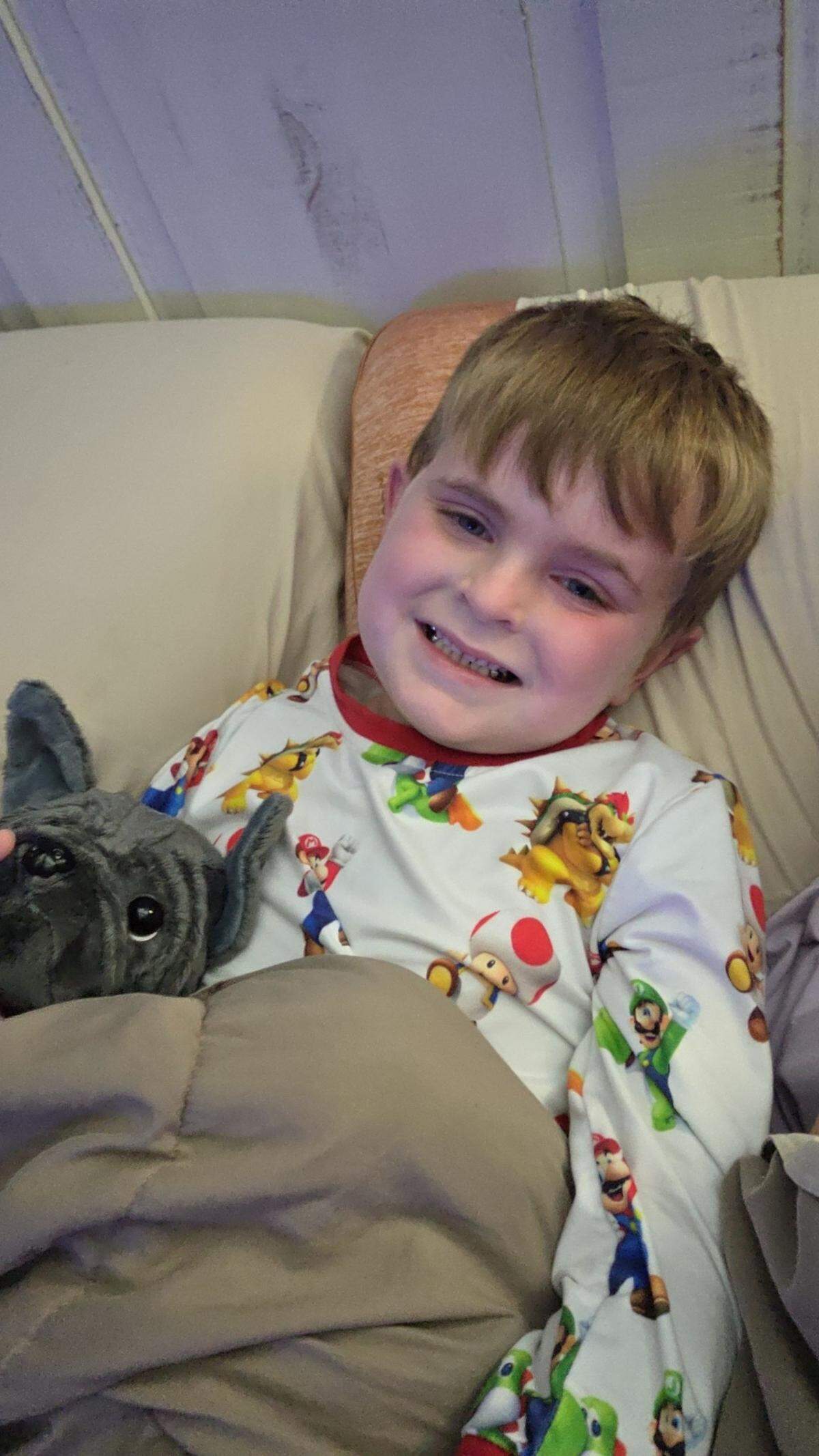
Rhett couldn’t be more excited. He selected lots of throws, including beads, stuffed animals and a green whistle. Green is his favorite color. He’s probably going to keep the whistle, his dad said. “He got a whole big bag of them,’ his dad said. “He’ll probably stick one in his pocket, I’m sure.”
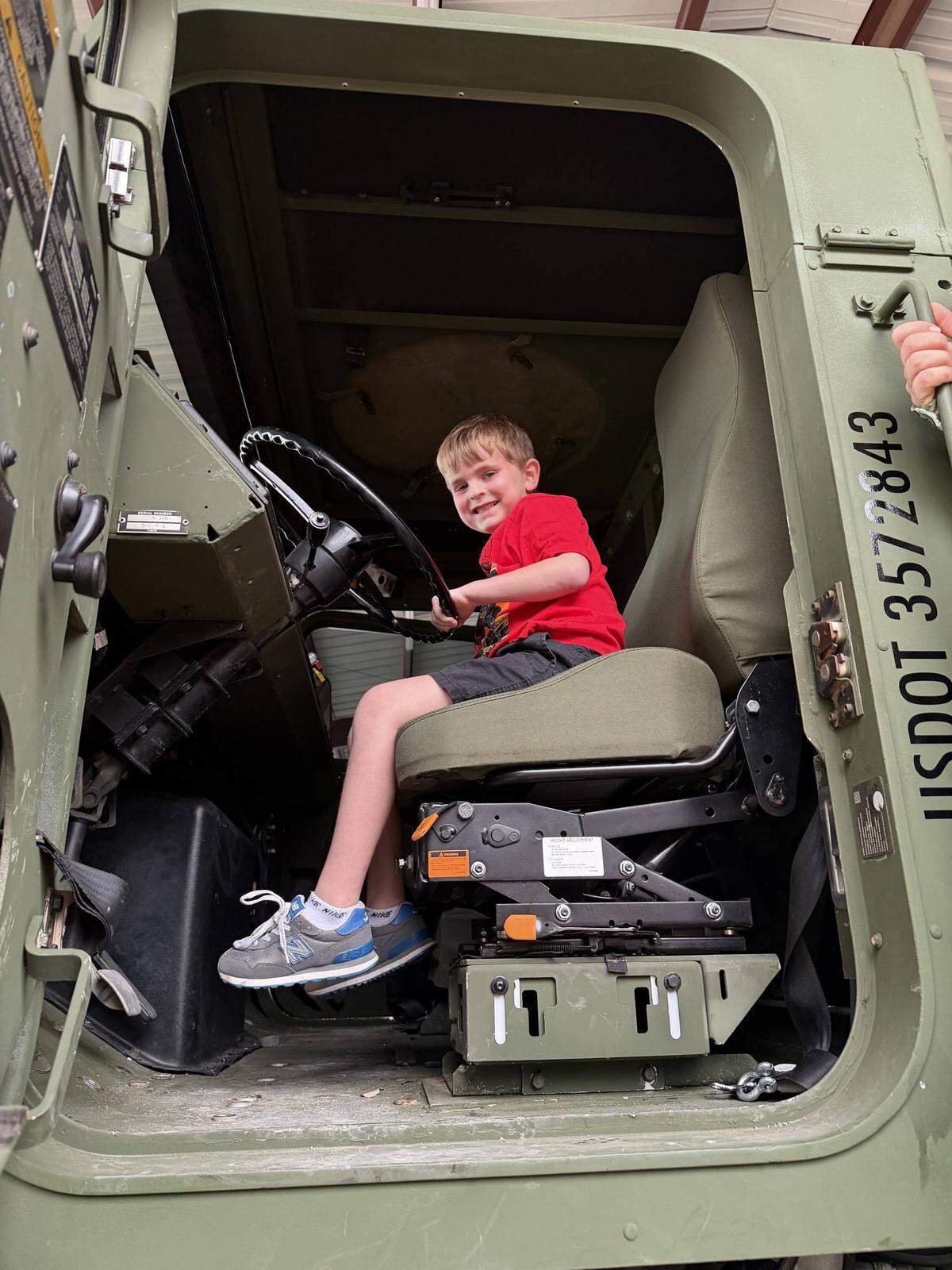
Rhett has always been a healthy child, his parents said. He is obsessed with monster trucks and loves mud riding, especially when he gets to steer the side-by-side while his dad is working the brakes and gas.
Radiation helped Rhett Eubanks
The first sign something was off was in his eyes. One of them kept drifting until it looked crossed. Then, the day before Thanksgiving, he woke up complaining of a headache and threw up. The same thing happened Thanksgiving Day.
His mom took him to the pediatrician’s office Dec. 1. “He could barely stand up,” she said. She thought he might be having a delayed reaction to a concussion after colliding with his best friend.
Things started moving fast after the nurse practitioner saw him. His next stop was for a CT at Memorial Hospital in Gulfport, where a mass on his brain was discovered. From there, he was transported to Manning Family Children’s in New Orleans, where he was admitted to the pediatric intensive care unit.
His parents got the diagnosis Dec. 3 from an oncology team. Rhett’s symptoms abated after radiation and steroids. He’s feeling better.
“The only thing Rhett knows is that he has a bobo that we’re trying to make better,” his father said. Rhett’s older brother, 13-year-old Carter Eubanks, knows the full story, but his 10-year-old sister, Brynleigh Langley, does not. His parents have asked that people be careful what they say around the children.
Kristal Eubanks said she’s in “survival mode.”
“We live day by day,” she said. “ . . . And right now, we’re just kind of in limbo, because there’s a grace period between the time that you finish radiation and the time that they can do the next MRI. His next MRI will determine his eligibility for clinical trials.”