Proven way to save on insurance, reduce losses eludes South MS homeowners. Why?
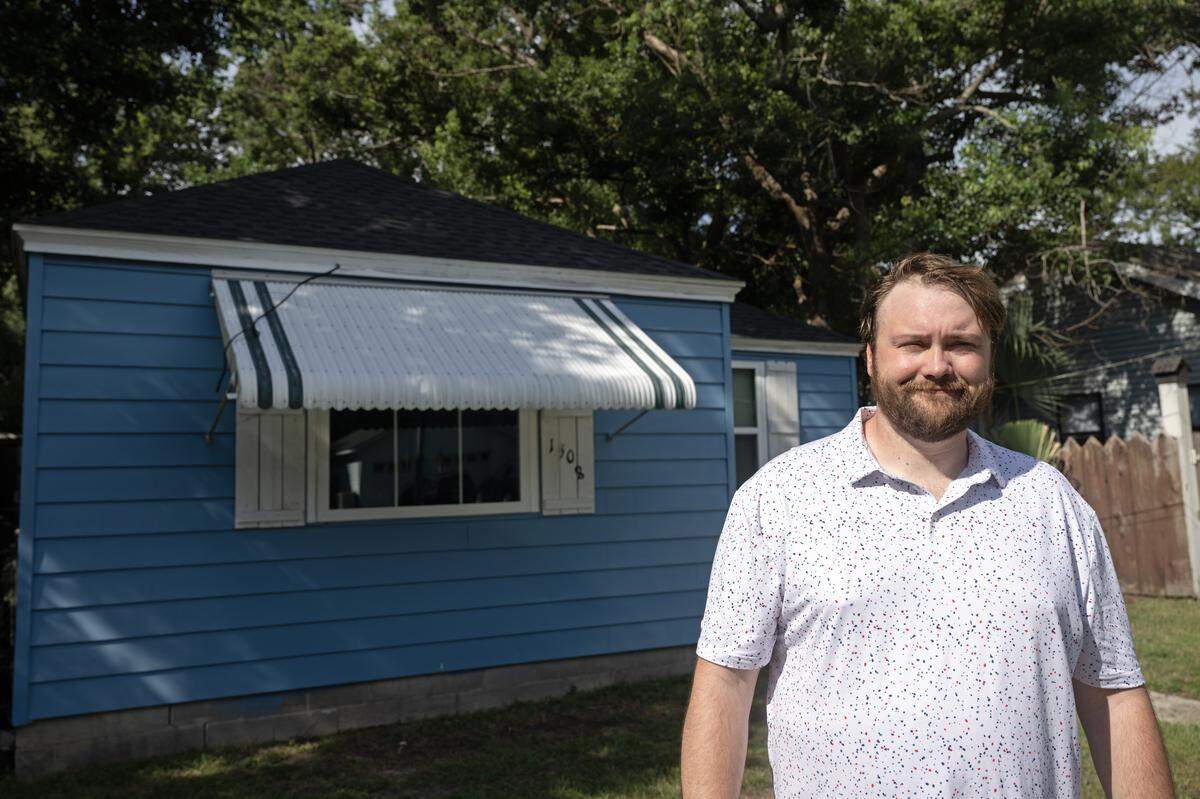
.jpeg "Andy Case, left, of the Mississippi Insurance Department and Gautier homeowner Beth Sanders look at her new roof. Sanders received a $10,000 grant to strengthen the roof against hurricane damage. She’s already saving money on insurance, but also believes homeowners should take steps to protect their property against severe storms.")
AI-generated summary reviewed by our newsroom.
- Lawmakers froze funding, with only 28 homes having received FORTIFIED roof upgrades.
- Distrust in insurance leadership stalled program expansion despite proven benefits.
- Neighboring states outpace Mississippi in grants and installations of FORTIFIED roofs.
Beth Sanders of Gautier was one of the lucky homeowners selected in a lottery to participate in a grant program that strengthened her and her husband’s roof for hurricanes and is saving them money on homeowners insurance.
“I’ve always been an advocate of mitigation,” Sanders said. “I want to fix stuff so I don’t have as much damage.” A $10,000 grant helped cover the cost of the roof, which has a FORTIFIED designation — a trademarked term for homes built to better withstand storms.
She’s already received a $327 refund under her current insurance policy and expects her cost to be about $600 less when she renews for a year.
The Mississippi Legislature first set up a program to mitigate Coast homes against storm damage in 2007, but without funding. In 2024, the Legislature offered a modest $5 million for retrofitting roofs. Sanders and 27 other homeowners participated before the Legislature essentially froze funding, beginning July 1, for the Strengthen Mississippi Homes program.
Interviews with legislators reveal a lack of trust in Insurance Commissioner Mike Chaney to run the program, which they also said was moving too slowly.
Chaney claims his Insurance Department took the time needed to set up a program that will work. Future phases have been canceled, he said, with $4,780,000 of the initial $5 million in funding the Legislature provided sitting in a trust fund.
At stake is a competitive insurance market with reduced rates for FORTIFIED construction. Studies show that FORTIFIED homes also suffer far less damage in hurricanes, lowering reconstruction costs and recovery time.
Mississippi was ground zero in 2005 for Hurricane Katrina. The record-setting storm started the insurance challenges that have continued as climate change increases the frequency and strength of severe weather.
Yet, 20 years later, states across the country are putting in place FORTIFIED construction standards while Mississippi still lacks a program, said Chris Monforton, CEO of Habitat for Humanity Mississippi Gulf Coast, which has used other financial sources for 74 FORTIFIED roofs that his organization has funded this year.
“We need to be advocating and looking at all tools — putting all tools and resources on the table — to stabilize insurance and the cost of homeownership here on the Coast,” said Monforton, who consulted with the Insurance Department on the design and implementation of Mississippi’s program. “And I think a FORTIFIED mitigation program is one of the easiest ones we can implement.”
Alabama, Louisiana outperform Mississippi
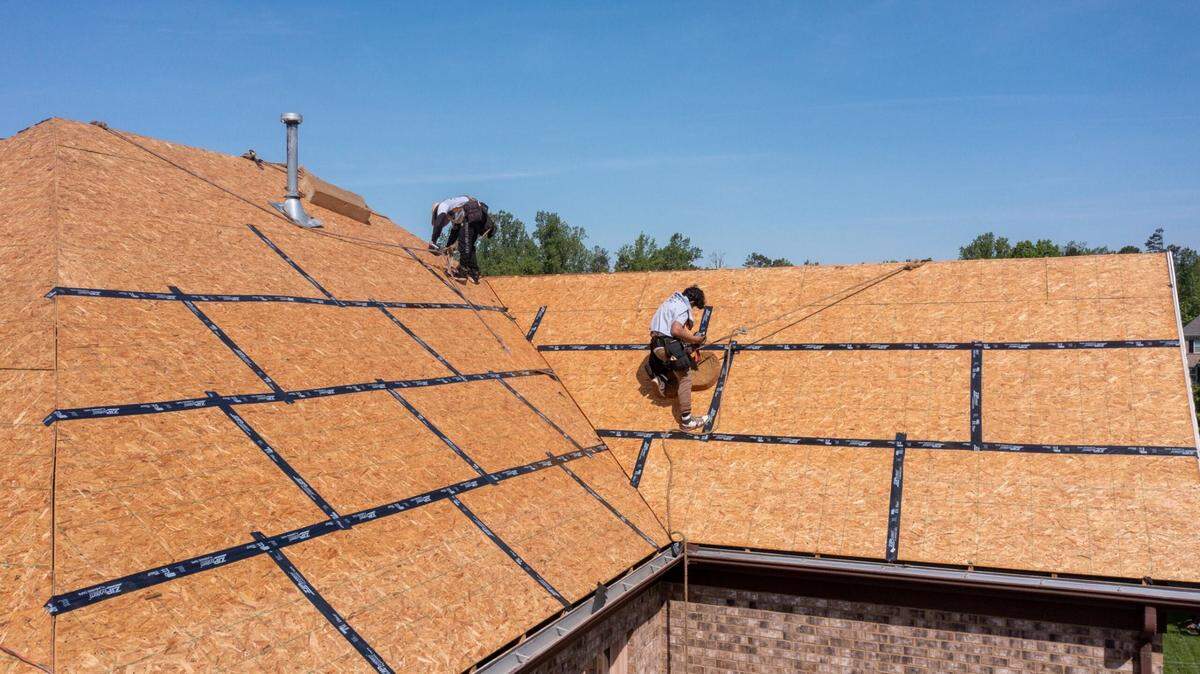
Mississippi’s neighboring states have pulled ahead in strengthening homes against hurricanes. FORTIFIED standards are set by the Insurance Institute for Business and Home Safety, a nonprofit sponsored by the insurance industry. IBHS trains builders and evaluators in FORTIFIED standards. The evaluators inspect work to make sure it’s done correctly.
IBHS shows the following numbers for FORTIFIED roofs, by state:
- Almost 30,000 in Alabama
- More than 15,000 in North Carolina
- More than 8,000 in Louisiana
- More than 1,000 in Mississippi
- Florida, South Carolina, Texas and Oklahoma each have under 1,000 designations.
- More than 85,000 homes across 32 states have FORTIFIED designations (roof or higher-level).
IBHS also has FORTIFIED standards for other retrofits to homes that, when completed, qualify for a FORTIFIED Silver designation and, for new construction, a FORTIFIED Gold standard.
For an existing home, the roof is the first line of defense and must be addressed ahead of any other improvements under the IBHS program. IBHS has been evaluating residential and commercial building components since 2010 in a unique South Carolina research lab where severe weather hazards can be simulated.
FORTIFIED roofs incorporate a number of components designed to keep out wind and rain, including a sealed roof deck. For every inch of rain that hits an exposed roof deck, nine bathtubs full of water can soak a house, IBHS says. If the roof covering is compromised, a sealed deck prevents further destruction.
“Once that water is allowed in, that in most cases is going to displace the occupants, because now it’s going to be wet,” said Alexandra Cary, an IBHS construction expert and director of FORTIFIED market development. “Their belongings are going to be wet, and they’re going to have to be somewhere else while their house is gutted and rehabbed.”
IBHS estimates that a FORTIFIED roof adds between $1,000 and $3,000 to the cost of a roof for a 2,000 square-foot house.
Habitat adopts FORTIFIED construction
Habitat on the Gulf Coast started working with FORTIFIED because the nonprofit builds affordable housing for lower income residents. Insurance rates climbed so high after Katrina, Monforton said, that some clients were unable to afford the payments — even without factoring in a mortgage.
So, Habitat started working with the stronger construction standards that Florida began to adopt after the destructive 1992 Hurricane Andrew. The Coast organization was primed to participate when IBHS introduced FORTIFIED construction in 2010.
Monforton has worked with the Federal Home Loan Bank of Dallas, where he is on the advisory board, to establish a grant program for FORTIFIED roofs. This year, he said, $10 million has been set aside for grants to homeowners and another $10 million for rental properties. Habitat also has tapped into federal disaster relief funds to provide grants for FORTIFIED roofs.
Monforton also has worked closely with state Sen. Scott Delano on insurance issues. Delano, a commercial real estate developer who serves on the Senate Insurance Committee, wants to see an experienced organization such as Habitat head Mississippi’s homeowner grant program.
“I wouldn’t want my auto mechanic to pull a tooth on me,” he said. But the Legislature said only 1% of the $5 million it allocated for Strengthen Mississippi Homes could go to pay a third-party administrator.
In the end, Commissioner Chaney put Andy Case in charge of the program. Case, a department director for 15 years, previously worked in claims management for Allstate.
He started working on Strengthen Mississippi Homes in July 2024, when the state funding became available. Case was administering the program in house, with advice from experts.
“All I needed was software,” he said, “if you take this to a private group, do you think they’re going to do it for free?”
He said the department moved slowly with the mitigation program on the advice of experts, including Monforton, and to ensure homes would qualify for the FORTIFIED designation.
The Alabama Legislature started that state’s program in 2012 and funded it in 2015. The first grants were issued in 2016, according to that state’s insurance department. The state recently reported that more than $86 million in grants have been issued.
Mississippi’s first FORTIFIED roof was installed about nine months after the program started, compared to 10 months each for Louisiana and Oklahoma.
Stronger roof reduces hurricane damage
A recently published study by the Alabama Insurance Department and the University of Alabama examined property damage from Hurricane Sally in 2020 showed that FORTIFIED construction reduced loss frequency by up to 74% and severity by up to 40%.
The Mississippi Insurance Department’s plan was to ramp up its program once the test group was finished. The department had hoped to complete 150 homes a quarter after the testing phase, then increase the number to 300 homes a quarter.
And the department was asking the Legislature for additional funding to keep the program going.
But legislators were wary. A previous program, funded by FEMA and run through other state agencies, was mismanaged and suspended around 2016. Only 945 of 2,000 homes were completed at a cost of $31.5 million, a federal audit found.
“We’ve been burned,” state Sen. Brice Wiggins of Pascagoula said. “And so we’re not in the mood to be burned again. Our job is to make sure it’s sustainable, it’s a legitimate program and we’re not spending money so that somebody can make it window dressing.
“There is an undercurrent of distrust, or certainly lack of proof that there is good faith.”
Rep. Kevin Ford of Vicksburg, an independent insurance agent, wants to take a homeowner mitigation program statewide to combat rising insurance rates.
“Sometimes,” he said, “these things do take time, especially when you’re dealing with the issues of the past.”