‘Extreme Makeover’ built Hurricane Katrina memorial as a gift. 19 years later, it’s a mess
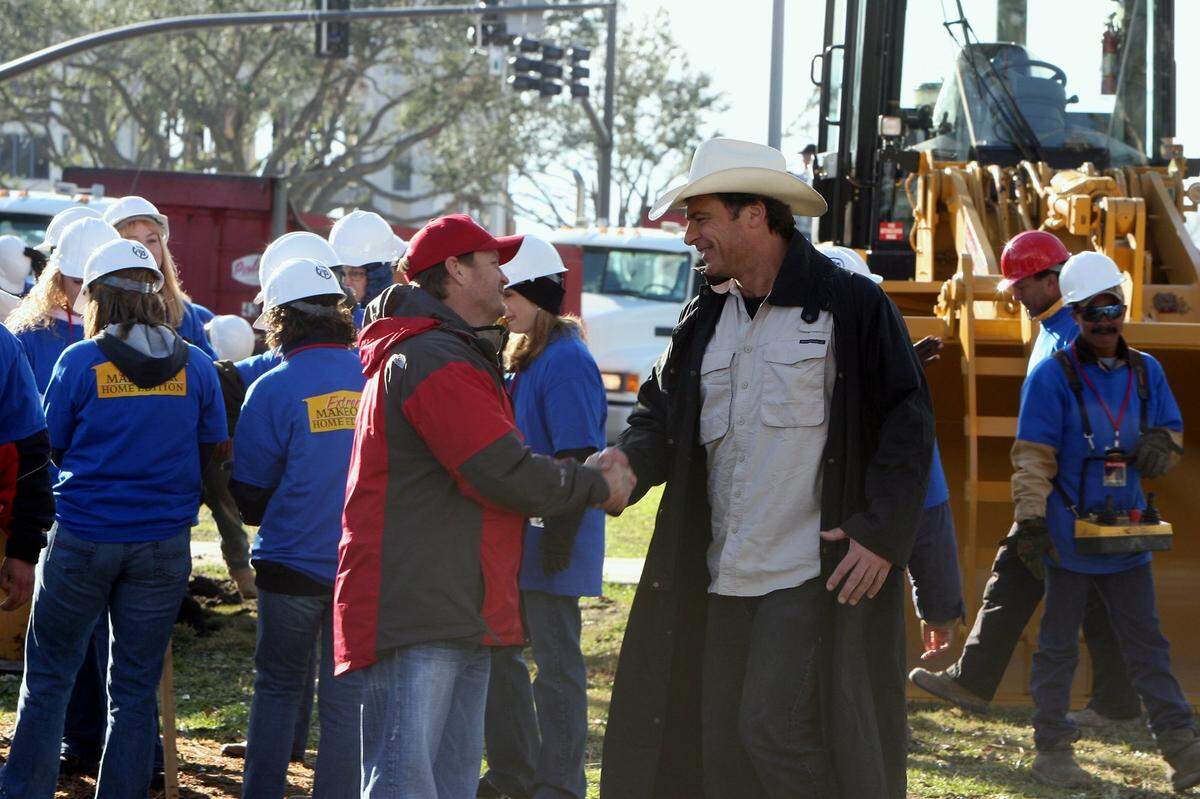
Extreme Makeover: Home Edition was one of the most popular television shows in 2005 and its cast and crew were among the first groups to help South Mississippi after Hurricane Katrina ravaged the Coast.
Less than a month after the storm, First lady Laura Bush and one of the show’s designers, Preston Sharp, filmed a segment of the ABC television program on Sept. 27, 2005, as part of a two-stop trip to Biloxi.
“We wanted, from the moment that hurricane hit, to get down there and do what we do, which is build,” said the show’s executive producer at the time, Tom Forman. “It’s probably a little too soon for that, but we’re itching to get started.”
Before they built, the company sent supplies.
“In the meantime, we wanted to do what we could. So we talked to our vendors and suppliers and lined up things that people need. Sears, a sponsor of our show through their Sears American Dream campaign, has loaded a convoy of trucks with items the American Red Cross has told them these two shelters need desperately: mattresses, bedding, linen, sleeping bags, tents, clothing and some other things,” Forman said.
Host Ty Pennington and the “Extreme Makeover” cast let the country know the hurricane wasn’t over in Mississippi when the episode aired six months after the storm. “Believe me, they still need your help,” Pennington said.
Instead of remodeling of one home, as they did on most episodes of the show, the team and volunteers rebuilt and equipped Coastal Family Health Center clinic in Biloxi. The medical facility was treating patients in a trailer after the non-profit’s building was destroyed.
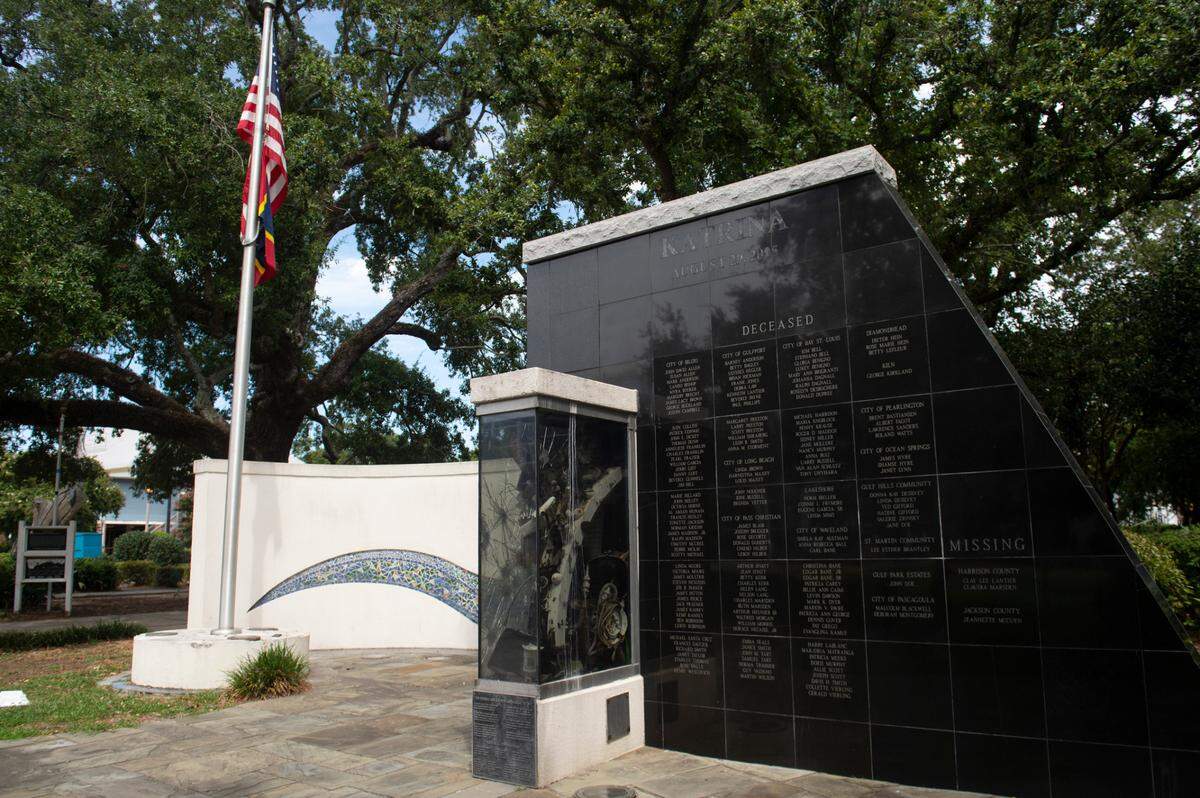
They also built a monument on the Biloxi Town Green “memorializing the hour and day that Katrina swamped South Mississippi,” according to an account in the Sun Herald.
“Hundreds of people, some emotionally overwhelmed, turned out for a candlelight vigil and watched ‘Extreme Makeover: Home Edition’ debut its gift to the Coast,” the article said.
The “Extreme” gift
Some of those people at the dedication ceremony contributed to the “memory case.” They contributed items that were all they found left when they returned to their homes or had special significance. The memories were encased in the safety glass display that stands between a mosaic memorial wave and a granite wall etched with the names of Katrina’s victims.
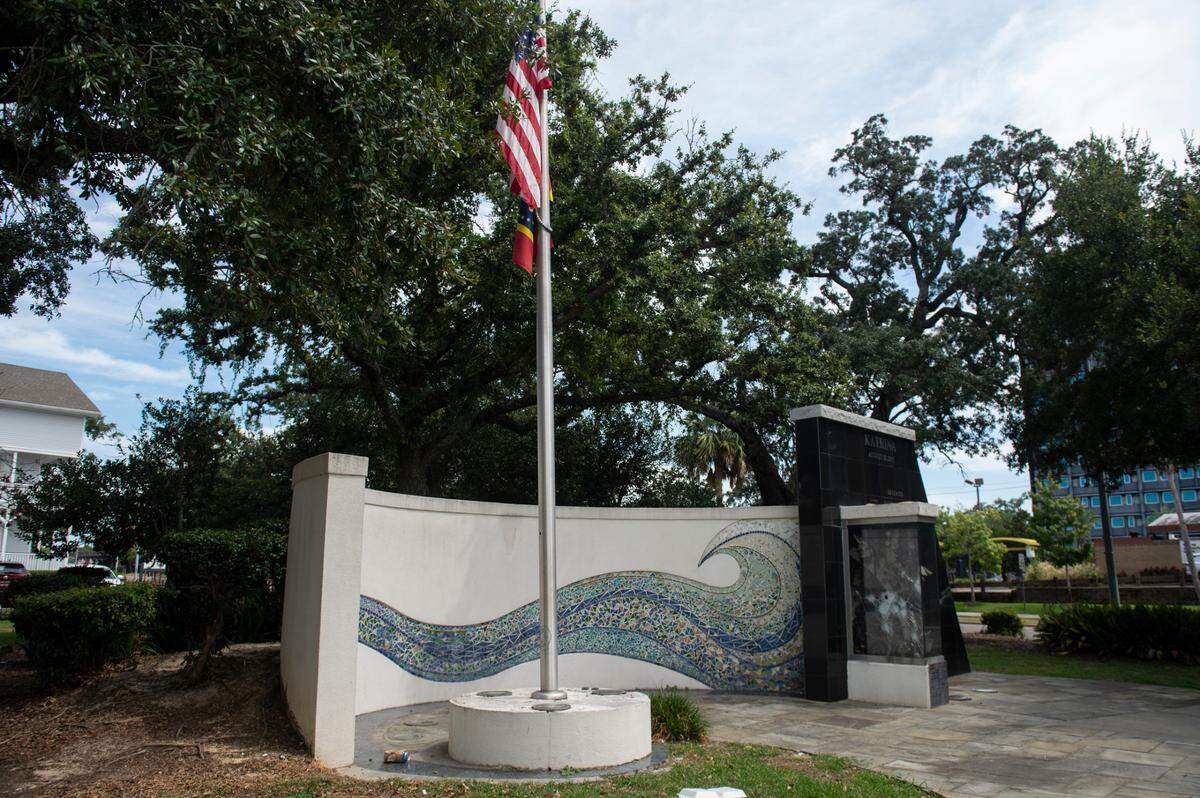
Coast artist Elizabeth Veglia created the Katrina wave mosaic in the great room of her home on Rotten Bayou near Kiln, which was flooded by eight feet of Katrina’s storm surge.
Architect Dennis Cowart of Ocean Springs, who designed the Camille memorial, also designed this Katrina memorial. The 12-foot height of the wall is the same height of Katrina’s surge at the Town Green.
What a mess and what’s next?
Now 19 years later, thousands of people have admired the memorial — but they aren’t as impressed today.
While the wave and memorial wall remain intact, the display case looks like someone shot it. It was hit several times and moisture seeped through a hole, making it almost impossible to see anything inside.
“They damaged that three times already,” said Biloxi Mayor Andrew “FoFo” Gilich.
It wasn’t a teenage prank, he said, but the work of vagrants throwing stones at the case.
“Just malicious,” he said.
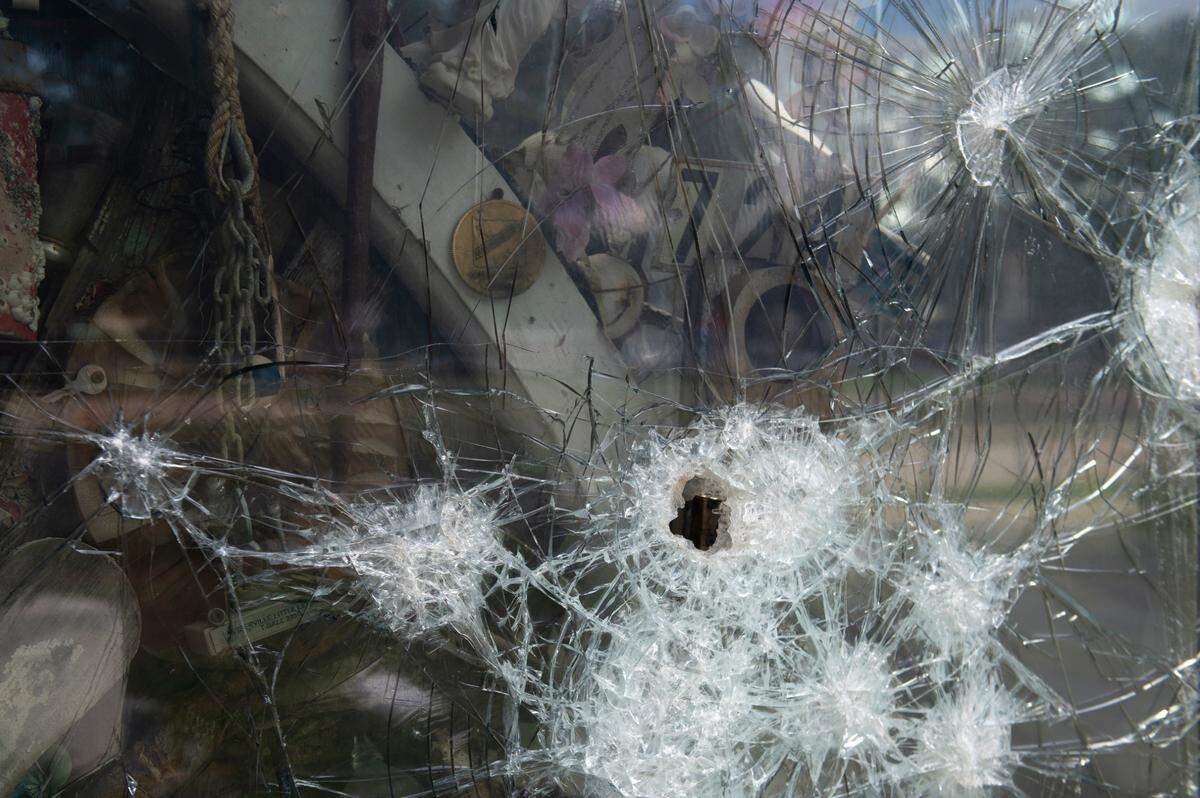
Gilich said the city won’t repair that memory case a third time.
“My last instructions are — whatever remains in good shape is to be moved to the Visitors Center,” he said. People will be able to see the memorial and the memorabilia inside, he said, but not necessarily in an outdoor display.
Biloxi Visitors Center was built a few blocks to the west of the Town Green after Hurricane Katrina destroyed the historic Dantzler House on the site. The visitors center contains a museum as a tribute to the city and its diverse people.
The wave and the wall of names will remain at Biloxi Town Green, the mayor said, and the lights installed at ground level, which get rain inside, will be raised to shine down.
Saving memorials
For the 55th anniversary of Hurricane Camille, another monster storm that devastated South Mississippi on Aug. 17, 1969, Biloxi partnered with others to move the Camille memorial.
The flagpole bent by the hurricane’s winds at the site of the former Church of the Redeemer and a granite wall inscribed with the names of the victims, now are displayed next to the Golden Fisherman statue.
All are outside the Maritime and Seafood Industry Museum at the eastern tip of the Biloxi peninsula.
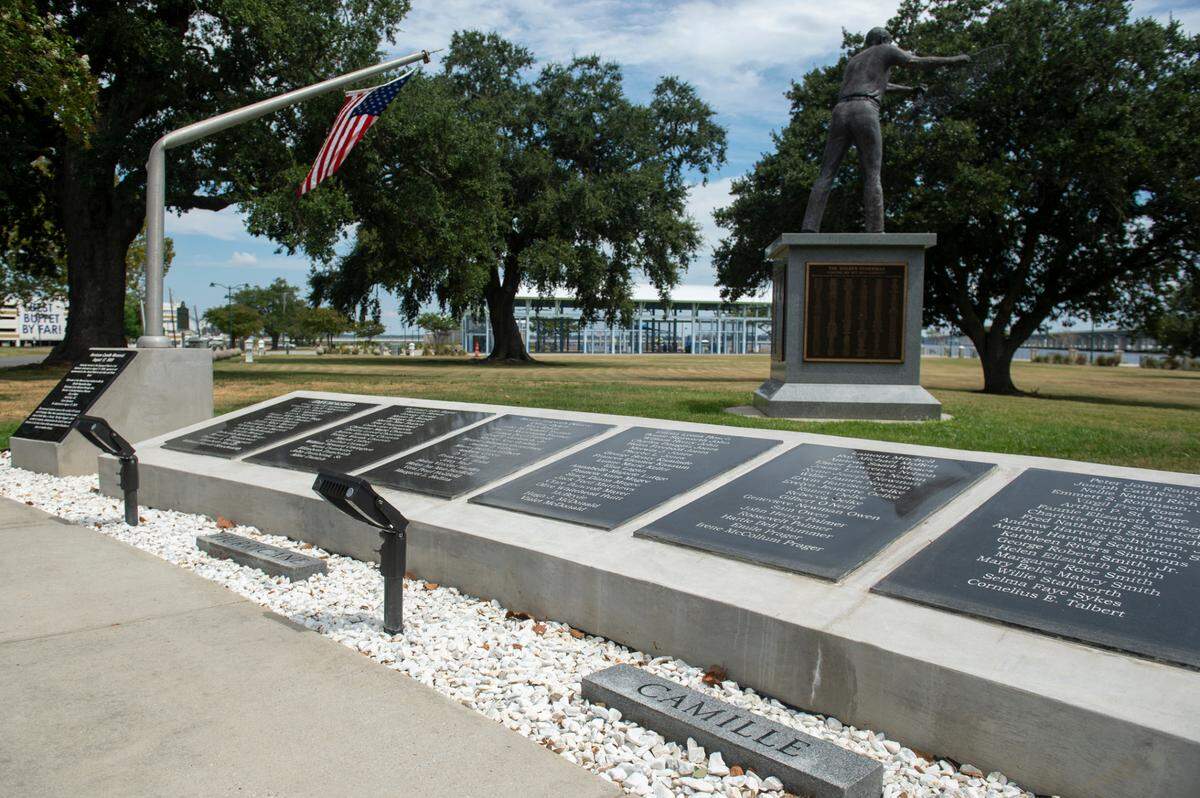
The Camille Hurricane mosaic, created by Veglia over six months to look like the satellite image of the hurricane, wasn’t part of the move that cost $52,000 as it was, Gilich said. Its intricate design was considered to be too difficult to move, he said, and it remains at the beachfront site, where a hotel will be built.
This story was originally published August 29, 2024 at 5:00 AM.