‘Now I get it.’ Former Gov. Barbour tells business group how Katrina made George Bush cry
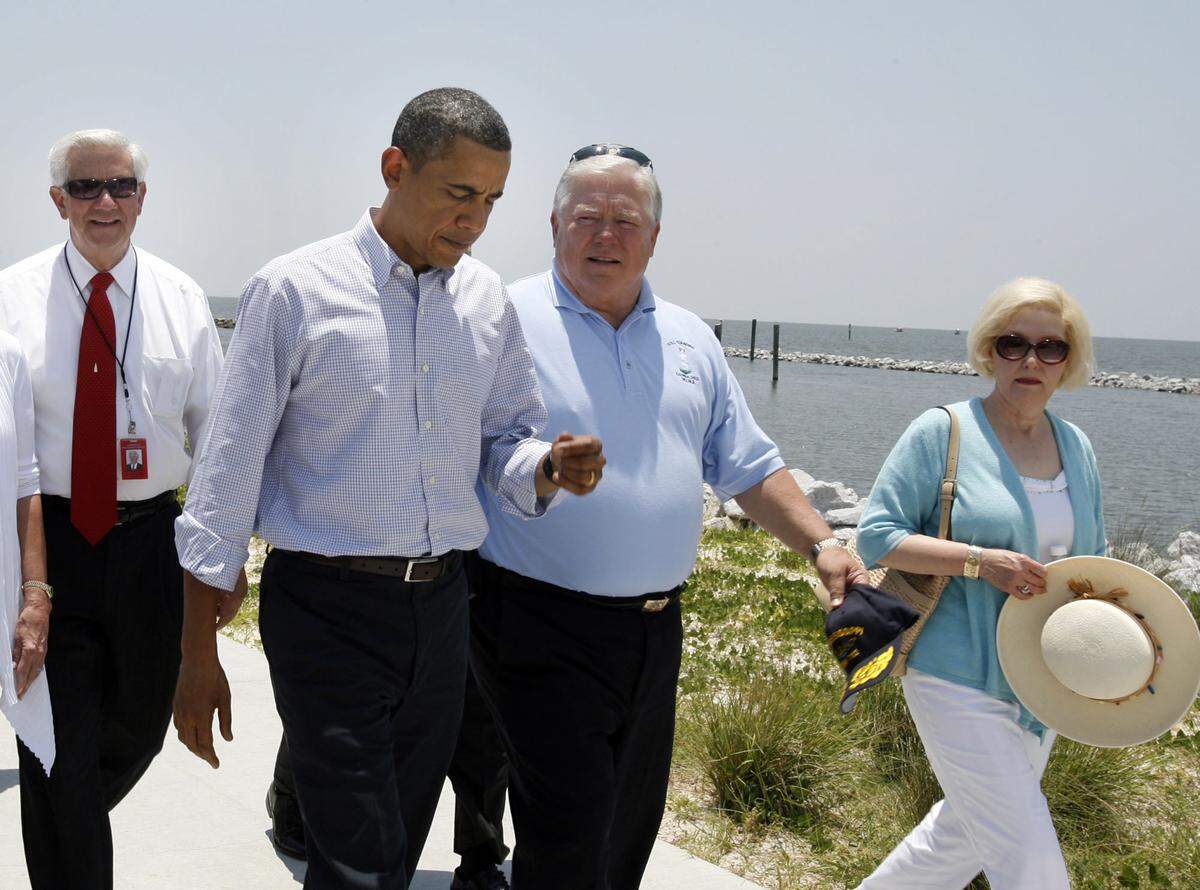
Former Gov. Haley Barbour stopped in Gulfport on Thursday and stood before local business leaders and politicians. He spoke of politics, the election and Hurricane Katrina. He told stories of the storm’s aftermath.
In one, he was driving the back roads near Bay St. Louis with his wife and President George Bush. They wound through destruction and arrived at Saint Stanislaus Catholic High School. President Bush opened the door.
“He was crying” Barbour said.
“Now,” he recalled the President said, “I get it.”
That memory and other emotional tales of Katrina grounded a speech Barbour delivered Thursday to the Gulf Coast Business Council. In a packed room at the Knight Nonprofit Center, Barbour remembered the days he spent on the Coast after the 2005 storm, which will mark its 19th anniversary next week. He also spoke of his tenure in office, and warned the audience that 2024 could be the strangest election yet.
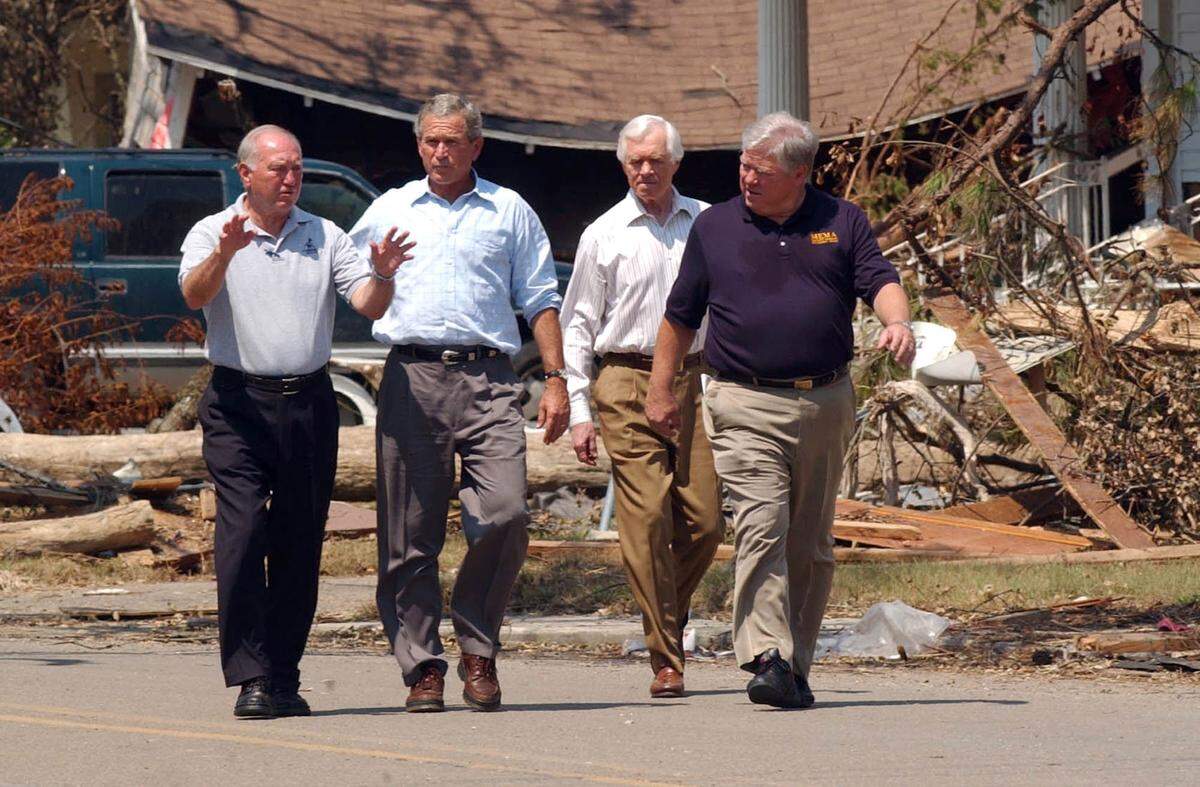
But the heart of the two-term Republican governor’s more than 45-minute speech dwelt on Katrina. Barbour, long popular on the Coast, led the state from 2004 to 2012, including when the storm devastated it in 2005. He helped secure billions of recovery dollars from the federal government.
On Thursday, he said he always knew Mississippi would survive because it found allies in even the strangest places. Former Massachusetts U.S. Rep. Barney Frank — a fierce liberal — stopped him one day after the storm, Barbour said. He wanted a copy of the state’s plan.
Frank promised Barbour he would write to each Democrat in the U.S. House of Representatives and ask their support, Barbour said.
“At that point we had never agreed on anything in our lives,” he said. But “he knew his constituents wanted us to be helped.”
The crowd listened to every word.
Barbour also praised the Waveland Police Department. Its officers planned to ride out the storm, then search for looting, injuries and bodies in the wreckage, Barbour said.
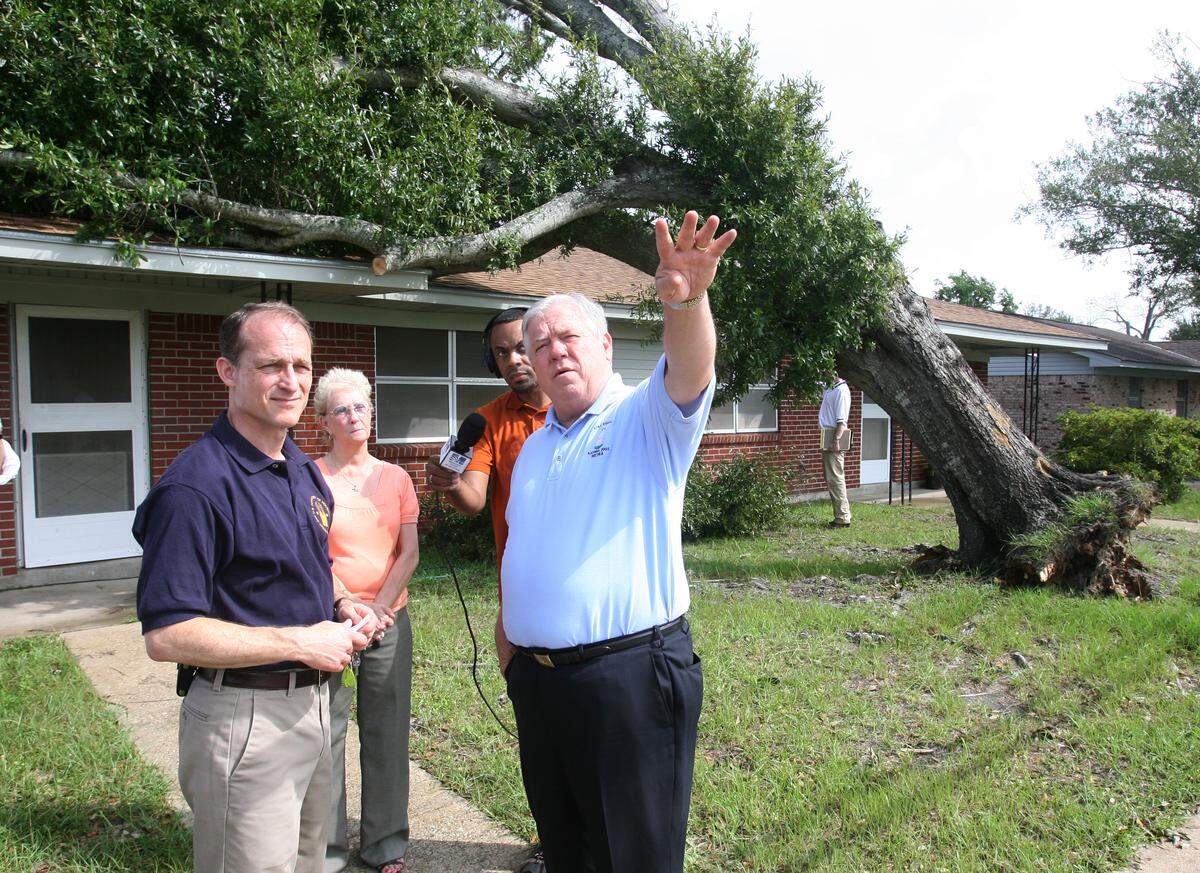
But a 37-foot storm surge washed through the building. The officers grabbed trees and tied people to safety with cords. The water, Barbour said, washed some “almost to the Bay.”
By 8 p.m. that night, the officers were back on duty.
“I can still remember how good that made me feel,” Barbour said. “I just thought to myself, if these people are gonna do that, what more can you ask for?”
Barbour worked for President Ronald Reagan as a political director in the 1980s, and chaired the Republican National Committee in the 1990s. In 2003, he defeated the incumbent Democratic Gov. Ronnie Musgrove in an election with record turnout. Under his leadership, Mississippi earned $5.5 billion in federal grant money after Hurricane Katrina recovery. He also drew criticism for directing $570 million to port expansion and not low-income housing.
He lobbied in Washington before he was elected governor, and later founded a Washington D.C.-based lobbying group. He also joined a law firm. He flirted with running for president in 2012. But he never did, he has said, because he did not have a “fire in the belly.”
On Thursday, he called the 2024 election rare and unusual.
But he was confident Donald Trump will carry Mississippi. He predicted Latino voters could make the difference in states such as Georgia and Pennsylvania in November, and criticized Democratic policies at the southern border. He also lamented the toll of inflation.
“Does Kamala Harris have any credibility on the economy? On inflation?” he said.
Several people chuckled in the audience.
Barbour helped shape the Coast. He pushed legislation for a $29 billion relief package to rebuild wiped-out homes after Katrina. He also signed a law that allowed floating casinos destroyed by the storm to rebuild onshore.
He later published a book about that time, called “America’s Great Storm: Leading Through Hurricane Katrina.”
“It looked like the hand of God had wiped away the Coast,” Barbour said Thursday. “Like an atomic weapon had gone off in the Sound and just obliterated everything.”
He praised its recovery.
“You couldn’t help but be proud of our people,” he said.
Then the former Governor stepped away from the podium, and walked out with the crowd.