New devices are trapping litter that’s trashing up MS Coast waterways. What to know.
Marine litter is being scooped up in four Coast waterways as part of a pilot project to improve water quality, particularly in the Mississippi Sound.
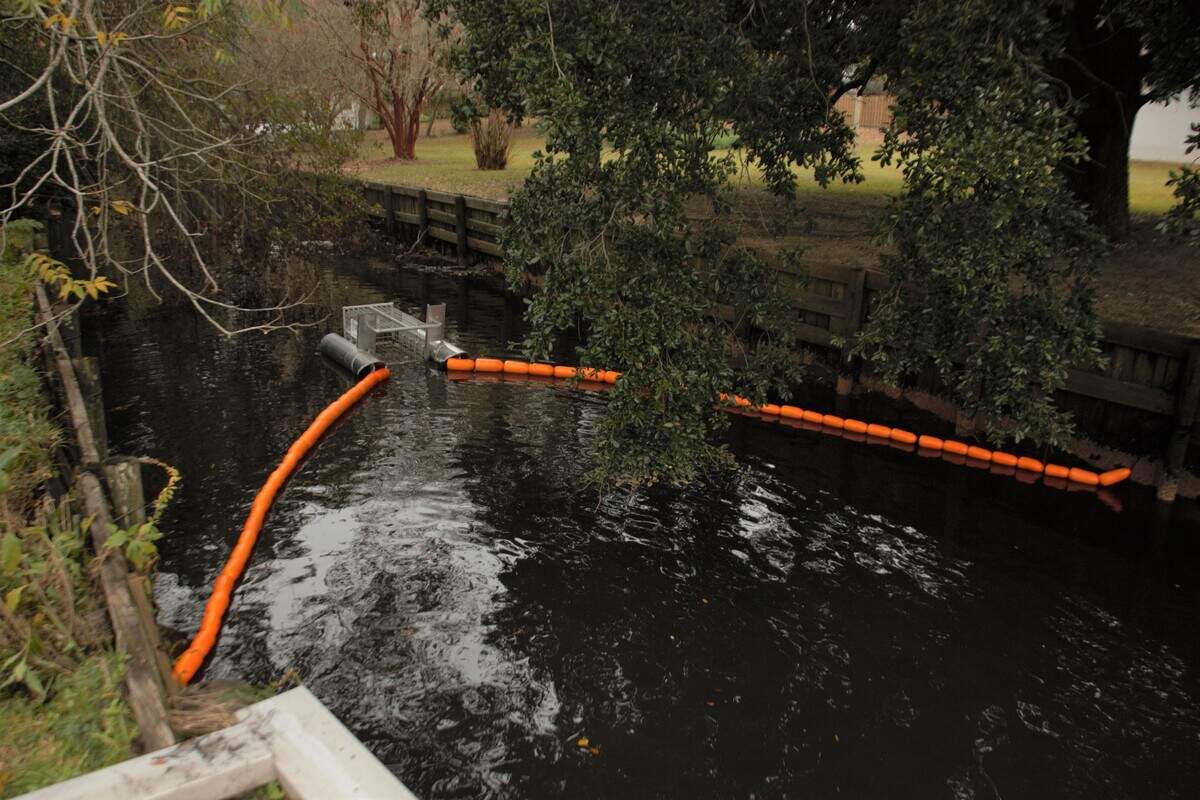
The Coastal Marine Extension Program at Mississippi State University is overseeing the project that has deployed Litter Gitters in four Coast waterways: the southern branch of Magnolia Bayou in Hancock County, on Brickyard Bayou and Canal #1 in Harrison County, and on Bayou Chico in Jackson County.
They were installed last week.
The Litter Gitter, developed by Osprey Initiative in Mobile, Alabama, uses booms to direct the flow of water and litter into an aluminum cage that is cleaned out a couple of times a month. Marine vessels and wildlife can navigate over or under the devices.
“They do a really good job of trapping floating litter as it comes down during heavy rain events or when the tides are going in and out,” Eric Sparks, director of MSU’s coastal program, says in a YouTube video about the devices.
“ . . . Litter has a huge impact on water quality. From the unsightly category, there’s been a lot of research that’s gone out that shows one of the top reasons why people don’t visit areas is if it’s trashy or full of litter.”
Litter also harms the environment, he said, particularly as it breaks down into microplastics and smaller pieces that are integrated into the food web and consumed by fish and other aquatic life.
MS Coast litter traps part of BP restoration work
The Mississippi Department of Environmental Quality provided MSU with $162,150 from BP catastrophe restoration funds for the pilot project.
“We’re always looking for, what else can we do?” said MDEQ Executive Director Chris Wells. “ We get approached by people all the time with gadgets and gimmicks and projects. This idea jumped out. This fits right into what we’re trying to do from a water quality standpoint, a stream restoration standpoint.”
Wells said litter traps are being installed in other parts of the country as well and not just along coastlines. He said MSU is compiling data on the amount and types of litter and debris collected.
Wells sees the pilot program as a small investment that can be expanded if it works well.
“This restoration thing is a puzzle we’re piecing together,” he said. “Hopefully, we’ll get some good data out of this that will help us make some decisions going forward.”
Sparks says Litter Gitters also have proven effective in two other locations in Biloxi where they were deployed over the summer: Keegan Bayou and Bayou Auguste. A grant from the EPA’s Gulf of Mexico program covered those costs.
He said those two Litter Gitters have collected at least a couple of hundred pounds of litter.
“It gets all the floating stuff, for sure,” Sparks said. “Obviously, there’s stuff that goes underneath it. It’s basically skimming off the top. It’s very effective. That’s why we get a lot of plastic bottles, things that have caps on them that float.”
This story was originally published December 19, 2021 at 5:50 AM.