Ida flooded a historic Black community on the Coast yet again. Will anything change?
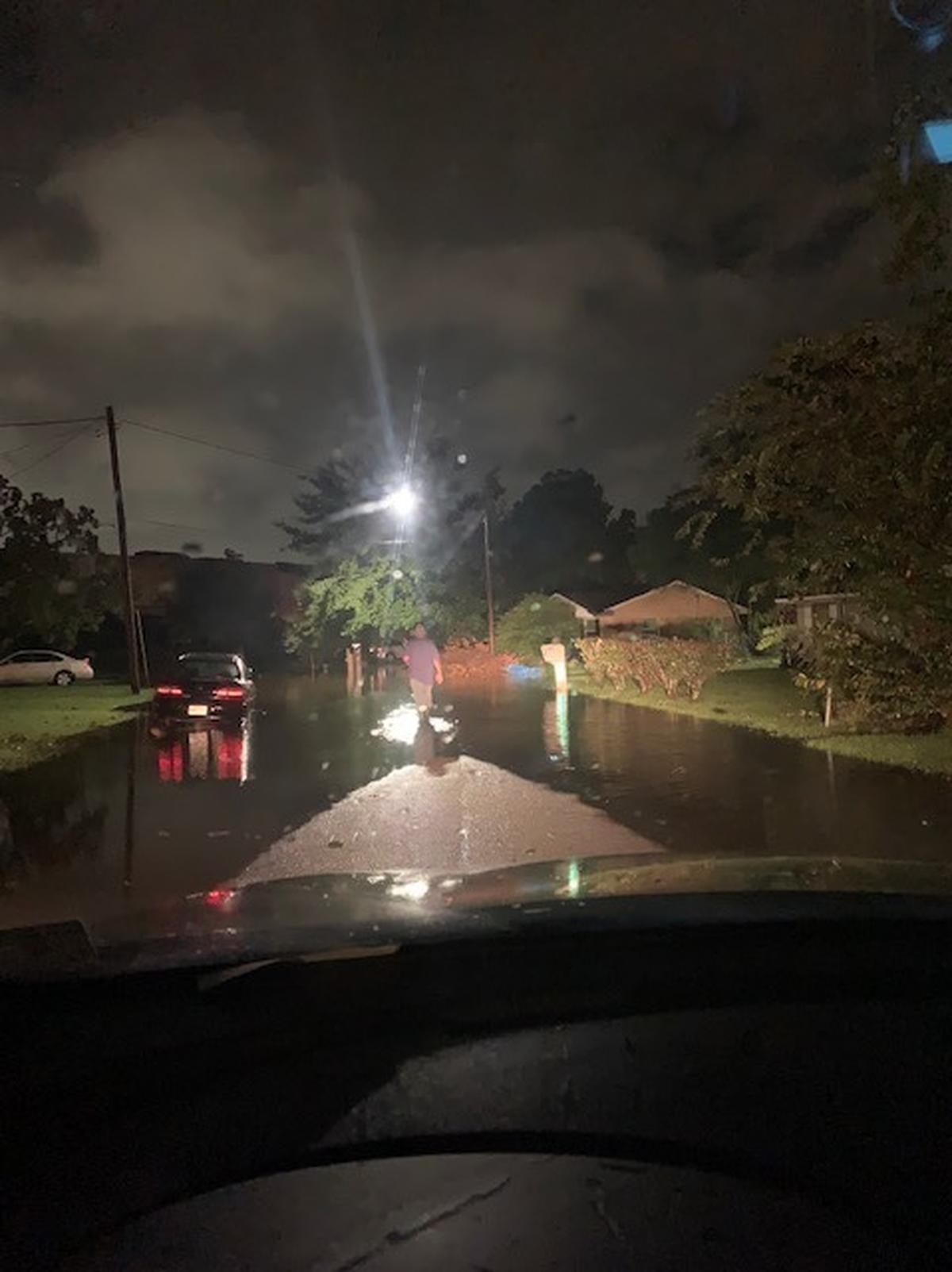
When Daniel Dedeux opened his front door to head to work on Tuesday, he saw a lake where the street was supposed to be.
As the tide rose in the wee hours of Tuesday morning, the waters of Turkey Creek, already swollen by Hurricane Ida’s rains, had nowhere to go but into the roads and yards of Forest Heights, a historic African American neighborhood in North Gulfport.
Dedeux called his supervisor at Ingalls Shipbuilding and said he wouldn’t be able to make it to work. He took a vacation day so he wouldn’t lose pay for the day.
Flooding has been a feature of life in the community. Residents and neighborhood advocates blame Gulfport’s over-development and the lack of investment in infrastructure to address the problem. And some say a planned $32 million road project, across what is now mostly wetlands, could make matters much worse.
As the floodwaters rose after midnight on Tuesday, Ward 3 Councilwoman Ella Holmes-Hines stationed herself just outside Holly Circle, the subdivision’s main loop, near the four pumps that were struggling to keep up.
She called residents and told them to look outside so they could move cars from flooding roads. Six of them joined her outside. The smell of sewage hung in the air as they watched the water and prayed.
“I think that we have come to a peak in the road,” Holmes-Hines said. “We’re going to do the right thing by this minority community, or we’re going to just be on record that we don’t care. Either way, they’re going to have to make a decision.”
A contested road project
The water consumed the parking lot and grass surrounding Forest Heights Baptist Church, but it did not enter the sanctuary, the Rev. George Rouse said. The inside of the church has flooded at least three times in the last 20 years, bringing up to two feet of water into the building, but Rouse thinks measures like removing trash and trees from the creek have helped.
The nonprofit organization American Rivers named Turkey Creek one of the country’s 10 most endangered rivers earlier this year.
Tuesday’s inundation arrived during an inflection point for Turkey Creek.
Gulfport is planning a $32 million project to build a new airport access road just north of the Forest Heights subdivision. That would open hundreds of acres of wetlands in the area to development, worsening the flooding problems, advocates say.
Several community groups have formed the Coalition to Protect and Preserve Forest Heights and asked President Joe Biden’s administration to halt the project, which relies on a $20.5 million federal grant.
On July 26, the group got a response from Washington: the Federal Highway Administration’s Office of Civil Rights will investigate whether the road project could disproportionately harm African American communities, and whether the planning included adequate community engagement.
A phone call to the investigator assigned to the case was not immediately returned on Wednesday.
A long-awaited levee
A multi-million-dollar levee project designed to protect Forest Heights from flooding finally got federal funding in 2021, but construction is still years away.
Justin McDonald, coastal resiliency program manager for the U.S. Army Corps of Engineers’ Mobile district, said the Corps and the City of Gulfport are hammering out their partnership agreement, which he hopes will be completed by the end of October. Then it will take about two years to finish the design and start getting construction bids.
McDonald said Gulfport will pay $600,000 for the design stage and an estimated $6.3 million for construction. The city will also be responsible for annual maintenance costs of about $150,000.
Initial plans for the levee were designed by the Army Corps of Engineers back in 2009.
The goal is to raise the existing levee by 5 feet to protect Forest Heights from extreme flood events, like Hurricane Katrina, and make residents eligible for the National Flood Insurance Program. The project also includes a permanent pump system that would replace the four exterior pumps that were brought in to battle Tuesday morning’s floodwaters.
“It’s kind of a two-fold issue,” McDonald said. “Raise this levee to handle extreme events, allow this community to be eligible for flood insurance. The other, provide assistance for what really is much more impactful for them on a much more frequent basis — standing water in the community that needs to be pumped out.”
For now, the residents of Forest Heights watch the waters rise and fall.
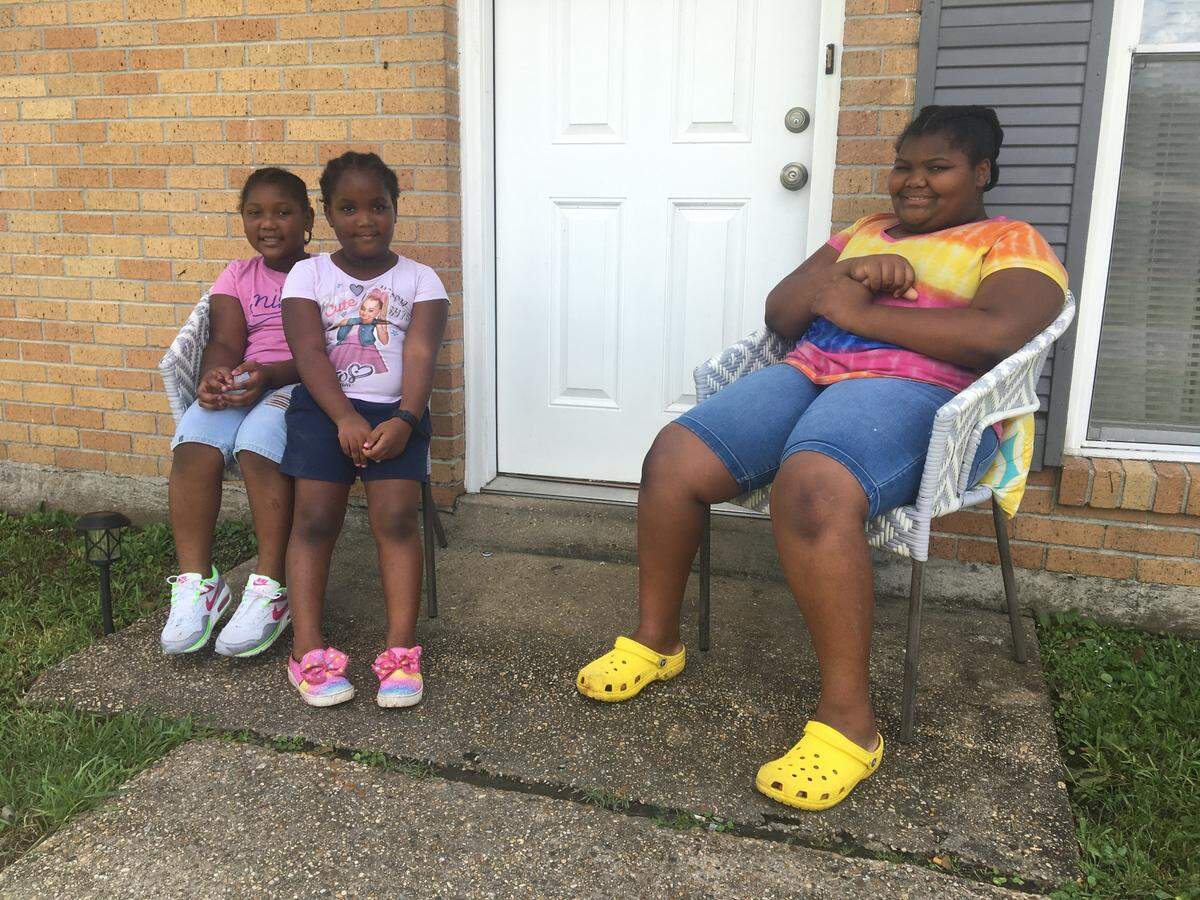
On Tuesday morning, a 30-year-old Gulfport native named Dominique opened her door and realized she wouldn’t be able to drive her kids to school, and her boyfriend would have to be late for work. (Dominique asked for her last name not to be printed because she doesn’t want her residence to be public.)
Her three daughters, 6-year-old Bailey, 10-year-old London, and 5-year-old Zoey, spent the day doing virtual school instead.
“We kind of know if it rains too long around here, it’s going to flood,” she said.
A historic American community
Forest Heights claims a place in American history.
In the mid-1960s, the National Council of Negro Women surveyed Black residents of North Gulfport about their housing. Many rented homes without electricity or running water. The organization built Forest Heights to help change that.
At Forest Heights, those residents could afford to buy a modern home and build wealth for their families. With support from the federal Department of Housing and Urban Development, it opened as one of the country’s first integrated homeownership developments for low-income residents.
The NCNW adopted it as a model for developments in St. Louis, Missouri; Raleigh, North Carolina; and New Orleans.
Cheryl Clark bought her home about 30 years ago. She was 25 years old and paid $16,000.
“It was a blessing to have these homes,” she said. “If you really couldn’t afford it, you could afford it.”
Over the years, she and her husband invested about $100,000 in the property and raised their five kids. She’s watched her neighbors do the same thing.
She’d like to renovate again, maybe adding a full bathroom off her bedroom. But the floods make her wonder whether she should try to leave instead.
In recent years, she said, the city’s pumps have helped, but on Tuesday, it seemed like they were struggling to keep up. When she woke up at 6 a.m., her yard was full of water.
“It gets kind of scary,” she said. “You say, ‘I hope it recedes.’”
This time, it did.