Historic Black community fights military project on Coast land fouled by arsenic, lead
Update: After a full day, a state environmental board recessed an appeal hearing Tuesday evening without a decision on whether to rescind the Mississippi State Port Authority’s permit for construction on North Gulfport property.
Seven more witnesses are scheduled to testify when the hearing continues at a later date. The board heard Tuesday from witnesses for the state, who said the north port property is suitable for development. Witnesses for North Gulfport residents, who are appealing the decision to grant the permit, are among those who will testify when the hearing continues.
Attorneys for North Gulfport residents tried to establish by questioning the state’s witnesses that nobody can say with certainty whether arsenic and lead could migrate off the site through new pathways if the property is developed, but a witness for the Mississippi Department of Environmental Quality staff, which recommended granting the permit, said he does not believe that will happen.
One last time, residents of North Gulfport have mustered to fight development of Mississippi State Port Authority property contaminated with lead and arsenic.
Three residents, the Anointed Temple A.O.H. Church of God and the nonprofit North Gulfport Community Land Trust are appealing a state decision to permit discharge of storm water from construction on the north port property, which is surrounded by hundreds of homes in predominantly Black neighborhoods.
Residents fear lead and arsenic will seep from the site into neighborhood ditches and area streams, including Turkey Creek. Port officials say the lead and arsenic pose no risk because they have been contained under a clay cap that the development will not disturb.
But mistrust runs deep between the residents and the port, which spent more than $560 million in federal economic development funds after Hurricane Katrina to create only a fraction of the well-paying maritime jobs the community was promised.
Residents also say such a development would never be permitted near white neighborhoods.
“It’s not uncommon for industrial uses to be located in an African American community, and it is uncommon for them to be located in upper-income white communities,” said attorney Desiree Hensley, who will represent the community Tuesday when a permit board hears the appeal of the Mississippi Department of Environmental Quality’s decision to grant the permit.
“It’s sort of a never-ending struggle. I’ve told my clients as long as the city has this land zoned industrial, they’re going to be at risk. There’s a chance this project can be defeated, but another project will be coming along. There’s nothing to stop the next permit application.”
Port spends $2.8M on land
The Mississippi State Port Authority (MSPA) paid Hancock Bank $2.8 million for the repossessed property, a total of 145 acres is northeast of the intersection of 34th Avenue and 33rd Street. The land sits a short two blocks from heavily trafficked U.S. 49 and, more importantly for the port, beside the Kansas City Southern Railway line.
MSPA knew a portion of the land was contaminated when it struck the deal in 2009 with Hancock Bank, now Hancock Whitney. The port paid the bank, also landlord for port administrative offices in the high-rise bank building downtown, $2.1 million for 112 acres, much of it forested wetlands. The port leased the remaining 33 acres, contaminated by lead and arsenic, for $700,000.
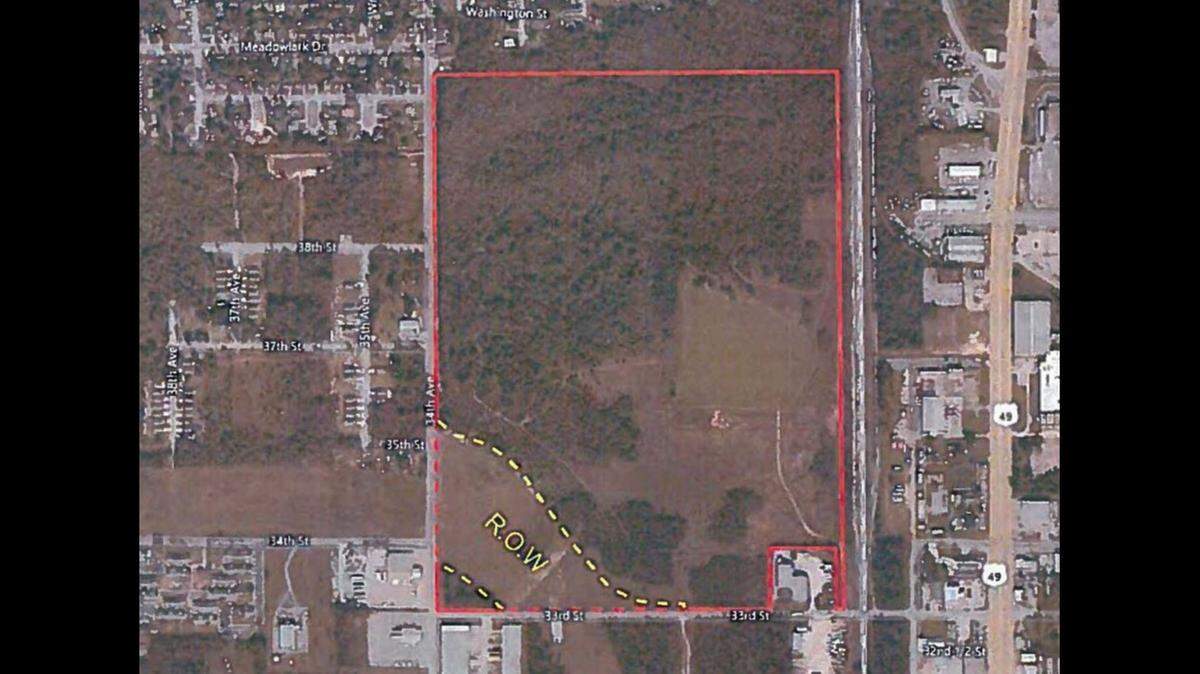
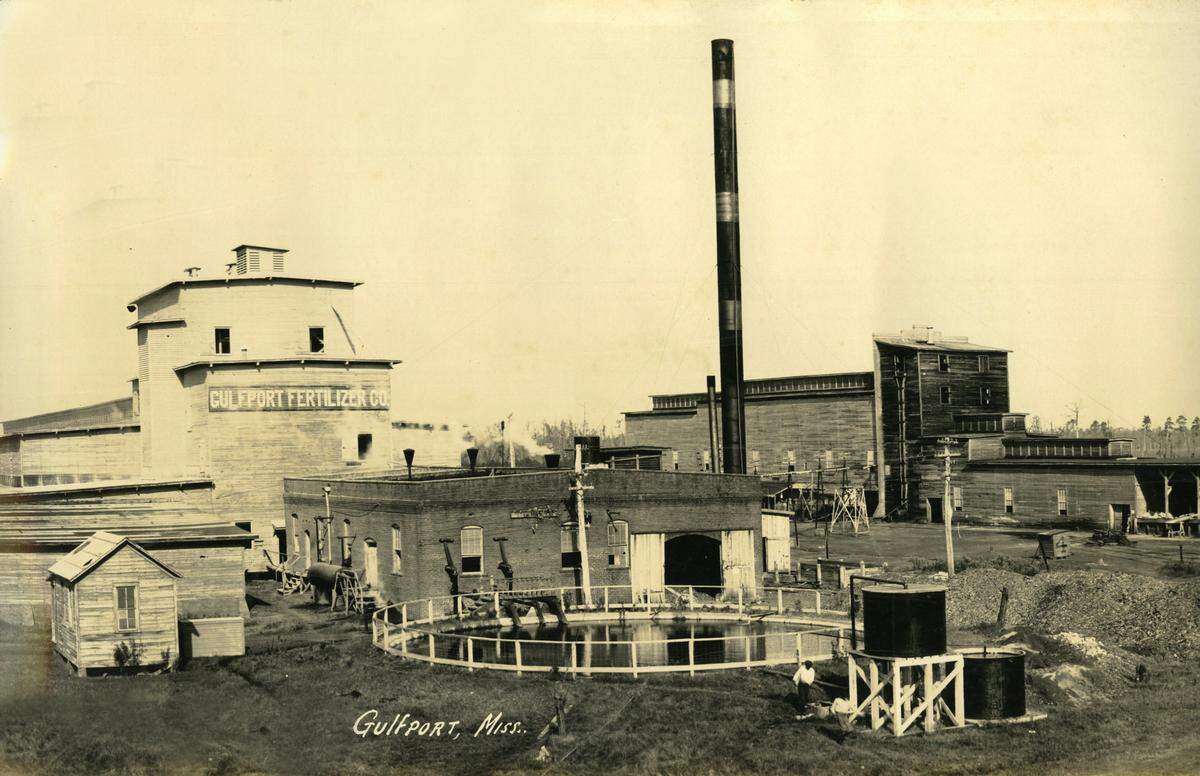
The port has paid all the rent and recently extended the lease on the 33 acres. The port will pay an additional $1 to Hancock Bank to become the official property owner. The 33 acres is where the port wants to locate its new development. In the early 1900s, the land was home to Gulfport Fertilizer Co., source of the contamination.
The port wants to use the property to store and load Department of Defense equipment, primarily from Camp Shelby, for shipping from Gulfport. The port has a Strategic Seaport designation for military shipments that would come mainly on the KCS rail line that parallels the property on the west.
The port has space to load and unload military shipments within 24 hours at its docks a short distance south on the Mississippi Sound. But space is insufficient for storing and marshaling the equipment, the port says. It has also ruled out other locations for the DoD facility.
Highly contaminated acreage on the property has been fitted with a clay cap, and monitoring wells are used to measure levels of arsenic and lead under a corrective plan MDEQ approved.
Attorney Brant Pettis, who represents the port, says years of required groundwater monitoring shows no migration of the lead and arsenic from the capped area.
The port also maintains the project has been designed so that surface water would not drain into Turkey Creek, once a favorite fishing and swimming spot, but now a waterway compromised by high bacteria counts. The port’s plan says surface water from a storage lot, detention pond and entrance would instead drain south to Brickyard Bayou.
“The fact is that the development plans actually drain the property south and improve drainage, but an untrusting community just won’t believe it,” port commissioner Jim Simpson said.
“ . . . Utilizing the property as a lay down (yard) for the military is extremely important. Since we are a strategic port, the feds are going to take care of us always when needs come up.
“We’re told right now that the property is fine and usable. The cap is there. But other people don’t believe that. They disagree. When is that fight over? When that fight is over, we will have a good use for it.”
Pettis said the port could move ahead with its plans because MDEQ and U.S. Army Corps of Engineers permits have been approved. But he said the port is respecting the community’s wishes to wait until the appeal is decided.
This is only the latest use the port has proposed for the property. The original plan was to put a poultry freezer there. The poultry shipping business provided maritime jobs on the port’s waterfront property before Hurricane Katrina, but the business has never returned.
‘Black lives don’t matter,’ North Gulfport resident says
Desiree Hensley, a professor at the Ole Miss School of Law, has been working closely with community members on the appeal of the port’s MDEQ permit.
Community members are displeased that 3.5 acres of wetlands will be filled for the project. Wetlands protect the neighborhoods from flooding. But the wetlands fill is not within the scope of the appeal. The appeal hearing will only address the project’s impact on water quality.
Hensley said toxic materials have “rested peacefully on the undeveloped property for 70 years and should remain undisturbed.”
While unacceptable levels of arsenic and lead were scooped up in the soil and either dumped in an approved landfill or moved to the area that was then capped, she said some levels of lead and arsenic remain on other portions of the 33 acres.
“There’s arsenic and lead throughout the site,” she said, though not at levels that meet the minimum for regulation.
“They’re poisons,” Hensley said. “They’re deadly to people. Any amount in the water supply would be a disaster.”
Residents fear the chemicals could end up in drainage ditches and seep into areas where their children play.
Residents Glenn Cobb and John Johnson, whose name is also on the appeal, say they have seen at least two African American communities displaced by the port’s pre-Katrina restoration and expansion. The neighborhoods disappeared for a port connector road that has never been built.
Many Black residents settled in North Gulfport when segregation limited their housing options. Commercial and industrial development have continued around them.
Cobb said hundreds of homes sit in the subdivisions of Villa del Ray, Forest Heights and Rolling Meadows. Residents already tolerate air pollution from heavy commercial traffic along U.S. 49 and noise from the rail line.
He believes the state is putting economics over people and would not be doing so if white people lived in the neighborhoods around the property. He sees the plans as a sign “that Black lives don’t matter.”
Residents have seen little benefit from the port expansion, as they feared from the start. When the project started, more than 12,000 new jobs were promised. In accepting millions from the federal government, the port agreed to retain 1,286 pre-storm jobs and create 1,300 new ones, a total of 2,586 jobs.
Those were expected to be good-paying maritime jobs. But in the end, the port has about 1,400 new jobs and 2,246 total jobs, the latest report on file from Sept. 30 shows.
The jobs figure is misleading, however. The port would not have met its goal of creating 1,300 new jobs without a federal decision that allowed jobs to be counted at Island View Casino Resort’s location on port property.
The latest breakdown available to the Sun Herald, from 2019, shows 1,167 of the port’s new jobs were at Island View and only 262 were maritime jobs — a cost of more than $2 million per maritime job.
Howard Page, a spokesman for the North Gulfport Community Land Trust, said the port never should have bought property it knew was contaminated from Hancock Bank.
“They’re still trying to use it and they’re still trying to hurt the same people who were supposed to benefit from the disaster recovery funds,” he said. “This is the final harm from the failed port project.”
This story was originally published February 8, 2021 at 11:31 AM.