Residents put holiday spin on hurricane debris in this Coast city. When is pickup?
Maureen and Robert Hudson are competing with their Kelly Avenue neighbors in a unique Christmas decorating challenge.
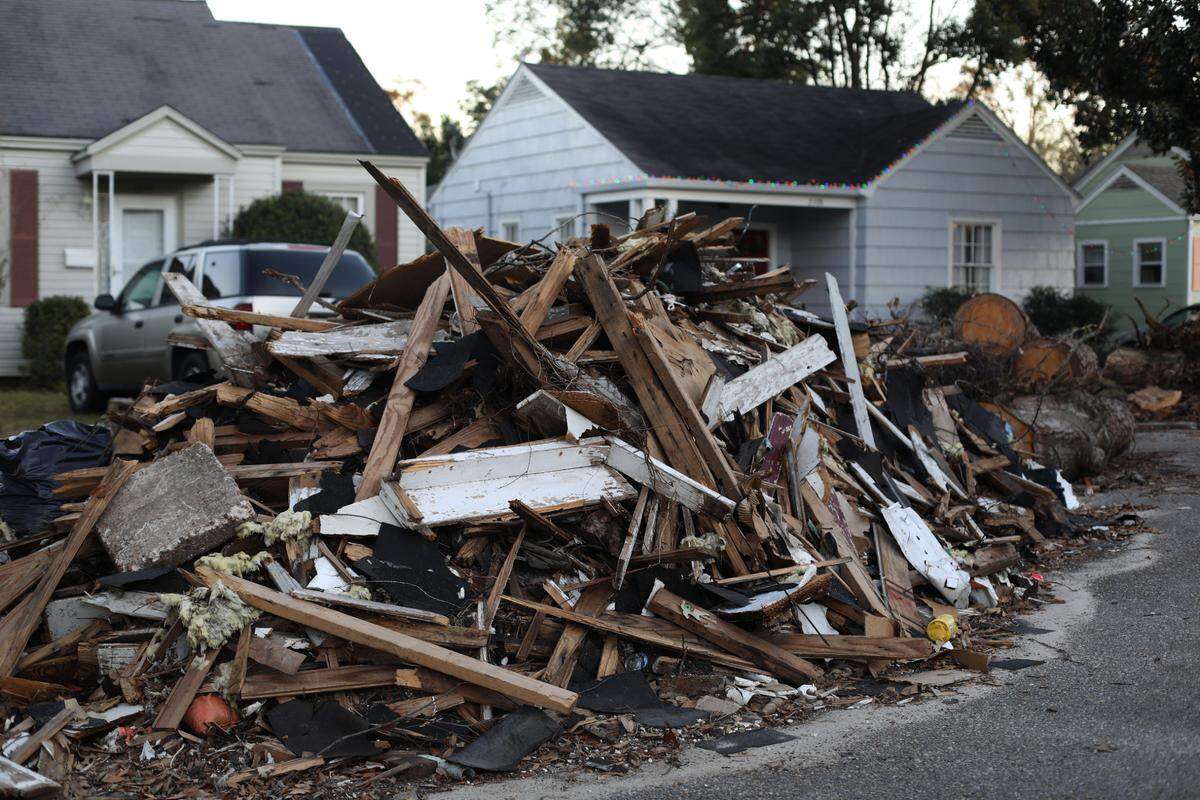
Their Hurricane Zeta debris has been with them so long that they are draping the unsightly mounds of splintered wood and tree limbs with tinsel, stockings and ornaments.
They’re all hoping the festive debris piles will motivate the city of Gulfport to clear them out soon.
The Category 2 hurricane’s damage a little more than six weeks ago is still all too evident to residents of Kelly Avenue and the nearby Broadmoor community, where large piles of rubble are an unpleasant reminder of a devastating hurricane season on the Gulf of Mexico.
The residents want to know when their debris will be picked up and why some piles are being left by the curb while others are gone.
Gulfport Public Works Director Wayne Miller is asking for patience and says cleanup is going more quickly than expected.
“This is the strongest storm we’ve had since Hurricane Katrina,” Miller said. “Somebody has to be last. Everybody can’t be first, unfortunately. But I can say they’re picking up a lot of debris.”
As a reminder, Miller said, it took 18 months to pick up all the debris from Katrina. Gulfport estimated Zeta pickup could take up to 8 weeks.
Miller said about 50% of the city’s debris has been picked up less than four weeks after work started. The debris already hauled away: 207,000 cubic yards by Wednesday evening, or enough damaged material to stand 40 feet tall and cover a football field.
The contractor, CrowderGulf, has been working for 25 days under an agreement the city set up ahead of the storm.
“We’re ahead of where I thought we would have been at this point,” Miller said.
Hurricane debris should be separated by type
Residents should know that their piles of damaged trees and shrubs — called vegetative debris — will not be picked up if it contains any construction debris, including fencing or other materials. Vegetative debris is being mulched before it is hauled to a landfill, while construction debris goes directly to a landfill.
Vegetative debris mixed with construction debris is left behind by crews picking up vegetation and picked up later by the construction debris-hauling crews.
None of the debris crews are picking up bagged leaves, so those should be placed on curbs separately to be picked up by WastePro.
CrowderGulf has 34 trucks hauling debris seven days a week during daylight hours, Miller said. He said 17 more crews are working to remove tree limbs and trees hanging over public easements — hangers and leaners, they call this debris.
Debris hauling is much more efficient than it was more than 15 years ago when Katrina cleanup started, he said. CrowderGulf is using trucks with two trailers and a knuckle boom attached for more precise debris pickup.
The cost could run up to $8 million, money the city had not budgeted but is working to pull from existing funds or possibly borrow through a short-term loan, according to a recent discussion between the City Council and administration.
FEMA will reimburse most of the money if Zeta is declared a major disaster for Harrison County, but the city wouldn’t receive federal money before February or March and the debris pickup bills will be rolling in sooner.
This story was originally published December 11, 2020 at 5:45 AM.