Rights to know before attending a ‘No Kings’ protest this weekend in Mississippi
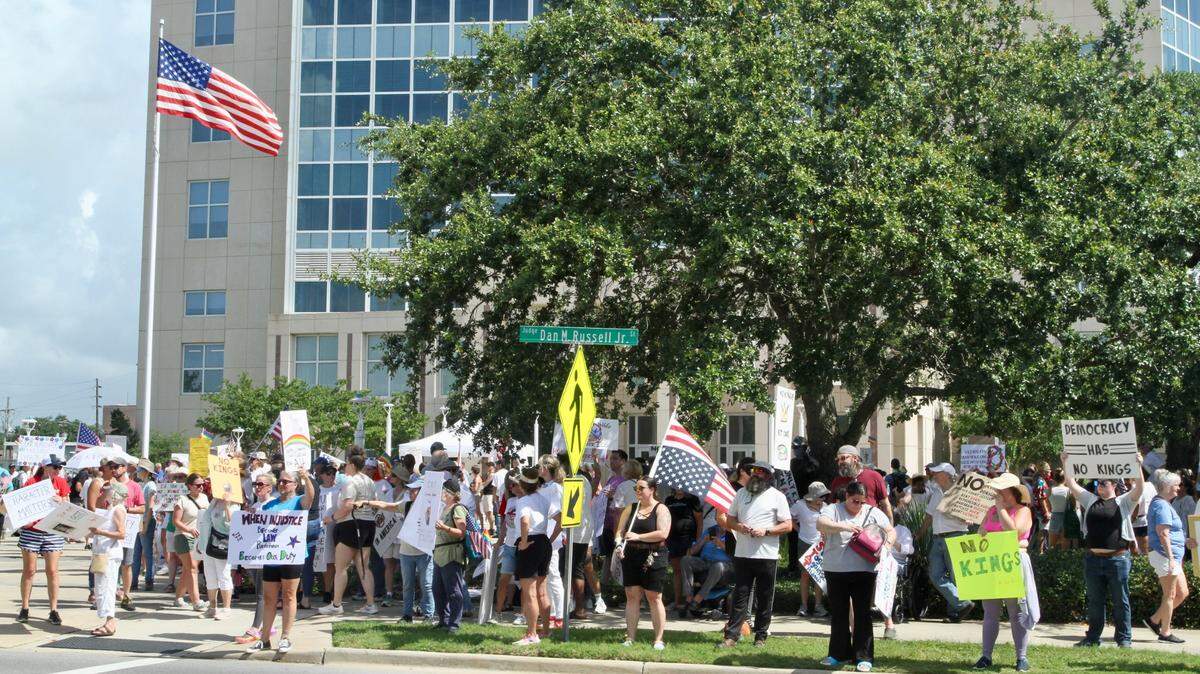
Several “No Kings” demonstrations against the Trump administration are set to take place nationwide Oct. 18 for a second time this year, including eight events planned in Mississippi, according to the No Kings website as of Oct. 16.
The “No Kings” movement, planned by 50501 — a grassroots organization — began as a response to the Trump administration’s actions, viewed by the organization as “anti-democratic,” according to their website.
About 2,000 demonstrations took place across the country June 14, coinciding with President Donald Trump’s birthday and military parade celebrating the U.S. Army’s 250th anniversary, McClatchy News reported.
If you’re participating in a “No Kings” protest in Mississippi, here’s what you need to know to stay safe.
What are your rights as a protestor in MS?
The First Amendment protects your rights to speak and assemble.
However, police and government officials can still set some restrictions on First Amendment rights, according to the American Civil Liberties Union of Mississippi.
“Symbolic acts and civil disobedience that involve illegal conduct may be outside the realm of constitutional protections and can sometimes lead to arrest and conviction,” the organization said.
As a protestor, you can do the following in public places, according to the ACLU of Mississippi:
- Distribute literature, chant, engage passersby in debate
- Refuse consent to a search of yourself or your possessions
- Observe, photograph or record the police
As a protestor, you can not do the following, according to the ACLU of Mississippi:
- Incite or threaten violence or obscenity
- Threaten to harm the President, Vice President or a major candidate for either office
- Block pedestrians from side walks or entering buildings
- Protest on private property
- Interfere with, touch or say antagonizing things to the police
- Carry drugs or weapons
How to stay safe before, during and after the protest
Here’s what you should do to stay safe before, during and after the protest, according to the Democracy Security Project:
Before
- Familiarize yourself with your legal rights
- Tell trusted emergency contacts where you’ll be and what time you expect to return
- Dress comfortably for the event and weather, avoid distinguishing marks and brands
- Pack a bag of water, snacks, emergency contact information written on paper, your ID
- Disable location settings on devices, turn off Face ID and fingerprint unlock
- Use signal to communicate to minimize surveillance risks. Put your phone on airplane mode when possible
During
- Be aware of your surroundings and the nearest emergency exits
- Travel in groups
- Stay calm
- Follow directions from organizers
After
- Let people know you’re safe
- Process your protest experience with trusted people
What to do if you are arrested
Here’s what to do in the case that you are arrested, according to the ACLU of Mississippi:
- Don’t run or resist
- Remember you have a right to remain silent
- Write down everything you can remember if you feel violated, including officers badge and patrol car numbers and which agency the officers were from. Get contact info from witnesses
- Contact a lawyer for specific legal advice