
Could new mystery disease attack coral reef off coast of Gulfport? Here’s what experts say.
Is a coral reef discovered off the Mississippi Coast in danger of contracting the same mysterious sickness of a reef off Louisiana and Texas? Researchers say it’s not out of the woods yet.
The new disease discovered at the Flower Garden Banks National Marine Sanctuary has been a cause of concern in the scientific community. At first, researchers thought the problem was stony coral tissue loss disease. Now, they aren’t so sure. And at this point, it is unknown whether or not the disease will spread to other reefs nearby.
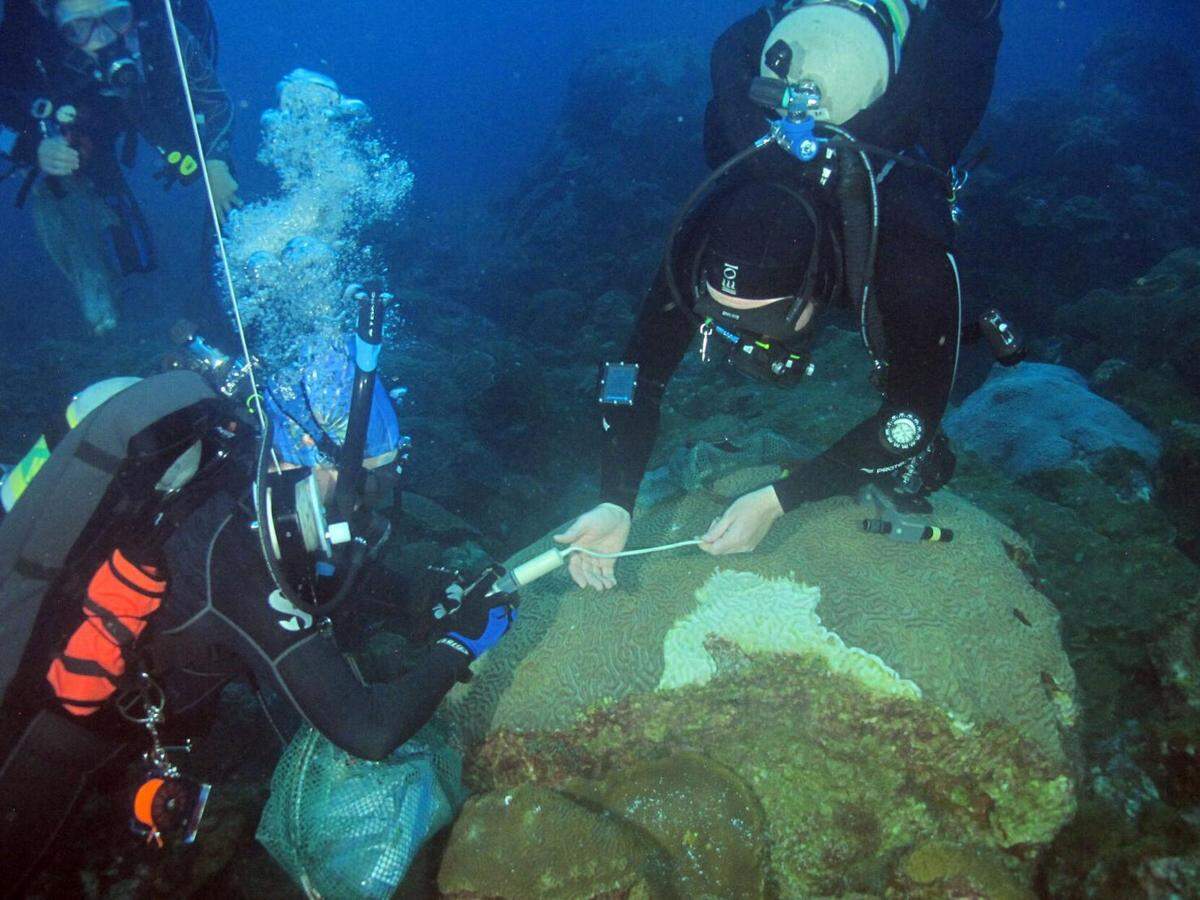
Mountain Top Bank Reef, a deep water coral ecosystem about 70 miles southeast of Gulfport, has not been impacted by the mystery disease, but it could be in the future if it starts to spread.
Leonardo Macelloni is an associate professor of research at USM’s School of Ocean Science and Engineering. He also led the most recent trip to Mountain Top Reef, which was discovered by USM researchers in 2015.
Macelloni said that USM researchers have visited the site at least four times since its discovery, most recently in November.
“Based on what we have seen with our imaging, we didn’t see any corals exhibiting signs of stress,” Macelloni said.
THE THREAT ISN’T OVER
The Mountain Top Bank Reef looks healthy now, but that doesn’t necessarily mena the coral ecosystem is out danger from new diseases.
Not a lot is known about mesophotic (deep water) reef ecosystems compared to shallow water reefs, said Leila Hamdan, because they are places where researchers cannot show up as frequently. Hamdan is the associate vice president of Research and Coastal Operations and acting director and professor for the School of Ocean Science and Engineering at USM.
“I think we are just starting to scratch the surface about potential diseases of coral on the seafloor,” Hamdan said. “Any natural ecosystem in our ocean and our waters, they’re all potentially susceptible to new diseases that we’re now just seeing. They exist in places that in the geological long past of the earth have never had any contact with humans or with the activities of humans. Since the 1940s we have logarithmically increased the amount of activity that’s happening in our coastal environments, but also in deep waters in places where these coral reefs exist.”
Studying deep water corals is a new evolution, Hamdan said, and is something that USM is just starting to focus their attention on.
“I think in the coming months we’re going to know a lot more about how healthy these places are and we’ve only just started to analyze those data,” Hamdan said.
WHAT CAN YOU DO TO HELP?
Wondering if there’s anything you can do to help our coral reefs survive? Dr. Hamdan has a few recommendations.
“Take the thought of the ocean, the care for the ocean, and our dependency on the ocean into everything that you do until it becomes as natural to consider ‘what is my action going to do to the ocean?’ as it is to recycle every day.”
Hamdan says it’s good for humans to have an “ocean thought” every day, where we keep the ocean and how we impact it in mind when going about our daily activities.
“Everything that we do in our daily lives, in our homes, it matters. The piece of plastic that you’re using today for lunch at some point is going to find its way into the ocean. That is the reality. And when it gets there, it’s going to be there for a long time.”
Hamdan also recommends that those local to the Coast engage in USM’s public programs to learn more about our ocean.
This story was originally published December 21, 2022 at 6:00 AM.