There’s a 975-acre coral reef hidden deep underwater off the MS Gulf Coast
Ocean researchers had known for a few years that something rose from the depths of the Gulf of Mexico about 70 miles southeast of Gulfport.
They just didn’t know what.
An equipment malfunction prevented the group from exploring a potential area 3,000 feet below the Gulf of Mexico’s surface where the Flower Garden Bank National Marine Sanctuary might be expanded.
So researchers from the University of Southern Mississippi decided instead to explore the area.
USM’S Hydrographic Science Research Center has in recent years acquired underwater drones, called autonomous underwater vehicles, and other equipment that for the first time allows them to explore the depths of our Gulf of Mexico neighborhood off the Mississippi Coast.
Gulf research through USM’s School of Ocean Science and Engineering accelerated thanks to money that flowed in after the BP oil spill in 2010. The research is still growing through a partnership with the Ocean Exploration Cooperative Institute, comprised of four universities and a nonprofit organization, and funded by the National Oceanic and Atmospheric Administration.
The school’s HSRC is helping NOAA with its goal of mapping Gulf Coast waters as technology improves, allowing detailed imaging in the depths of the ocean.
USM has acquired an impressive array of equipment for the work just as the university begins to emphasize its ocean science and engineering programs on the Coast.
Underwater camera captures invasive species
Sonar waves aboard the USM research vessel Point Sur had provided only vague outlines of the underwater mass off the Mississippi Coast. To find out what was there, researchers employed an unmanned underwater vehicle, called the Mola Mola, equipped with a camera that captures detailed images.
What they found was a reef in shallower water than expected. The base sits 450 feet below the surface and rises up to 200 feet below surface. The Mountain Top Bank Reef, as they call it, covers 975 acres.
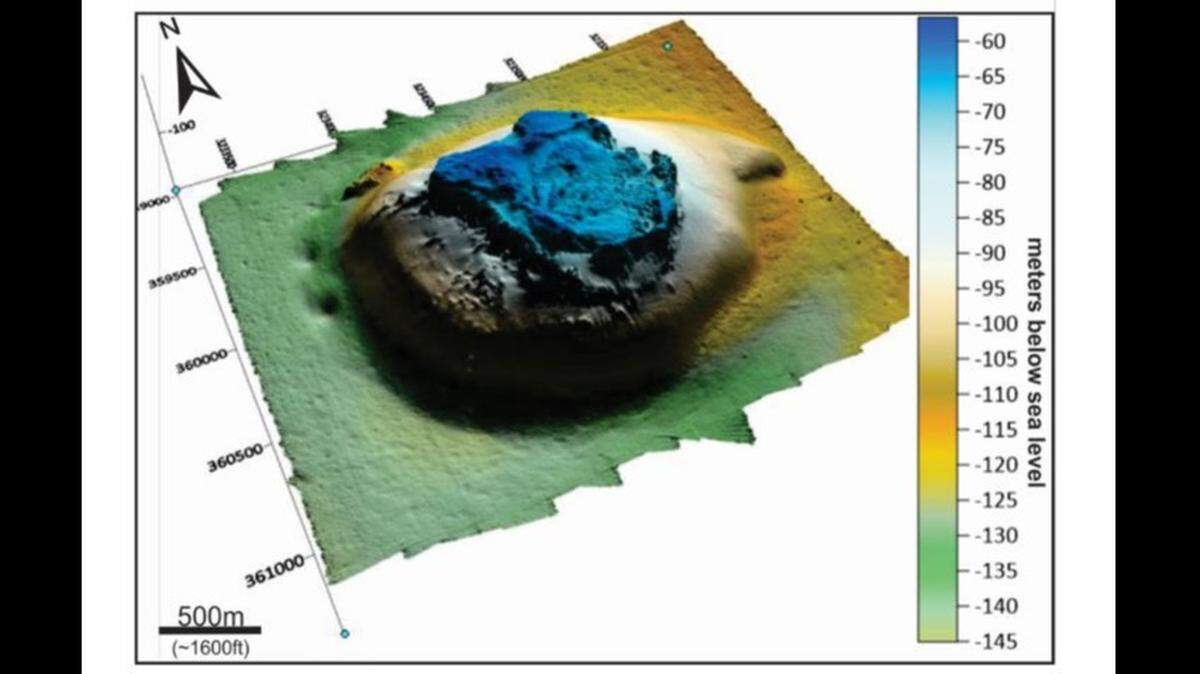
“It was nice to see that there were some corals and fish living there,” said Brian Connon, HSRC director. “I think we were all surprised to see the amount of life there.”
The Mountain Top Bank Reef is one of a series of mesophotic reefs that support coral ecosystems in the Gulf. Mesophotic reefs sit 100-490 feet below the ocean’s surface.
“We have a well-developed system of coral reefs,” said Leonard Macelloni, an HSRC research associate professor and chief scientist onboard for the reef exploration. “Often, people are confused. They are not like tropical coral reefs, the beautiful, colorful coral reefs you see in the Bahamas or Red Sea.”
The underwater vehicle photographed a variety of corals in muted colors, bivalves, sponges, amberjack, feather stars, algae and lionfish on the reef.
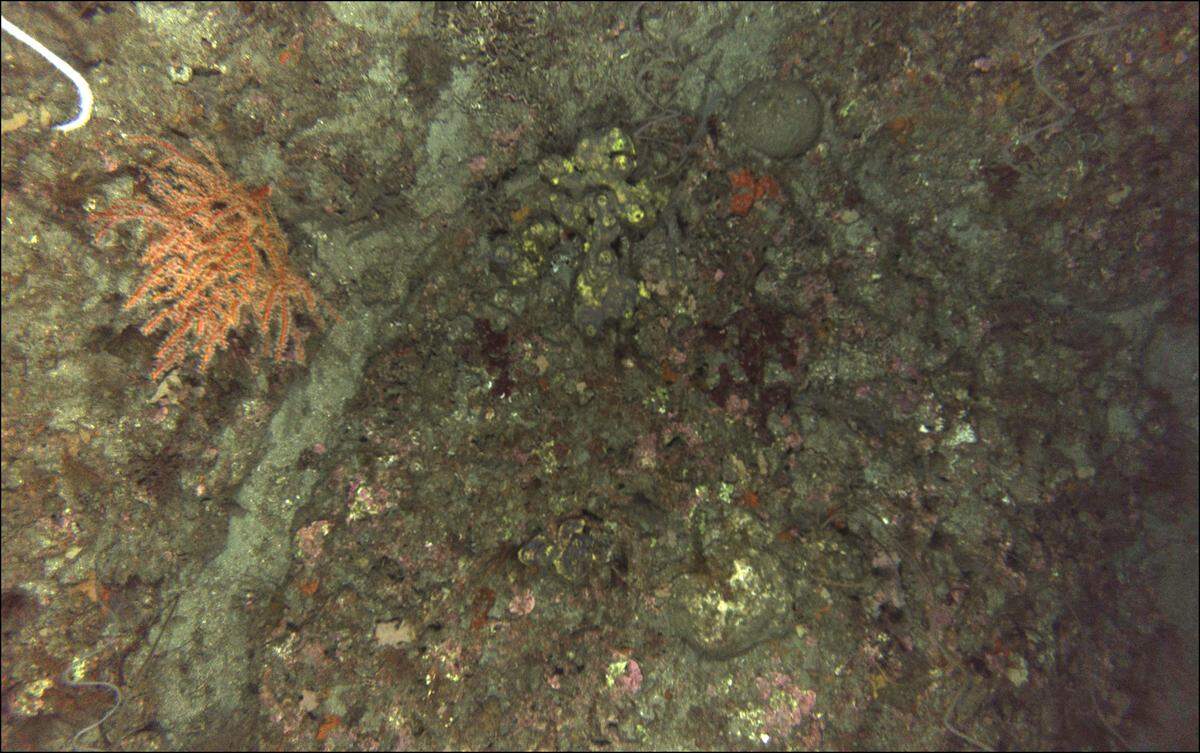
Experts suspect lionfish made their way into the Atlantic and areas of the Gulf, where they are considered an invasive species, because they have been dumped for decades from home aquariums.
The HSRC crew did not expect lionfish would be as pervasive as they were on the reef.
Lionfish are carnivores with no natural enemies in the Gulf ecosystem, where they prey on juvenile fish and can decrease diversity, said Chet Rakocinski, a professor in USM’s School of Ocean Science and Engineering. The state of Florida sponsors lionfish tournaments to limit proliferation.
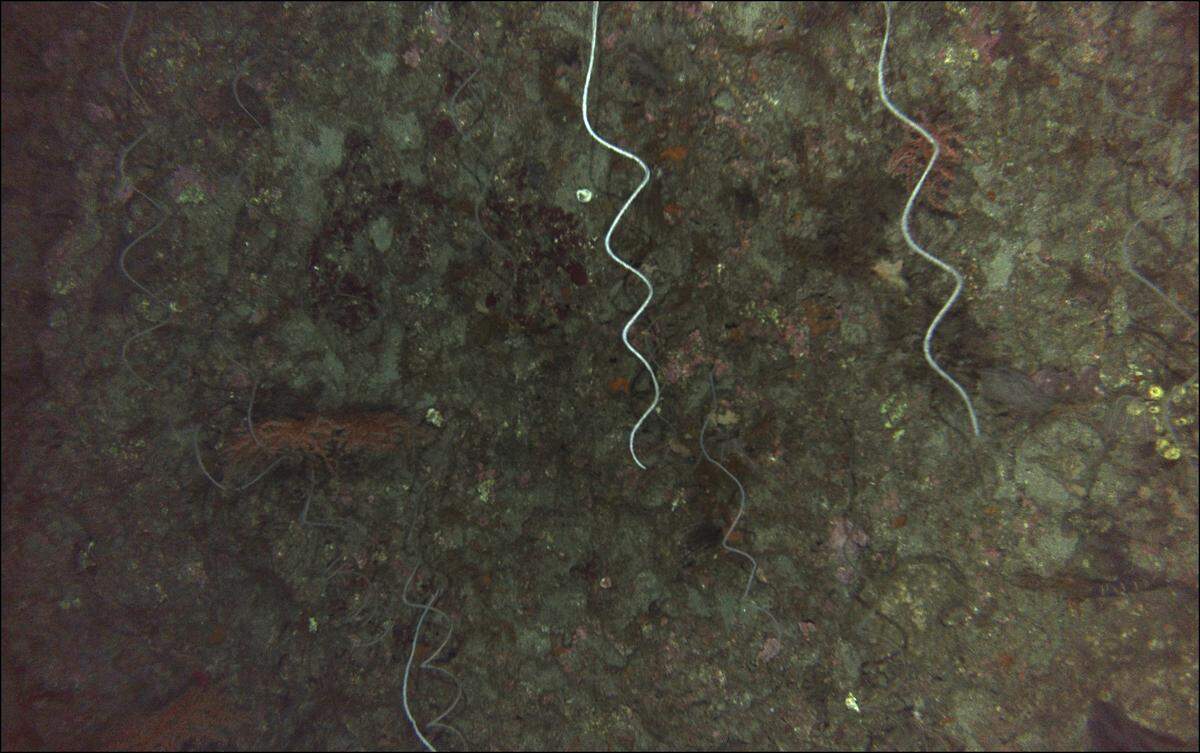
Rakoncinski examined photos from the reef and identified some of the aquatic life, including a spiral-shaped, bright white coral, called wire coral, that he had never seen.
“It just expands our awareness of the distribution of these type of deepwater coral systems that are right here in our backyard in Mississippi,” he said. “That’s pretty notable.”
Future trip planned to explore reef
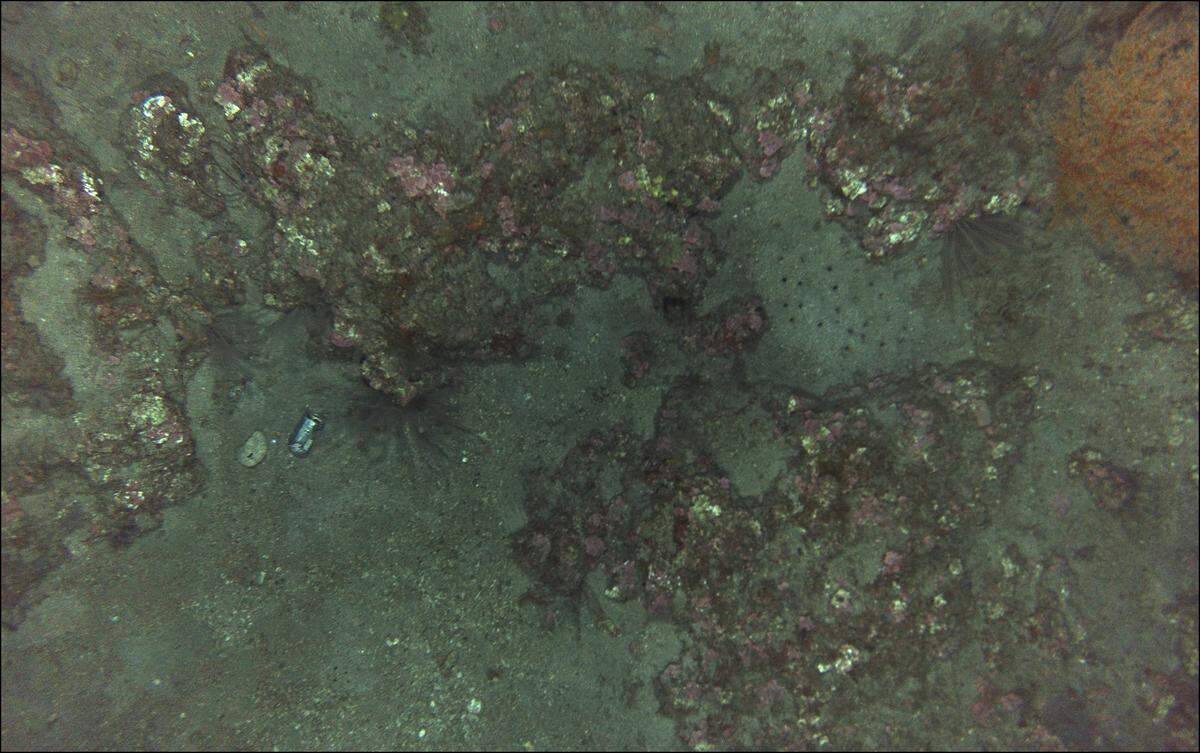
Researchers also discovered a gas flare and pockmarks in the sea bed at the reef’s base, indicating the presence of methane. The team used special sonar to detect a methane flare in the water column.
“USM is very well-equipped in terms of sensors and platforms,” Macelloni said. “We are one of the tops in the nation. People don’t think about that, but we are.”
He said the Gulf of Mexico is famous for oil seeps because of all the hydrocarbons in the subsurface. Think of the ocean’s subsurface as a layered cake, he said. Salt moving upward fractures the layers and sea bed, allowing gas to escape the subsurface and move upward.
“It’s a very well-known process in the Gulf,” Macelloni said. “We had never seen this kind of process so shallow, so close to the Coast.
“These kind of seeps that we have seen were not known before, so this is very interesting to us. Usually, these things happen much deeper. Now our interest is in trying to understand why.”
Macelloni expects more exploration of the reef.
When is the next trip planned? He laughed.
“When we find the money,” he said. “Our science is very expensive.”
Connon said the camera system is being upgraded on the unmanned underwater vehicle for a return to the reef in 2021.
The Mola Mola cost about $800,000, but a second underwater vehicle runs $1.3 million and an unmanned surface vessel with sonar has a $900,000 price tag.
This story was originally published October 19, 2020 at 5:50 AM.