
These homes and buildings survived Katrina. East Biloxi’s 7-year road project wreaked havoc.
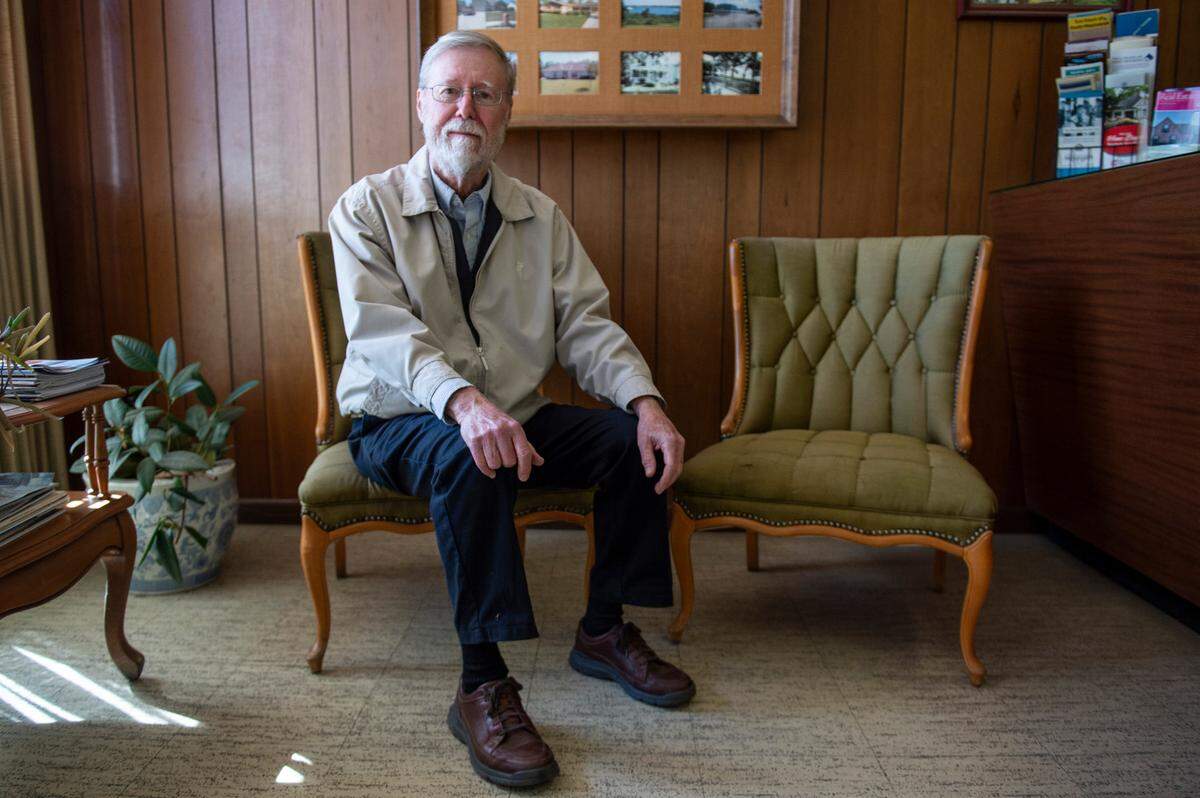
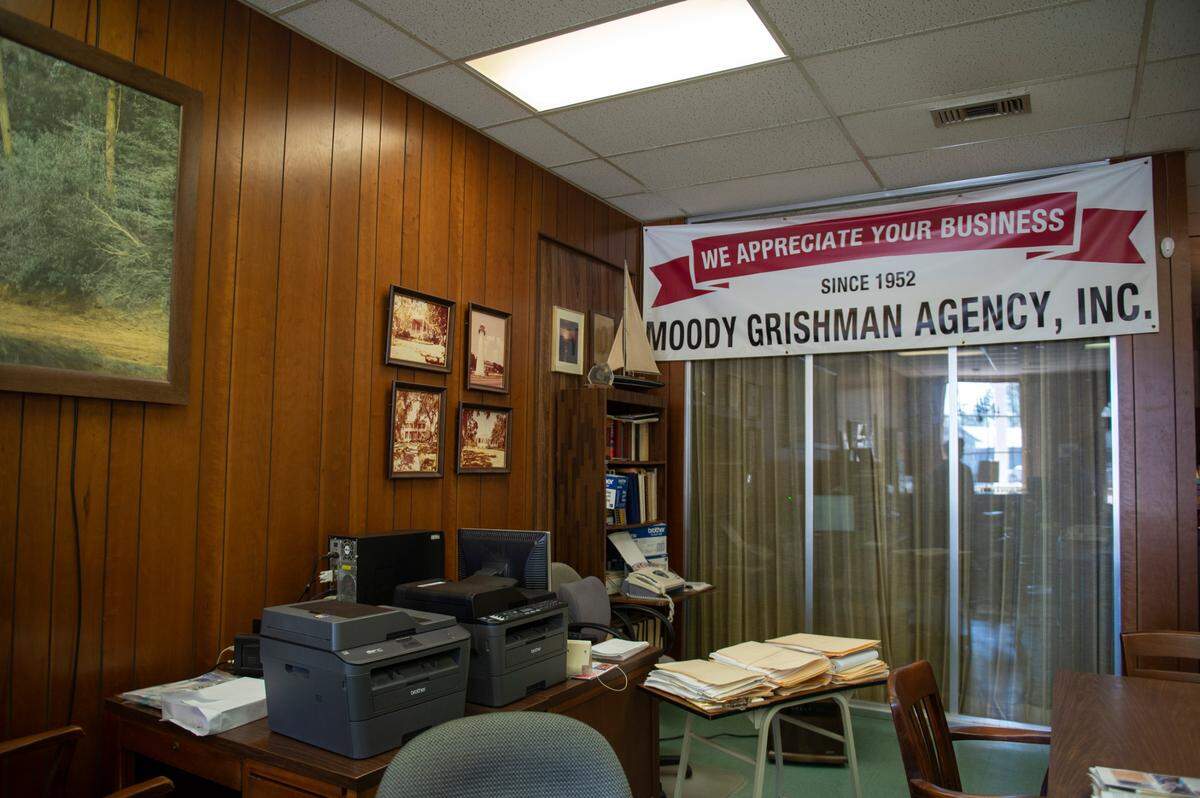
Milton Grishman’s real estate office on Howard Avenue survived Hurricane Katrina with only a few missing shingles. Then came the FEMA-funded project to repair the city’s infrastructure after the storm.
“The infrastructure repair– that was a whole different story,” Grishman said. “That was severe damage.”
During the $130 million project, Oscar Renda crews dug a massive trench on Benachi Street, almost 30 feet deep, in order to repair pipes deep underground. The excavation just a few feet from his building caused the earth under the building to shift, which cracked the foundation and an exterior brick wall.
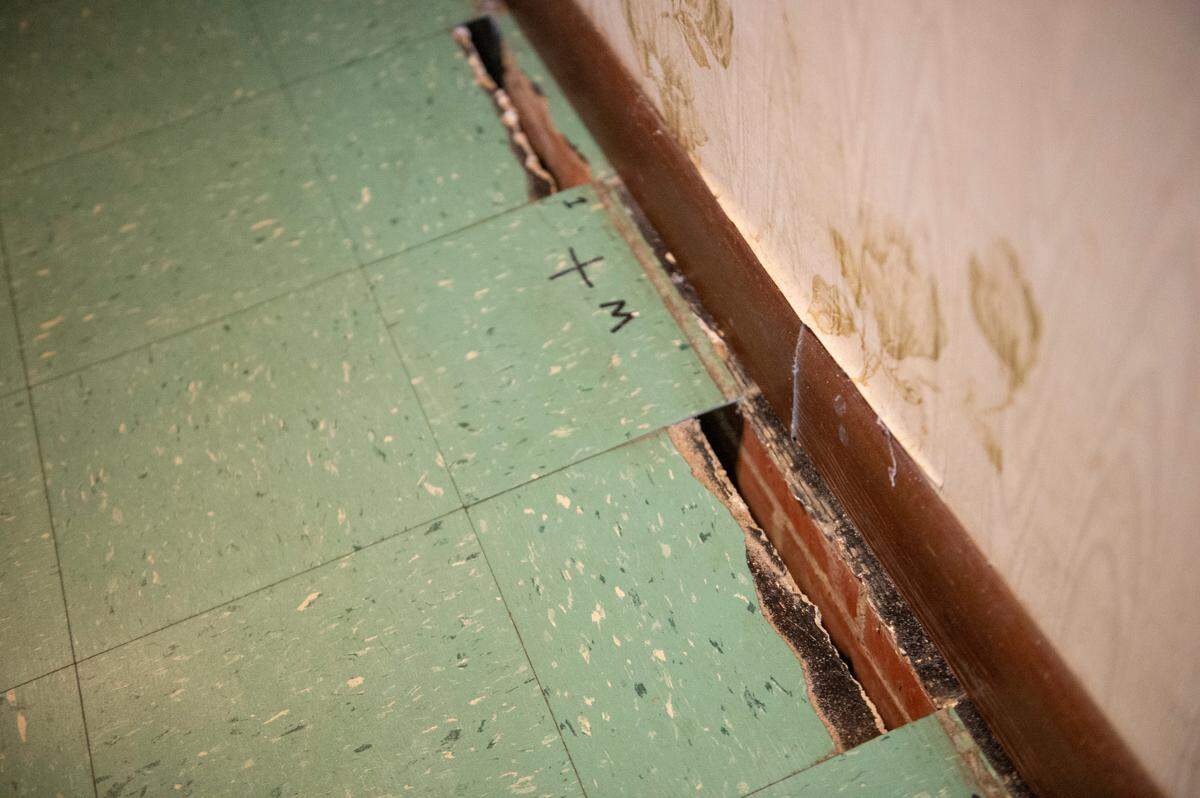
More than three years after the damage was done, light shines through the cracks in the floor at the base of the wall. He can’t open or close the rear door because the building has settled on top of it. In his early 70s, he has delayed his retirement while he tries to get the office fixed.
“Who would buy a building with a cracked foundation?” he said.
Oscar Renda’s insurance company, Liberty Mutual, told Grishman in 2019 they’d cover his losses. He has never seen a penny.
A Sun Herald investigation has found that at least 48 Biloxians, including Grishman, reported structural damage to their homes or businesses during the project. Many of them said Oscar Renda has rejected or ignored their damage claims, and that city officials have told them the project didn’t cause their problems. They have been left to pay for costly repairs on their own, as Biloxi celebrates the completion of the largest public works project in its history.
Like Grishman, many of the claimants believe deep excavations and the vibration of heavy equipment near their property caused the earth under their houses to shift, which in turn caused structural problems. Engineers told the Sun Herald that excavations—especially in places with a high water table, like Biloxi—can cause settling and damage to nearby structures, but determining whether that actually happened in each case would require specific knowledge of the work in that area.
Through a public records request, the Sun Herald obtained spreadsheets of damage claims that Biloxians reported to the city from 2014 to 2021 and which were labeled as claims against Oscar Renda. The documents don’t indicate whether the claimants received money. Interviews with six people who filed claims for structural damage suggest that getting compensated was rare: Only one woman said she received a $3,000 check from Oscar Renda, although she estimates the damages would cost $40,000 to repair.
After getting nowhere with Oscar Renda and Liberty Mutual, Grishman hired a lawyer and sued the company, along with the city of Biloxi and Hemphill Construction. Last year, he won a default judgment against Oscar Renda after the judge became exasperated by the contractor’s conduct during the lawsuit. If Oscar Renda doesn’t settle, he will be awarded damages at trial later this year.
In a deposition, project manager Jennifer Matranga acknowledged her company’s work caused Grishman’s building to settle. But, she said, Oscar Renda had been following the city’s plans.
“We did the work according to the contract,” Matranga said. “The work that we did caused the damage to the building…. But I’m saying that we did– it’s not due to our negligence.”
The large majority of nearly 800 damage claims against Oscar Renda documented by the city involved damage to vehicles. And with Oscar Renda’s piece of the project — often called the North Contract — concluded, Biloxi officials have been eager to declare “mission accomplished.”
In Feb. 2021, the city’s monthly newsletter announced “The End of the Line” on the North Contract.
“This was one long ordeal, and for that we apologize,” wrote Mayor Andrew “FoFo” Gilich, who took office in 2015, a year after the project started. “Ward 2 and East Biloxi have the newest streets, sidewalks, water, sewer and drainage systems you’ll find anywhere, and it’s been earned.”
But the claims involving structural damage show that for some East Biloxi homeowners, the project was much more than an inconvenience that ended when the roads were paved.
East Biloxi is the oldest part of the city, and a number of the affected homes have belonged to their owners’ families for generations. Now, some residents say they find themselves facing the prospect of spending tens of thousands of dollars to restore the family home – or accepting that they can’t afford to repair the damage.
‘Didn’t understand the potential for damage’
For most people in East Biloxi, the most frustrating aspect of the North Contract was the removal of asphalt for years, which left them feeling like they’d been dropped into a rural area while still paying city taxes.
But another defining feature of the work was holes: Massive, deep holes, sometimes stretching the full length of a person’s property, and sometimes remaining open for months.
The excavations were necessary for workers to reach and replace old water and sewer lines.
Before Oscar Renda’s crews started digging in 2018, Grishman said, they came by to let him know they’d be working next to his building.
“I really didn’t understand the potential for damage,” he said. “I thought they were gonna be responsible.”
In this part of town, the sewer lines were particularly deep, and the company had to dig nearly 30 feet.
One day, Grishman ran outside and shouted, “Hey, you’re cracking the building!”
A daily work report from November 2018 shows that when Oscar Renda workers were installing steel plates to stabilize the excavation, they had to “stop for an emergency” because Grishman’s building “began to settle.”
Grishman said Oscar Renda’s workers quickly acknowledged they had caused the problems and told him their insurance company would take care of it.
Liberty Mutual drags its feet
In an email to Grishman on Feb. 1, 2019, a Liberty Mutual employee named Elizabeth Trivett wrote, “I was finally able to get ahold of Oscar Renda. We are accepting liability for this loss. Please send over your estimate for repair costs and I will review.”
But Liberty Mutual never followed through, and it’s not clear why.
In her deposition, project manager Jennifer Matranga implied Trivett could have sent the email without clearing it with anyone at Oscar Renda.
“I don’t know who she talked to,” Matranga said. “So– I mean, what if she didn’t talk to anybody? What if she didn’t talk to anybody and she just wrote this down? I can’t speak for her.”
In a statement, Liberty Mutual senior public relations consultant Richard Angevine said the company does not publicly discuss claims.
Construction litigation experts interviewed by the Sun Herald said that a contractor may seek to prevent claims from reaching their insurance company. More claims paid out could mean higher premiums, or even result in the insurer dropping their coverage.
In any case, Grishman never got a check.
“Their modus operandi is delay, delay, delay,” he said. “Just drag their feet until people get tired and give up.”
In an email to the Sun Herald, Matranga said Oscar Renda did not interfere with Liberty Mutual’s handling of claims. She did not say how many claims the contractor sent to Liberty Mutual.
‘Running sand’ and deep excavations
Grishman’s lawsuit turned up evidence that explained how the project’s excavations could create unintended consequences.
Because the water table in East Biloxi is so high, many excavations filled with water.
“Just running water everywhere,” Matranga said in one deposition. “Even some shallow depths, we had to dewater.”
Dewatering involved installing a diesel pump that removed water from the bottom of the trench. The one next to Grishman’s building ran 24 hours a day, seven days a week, for three months.
In addition to water, the workers in Biloxi frequently dealt with something called “running sand.” When they dug, wet sand would shift from the adjacent earth into the excavation.
If that happens to land that sits underneath a building, the uneven sinking can affect the foundation and structure.
Sometimes, workers found unexpected things while digging. In 2018, while replacing sewer lines 22 feet underground on Howard Avenue near Benachi and Querens, Oscar Renda crews found a bank of telephone and gas lines that had not been on any plans. While they figured out what to do about that, holes remained open.
Over time, the soil underneath homes may have shifted toward the excavations, destabilizing the structures on top.
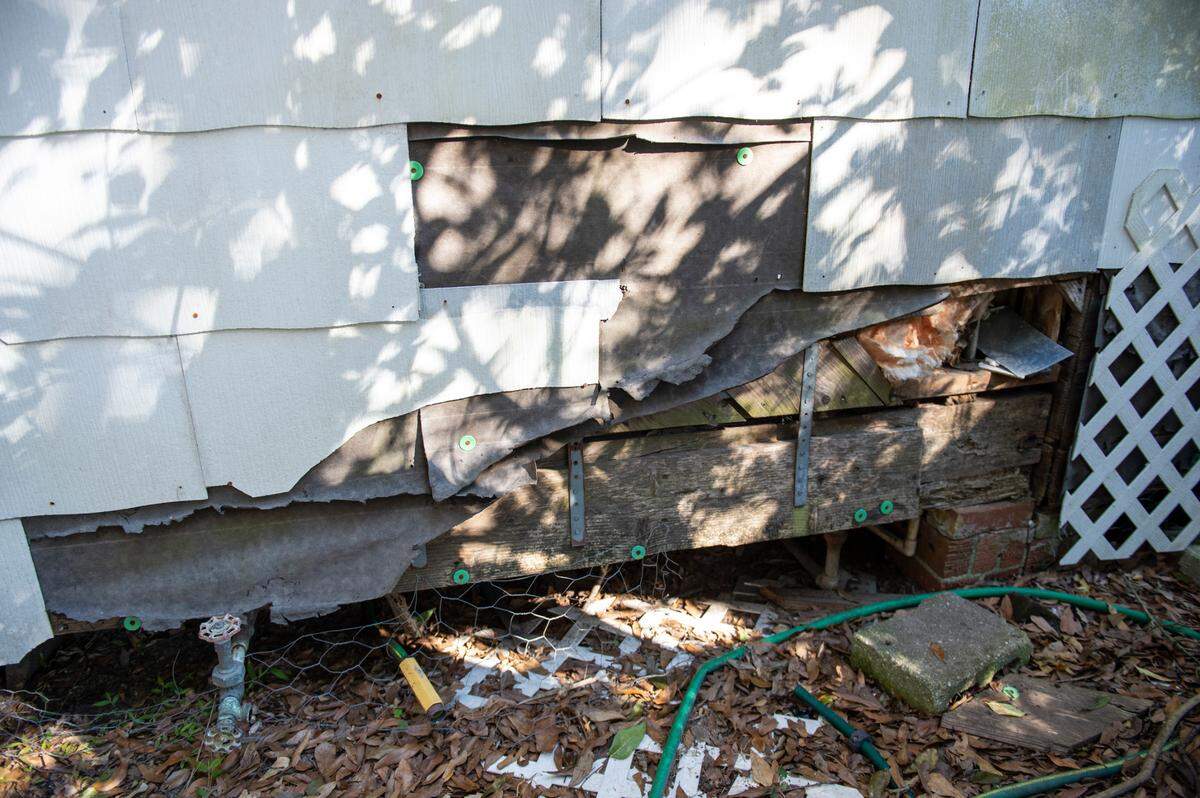
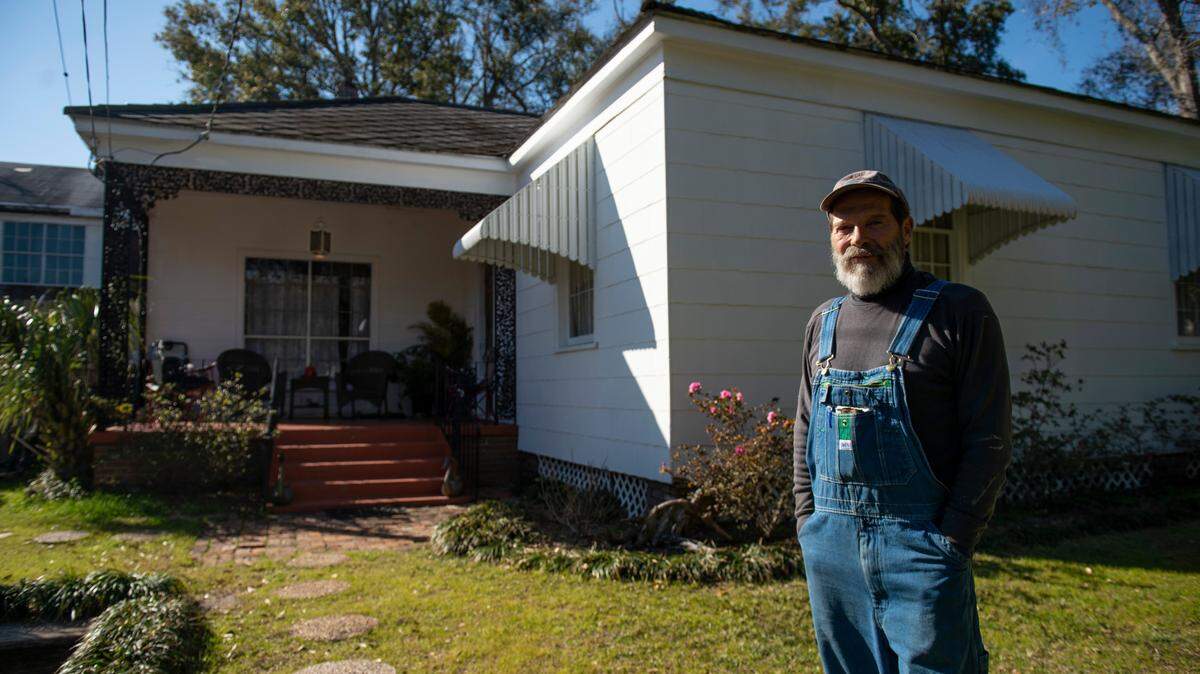
That’s what Phillip Lentz Grant believes happened at the 1926 house he owns on Benachi Street. He said workers dug a 30-foot-deep trench in the street, spanning the length of his property, and that it remained open for about three months.
Now, he’s had to spend about $4,000 to level his house. Shingles keep cracking and falling off. He has owned the home since 1980, and before that his mother had owned it since 1962. The problems he now faces are entirely new, he said.
“The house is moving, naturally, because they had a 30-foot hole dug in front of my house,” he said.
Structural damage claims consistent in East Biloxi
The documents obtained by the Sun Herald contain sparse detail about each of the claims. They mostly do not contain claimants’ names or addresses, making it difficult to contact claimants or check the work that occurred nearby and evaluate the possible consequences for structures.
But the issues homeowners have reported are consistent.
In April 2016, a Strangi Avenue homeowner reported “home is shifting due to construction by home.”
On Iroquois Street in April 2017: “Alleges foundation is cracking due to road construction.”
On Division Street in August 2017: “Alleges road work in front of building is causing floors to buckle.”
On Seal Avenue in October 2017: “Hardwood floors have buckled due to construction.”
On Reynoir Street in June 2018: “Alleges damage to mother’s house from road work. Cracked tiles, broken bricks.”
On Frank P. Corson in January 2020: “Cracks in ceiling, tile floors cracked, crown molding pulling away and house is sinking.”
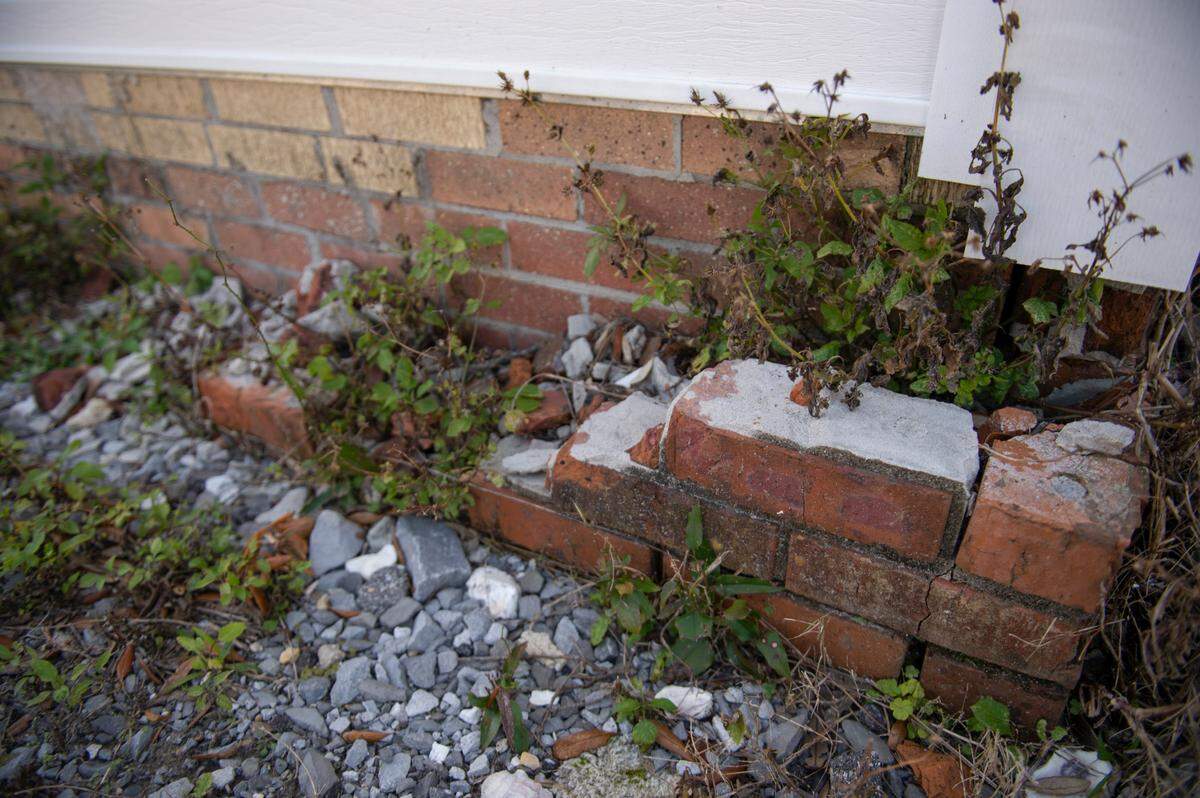
A resident of Division Street, Cass Woods, filed a lawsuit against Oscar Renda and the city of Biloxi in December 2020, alleging Oscar Renda had violated its contract by leaving streets unpaved and unsafe for years and permitting dust to invade Biloxians’ homes. She blames the work for other problems with her house, too.
The Sun Herald spoke with two engineers at Auburn University who said that determining whether the road work had caused the problems each claimant alleges would require specific knowledge of the conditions at each site.
But the dewatering Matranga described as ”just running water everywhere” could indeed cause structures to settle, they said, and the issues claimants reported sounded like they stemmed from settling.
Michael Perez, assistant professor in the civil and environmental engineering department at Auburn University, said that when dewatering is necessary, that means water is flowing from adjacent soil into the excavation.
“That water is occupying what we call void space in the soil,” he said. “If you remove the water, that void space is gonna be filled up with air. And that air could cause other soil particles to move and fill up those air voids.”
In an email to the Sun Herald, Matranga declined to answer questions about specific claims and Oscar Renda’s response.
“Some claims appear to have been caused as a result of the nature of the work Oscar Renda was tasked to do,” she wrote. “Oscar Renda is not responsible for problems caused by the City’s plans and specifications which the City’s contract obligated Oscar Renda to follow.”
Who’s responsible for the Biloxi damage?
In her deposition for Grishman’s lawsuit, Matranga argued Oscar Renda wasn’t responsible for the damage because they were following plans set by the city of Biloxi.
“The city never said, ‘Hey, don’t do this, don’t do that,’” she said. “The designers didn’t say, you know, ‘Don’t do this, don’t do that.’ They didn’t put any special notes on that page… There’s only one way to do that work.”
“We carried out the work according to the contract,” she continued. “They designed it. We didn’t design it.’
That explanation mirrors Oscar Renda’s arguments in a $79 million lawsuit against the city of Biloxi. In that lawsuit, the company claims that any problems with its work on the North Contract were due to flawed design documents and poor project management by the city.
Woods’ lawsuit argues that if Matranga’s argument is correct, and the work required Oscar Renda to damage structures, that means the city of Biloxi is responsible for paying for residents’ damage.
The city has pointed to a provision of the North Contract that states Oscar Renda won’t hold the city responsible for “any loss, damage and liabilities occasioned by, growing out of, or resulting from any default hereunder, relating to the execution of this agreement.”
‘The backbone of my family’
Tired of sending letters to Oscar Renda and calling the City to beg for help, some Biloxians wonder if they will ever be able to afford to repair their homes.
Grant said the city told him that to move forward with his claim, he had to hire an engineer to evaluate his damage. The engineer told him Oscar Renda’s lawsuit against Biloxi could drag on and affect his case.
“He said it’s worth just taking money out of your pocket and doing it yourself,” Grant said. “Because this court thing will last four or five years and it’s not gonna ever get done.”
So, that’s what he’s doing.
And the engineer’s advice about how long and complicated a potential lawsuit could be was likely correct.
David Pearson, an Alabama-based consultant who works on high-risk construction projects, said determining responsibility for alleged losses during such a massive endeavor is time-consuming and can require picking over many details and facts.
“It’s very, very difficult to reach those conclusions without understanding a lot of detail,” he said. “And it’s not uncommon to spend hundreds of thousands of dollars discovering all of those facts.”
One resident, who spoke on the condition of anonymity because talking publicly could affect their job, first noticed the floor of their living room cracking. They attributed it to humidity. Then the shower cracked. Outside, there is a crack in the house’s brick exterior wall, as if the front half of the house is trying to make a slow break for it.
“I took a long time to figure out what was going on,” they said.
Around 2019, they concluded the problems were too wide-ranging, and too consistent, to be attributed to anything other than the infrastructure work– specifically the hole the size of a car, six feet deep, that had sat in front of the house for at least a month.
They called the city and went through the process they set up to document claims: An Associated Adjusters employee came to the house and took photographs. They wrote a letter describing his issues to Matranga in June 2021. She never responded.
When the claimant got tired of waiting, they asked Associated Adjusters to send follow-up emails later in the year to Oscar Renda safety manager Dan Yanes and paralegal Keri Stube.
They never responded either.
They feel the city has effectively told residents that their options are to sue Oscar Renda or pay to fix their own damage. In his case, they estimate that could cost $70,000.
“You hire a contractor with my tax dollars, then they do all this damage, and you turn around and say: you gotta go after them,” they said.
And, they note, the city is using their tax dollars to fight lawsuits from other people like them, such as Grishman and Woods.
Meanwhile, they tabulate the damages. The front door swings open because of how the house has shifted. The cracks in the floor keep getting wider. They patched the bricks outside with mortar, but that is cracking too. Soon, they believe, water will make its way into the cracks and rot the lumber.
They want to save the house, which they call “everything my family worked for.”
“This is the backbone of my family,” they said. “My mom and dad owned this house 50 years. Now they’re gonna tear it up and nobody’s gonna pay for it?”
‘The Creole House’ on Howard Avenue
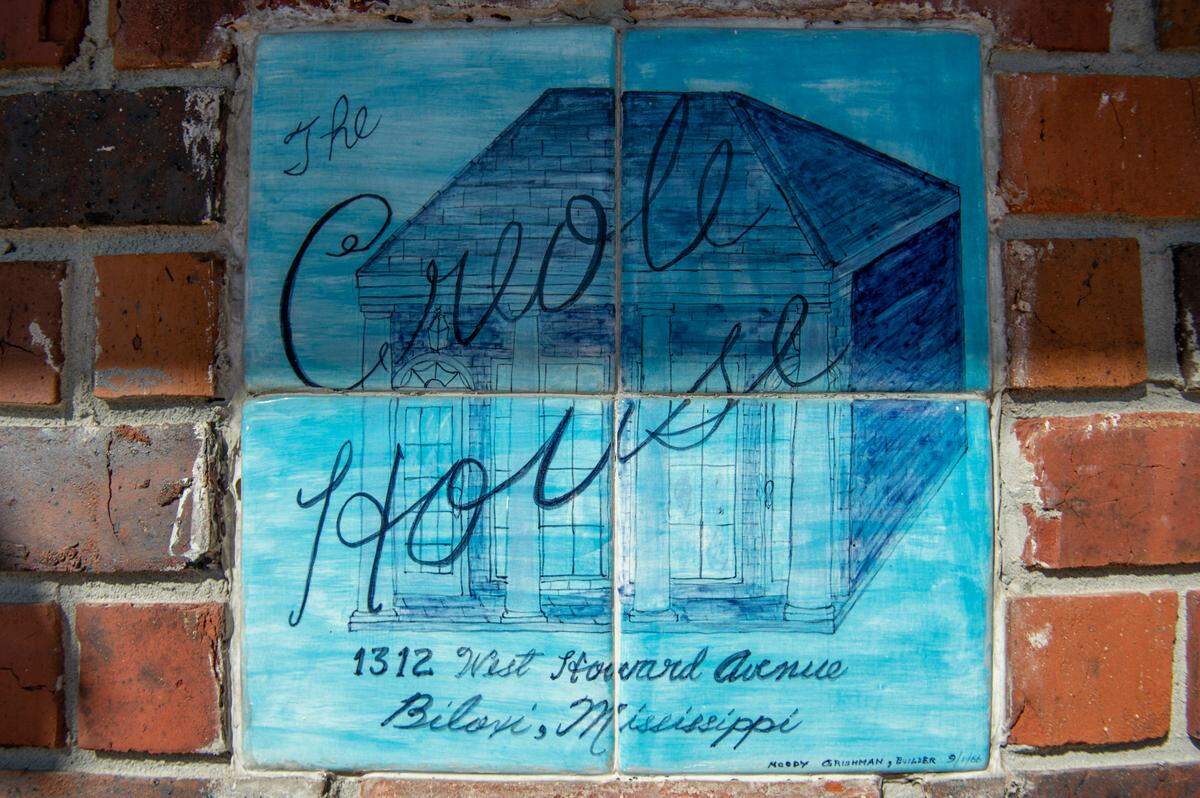
Grishman’s father, Moody, bought the Howard Avenue building in 1966 to house his real estate company.
Moody had grown up in New Orleans and took art classes in the French Quarter. He painted a picture of the new office building on four blue ceramic tiles and installed them in the building’s brick facade. “The Creole House,” he dubbed it.
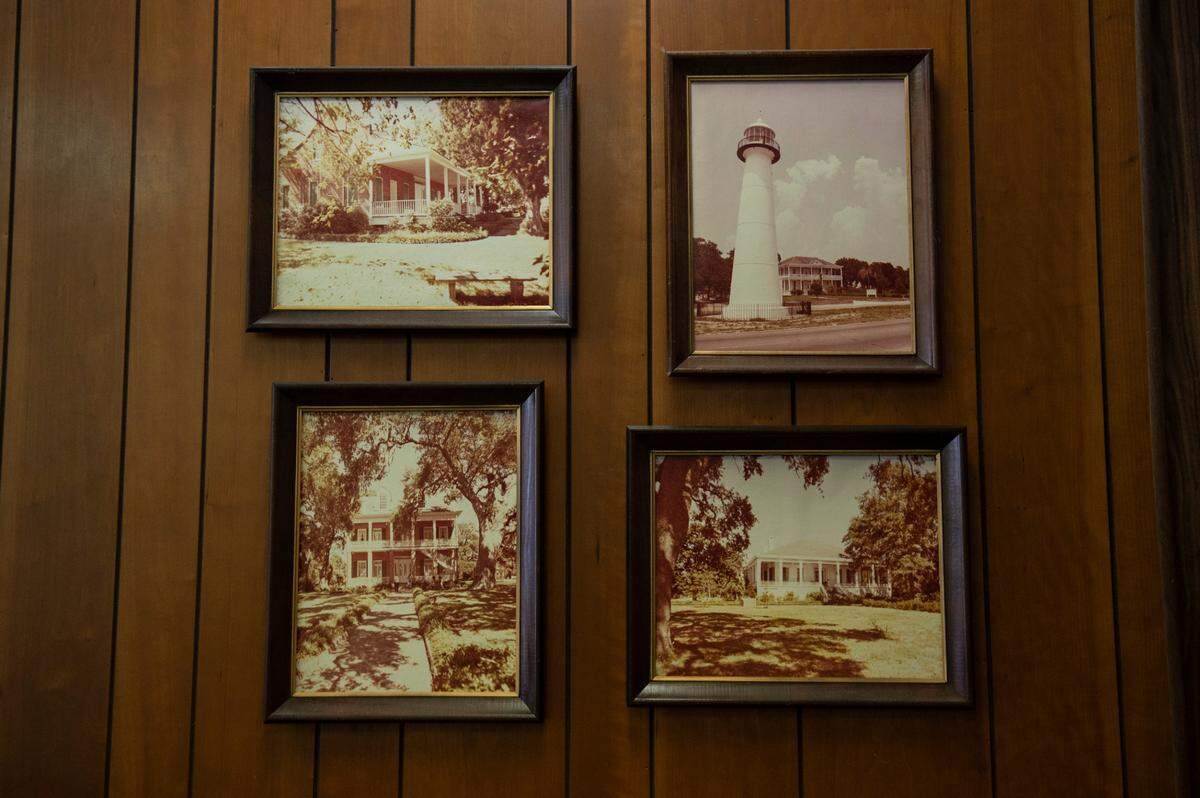
The office is full of mementos from 70 years as a family-run business. Clippings from Sun Herald articles about the agency. A custom-made clock that fell off the wall during the infrastructure repair and now sits on the floor. Photographs Milton took of historic Coast homes, later washed away by Katrina.
When Grishman thinks about his years-long fight to save his building, he remembers a Yiddish saying his dad liked. “Mann Tracht, Un Gott Lacht.”
“Man plans, and God laughs.”
This story was originally published April 1, 2022 at 11:41 AM.