Meet the immigration attorney fighting to help Spanish speakers on the MS Coast
The Mississippi Gulf Coast’s Latino and Spanish-speaking population has grown dramatically over the past 20 years, but services and resources in Spanish, from hurricane updates to medical information, haven’t kept up, advocates say.
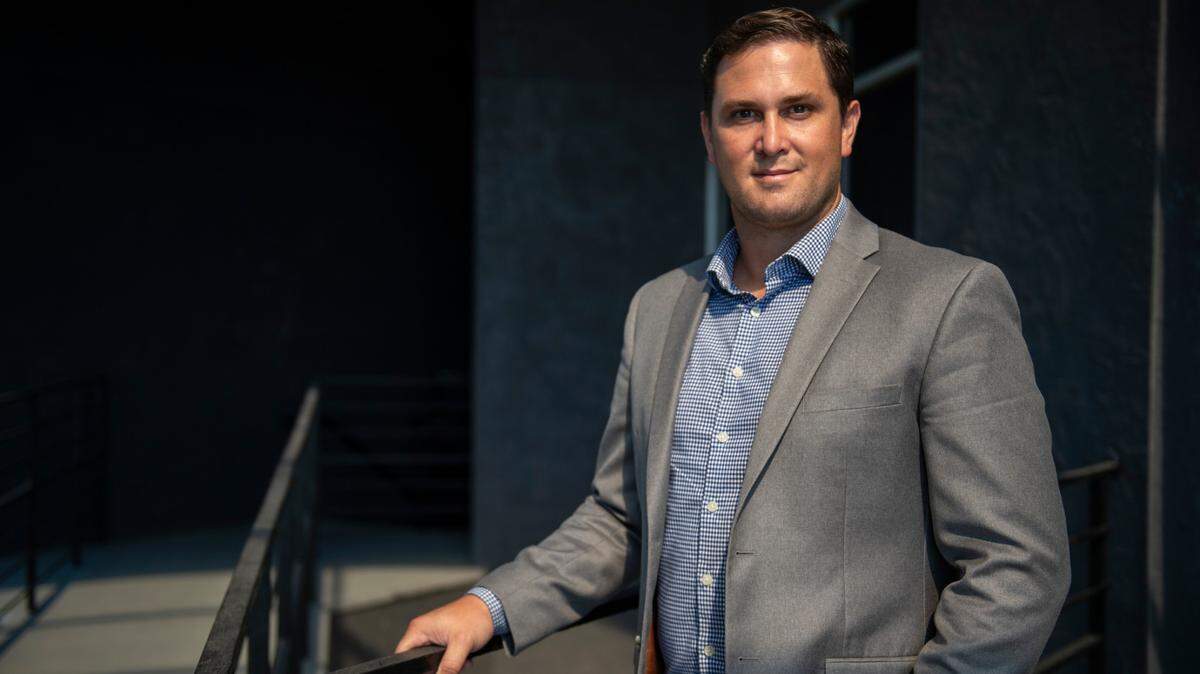
Gulfport immigration attorney Dalaney Mecham aims to help address the need for legal representation, in his clients’ language, at a time when immigration policies are shaping the lives of more Mississippi families than ever.
Mecham’s clients in South Mississippi are directly affected by the policy changes that make national headlines, from DACA (Deferred Action on Childhood Arrivals) to the Trump administration’s “remain in Mexico” policy, to the way ICE handles immigrants’ routine check-ins.
Mecham never planned on being an attorney, or on living in Mississippi. He studied Spanish while living in Chicago after high school and then in college. When he realized there weren’t many ways to make a living from his language skills alone, he and moved to Mississippi with his wife, Hannah Shirley, a Hattiesburg native, and both graduated from law school at the University of Mississippi.
After working on child support enforcement for the Department of Human Services in the Mississippi Delta, then another firm in Gulfport, he and Shirley opened their own firm in January 2019.
His practice focuses exclusively on immigration. His clients are U.S. citizens, immigrants, and asylum-seekers from all over the world, as well as employers seeking to hire people from other countries.
“The job of an attorney is to advocate on behalf of your client,” he said. “And to be able to communicate with them on their level, to hear them speak in their own language, is hugely beneficial to them. And also it helps the attorney to represent them adequately, and advocate for them adequately, having heard their story through their own words.”
How do you see the need for legal representation for Spanish speakers playing out here on the Mississippi Gulf Coast?
I know two other attorneys in the Gulfport area that speak Spanish. I don’t think they’re specifically dedicated to immigration. There is a growing Hispanic population in the South, and there are not many attorneys that both speak Spanish and specifically do immigration matters. I have a bunch of clientele anywhere from the panhandle in Florida, through Mobile, up to like Laurel, Jones County, down to the Coast and all the way over to Slidell.
As far as other attorneys I know that do immigration in those areas, there are very few. I know of none in Hattiesburg. None in Mobile that I know of.
Can you talk through what a typical week or month for you is?
I guess we could divide it into two areas.
First, removal defense cases. Those are people who are either in court or they’ve been given a notice to appear in court with a court date. And so they need to go before an immigration judge and present a case.
Then there are family-based cases where people come in and they have spouses or children or parents in other countries, or who are here, but can be petitioned. I analyze the case and we decide what’s best for them.
We also get a lot of phone calls for employment-based cases, because so many people are looking for employees right now. I’ve had a lot of employers contact me looking to bring people into the U.S. for the purpose of working.
When things happen locally or nationally, like the raids in chicken plants by ICE— that morning that that was happening, before I was out of bed, my phone was blowing up with text messages from people that were family members, or people at the plants saying ICE is here, like what do I do?
With Afghanistan, I had a lot of people trying to get special immigrant visas or parole into the country, I had a lot of people contacting me for that.
My mix of time is either in the court in New Orleans, with clients at interviews, with immigration officers, in court, in family court, in the office working on cases or doing interviews or meeting with new potential clients. I keep pretty busy.
Can you give an example of a case you’re working on now?
[I have a client who was] ordered removed at the border. An 18 year old. But we spoke with an asylum officer, explained the likelihood of him being able to be granted some type of relief, specifically asylum— the likelihood of him being able to succeed on the merits of an asylum case.
The officer agreed he had a strong potential to be able to receive asylum, based on persecution, based on membership in a particular social group in his country. They took away the removal order and placed him into normal removal proceedings. He’s still detained, but there are new priority guidelines, so we’re hoping he would just be paroled in the United States based on the fact that he’s young and not a priority for deportation.
Are you able to share his country of origin?
He’s from Nicaragua.
And where is he being detained right now?
He’s in Arizona.
How did he find you?
He has family here. That’s the thing. Here in Mississippi, I have clients from I would say every continent. I can think of clients from Africa, Asia, Europe, South America. They’re either here or have family members here. That’s why they contacted me. So this impacts many families on the Gulf Coast.
Is the hope that pretty soon he’ll be coming here to Mississippi?
I believe so, I think that’s where he eventually wants to be. He does have family in Arizona also. Once he’s released from ICE custody, he still will need to go through the process to actually prove an asylum case. The credible fear screening is just the preliminary step to be able to come into the United States to be able to get asylum.
How is he doing?
He’s doing well. But he’s 18 years old. He’s never been in prison or jail or anything like that. So he’s obviously struggling. The last conversation we had, he said, am I still going to be here for Christmas? I said, you know what, we’re doing everything we can to make sure that you’re home for Christmas. Now that you passed your credible fear screening, that’s not gonna be an issue.
But you never know, because we’re at the mercy of the government, who is so underfunded. And they put resources into separating families, trying to create deterrents, trying to scare people and harm them, as opposed to creating a functioning system according to the laws that we currently have.
You could change the laws also. But if you’re just going after the current asylum laws, it’s underfunded, it has a lack of resources, and honestly it’s just an absolute mess.
Could you define asylum-seeker and talk through the distinction between asylum seeker and a refugee?
An asylum seeker is someone who is either present in the United States or presents themselves at the border to seek asylum. Someone who’s seeking refugee status, that’s done through the consulates abroad. An asylee is already in the United States or at a port of entry in the United States.
What do you think people should understand about asylum seekers and their legal rights?
There’s a lot of discussion about people who “entered illegally” into the United States. All that means is they entered without inspection at the border, or they entered at a port of entry without a visa. And those would be considered – I guess unlawful entries, or entering without inspection because it wasn’t with a visa.
But the law states that in order to apply for asylum, you either must be found in the United States, or at a port of entry. So many of these people in these caravans, and from what I understand the Haitians who were at the border most recently, were attempting to enter the US to seek asylum, because that’s what’s required by the law. While you can say they entered illegally, that’s the lawful way to seek asylum. Seeking asylum is not illegal.
Why do our laws give people the right to seek asylum?
The law exists to protect these people from persecution, or threats of harm, in their home country. And we have an obligation under our international treaties. If you’re going to be harmed, persecuted, or tortured in your home country on account of your political beliefs, your race, your religion, your membership in any particular social group that’s defined under the law in specific ways, and your home country does not have the capacity to protect you from this harm, then the United States has an obligation, according to our law, to protect these people. We can’t send people away to be persecuted.
How did we get to this place where the system is not functioning?
My opinion on this issue is that Congress has not acted on this issue for so long that it’s an issue that just continues to get worse... Congress is ignoring the reality of the situation. There needs to be, for asylum specifically, more funding, there needs to be more structure, more officers, there needs to be a way to screen these people to allow them a place to enter, to petition for asylum, to go through credible fear screenings, and for officers to meet with them immediately, to make a determination within hours instead of months, to determine whether or not they qualify to pursue asylum.
The way it’s functioning now, they enter, they’re either NTA’d, which means they’re given a notice to appear in court, and they have to wait for years for a court date, or they’re given an expedited removal order, and they have to wait months for a credible fear screening.
Which is a huge waste of resources for the American taxpayer, to house and to detain for months on end, people who have a legitimate claim, people who have committed no offense other than legally seeking asylum in the United states.
My client that passed the credible fear screening—he’s been detained for almost two months now. He’s 18 years old. And he’s just, just now, been determined to have credible fear.
How would you grade the Biden administration on immigration so far?
So far? It’s not an A. I would say we’re close to a B. I don’t know. Would I even give him a B? I’m trying to be generous because I’m expecting more. I want something more from him and they’re talking like they’re gonna give it us… But up to this point, his policies are fairly consistent (with the previous administration’s,) with a few exceptions. But even the few exceptions are super helpful. It’s not an F.
What has disappointed you?
Maybe he’s tried....
There’s been some discussion about the Biden administration having sent so many Haitians back so quickly, that not giving these people an opportunity to seek for asylum violated their rights. We know that Haiti’s government is non-functioning after the assassination of a president. We know that they were hit with a natural disaster. He’s already designated TPS (Temporary Protected Status) status for Haitians. Why are we sending people back to Haiti?
His ability to end MPP (”Migrant Protection Protocols,” also known as “remain in Mexico”) or fight against MPP I think was lacking. His fight for DACA, because it was overturned in the court, needs to improve. They are attempting to implement a new DACA policy that hasn’t been struck down by the courts.
But most of these issues should be resolved by Congress.
What is the one thing you’d want people here in South Mississippi to know about the immigration system?
We don’t need to fear immigrants in our communities. The contributions that immigrants make to our communities, we rely on. Every Mississippian benefits from immigrants in our communities, whether that is from labor that they provide in any of our industries, because I know immigrants in almost every industry– but specifically our tourism industry, I have many clients that work in casinos, in our construction industry. We’re facing a housing shortage, we’re facing a labor shortage. These are the people that are providing labor for all of us to benefit.
This story was originally published October 25, 2021 at 5:50 AM.