What are the biggest COVID risks in South MS? Coast hospital’s research gives answers
While COVID-19 unraveled across the nation, South Mississippi emerged at times as the epicenter of virus spread, death and hospitalizations — overwhelming health systems already short of staff and resources.
But Singing River Health System, though stretched startlingly thin, used the crisis to quietly pioneer first-of-its-kind research initiatives.
The Pascagoula-based health system established a research team, published original scientific articles and participated in international studies and national trials during the pandemic, discovering that obesity, age and vaccination are the largest risk factors for their Mississippi Gulf Coast COVID patients.
Singing River also conducted a vaccine skepticism survey among South Mississippians during delta’s spread, finding that social media, more than the influence of community leaders, has impacted the vastly vaccine-hesitant area into forgoing their shots.
Vaccine hesitancy among the around 35% surveyed who hadn’t been vaccinated had more to do with uncertainty about the shots than extreme positions against them.
“Our research has really taken off,” said Ijlal Babar, pulmonologist and director of Pulmonary Critical Care at Singing River, who has led the research initiatives with research coordinator for pulmonary critical care Maggie Clarkson and William Carey school of pharmacy faculty Ashley Hawthorne.
“In the entire state of Mississippi...besides the university, there’s no other place where meaningful research is being conducted. Community hospitals don’t generally participate in research.”
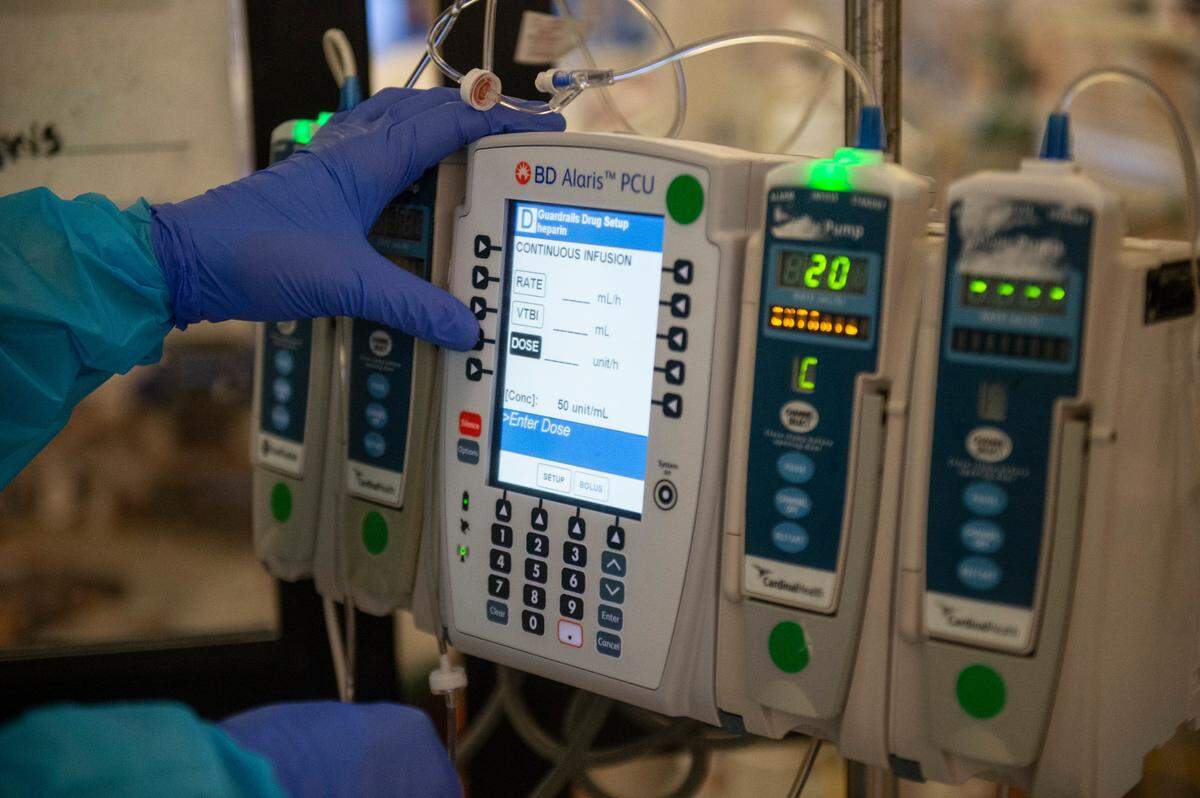
Singing River is one of 30 centers in the nation participating in a trial coming out of Beth, Israel on COVID patients and is part of an ongoing study about the use of an anti-blood clot medication to treat the virus.
The health system is also beginning to participate in a national trial that puts a device into people who cannot get off ventilators.
“I think it takes us to a higher level because we have become part of cutting edge medicine. We have options available for patients that aren’t available in most places. So I think it just takes the whole institution to a different level,” Babar said.
Largest COVID risk factors in South MS
At the beginning of the pandemic, a group of Singing River doctors gathered the experience they had with COVID patients over the first few months of virus spread.
The research, COVID-19 in a Mississippi Community Hospital, was published in the May 2021 edition of Southern Medical Journal. Mississippi recorded the first case of coronavirus disease on March 11, a few days before the study tracked COVID in Singing River hospitals from March 15 and April 10, 2020.
About 26% of the patients who tested positive over this time ended up in the hospital, and about 40% were admitted to intensive care units.
Death rates in the 158 COVID-positive patients studied was 5.7%. None of the 24 non-ICU patients died. The ICU mortality rate was 53%.
“The publication is a view of managing patients in the community hospital setting, which was missing in the literature,” Babar, one of the leading authors, said.
“There’s not very much information out there on that and the community hospital perspective is important because that’s where 75% of patients in the nation get their care.”
The study found that obesity was one of the largest risk factors associated with dying from COVID. Obesity was noted in 68% of hospitalized patients. All nine deceased patients were obese.
Babar said that obese people have higher levels of circulating cytokines, or proteins that control the growth and activity of other immune system cells and blood cells, than non-obese people. So when they get sick, their bodies develop a stronger inflammatory response.
Uncontrolled inflammation at the infected lung site will trigger specific lung damage and invoke additional respiratory problems.
“In COVID, the initial phase of the disease is where the virus is replicating. But then what causes most of the problem is the strong inflammatory response that the body then mounts,” Babar said.
“So, we have patients where the COVID is eradicated, there’s no COVID detectable, and yet they’re super sick. And it’s because now it’s an inflammatory response that’s damaging them.”
Singing River also learned from the study about the survival rates of patients put on ventilators. The median duration on the vent was 17 days, according to the research. About half the patients who ended up on the ventilator did not survive.
Babar said that the delta variant worsened these findings. More obese people’s health declined, along with younger groups and those who were unvaccinated.
Young people also generate stronger inflammatory responses and worsened at greater rates than their older counterparts during the delta spread.
“Younger people did so much worse than the older group of people who had been worsening, getting sick last year in the initial phases of the disease,” Babar said.
Ventilator success also worsened during the delta wave.
“As time went on, and especially during the last wave, we have seen more like 75 to 80% will not make it. And that is especially prevalent because these are young people.”
Vaccine skepticism survey
The Mississippi Gulf Coast continues to record some of the lowest vaccination numbers in the state, which is already one of the least vaccinated places in the country.
Singing River, one of the area’s most ardent proponents of vaccination, began during the delta wave handing out surveys at their primary care clinics to find out why shot rates were so low.
They had about 350 people who completed the survey over the month of August, with the majority of people who answered were already vaccinated.
About 11% of those surveyed absolutely did not want to get vaccinated. About 24% were just unsure if they wanted to get their shots.
“A lot of the findings were what we expected them to be. The people who were not vaccinated did not do anything that the CDC said. They didn’t feel that they were at risk of infection,” said Babar.
Another question asked in the vaccine skepticism survey focused on where patients’ vaccination decisions were influenced. Singing River asked if patients’ faith or community leaders impacted their choice.
Not one surveyed thought they were influenced by community leaders. Babar said this finding leads he and other health officials to believe that social media is driving the vaccination narrative in the area.
“We are putting it together that what that means is that people have been influenced and are being influenced by social media,” he said. “I really think that social media has played a bigger role than anything else during this crisis.”
This article and live event is supported by the Journalism and Public Information Fund, a fund of the Gulf Coast Community Foundation.
This story was originally published December 15, 2021 at 5:50 AM.
CORRECTION: Correction: Singing River is part of an ongoing study about the use of an anti-blood clot medication to treat the virus. An original version of this story said the hospital was part of a study published in the New England Journal of Medicine about the same topic.