He transformed IP Casino after Katrina. Now he’s leading Hard Rock brand through COVID
He was the new general manager of IP Casino Biloxi when Hurricane Katrina hit in 2005 and 15 years later Jon Lucas, now chief operating officer at Hard Rock International, is guiding the Hard Rock cafes, casinos and hotels through the coronavirus comeback.
Lucas returned to Biloxi on Wednesday to speak at the Southern Gaming Summit at Beau Rivage Resort & Casino, where casino executives gathered after enduring the challenges and successes over the last year.
Hard Rock has 248 branded venues in 70 countries, 50,000 employees, 34 hotels and 13 casinos including the one opening next week near Gary, Indiana.
“The brand has never been hotter,” Lucas said.
In the United States, all but three of the Hard Rock Cafes are open and those will be returning soon, he said.
But in Europe, he said just four of the 23 cafes are open. Of the five new hotels Hard Rock opened in 2020 during the pandemic, the three in Europe had to close again.
Hard Rock also has properties in Asia, which were the first affected by the coronavirus, and in India and Brazil, which are still hard-hit with COVID-19.
Just as he had to do after Katrina, Lucas said the coronavirus has forced him and other executives to consider — “How do you reinvent yourself?”
First casino to reopen after Katrina
Lucas started in Atlantic City, moved on to Las Vegas and was at a casino in Tunica when Jeff Cooper approached him about becoming the general manager at the Imperial Palace — now IP Casino Resort Biloxi.
Cooper, a trustee for the Englestad Foundation, said the IP was underperforming following the death of founder Ralph Englestad in 2002.
Lucas made the move to Biloxi just two months before Katrina hit in August 2005. The hurricane closed every casino in Biloxi and across South Mississippi, and it would take months and even years for them to reopen.
A week after the storm, the IP began work on a plan to restore and reopen, Lucas said.
“We did a lot in those 100 days,” between the hurricane and reopening, Cooper said.
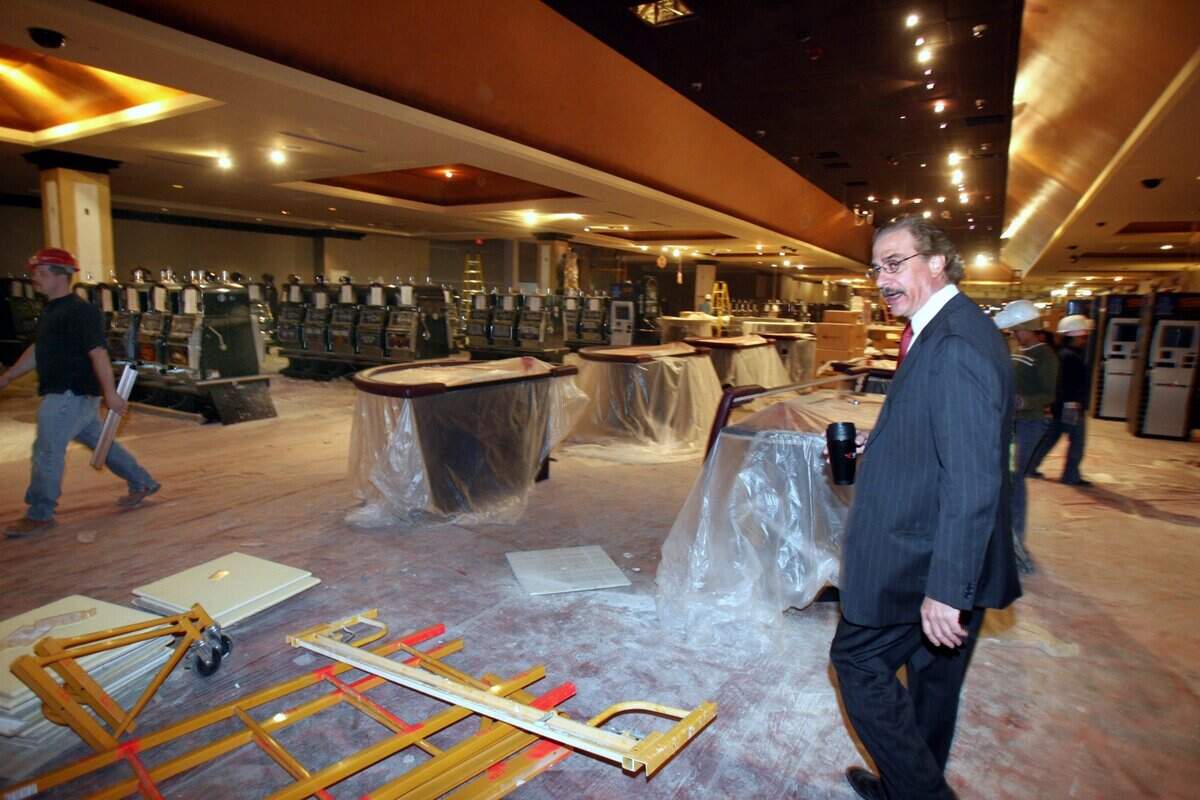
What Lucas managed in modernizing and reopening the IP casino first — just three months after Katrina — ”It was the stimulus for this market,” Cooper said.
The old Betty’s Diner on the first floor of IP was destroyed and transformed into the upscale Chill Bar, Cooper said. The plain cafeteria gave way to a buffet. Crown Room atop the casino became Thirty-Two fine dining restaurant.
The fitness center became a spa, Cooper said.
It took more than $2 million in overtime just to get the elevators ready for opening day, Lucas said.
Getting reopened first and remodeling while in business brought huge rewards.
“I don’t know why anybody hesitated,” he said.
‘People are the most important asset’
Hurricane Katrina was a once-in-a-lifetime event, and then came the coronavirus 15 years later.
To be successful at dealing with two life-altering events is all about building the right team, Lucas said.
“People are the most important asset,” he said.
His staff at IP Casino lined up and applauded him all the way out of the building on Lucas’ last day in 2011, after Boyd Gaming bought the property.
This year Hard Rock was the first privately-owned casino company to be named one of the best-managed companies in the U.S. He said the company also has been honored as best employer for women and best employer for diversity.
Keeping employees engaged, safe during COVID
When disaster hits, you just stay focused, Lucas said. With Katrina, he said, it required being good problem solvers.
“With COVID, it was totally out of your control,” he said.
To ensure brand consistency and make safety the top priority, Hard Rock adopted a 150-page “Safe and Sound” program of guidelines and protocols. Every property as it reopens has 262-point inspections they must meet with a score of 90% or above, or they must be reinspected.
To communicate with employees when everyone was furloughed, Lucas said they held online meetings, videos from the chairman and even a contest where the winning employee collected $10,000 in cash.
“Anything to keep them engaged and informed,” he said.
All the employees earning less that $50,000 a year received $100 gift cards every two weeks to buy food and necessities. Food distribution was set up for members of the Seminole Tribe, which owns the Hard Rock brand.
Lucas said it wasn’t just the the blue-collar employees who needed help with food supplies during the shutdown. “It was everybody.”
Hard Rock also paid for electrostatic cleaning for back-of-house facilities so employees felt safe returning to work, and sealed the guest rooms after cleaning to show they were sanitized.
A survey of 2,500 regulars, most of them seniors who had not returned to Hard Rock casinos, showed many of them were unaware of the safety precautions. Lucas said Hard Rock produced a commercial to show them, and the company saw a rebound in that market.
How Hard Rock adapted to COVID
Just as he did at IP Casino after Katrina, Lucas said he’s focused on how to change the perception of the Hard Rock brand since he was hired.
Hard Rock Cafes got a more contemporary look, he said, and the casinos and hotels became more upscale. They’ve also gotten more flexible during the coronavirus.
”We got into delivery businesses in the cafes,” he said, and partnered with Amazon to deliver no-touch rewards to its customers.
One area where they were slow to react during the coronavirus was retail, he said, and they didn’t capture the opportunity as people were shopping at home.
Travel expenses over the last 12 months were down $5.1 million, and Lucas said while some in-person meeting sare still required, there is no way the company will go back to spending $6 million for travel in a year.
There are lessons learned during COVID-19 and some issues are still to be solved, he said.
“I’m sure everyone is having challenges hiring people” he said to the audience of casino operators, who are having issues hiring.
“How many are going to bring a buffet back,” he asked, and “Do you bring back valet parking?”
Casinos had to reduce the number of slot machines for social distancing, and Lucas said they found revenues were still “pretty solid” with fewer games.
The demand for restaurants will be there as more people are comfortable going out to eat again, but he said unfortunately there is less supply as independent and family-owned restaurants couldn’t survive the pandemic.
South Mississippi is still making its comeback from Katrina, he said, and it could be years before the world returns to a normal with the coronavirus.
This story was originally published May 7, 2021 at 5:50 AM.