Businesses wait weeks for liquor shipments. Several have decided to sue
AI-generated summary reviewed by our newsroom.
- Lawsuits allege Ruan failed to ship ordered liquor, causing empty shelves and lost sales.
- Warehouse software and conveyor failures produced a backlog of roughly 220,000 undelivered cases.
- Legislators weigh temporary private distribution to replace state warehouse until 2027.
Mississippi’s beleaguered liquor and wine warehouse operator, Ruan Transport Corp., is facing several lawsuits in Circuit Court from liquor store owners with empty shelves.
Michael Casano, a Diamondhead attorney, is suing Ruan on behalf of three liquor stores, including one he co-owns, Aloha Wine & Spirits LLC, also in Diamondhead. The other two businesses with pending lawsuits are Buckshots LLC in Pass Christian and Rosetti’s Liquor Barrel Ltd. in Bay St. Louis.
Liquor stores’ shelves are still partially empty because of changes to the warehouse operations, Casano’s lawsuits say. The problem started shortly after the new year, with liquor store orders lagging by a month or more. Casano said shipments are still about three weeks behind at Aloha.
“With us, it’s huge,” Casano said. “Our competition is Slidell, Louisiana. When somebody can’t get liquor in our store, they just drive to Slidell. We’re losing customers daily because we don’t have inventory.”
The problem is statewide. Ruan has not yet had time to file a response to the lawsuits.
MS controls liquor sales
In Mississippi package stores, restaurants, bars and casinos must buy liquor and wine through the state’s Alcoholic Beverage Control Board. The liquor is shipped from an outdated warehouse in Gluckstadt, just north of Jackson. Ruan manages the warehouse under contract with the state.
While the state is building a new warehouse, it won’t be open until 2027, said state Rep. Jay McKnight, who represents portions of Harrison and Hancock counties. McKnight has been trying to help with solutions, Casano said, as have other members of the Coast’s legislative delegation.
McKnight said he doesn’t think the state should be in the alcohol distribution business. A bill is pending that would allow businesses with liquor permits to buy directly from private distributors for at least the next two years, when the new warehouse should be operating, he said.
Some legislators are reluctant to give up the estimated $150 million a year the state collects from alcohol, but McKnight believes even more tax revenue could be collected if businesses dealt with private distributors capable of providing a larger selection.
“We’ve had problems — nothing to this magnitude — but we’ve had problems for years and years running this warehouse,” McKnight said.
Lawsuits filed over alcohol shipping delays
Casano’s lawsuit says serious problems began after the warehouse shut down in early January for annual inventory. Ruan implemented a new software system that was incompatible with a conveyor belt system used to load delivery trucks, the lawsuit says.
As a result, the lawsuit says, three of four conveyor belt lines were removed from service. The lawsuit says the software contractor providing support for the conveyor-belt system “ceased providing those services.”
McKnight said state employees are now doing the job the computer handled, selecting and pulling liquor from the shelves to ship out. By March 1, the warehouse had a backlog of 220,000 cases of unshipped liquor, the lawsuit says.
Ruan’s contract calls for liquor to be shipped the day after it is ordered. The state expects the problem to be sorted out by May, but McKnight said that projection is optimistic.
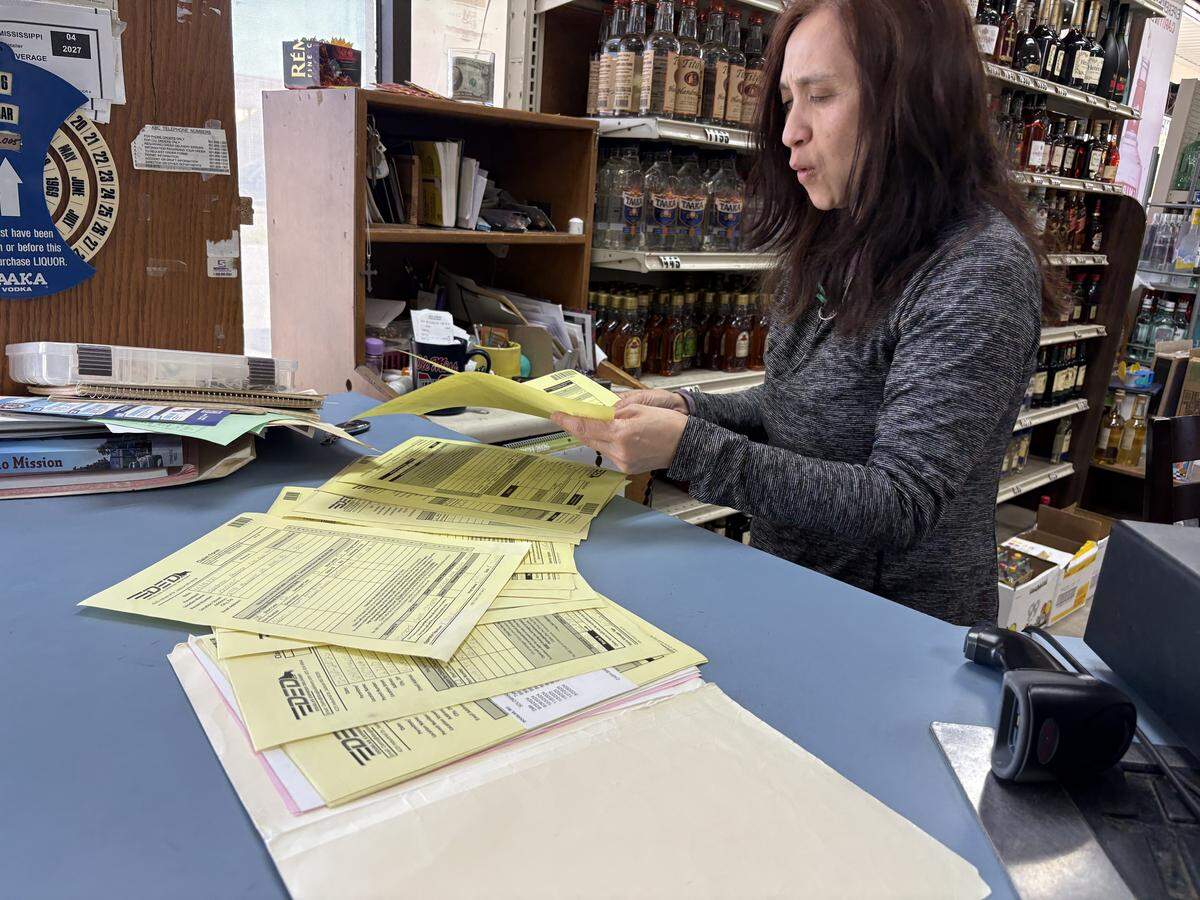
Casano said his shop is still experiencing a three-week lag in shipments, with shelves sitting empty. Soloman’s Wine & Liquor in Biloxi has a backlog of about one month. Owner Nu Tran said that she paid for 12 cases of liquor in February that still haven’t been delivered.
“Who can sustain this?” asked Tran, who has not filed a lawsuit. Tran also has empty sections on her shelves because of the missing orders.
Before the warehouse “crisis,” the lawsuits against Ruan say, liquor stores could expect to receive their orders in 1 to 3 business days.
The lawsuit says that “store inventory was significantly diminished during seasonal peak times such as Mardi Gras, leaving partially empty shelves and a lack of the most commonly purchased retail items.”
The liquor stores accuse Ruan of breaching its state contract, negligence, gross negligence and unjust enrichment for collecting its per case contract fee on orders that weren’t fully delivered.
The liquor stores are seeking unspecified amounts for lost revenue and profit, charges for undelivered goods and loss of business reputation. They also seek punitive damages, alleging reckless disregard for their rights, plus court costs and attorneys’ fees.