NASA’s Artemis will blast off to the moon. How Stennis helped make the launch happen.
Aug, 29 is the anniversary of Hurricane Katrina and this year it also marks NASA’s return mission to the moon for the first time in 50 years.
Monday’s launch was scrubbed after one because of technical issues with one of the four engines. Friday is the next possible launch date established by NASA. That launch wound be at 11:48 a.m. Central Time. The next alternate launch date would be Sept. 5.
NASA will broadcast the countdown and launch live of the first Orion mission on its app and at nasa.gov/nasalive.
NASA and partner agencies are working to engage the American public in the Orion program and bring back some of the excitement of the Apollo days and the race to the moon.
In the 1960s, school students gathered around a single television set up in cafeterias and school auditoriums to watch the Apollo launches and often the splashdowns. Americans joined the countdowns, heard the roar of the engines, marveled at the flames, the liftoffs and engine separation.
America cheered together with the world as Apollo 11 astronauts landed on the moon and Apollo 13 astronauts — including Biloxi native Fred Haise — safely returned to Earth after an explosion in space.
“A lot of us who weren’t around for Apollo generation — this is our Apollo moment,” said Mary Engola, senior manager of space communications for Aerojet Rocketdyne.
The Orion mission
Orion is the name of the next series of NASA missions — following Mercury, Gemini, Apollo and the Space Shuttle. Artemis I is the first Orion mission.
▪ Artemis I won’t have any astronauts on board. For six week it will travel the farthest a human-rated spacecraft has ever gone, slingshot around the moon and splash down near San Diego.
▪ Artemis II is planned for next year and will have a crew that will go to the moon but not land. While Apollo capsules held three astronauts in close quarters, the Artemis capsule can hold four astronauts.
▪ Artemis III, scheduled for 2025, ““will be boots on the moon,” said Doug Bradley, RS-25 deputy program director for Aerojet Rocketdyne. The plan is to land the first woman and African American astronauts on the moon.
This month’s mission will mark America’s return to the moon for the first time since Apollo 17 in December 1972. The last Space Shuttle flight carrying American astronauts was in 2011. Since then private companies have shuttled supplies to the International Space Station and taken some private citizens for a ride into space.
NASA’s long-term mission for Orion is a journey to Mars, Bradley said, and that will be accomplished in steps.
Astronauts will stay longer on the moon than the Apollo missions, he said, and eventually they will remain for a number of months.
“Then we’ll be ready to go to Mars,” he said.
That could still be a decade away. A trip to the moon takes a few days. NASA estimates a trip to Mars will take nine months each way.
Stennis plays a major part
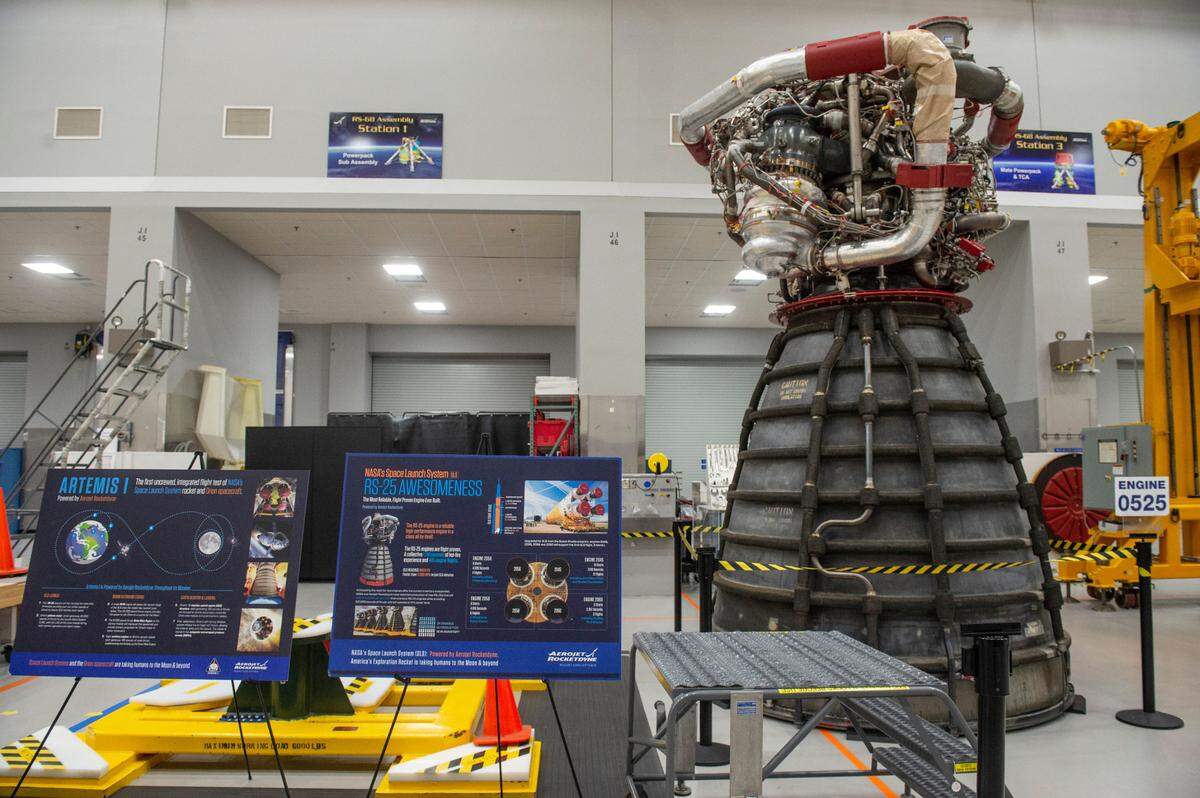
The four RS-25 engines that will power Artemis I were tested individually and together at NASA Stennis Space Center in Hancock County. They will power NASA’s launch back into space with 8.8 million pounds of thrust.
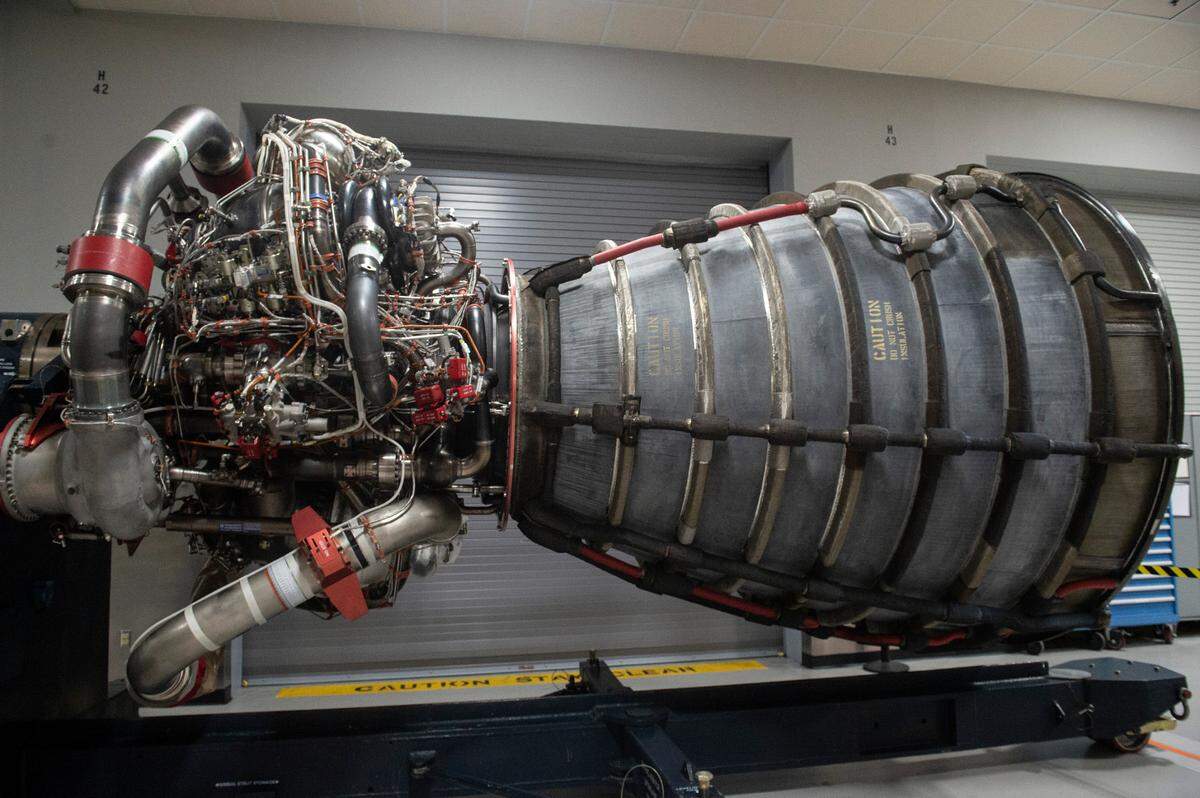
All of the first 16 engines that will be used to launch Artemis capsules are recycled from the Space Shuttle program, said Jack Fabre, who works in the assembly and test integration for RS-25 rocket for Aerojet Rocketdyne at Stennis. Two of them were never used on the shuttles and all of the rockets with 1990s technology are being completely retrofitted, with crews changing the brains of the engines and installing new controllers.
Unlike when they were used on the Space Shuttle program, “The RS-25 is a throw-away rocket — one mission and done,” Bradley said.
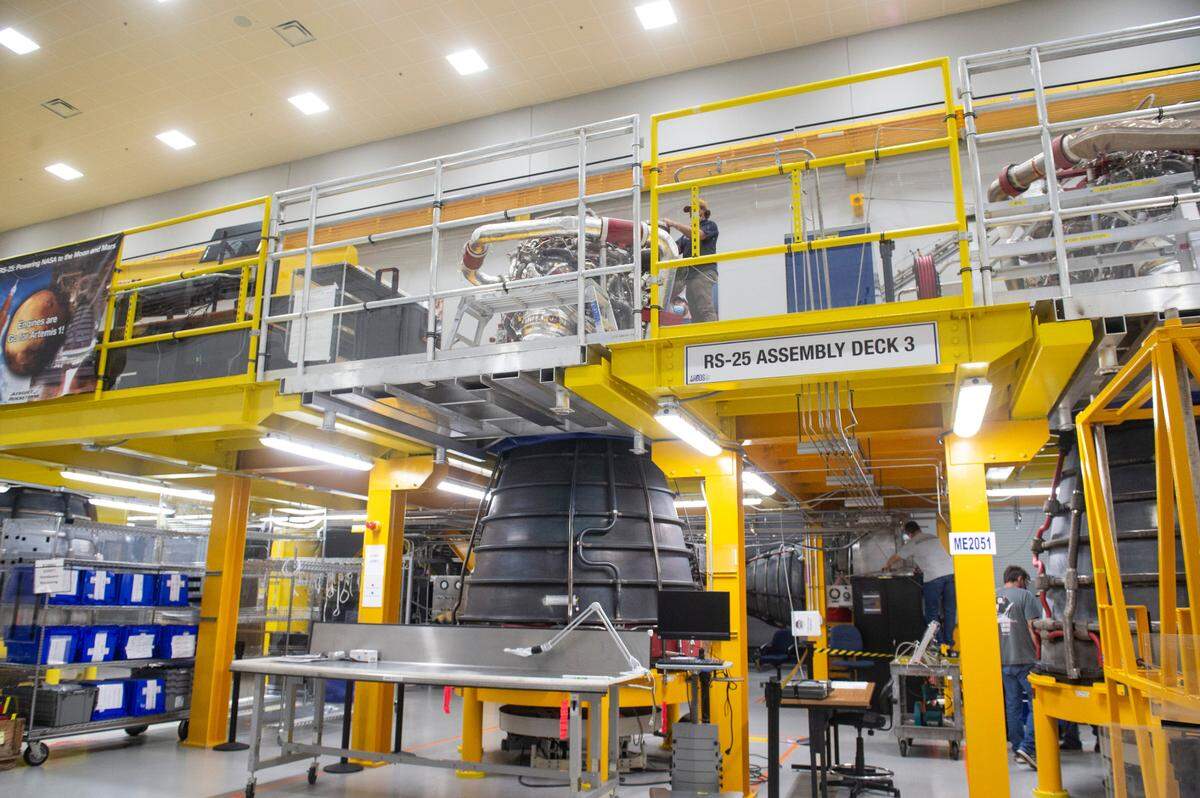
Aerojet Rocketdyne will build 24 engines from scratch for later missions, and is producing all the engine power for the entire rocket, which includes the second stage rocket and a combined 39 different propellent elements.
More than 1,000 companies across the country and around the world have worked on Artemis I. Bradley said about 600 people company-wide at Aerojet Rocketdyne are involved in building and testing the engines, which take an average of 5-6 months to assemble. Many of those people work at Stennis and live in Mississippi and Louisiana.
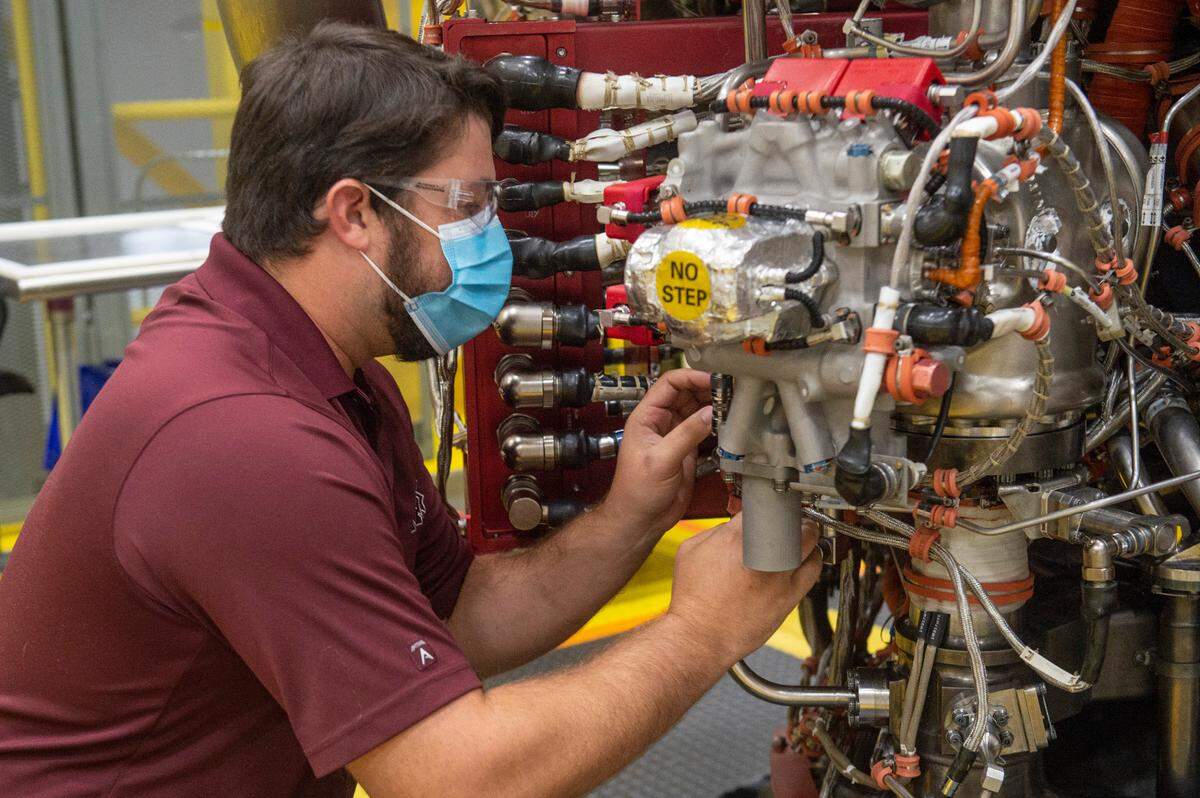
Chris Ladner, an avionic engineer working at Stennis, said he is honored to represent his co-workers as the person selected to be at the launch at Kennedy Space Center in Florida Monday.
Rocket science in Coast backyard
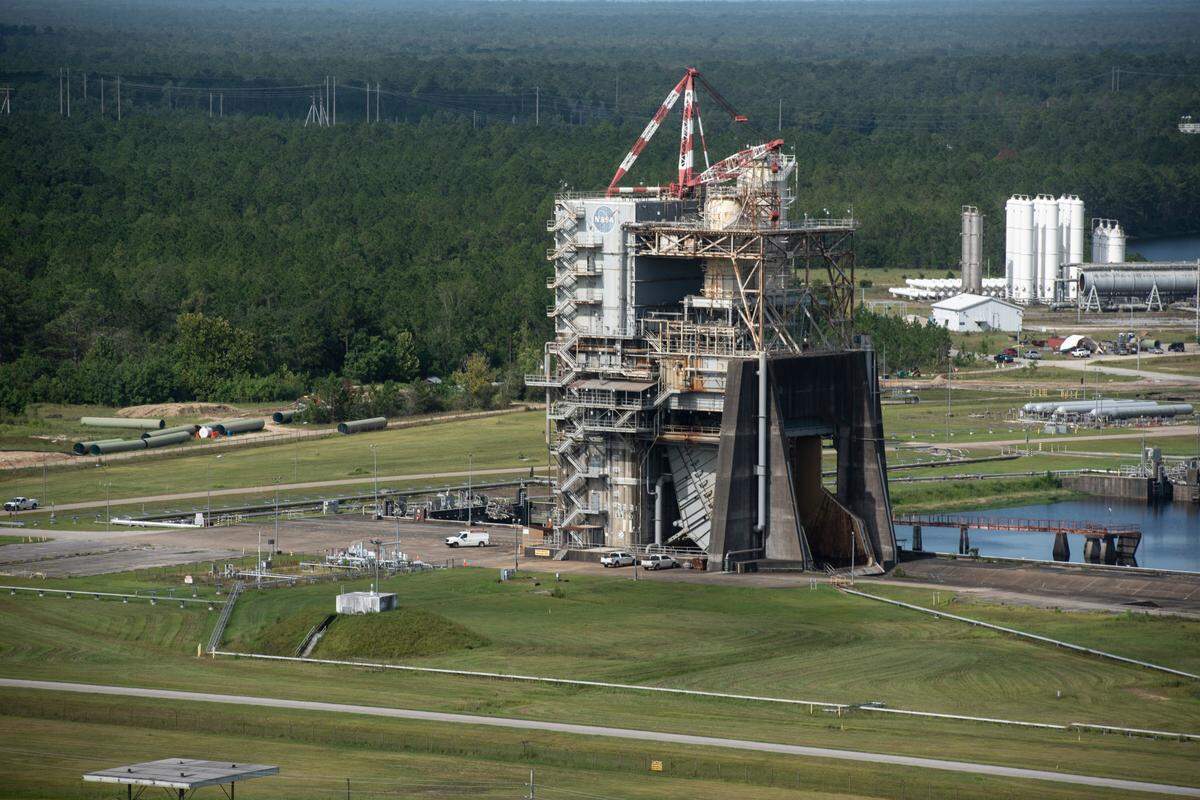
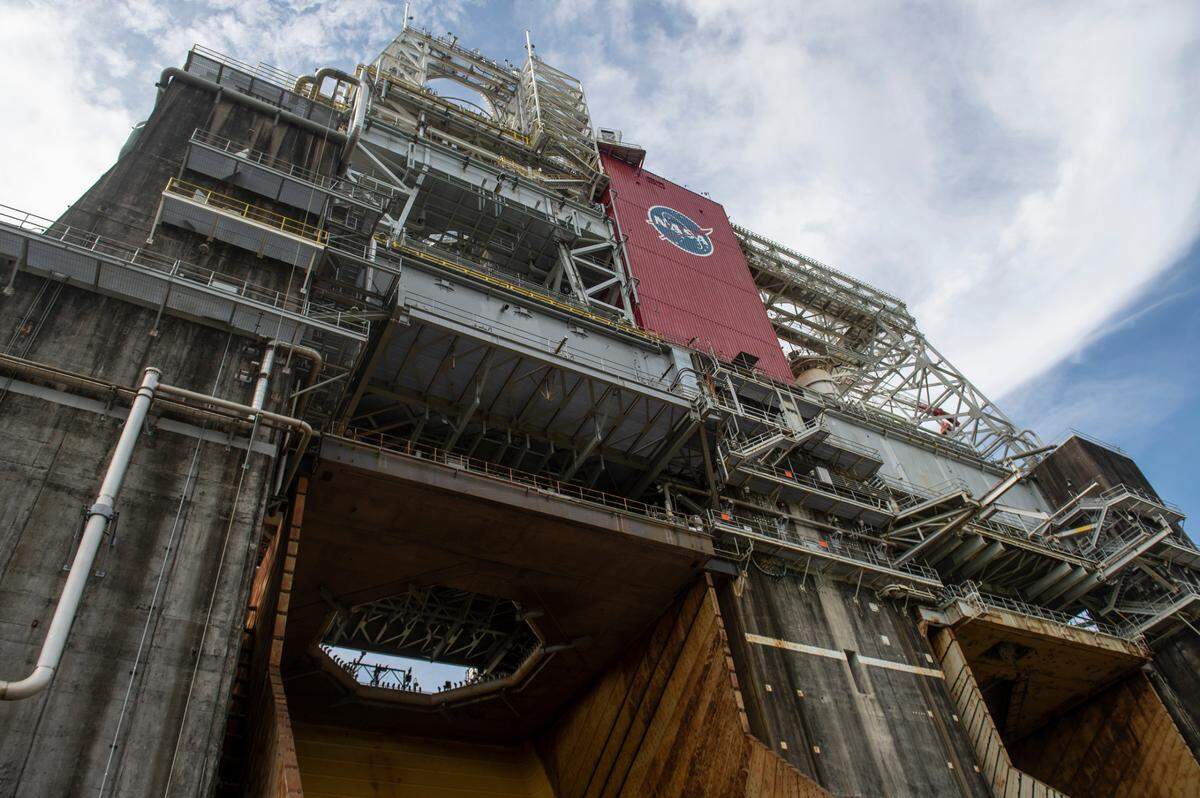
Standing atop the 360-foot tall B-2 Test Stand at Stennis shows just how vast the buffer zone is. The 125,000 acres surrounding the stands allow Stennis to test the rockets without damaging any nearby properties.
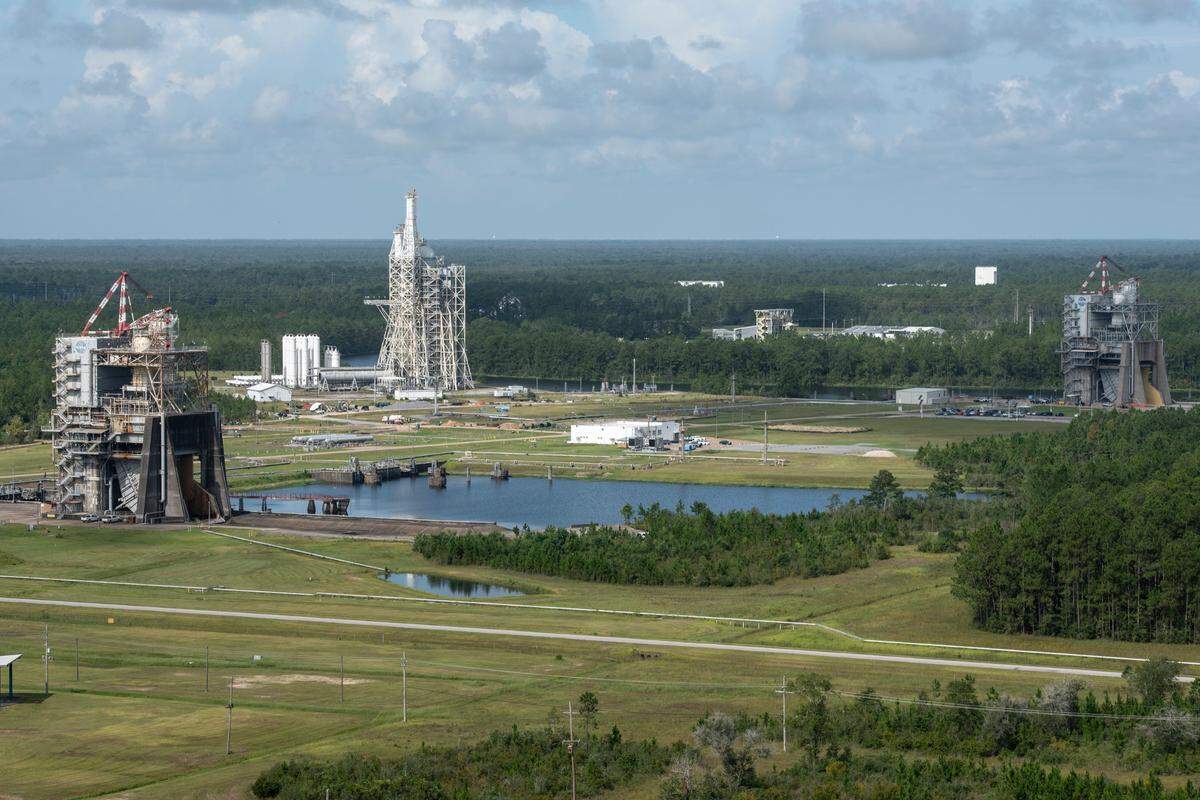
“Rule No. 1 at Stennis is we do not launch,” said Nicholas Nugent, PhD., project engineer for the B2 test stand where the engines for Artemis I were tested.
Tests on the rockets for future Artemis missions have not been ordered, officials said.
The test stand was modified and restored to accommodate — and hold in place — the SLS rockets. About one million pounds of new steel was placed at the top of the stand.
The Space Launch System was transported up the Pearl River from NASA’s Michoud Assembly Facility in New Orleans by the Pegasus barge to Stennis in January 2020.
“It was almost 10 days from the time we got it off the barge until we got it in the stand,” said Mark Hancock, deputy project manager. The National Weather Service in New Orleans provided morning updates and wind speeds to get the engine safely in place.
An extension had to be built for the crane that was used to haul the engine off the barge and turn it vertical to fit into the test stand. The crane operator can’t see the rocket and uses spotters and cameras to do the work.
In March 2020, the coronavirus shut down the project to just a skeleton crew for two months. That was followed by an active hurricane season that required the test stand to be secured.
When the rockets fire, a flame bucket at the bottom of the test stand absorbs the impact. Its 30 segments are made of carbon steel, and during a test cooling water fed in through 32,700 holes, said Nugent, who counted them.
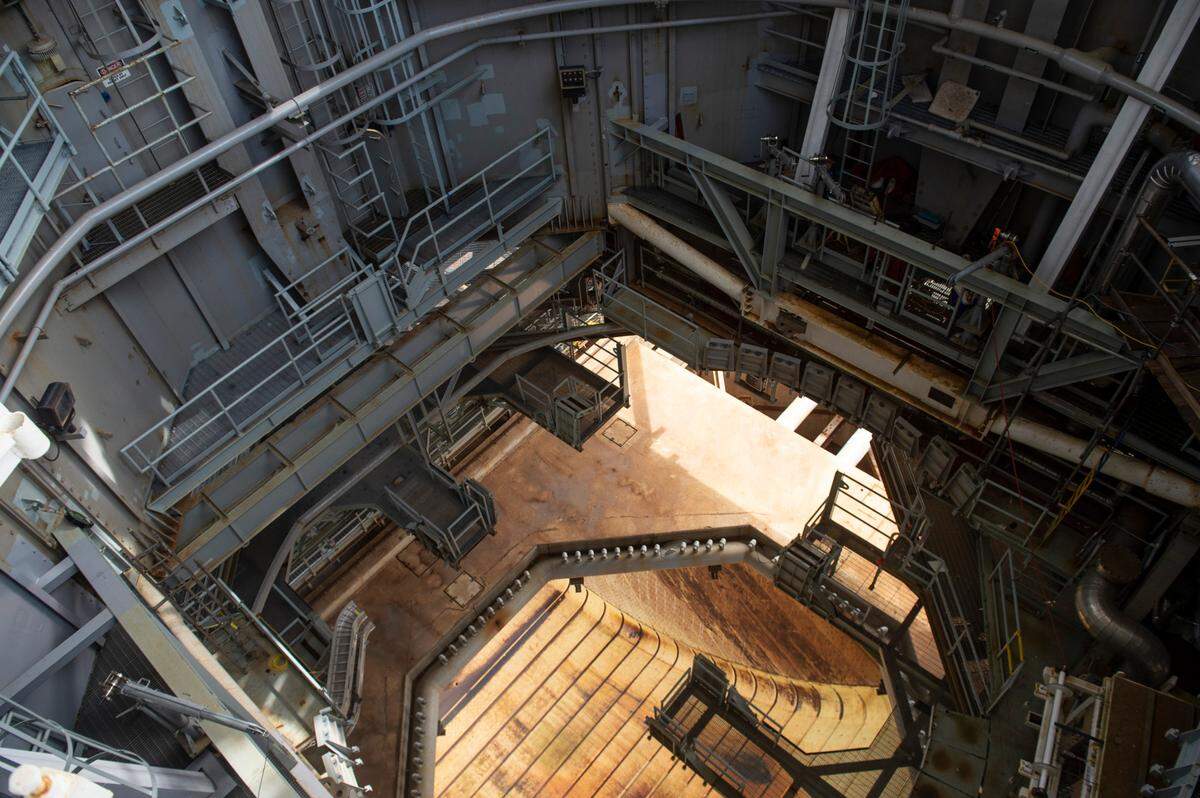
The test stand also has acoustic buffers to keep the noise and rattle from the test down, so people in South Mississippi typically don’t hear or feel the rocket tests in their backyard.
What to know about Monday’s launch:
Artemis I is scheduled to launch Monday, Aug. 29, at at 7:33 a.m. Central Time, up to 9:33 a.m.
If the launch is scrubbed, it could take place Sept. 2 at 12:28 p.m. CT or Sept. 5 at 4:42 p.m. CT.
The launch will be televised on the NASA app and the NASA live website
The Orion crew capsule is uncrewed and will spend about six weeks in space.
This story was originally published August 28, 2022 at 7:00 AM.