
How much does Mardi Gras cost in New Orleans? From Hand Grenades to beads, prices soar
Carnival revelers have started trickling into New Orleans in recent days, and the ones that stopped at the Tropical Isle on Bourbon Street didn’t blink at the $1-a-pop price increase for the bar’s signature neon green Hand Grenade cocktail.
Jason Fortner, who runs the five Tropical Isle outlets in the French Quarter, said he’s hoping customers won’t balk at the first price increase in more than a decade on the high-octane slushy drink. He had to raise the price from $10 to $11 this year to cover some of the across-the-board cost increases he’s facing because of the recent nationwide surge in inflation.
“We maybe could’ve gone up by a couple bucks on it, but I didn’t want to do any more than I had to,” he said.
U.S. consumer prices through January were up 7.5% on the year, the largest annual jump in 40 years, according to the U.S. Bureau of Labor Statistics. Rising prices — led by food, energy, and housing — reflect supply-chain issues, the continued economic rebound from the pandemic and rising wages, especially for some service sector workers at hotels, bars and restaurants.
The Hand Grenade price bump is in line with the price increases for a number of Carnival goods and services, according to conversations with business owners, industry associations and pricing analysts. U.S. average alcohol prices are up nearly 7% since February, 2020. A king cake costs more, as does fried chicken. Krewes are paying more for beads, and prices for big ticket items like downtown New Orleans hotel rooms have also increased.
The reason behind price rises is similar for most businesses: there are widespread labor and raw materials shortages at a time when people are starting to take more trips and spend more money going out.
However, New Orleans business owners say they are wary of raising prices as they try to make up for two lean years since the last big Mardi Gras celebrations. And some, including musicians and others who have see rising costs themselves, say they can’t pass those costs along without losing out on work.
‘It’s been kind of crazy’
Lindsay Wells, owner of Mardi Gras Inside Tours, which sells package holidays, said the underlying cost of her tour packages have gone up by about $200 per person, but she’s increased prices by only $100 since 2020.
“We saw really strong demand toward the end of last year but then with delta and omicron, we also saw record cancellations,” said Wells of the COVID-19 surges.
Fortner said he has seen costs rising for the ingredients that make up his Hand Grenade cocktail, which includes a melon-flavored liqueur and a “secret combination” of white spirits, including gin, vodka, and rum. The chronic shortage of popular liquors and other bar supplies during the pandemic has pushed up prices for most products, especially as demand has begun to return. The stylized plastic cups are also more expensive.
“It’s been kind of crazy just trying to get supplies to keep up,” he said.
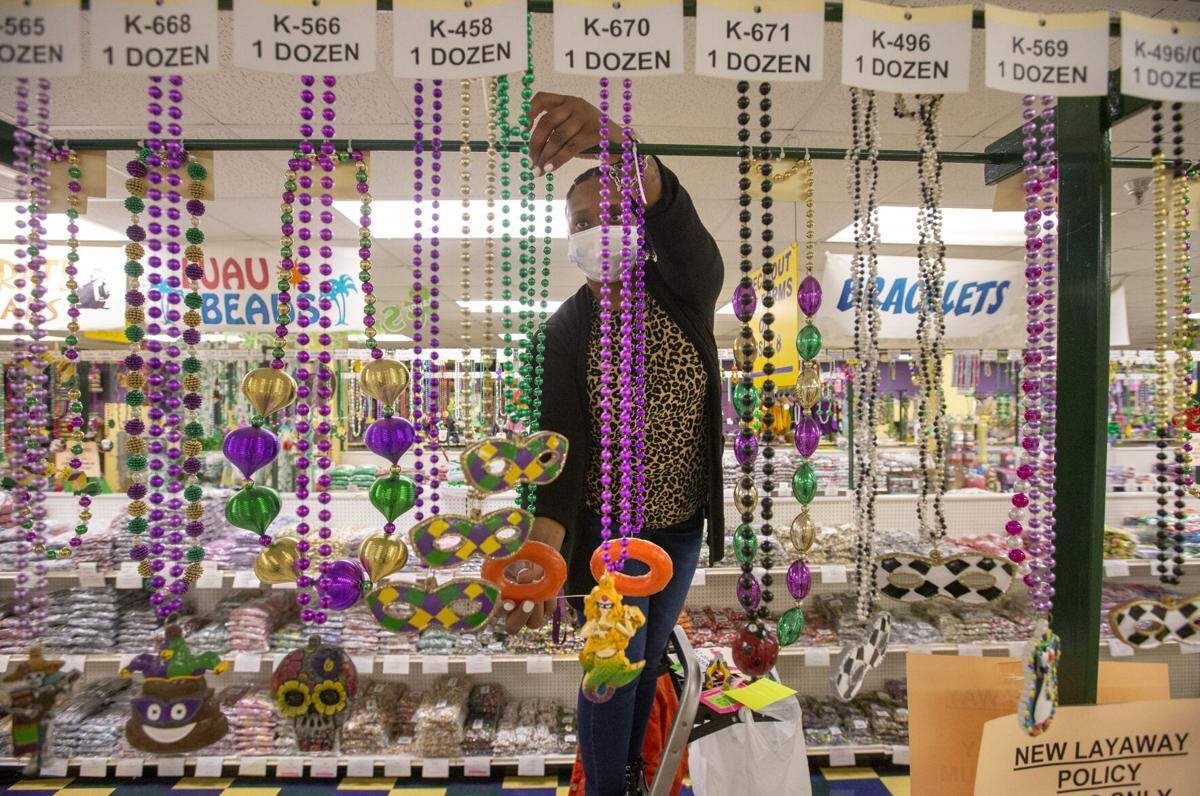
All kinds of other shortages and bottlenecks affecting manufacturing hubs like China have driven up prices for Mardi Gras items, such as beads and ball gowns.
“I’ve been doing beads since 1993 and this is the most hectic year I’ve ever had,” said Dan Kelly, owner of Beads by the Dozen, Inc. in Elmwood.
A container of beads shipped from China costs about $18,000 this year, up from $16,000 in 2020, Kelly said. Delivery has been unpredictable, but he only needed to purchase about one-third of his normal order because the krewes he sells to had supplies left over from last year’s canceled parades.
Fixing with feathers
Dawn Michelet, the owner of Red Carpet, a dress shop on Magazine Street, said shipping woes have caused her sleepless nights as she is squeezed between higher prices and depressed demand from her clients.
“The shipping is triple what it was, if it even shows up at all,” she said. “I like to have things months in advance, so I’ve been praying a lot.”
The gowns she usually tries to sell for about $200 or less aren’t available this year, so she has only had pricier outfits.
“Everything is more expensive,” Michelet said. “The same dress I paid wholesale for $199 (in 2020) is $349 this year.”
To keep costs down for clients she has been repurposing dresses — adding feathers, for example — to give gowns a fresh look for multiple events.
King cake hike
King cake has not been immune to price hikes.
Ryan Haydel, owner of Haydel’s Bakery in Jefferson Parish, said everything from eggs to the cardboard the king cakes are served on and the plastic babies stuffed inside have gone up in price. Haydel’s medium king cake is priced at $17 this year, a 13% increase from 2020.
And another parade-route standard, fried chicken, is also costing more this year. At McHardy’s Chicken & Fixin, a seventh ward takeout spot that does a great deal of Mardi Gras business for parade route spreads, 20 pieces now costs $28.16, up from $25.36 two years ago.
Flights, hotels
Not everything is seeing price jumps, of course.
The cost of a tuxedo rental hasn’t changed at Perlis Clothing, for instance. Ryan Vogel, clothing buyer at Perlis, said a regular black tuxedo rental, including patent leather shoes, is still about $150.
And some prices still remain depressed by the pandemic. Airfare to New Orleans is on average about 11% lower than it was for the weekend before Mardi Gras two years ago, despite soaring jet fuel costs, according to Adit Damodaran, an economist at Hopper.com, which tracks airline data.
The average cost of a round trip ticket to Louis Armstrong New Orleans International Airport on the Sunday before Mardi Gras is about $294 this year, compared to $329 in 2020.
Damodaran said the main reason for lower fares is simply the lack of demand, particularly from business travelers.
But saving on airfare still means paying more elsewhere. The cost of a standard double room at Hotel Monteleone for Mardi Gras weekend is $400 a night, up about 27% from the same timeframe in 2020, according to the hotel’s general manager, Steve Caputo.
The iconic Royal Street hotel is nearly 90% booked for Mardi Gras weekend, Caputo said.
Hotel room rates have been rising steadily since the end of last summer, particularly for leisure destinations like New Orleans, according to Chelsea McCready, senior director of hospitality analytics at STR, an industry analysis firm. But costs are up too.
The hotel sector has in the past year seen the biggest hike in average hourly wages in more than a decade, rising from $17 to $19.50. That doesn’t include the widespread practice of offering bonuses to workers to recruit or retain them, said Mavis Early, executive director of the Greater New Orleans Hospitality and Lodging Association.
Musicians left out
One important New Orleans sector not benefiting from the tight labor market, however, is musical performers.
The price of hiring one of New Orleans top high school bands, for example, has hardly changed in at least a decade, said Brice Miller, founder of The New Orleans Music Company, which is a booking agent for musicians.
He said one of the better known high school marching bands will charge about $2,300 to perform in a parade, though other schools might charge less than half that.
“No organization is saying, we’re going to up your pay because of inflation or pandemic losses, they’re looking for the cheapest entertainment,” said Miller.
He said that is true also for the professional musicians who play gigs on Frenchmen Street, where the booking rates for bands like his Twisted Dixie ensemble still typically are comprised of a $5 door charge, 20% of the bar, plus tips.
“The impacts of inflation on the live venue and entertainment business are being passed down to the performers, who are considered the bottom of the food chain instead of the caviar,” said Miller.
Ian McNulty, staff writer for Nola.com and The New Orleans Advocate, contributed to this report.
This story was originally published February 19, 2022 at 12:58 PM.