
Celebrate the native American culinary contributions
As we prepare to celebrate Thanksgiving on Thursday, let's examine culinary contributions that came from the tumultuous melding of the New World and Old World cultures in the 1400s. Ancient cultures began to decline, armies invaded, diseases decimated and thousands of European immigrants poured into what they saw as the open spaces of the Americas.
But the New World also had a resounding and lasting impact on Europe, perhaps in a culinary way more than any other. Countless vegetables, fruits and animals were introduced from North and South America across the Atlantic, and from there, around the world.
Can you imagine the holidays without a turkey? Italian food without the tomato? Thai food without the pepper? Southern food without lima beans, squash and sweet potatoes? Wow. Here's a partial list of the New World's gifts to the Old: wild rice, lima beans, peanuts, potato, corn, sweet potato, avocado, blueberries, peppers, tomatoes, strawberries, squash and pumpkin, cashews, cocoa and even vanilla.
This melding of new foods and people really did change the food culture in countless countries around the world, but it also was instrumental in developing the foodways that would become famous in the American South. We benefited from the new foods that came from all over the Americas, such as the three sisters of beans, squash, and corn; local foods such as the filé the Native Americans sold the Creoles in New Orleans, and from further afield in the okra the African slaves brought with them. We found cornbread when hungry Europeans realized that wheat did not grow well in Southern climes, and so substituted ground corn.
Similarly, sweets-starved immigrants began to grow sorghum for molasses when sugar cane fields planted anywhere north of what is now Mississippi 82 failed.
Thursday is Thanksgiving, but let's not forget that Friday is American Indian Heritage Day, so let's give a thought to what this mingling of cultures has meant to the world. Turn on the stove and oven, put on a pot of beans, make some cornbread or pour some sorghum on that biscuit!
Here are a few recipes that feature New World foods.
The first is a simple recipe, but it is delicious. The few ingredients hold hands in an amazing way, but there is nothing complicated about it. Using a good, imported Italian pasta is a good idea; the difference in quality is noticeable. Wedges of pumpkin can be found at larger Asian markets. If you can't find pumpkin, use squash or zucchini. As always, only use authentic, imported Italian Parmigiano-Reggiano -- nothing else is even close in flavor and texture, and never buy it pre-grated. As for the olive oil, that is a different matter. There are good olive oils being made in California and several South American countries. Look for a fruity, green oil, and if it has a little bite to it, so much the better.
PUMPKIN AND PASTA
1 pound linguini or fettuccini
2 cups cubed pumpkin
3-4 cloves chopped garlic
Lots of Parmigiano-Reggiano
Best quality olive oil
Fresh ground black pepper, red pepper flakes
Fresh sage leaves for garnish
Prepare the pasta according to package directions, drain, add a little olive oil and toss, then set aside. Sauté the garlic in olive oil until it starts to brown, remove it and discard. Now your oil has been infused with garlic. Sauté the pumpkin in the oil until browned and just tender. Don't overcook it or it will fall apart. Season aggressively. Toss the pasta and pumpkin, with the oil from the pan. Plate, add plenty of Parmigiano-Reggiano, garnish with sage and serve at once.
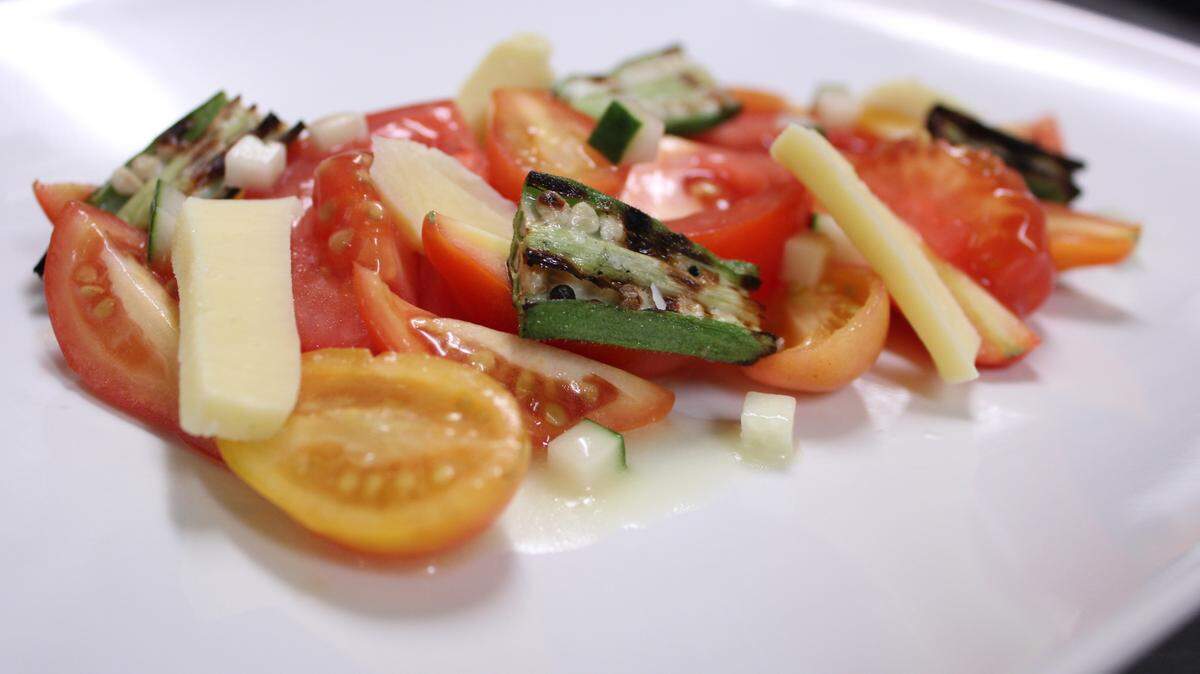
To make this recipe really sing, use heirloom tomatoes. Yes, they are expensive, but a little bit goes a long way. Also use a good white cheddar cheese, if you can find it. The best is Irish, but if you can't find it, use any firm, flavorful white cheese. Under no circumstance should you use mozzarella.
TOMATO AND OKRA SALAD
2-3 cups chopped, best quality tomatoes
3-4 okra pods
1/2 cup cucumber, cut into small cubes
1/2 cup white cheddar
Salt
Olive oil
Toss the tomatoes in a little olive oil, but not much. Slice the okra into 2/3-inch rounds, toss in a little oil, salt and grill until browned and tender. Julienne (cut into thick matchstick shapes) the cheddar; now toss everything together. Do not refrigerate, as the okra is best when served still warm.
Chow chow is a subject we have talked about before, but it is so good, it is worth repeating. Some people call it tomato chutney, but whatever you call it, it is delicious and has a variety of good applications. Chef Alex Perry of Vestige in Ocean Springs serves it with a sautéed filet of fish. More typically, at least in the South, it is served with peas and beans, and if you add a little good cornbread, you will be a very happy fellow.
JOSEPHINE'S CHOW CHOW
1 large can whole tomatoes with juice
1 chopped red onion
1/2 cup Asian style rice vinegar
1/2 cup sugar
1-2 chopped jalapeño peppers
4-5 whole cloves
Combine all of the ingredients and simmer in a sauce pan for about 30 minutes. It is done when it is thick as can be. Cool before serving. Store in sealed containers in the refrigerator and it will keep for at least a week.
LIMA BEANS AND LEFTOVER HAM
2 cups dried lima beans
1 ham bone with lots of meat left on
1 chopped onion
1 chopped bell pepper
1/2 cup large diced carrot
4-6 cloves chopped garlic
1-2 chopped and seeded jalapeno peppers
Salt and freshly ground black pepper
Soak the beans overnight. Add oil to a large, heavy bottom pot and sauté the onion, bell pepper, and carrot for 5 minutes. Add the garlic and cook 2 minutes more. Add the meaty ham bone, cover with water and simmer for 1 hour. Now you have a delicious stock. Add the beans and simmer until tender. Please serve with your best cornbread.
Julian Brunt, who comes from a family with deep Southern roots, writes the Coast Cooking column that appears in Wednesday's Sun Herald and for a blog at sunherald.com. He is a food writer and photographer with regular columns also in magazines.
This story was originally published November 24, 2015 at 7:44 PM.