
Tim Lockley: Water makes mosquitoes feel right at home
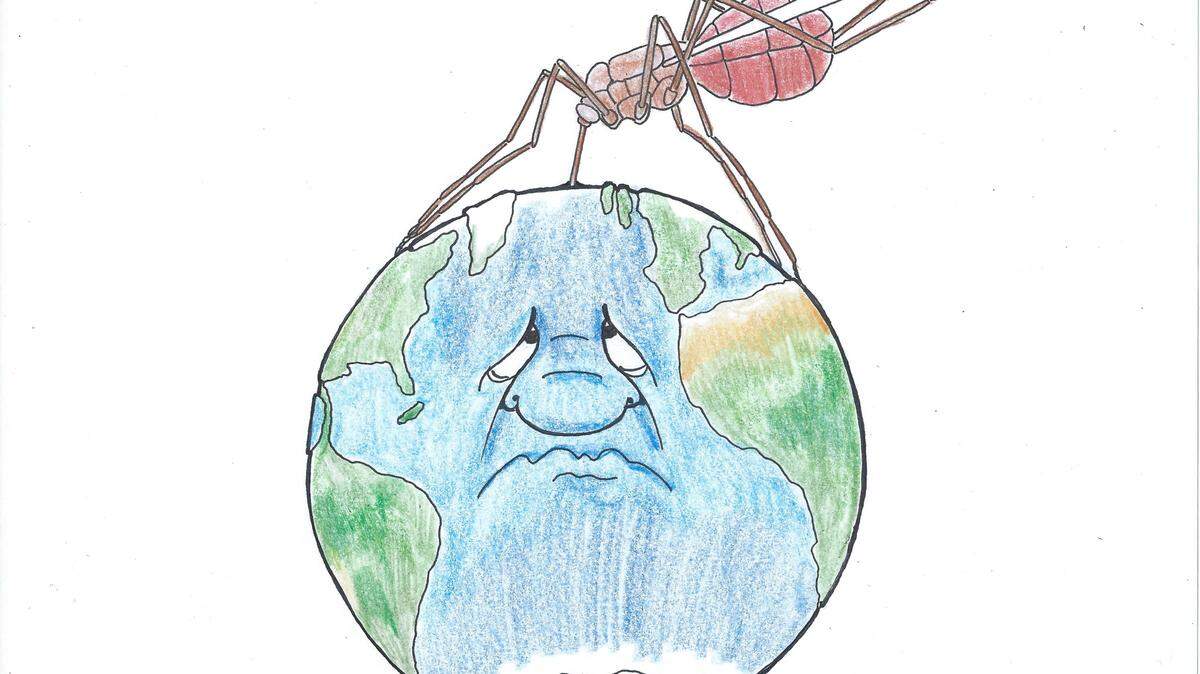
The movie "Jurassic Park" got a lot of things wrong, scientifically speaking. But one of the things they got right was that mosquitoes existed during that period 210 million years ago. As to whether they would have been able to penetrate the hide of a Triceratops and feed on its blood is questionable. We know that dinosaurs had fleas, but they were the size of the last joint of your thumb. The mosquitoes that we've observed in Jurassic amber weren't much bigger than those that exist today.
I've had quite a few people ask me about mosquitoes lately, most often in association with the Zika virus. So far, all of the cases reported in the United States (including Mississippi) have been from people who had recently traveled to other countries. As of today, according to the Center for Disease Control in Atlanta, the virus has not established itself here.
That's not to say that it can't. We have the arbovector (carrier) here already. It's our old friend the yellow fever mosquito Aedes aegypti. It isn't a native. It arrived here from Africa hundreds of years ago, probably on slave ships. There are two other members of this genus that are potential carriers: the native eastern salt marsh mosquito (Ae. sollicitans) and another, more recent arrival, the Asian tiger mosquito (Ae. albopictus).
Fortunately, even though they are here, they aren't that common. Unfortunately, recent research done in Brazil has found that there may well be more than one carrier. However, when it comes to protecting yourself from these biters or any other mosquitoes, the same procedures apply.
First and foremost, don't let mosquitoes set up housekeeping in and around your house. All mosquitoes, regardless of the species, require water for their young (called wrigglers) to develop. Get rid of anything around your home that can hold water. If you can't get rid of it, dump it out periodically, at least once a week. Under ideal conditions, a mosquito can go from egg to adult in as little as seven days, and a single bottle cap of water is sufficient to grow one mosquito. Be diligent. Empty your bird baths every week. If you can see a puddle of water, there are probably young mosquitoes in it, or at least eggs ready to hatch. Fill in any low spots where water can stand for any significant period of time. Unlike their cousins the Anopheline mosquitoes who love stagnant water, Aedes species prefer relatively clean water. The saucers under your pots can be a significant breeding ground. Fill the saucers with sand. Moisture will be trapped there, but the sand will not allow any free-standing water to accumulate.
Check your gutters. When dead leaves and other detritus build up, it can stop or slow the flow of water. This can lead to standing water that mosquitoes can use. If you have a freshwater swimming pool, keep it chlorinated.
Once you've got the water problem under control, you may still get mosquitoes buzzing around. An application of a residual insecticide can aid in reducing their numbers. These insecticides do not target just mosquitoes. They also will kill bees, beetles, butterflies and other, often beneficial, insects. Use them only when you absolutely have to. When you do use them, the best sites are under outdoor furniture, the shaded sides of buildings and dense vegetation -- any cool, dark areas. Read the label before applying and follow the instructions.
Your best line of defense is still repellents. Products that contain DEET or picaridin provide the longest and best protection as long as you apply them according to label directions. Most mosquitoes prefer to attack us during the early morning or late evening. Aedes species will feed throughout the day. If you have to be outside, wear long sleeves, long pants and socks. Barring that, apply repellents to any exposed skin. As a rule, most mosquitoes are not strong fliers, so a good fan strategically placed can go a long way in keeping them off you and, at the same time, help keep you cool.
Do not invest your money in mosquito "traps" or bug zappers. The traps will capture quite a few mosquitoes, but they also draw mosquitoes in from greater distances, increasing the population in your yard. They originally were designed as a method of determining the number and species of mosquitoes in a given area. They were not designed to eliminate mosquitoes completely. As for bug zappers, if you buy one, give it to your neighbor. Bug zappers kill very few mosquitoes. The wires are, for the most part, too widely separated to electrocute something as small as a mosquito. Like the traps, the ultraviolet light draws mosquitoes toward the zapper. It may kill some, but not enough to stop them from biting you. You're still more attractive to them than the zapper. If the zapper's in your neighbor's yard, they'll be the ones inviting the mosquitoes over, not you.
Bracelets, electronic repellers, smoke coils, citronella candles or torches -- none of these work. Some people think that encouraging birds and bats to nest nearby will cause a reduction in mosquito numbers. Although they do eat mosquitoes, they make up only around 1 percent of their diet. That's not to say they're not nice to have flitting about. They do consume fairly large numbers of garden pests such as moths -- just not mosquitoes.
Overall, the problem you experience with most mosquitoes is a local one. By local, I mean your yard. Keeping the opportunities for mosquitoes to breed to a minimum will go a long way in reducing the misery index this summer.
Tim Lockley, a specialist in entomology, is retired from a 30-year career as a research scientist for the U.S. Department of Agriculture. For answers to individual questions, please send a stamped, self-addressed envelope to Tim Lockley, c/o Sun Herald, P.O. Box 4567, Biloxi MS 39535.
This story was originally published March 10, 2016 at 5:38 PM.