
Tim Lockley: Millipedes are helpful in the lawn
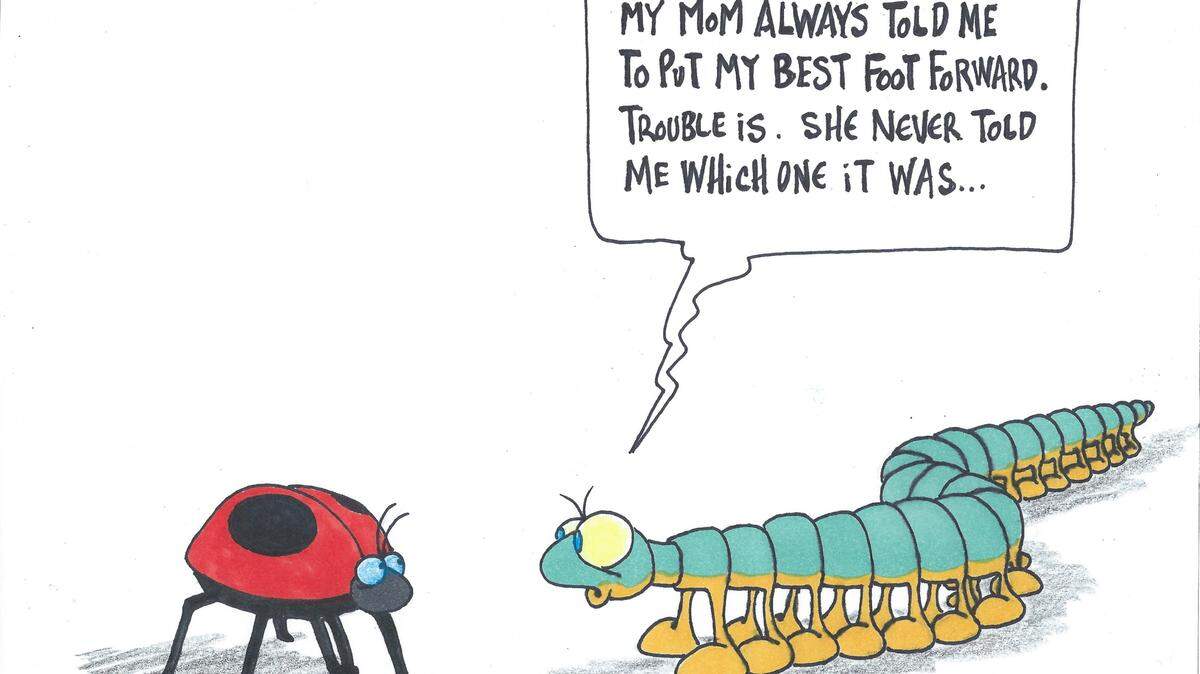
Millipedes were probably the first creatures to leave the primordial seas and live permanently on the land. A fossil millipede recently was discovered in Scotland that was 420 million years old. That's 20 million years older than the previous record holder, a daddy longlegs. Its modern offspring haven't changed much since then.
There are over 10 thousand species of millipedes in the world. They range in size from just over a millimeter to 35 cm. They are long, slow-moving multi-segmented arthropods. A casual observation would indicate two legs per body segment, but this is a mistake. Mama Nature stipulates one pair of legs per segment and a closer look shows that millipedes haven't broken her rules. What looks like a single segment is, in reality, a plate that covers two segments, each having only one pair of jointed appendages.
The good news is that millipedes do not bite people or pets. They don't carry any diseases that they can pass on to us. They don't infest our stored food and they don't do any significant damage to our garden plants. They are decomposers. Their job is to consume organic material like dead leaves and grass clippings.
The bad news is the "ick" factor people get when millipedes begin to show up by the thousands. On warm humid nights, millipedes can migrate en masse into garages, carports and homes. They aren't really attracted to these areas. They're just wandering around and eventually stumble across your house -- if a creature with scores of legs can actually stumble. When they do show up inside your home, the odds are that they're just going to curl up and die within a day or two. Your house is to millipedes what Death Valley would be to you in mid-August. The simplest method to remove millipedes from your house or garage is to sweep them up and take them outside. If you use a vacuum, empty the bag as soon as possible to avoid the rather unpleasant odor you'll get from disturbed and dead millipedes.
If you want to control millipedes, you should concentrate on treating them out of doors. That's where they prefer to be. Begin by dethatching your lawn. That's a major source of food for hungry millipedes. Cut down on watering your yard. When you do apply water, do it early in the morning. This will allow your lawn to dry out by evening when millipedes become active. The lower the moisture level, the fewer millipedes you'll have running around.
Because of their preference for areas with a high moisture content, you'll usually find them under boards and mulch, in leaf litter and compost and in grass clippings. If you can reduce these areas, you'll greatly lower the numbers of millipedes. Eliminate debris and keep firewood stored above ground. Don't over mulch your flower beds.
If you want to try chemicals, pesticides supply only a temporary control at best. Millipedes can travel more than 20 meters and may be outside of the area where you have the option of applying insecticides. Rather than treating your entire yard, an application of an insecticide around the foundation of your home is going to be your best option. Just remember, before you decide to treat your yard: Millipedes in your lawn are beneficial. They're breaking down leaf clippings into free fertilizer. Just treating around the foundation of your home will keep the occasional millipede from wandering into your house while allowing the majority to do their job.
Tim Lockley, a specialist in entomology, is retired from a 30-year career as a research scientist for the U.S. Department of Agriculture. For answers to individual questions, please send a stamped, self-addressed envelope to Tim Lockley, c/o Sun Herald, P.O. Box 4567, Biloxi MS 39535.
This story was originally published March 3, 2016 at 4:59 PM with the headline "Tim Lockley: Millipedes are helpful in the lawn ."