
Kat Bergeron: The Coast is the land of acceptance
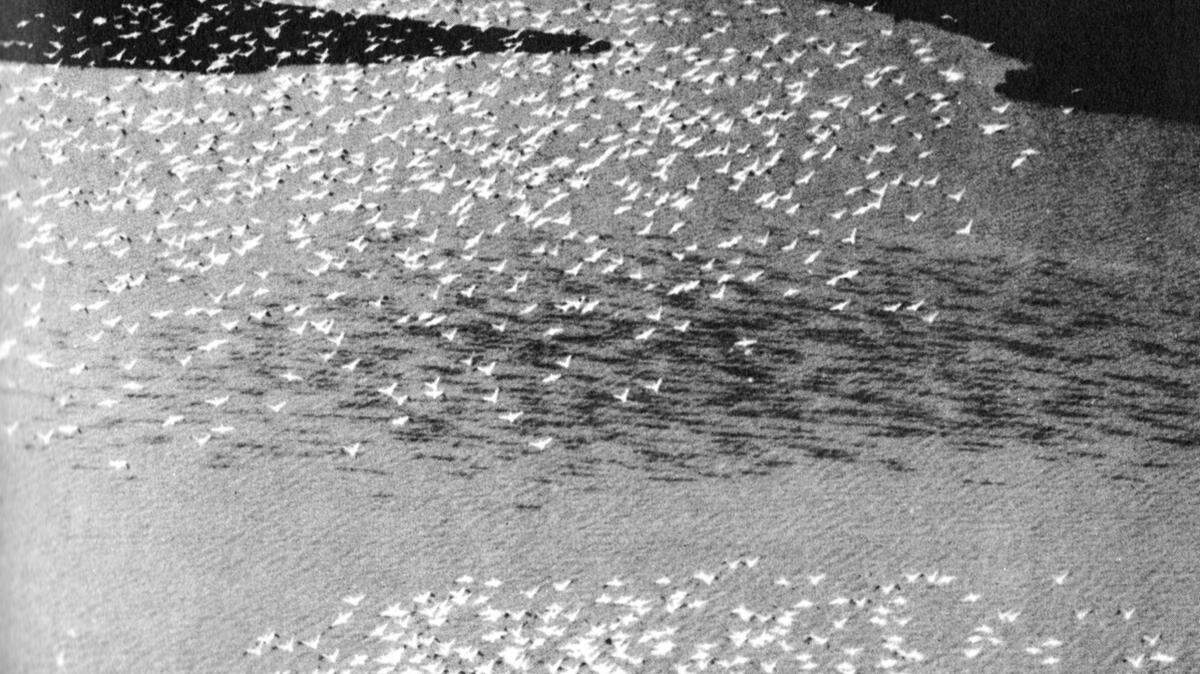
Have you wondered why Mississippi Coast locals and people from Louisiana and upstate Mississippi simply call our region "the Coast"? It's as if we are the one and only coast. Harnett T. Kane makes reference to this proud designation in "The Golden Coast," a book published in 1959 to cover the Gulf Coast region from Key West, Fla., to Brownsville, Texas, including the coastlines of Florida, Alabama, Mississippi, Louisiana and Texas.
'The Coast!'
"The Coast!" declared Kane "From my boyhood in New Orleans, the words meant a special place, a magic area. For more than a hundred years the Creole City, together with much of the rest of the South, thought of the Gulf area of Mississippi as its region of summer play, its holiday land, when the interior air became all too steaming and they needed a breeze-touched retreat that was not too far away.
"More than any area along the Gulf, this is the Old South. For many miles there appears a procession of replicas of the plantation residences, some massive, others a warm-season version in half scale. The houses generally stand on high ridges, their brick or wooden bases lifting them still higher in the breezes. They are half hidden in their settings of down-sweeping oaks and pecans and their hedges and bushes of camellias, many as big as most trees of other sections. . . .
"Along the shore is an unbroken stretch of about eighty miles, always to the sight of slow waves to one side and the sentinels of trees to the other. It has no single great settlement, but a string of them: Biloxi, Gulfport, Pass Christian, Bay St. Louis, Waveland, Ocean Springs and others with names like poems in the wind; sometimes the towns run together in a long line.
"For nearly 30 miles a man-made beach of white sand dazzles the eye, and over it long wooden walks extend to pavilions and boathouses with steps into the deeper Gulf."
This romantic description was written after the 1947 hurricane flattened waterfronts but before the storms of 1969 and 2005 caused Coast cities to return to the drawing board. It also was published before the Coast set itself apart from the state by legally allowing drinking alcohol and gambling.
Perspective
Such vintage publications as Kane's "Golden Coast" are important to understanding the 21st century Coast fabric, so obviously woven from the old and the new. Last week, this column featured Kane's broader view of the Gulf region but today we hone in on our section.
In the Coast chapter Kane observed:
"Here flourishes another Mississippi, so different from the rest of the state that it might be of another region, more liberal in outlook, more tolerant of man's lapses. It may or may not be true, for instance, that 'Mississippi will vote dry as along as it can stagger to the polls.'
"The fact remains that in many rural and town sections a man who is rigidly against rum for the record may tipple behind the barn. He can stand up firmly to be counted against gambling, but not object to a little chance-taking when the neighbors are not looking.
"On the Coast, for the most part, there are no barns to hide behind, and the people next door will hardly peep at a game because they themselves may be trying their luck at the moment. These Gulf folk turn an amiable smile toward life; they think it not unreasonable for human beings to be, well, human.
"Much of their philosophy is explained by the fact that, along with the traditional South, there exists a pungently French life with other South European touches: Italians, Dalmatian, Greek, Spanish."
'Old South on the Gulf'
The 17-page chapter on the Coast, which he titles "Old South on the Gulf," is chockful of regional history, town histories and black and white photographs of James Ricau, a New Orleans native who was an editor, sugar chemist and art collector.
Kane himself wrote at least 17 books on such diverse topics as "Natchez on the Mississippi," "Queen New Orleans" and "The Southern Christmas Book."
In his "Golden Coast," Kane philosophized: "A number of my friends have gone to the Coast and been repelled by the ways; then they too have learned to accept life as they found it. Acceptance -- that is, above all, the byword."
Kat Bergeron, a veteran feature writer specializing in Gulf Coast history and sense of place, is retired from the Sun Herald. She writes the Coast Chronicles column as a freelance correspondent. Reach her at BergeronKat@gmail.com or c/o Sun Herald Newsroom, P.O. Box 4567, Biloxi, MS 39535-45667.
This story was originally published February 20, 2016 at 3:12 PM.