
Tim Lockley: Lady beetles want to come in from the cold
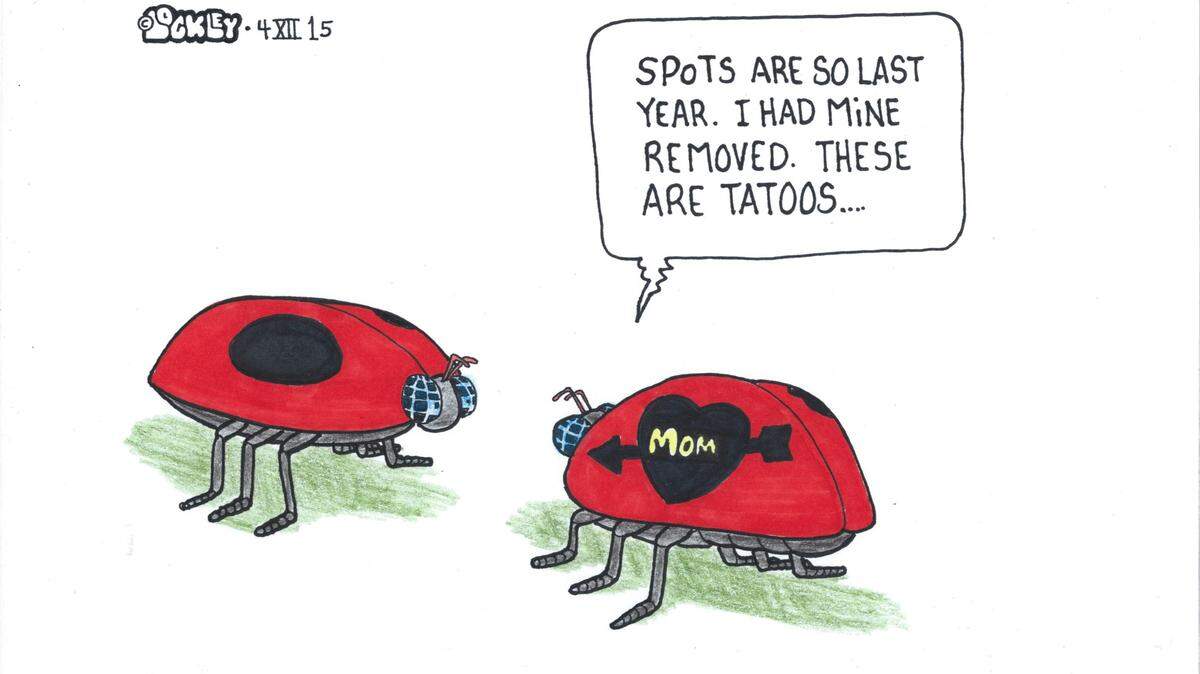
This time of year, you might get unexpected visitors -- a lot of them. One of these is the Asian multi-colored lady beetle (Harmonia axyridis), also known as the Halloween lady beetle because of their orange, red and yellow coloration.
This particular beetle is an import. It was first brought into the country over 100 years ago to control the spread of tree aphids. For some reason, that introduction didn't work. They seemed to just disappear. Then, in 1988, they popped up in Louisiana. Since then, they've managed to establish themselves over most of North America.
For most of the year, Asian lady beetles supply us with a cost-free benefit by controlling aphids and other soft-bodied pests on our trees, ornamental shrubs and, to some extent, in our gardens. It's when the days grow shorter and the air gets cooler that they become a nuisance.
In their native Asia, they will accumulate in huge numbers in cracks and crevices on cliff faces to spend the winter. You may have noticed that we don't have many cliffs here on the Coast. The Halloween beetle has managed to adapt to that lack of cliffs by substituting our buildings. They are attracted to the sunlit sides of light-colored structures. At night, they'll swarm to lights. If they can find an opening in the wall, they will gather together.
Common over-wintering sites include window and door frames, porches, garages, beneath exterior siding, under roof shingles, wall voids, soffits and in attics.
The Asian lady beetle doesn't harm people or pets. They don't carry any communicable diseases and they rarely bite. Nonetheless, this time of year, I'll start getting panicked phone calls from people wanting to know what has invaded their homes and what can they do to rid themselves of them.
The first thing I tell them is to not try to pick them up with their bare hands and do not, under any circumstances, mash them. If alarmed, they will release a fluid that has a foul odor that is difficult to wash off and leaves an orange stain that, for all intents and purposes, is permanent.
The easiest way to remove the beetles is to vacuum them up. If you want to save them to control aphids next spring, place a pair of old panty hose in the vacuum hose to collect them. When finished, secure it with a rubber band. Once you've filled your panty hose with beetles, take it outside and place it in an area where it won't be disturbed. You can open it up come spring. Don't try sweeping them up -- you may wind up crushing some of them.
To stop them from coming back next winter, you'll need to do a little pest proofing. Seal up any openings with caulking. Adjust or install tight-fitting door sweeps to thresholds at the bottoms of all exterior doors. Any gap bigger than 4 millimeters (1/6 of an inch) will allow the beetles access into your home. Repair damaged window screens. Seal up openings where pipes and wires enter the walls of your home.
Pesticides aren't recommended. Because they're hibernating, their metabolism has been adjusted and pesticides will have limited effects. You're better off saving as many of them as you can for next spring.
Tim Lockley, a specialist in entomology, is retired from a 30-year career as a research scientist for the U.S. Department of Agriculture. For answers to individual questions, please send a stamped, self-addressed envelope to Tim Lockley, c/o Sun Herald, P.O. Box 4567, Biloxi, MS 39535.