
TIM LOCKLEY: These mushrooms raise a stink in the fall
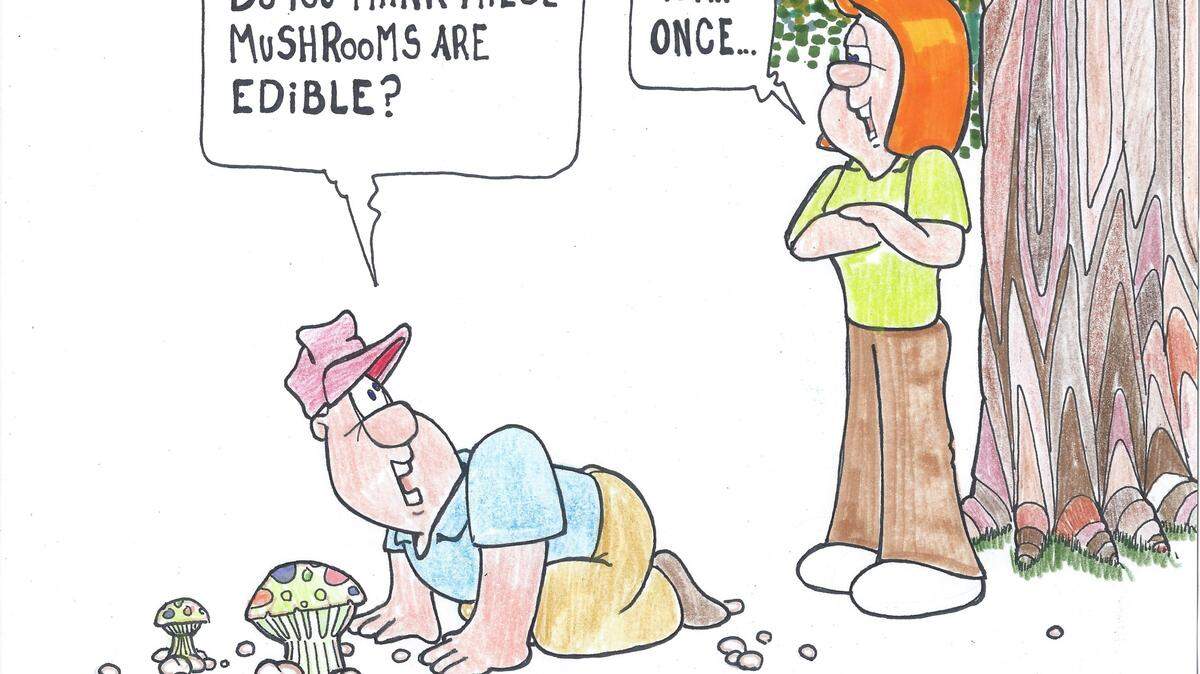
The smell of fall is in the air, and it isn't pleasant. The stinkhorn mushrooms have raised their heads and the odor of rotting flesh is wafting through the neighborhood.
Stinkhorns begin showing up when the weather cools and rains begin to fall. Many look like some nightmare creature from outer space. Others look like a particular bit of the male anatomy. The stinkhorn you run across most often is called Dead Man's Fingers. It looks a little like a small, grayish-pink basket with a dark brown smelly center.
As with all fungi, the life of a stinkhorn mushroom begins with a spore deposited on an organically rich substrate, such as your yard. As it grows and matures, it spreads itself by mycelium, consuming decomposing wood. As often as not, this decomposing wood is the mulch you so lovingly spread about your flowers and ornamentals. When the fungus is sufficiently mature, it forms a golfball sized structure that pushes its way up through the soil. This benign stage is short-lived. Pretty soon, the fruiting body grows (up to 6 centimeters an hour) and forms the smelly end product.
Upon reaching its maximum growth, the stinkhorn secretes a smell, dark mucous that contains its spores. This secretion is highly attractive to blow flies, carrion beetles and snails. The insects and snails will stroll across the spore-containing mass, either eating the spores or picking them up on their legs and bodies. The spores will be carried away from the parent fungus and are dropped off some distance away. If the spore is fortunate, it will begin its life in a suitable environment and the entire cycle will begin again. After a few days, the mushroom will collapse into a gooey slime that will be reabsorbed back into the soil.
As bad as these stinkhorns can be, the mushroom itself is relatively short-lived. The spore-producing mushroom represents around 0.001 percent of the fungus' biomass. The vast majority remains under the soil, happily consuming rotting wood.
Because 99.999 percent of the fungus is below ground, there's little you can do to "control" stinkhorns. Simply removing the fruiting body as soon as you see it is probably your best bet. Grab them. Bag them and throw them in the trash (or, eat them; they're a delicacy in Asia). Do not toss them into your compost pile. If you notice that the mushrooms seem to be clustered in a relatively small area, there might be some piece of wood below the soil that you can dig up and throw away. Most of the time, they seem to be scattered around, popping up randomly in your lawn and flower beds. If you don't mind the divots, a nine iron is a fun way of getting rid of them.
If the smell-from-hell is overpowering your senses and your neighbors have stopped coming to visit, be patient. The stinkhorns soon will go away and your neighbors will have the same problem soon enough.
Tim Lockley, a specialist in entomology, is retired from a 30-year career as a research scientist for the U.S. Department of Agriculture. For answers to individual questions, please send a stamped, self-addressed envelope to Tim Lockley, c/o Sun Herald, P.O. Box 4567, Biloxi, MS 39535.