
The search is on for the lucky 'sea bean'
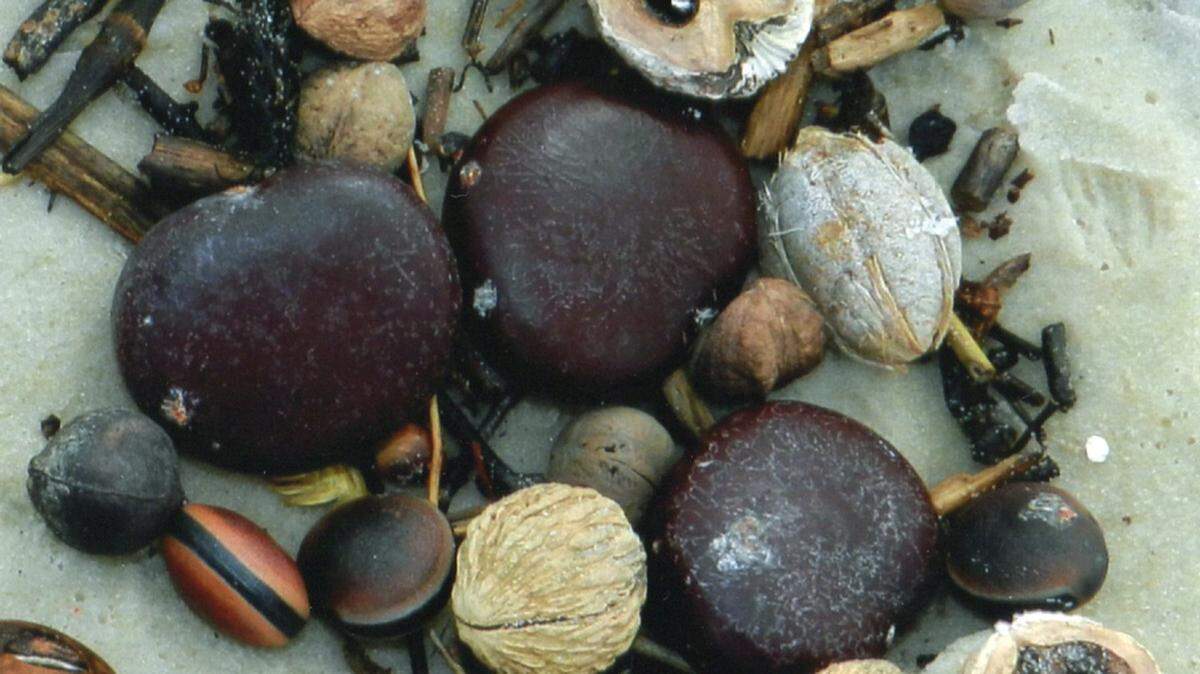
Do you know beans about the local beach?
I admit I'm still learning.
This is not about historical facts, such as the pretty white sand of Mississippi Coast beaches originating in the Appalachians as quartz. Or the fact that ours is a man-replenished, not a man-made beach as too often claimed. Native Americans and the first European explorers, after all, walked on our sandy beaches. Did they find beans lying on the sand?
These early beach walkers would not have recorded such mundane findings in their journals, so we can only guess. My vote is a resounding "yes." If we can find beans on the beach today, they found them yesteryear.
Thoroughly confused? Don't be. Go for a beach walk.
Look for your own "sea bean" treasures.
The dregs of Hurricane Patricia, which struck Mexico on Oct. 23 and brought wavy high tides to our beaches several days later, deposited sea beans on our shores. Many of them traveled thousands of miles from such exotic places as the African west coast, the Amazon Basin, Central and South America, the Caribbean, Hawaii and the islands of the Gulf of Mexico.
I blame Paul Jermyn for my re-awareness of sea beans. I once coveted several I'd found in pre-Katrina beach walks, but they were swept away in that 2005 hurricane along with other belongings. Frankly, I'd forgotten there was such a thing as a sea bean.
Bean quest begins
Several weeks ago, Jermyn e-mailed me a photo of sea beans he and his wife collected in late spring on beach walks in Long Beach. The light bulb went off in my head when I recognized two beans as varieties I'd found in my pre-K days.
I invited myself over to admire his beach collection. You may recognize Jermyn's name as a longtime collector of historic Coast images found in vintage post cards and old photographs, which he generously shares with publications and those of us who write about the Coast's past. Jermyn's sea bean collection and how these oddities made it to Mississippi reveals another side of this Coast native.
"Years ago I found one sea bean and put it in a cigar box with all the other kinds of treasures kids save." Jermyn said. "It was heart-shaped and back then we called them 'lucky beans,' because they were rare and considered good luck to find one. I don't know where that cigar box is now, but I never forgot about my lucky bean."
This spring, Paul found another sea heart. Then another. As he and his wife walked the beaches, they found other types of sea beans of different sizes, shapes and colors. Fascinated by so many varieties, he began researching them and learned each had a name. There are hamburger beans, tropical almonds, both black and Jamaican walnuts, bull's eye, black pearls, golfballs, sea purses.
Where to look
We took Jermyn's bean stash of about eight varieties to the beach for a photo session and surprisingly found a few more new beans to add to the collection. They tend to be in the wrack, what beach walkers know as the debris lines deposited by high tides. We talked about the storm headed to Mexico and how the currents might bring more sea beans to our Coast.
It did. Several days later, another friend and I explored the beach off Courthouse Road in Gulfport, when the tide was unusually high, the wind brisk and the waves crashing. Happily, we found treasures of our own.
The wrack was thick with debris; we had to find sticks to stir around in it to find the beans. The wrack included lots of broken sea reeds, bits of seaweed, boat trash including unidentifiable plastic and rope and a wood pulley, an intact plastic goldfish, a pretty oyster shell, a sea pod that looked like a pelican and small pieces of red lava and coral.
I was excited to find two large Crucifix Fishes, what I consider the best find on Coast beaches because good shells are rare. (The Crucifix Fish is the head bone of the hardhead catfish that local tradition claims is the shape of Jesus on a cross, but that's another story....)
My friend and I took our treasures to her house to examine. We were so pleased we braved the drizzle and took another beach walk.
How did they get here?
We found several dozen sea beans of about six species. Some looked like small acorns but I've since identified them as hog palm. I believe another round black one to be the Jamaican naval surge and a ridged one to be either a tropical walnut or a black walnut. I found a sprouting mangrove seed, possibly from Florida or Mexico. Several others look like peach pits.
Identification can be difficult because wave action and salt water can alter appearances, plus we are unfamiliar with most of those non-natives.
Most sea beans are carried to the sea by freshwater streams, rivers and floods, then ocean currents and storms come into play. Jermyn's tropical almonds, for example, likely come from Singapore or India.
That day I found no hamburger beans or sea hearts (my two pre-K finds), but I'm pleased with the stash now proudly displayed in a cut-glass bowl in my Virginia abode.
Sea beans are sometimes called drift seeds or drift beans. The name is used for seeds, beans and nuts that are carried across the oceans by currents and wind. They float because they have air pockets or their contents are lighter than water.
Many travel for thousands of miles and take more than a year to land on beaches along the Gulf of Mexico. I'm too much of a newbie to this subject to advise the best times of year to go sea beaning on our Coast beaches, but obviously storms and high tides make good depositors.
Good luck finding your own lucky beans.
Kat Bergeron, a veteran feature writer specializing in Gulf Coast history and sense of place, is retired from the Sun Herald. She writes the Coast Chronicles column as a freelance correspondent. Reach her at BergeronKat@gmail.com or c/o Sun Herald Newsroom, P.O. Box 4567, Biloxi MS 39535-4567.